

Blog Reader Retargeting on Meta Ads: Content-Based Audiences
Instrument consented active reading heuristics, verify supported content audiences, and test a relevant offer under a small cash cap.
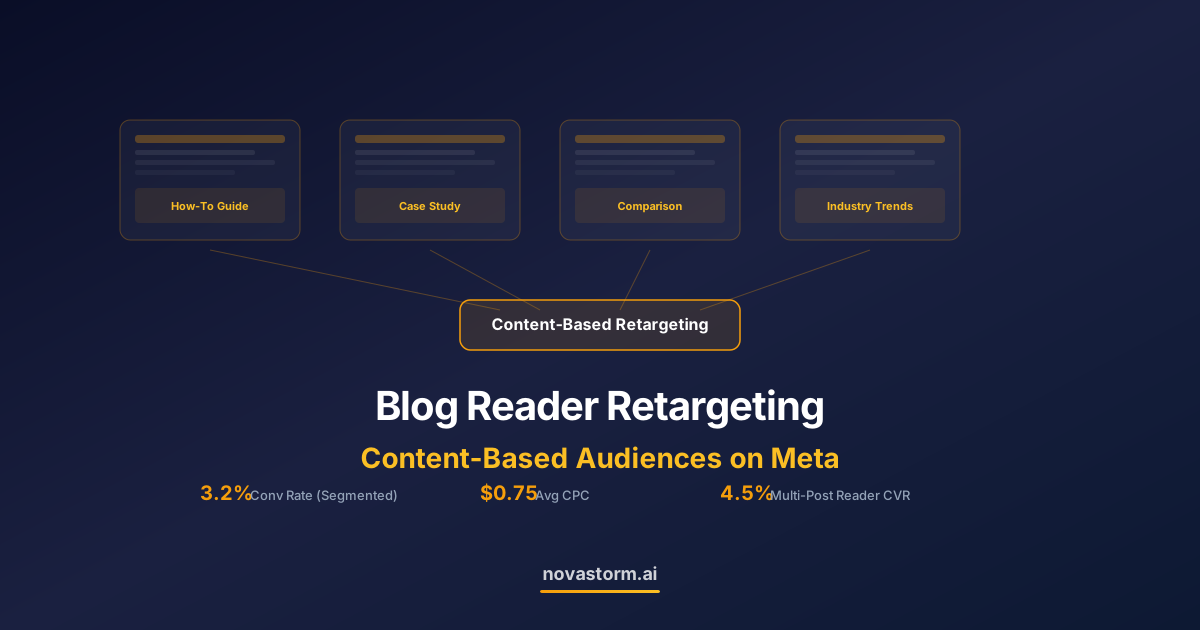
A blog visit indicates contact with a topic, not verified reading, profession or purchase intent. Retargeting can test whether a relevant next step helps an eligible reader. Define a permitted signal, match it to a truthful offer and measure qualified or paid outcomes before calling the audience valuable.
Match a topic to a useful next step
| Article category | Message hypothesis | Mature business outcome |
|---|---|---|
| Budget economics | See how to prepare a campaign with an explicit cash allowance | Qualified signup or paid service under your actual model |
| Creative testing | Review a concrete creative-test brief | Activated account using its declared product action |
| Tracking data | Use a tracking QA worksheet before advertising | Qualified conversation or relevant service purchase |
| Comparison content | Check current product fit and actual terms | Confirmed purchase/subscription if applicable |
These are hypotheses. A comparison article can attract researchers or competitors; reading an advanced guide does not prove the reader is a media buyer. NovaStorm’s platform access is free under its current offer; a signup is not a paid subscription. Generation-credit purchases are a separate commercial outcome.
An educational active-time and scroll implementation
The example below emits an adapter event only after sixty seconds of consented foreground activity and at least 75% article depth. Both thresholds are chosen heuristics, not proof of reading or qualification. Activity expires after fifteen seconds without input. The shared in-memory seen set suppresses duplicate emissions for an article during the current page lifecycle.
The Page Visibility API provides the visibility signal; browsers may throttle background timers. Wire hasConsent to the current permitted-purpose state and emit to an approved measurement adapter. This code does not install Meta Pixel, create an audience or persist a cross-device reader identity.
function startBlogRead({ article, articleId, category, hasConsent, emit, seen }) {
  let activeMs = 0, maxScroll = 0, last = performance.now();
  let lastInput = -Infinity, allowedBefore = false, disposed = false;
  const permitted = () => hasConsent() && document.visibilityState === 'visible';
  const sample = (now) => {
    if (disposed) return;
    const allowed = permitted();
    if (!hasConsent()) { activeMs = 0; maxScroll = 0; lastInput = -Infinity; }
    if (allowed && allowedBefore) {
      activeMs += Math.max(0, Math.min(now, lastInput + 15000) - last);
      const rect = article.getBoundingClientRect();
      const depth = Math.max(0, Math.min(1, (innerHeight - rect.top) / rect.height));
      maxScroll = Math.max(maxScroll, depth);
      if (activeMs >= 60000 && maxScroll >= 0.75 && !seen.has(articleId)) {
        seen.add(articleId);
        emit('BlogRead', { article_id: articleId, category, active_seconds: Math.floor(activeMs / 1000) });
      }
    }
    last = now; allowedBefore = allowed;
  };
  const activity = () => {
    const now = performance.now();
    sample(now);
    if (!disposed && permitted()) lastInput = now;
  };
  const tick = () => sample(performance.now());
  const resetClock = () => { last = performance.now(); allowedBefore = false; };
  for (const type of ['pointerdown', 'keydown', 'scroll']) window.addEventListener(type, activity, { passive: true });
  document.addEventListener('visibilitychange', resetClock);
  const timer = setInterval(tick, 1000);
  return () => {
    disposed = true;
    clearInterval(timer);
    for (const type of ['pointerdown', 'keydown', 'scroll']) window.removeEventListener(type, activity);
    document.removeEventListener('visibilitychange', resetClock);
  };
}
Create one tracker per article view with a shared new Set() for that page lifecycle; call its returned disposer on navigation/unmount. Supply a positive-height article element and controlled article/category identifiers. Permission withdrawal resets accumulated time/depth and stops new emissions; it cannot retract an event already sent. Reinitializing an entire page creates a new lifecycle, so collection-side event identity/deduplication needs its own design.
Acceptance checks before collection
Stop wasting ad budget
NovaStorm AI cuts Meta Ads CPA by 30% on average. No complex setup required.
- Consent denied: no event; pre-consent activity does not count.
- Hide the tab, wait, then return: hidden time must not increase active time.
- Stop interacting: after fifteen seconds, additional idle time must not count.
- Meet both thresholds: one event; repeated ticks or the same article key do not produce additional events in the shared seen set.
- Withdraw consent: no new emission; dispose on navigation so old listeners stop observing a new page.
This educational implementation passed local simulated checks for denial, hidden-time exclusion, threshold emission, duplicate suppression, withdrawal and disposal. That is a code-level result, not a production analytics deployment or a measured reader-quality improvement.
Validate the actual audience rule
Meta’s audience schema supports website sources and rules. The presence of an event parameter is not proof that BlogRead/category rules are available in your setup. Save the accepted source, rule, retention and exclusions; mark unavailable criteria explicitly. An eligible URL-based audience can be a fallback if its collection and configuration are supported.
A count of three articles requires distinct article identities and a permitted persistent/session model. Reloads do not establish three articles, and a time threshold does not establish intent. Do not assign an occupation or a universal high-intent score from those signals.
Keep the paid-outcome loop small and honest
Hypothetical campaign: a budget-guide audience receives a factual budget-review offer. Cap media at $120, use a consistent destination and wait through the declared outcome window. If four mature paid service orders occur, media cost is $30 per order; if only two occur, $60. These assumed counts are noisy and do not prove incrementality or a stable audience advantage.
Record eligible population, actual spend, unique qualified/paid outcomes, returns and contribution. Stop at the cash cap, investigate failures and allow an inconclusive result. Use the small-budget evidence guide rather than spreading a tiny audience across many categories.
Prepare a paused NovaStorm campaign draft around the chosen content-to-offer hypothesis. BlogRead instrumentation, consent wiring, accepted audience rules and outcome reconciliation require their own implementation; this article does not claim NovaStorm already collects those events.
Published by NovaStorm AI. Worked examples and proposed tests are labeled in the article.
Disclaimer: This article was generated with the assistance of AI and reviewed by the NovaStorm AI team. While we strive for accuracy, we recommend verifying specific data points and consulting official sources (linked where available) for critical business decisions.
Ready to automate your Meta Ads?
NovaStorm AI takes full responsibility for your campaigns — from monitoring to optimization.
Start NowMore on Custom audiences and retargeting

Cross-Platform Retargeting Pools: Combining Meta and Google Data
Coordinate permitted first-party Meta and Google audiences, verify Customer Match eligibility, and reconcile attribution without inventing cross-platform identity.
Abandoned Cart Email and Meta Ad Retargeting: Combined Recovery
Coordinate cart emails and Meta retargeting with consent, purchase suppression, illustrative margin calculations and an explicit holdout design.
Retargeting Exclusions: When to Stop Showing Ads to Converted Users
Plan retargeting exclusions by customer lifecycle, handle refunds and permission withdrawals, and verify matching and refresh limits.
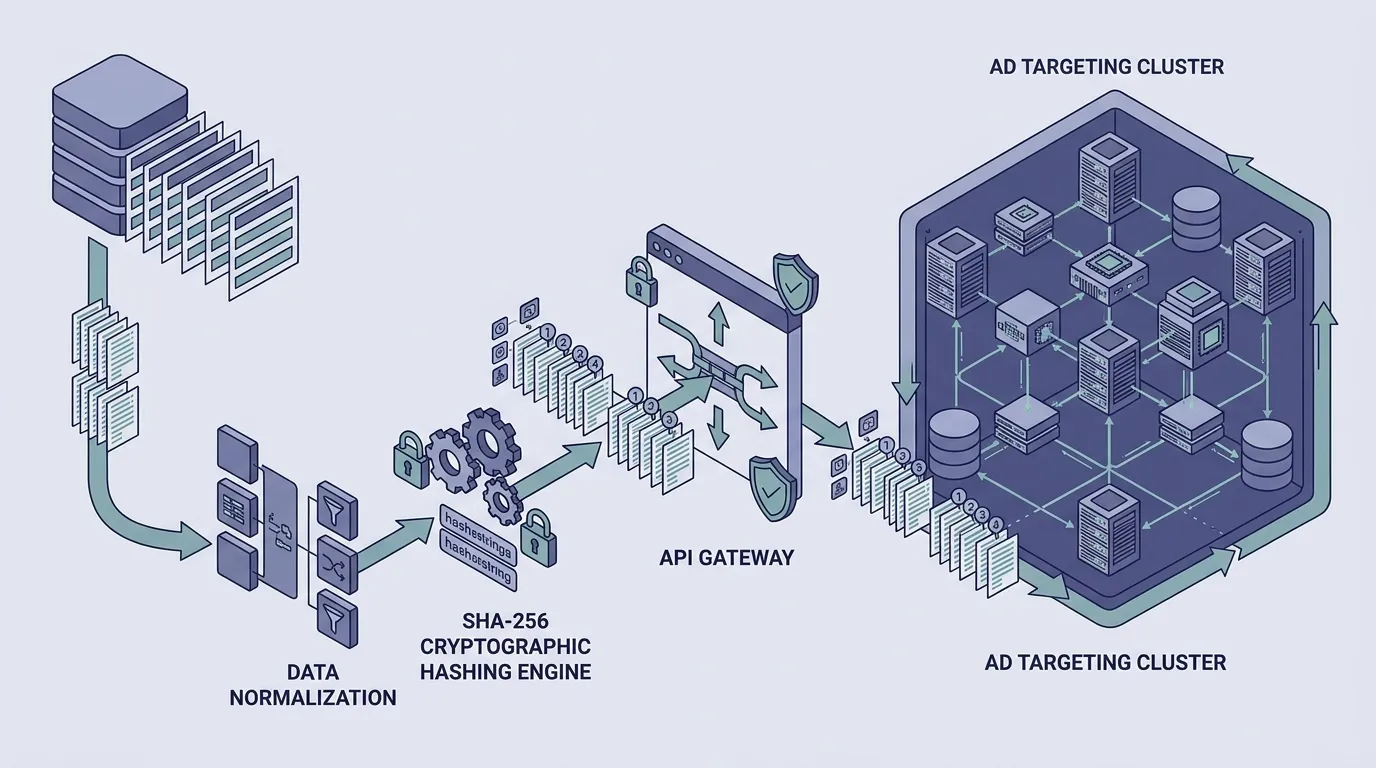
Meta Custom Audience Syncing via Usersreplace: Prevent Learning Resets and Session Errors
Learn how to update Meta Custom Audiences using the usersreplace endpoint without triggering ad set learning resets or session timeout errors.