

Lookalike Audiences in 2026: How to Build and Scale Them
Validate a permitted lookalike source and saved expansion behavior, then plan mature-order reviews and a total capped budget.
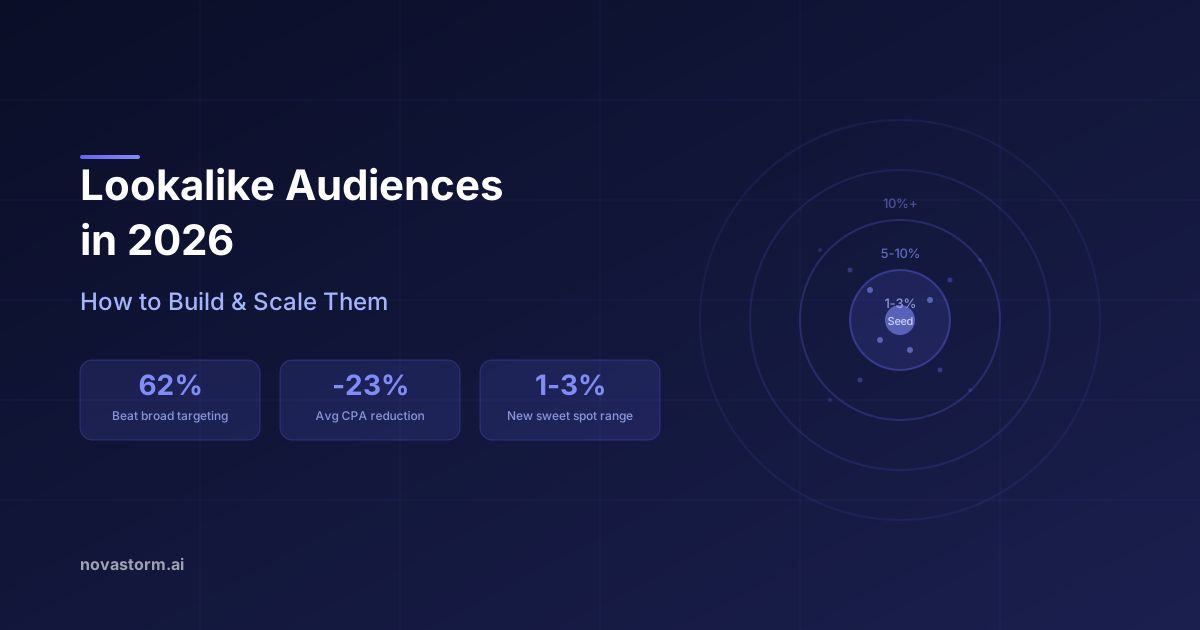
Lookalike Audiences in 2026: How to Build and Scale Them
A lookalike source is a prospecting hypothesis based on permitted customer or engagement data. Inspect the available source, market, percentage range and actual ad-set behavior before spending. A larger source or a familiar name does not make an audience statistically sufficient, commercially qualified or guaranteed to outperform broad delivery.
A source-quality worksheet
Hypothetical source brief, not an uploaded audience: recent paid customers for one deliverable product in one currency/market. Remove duplicates, refunded/canceled records under the chosen business definition and people whose permitted use is withdrawn. Do not publish their identifiers; the worksheet below is aggregate planning only.
| Field | Save privately | Acceptance |
|---|---|---|
| Source definition | Paid-customer horizon, product/market and qualifying rule | Same commercial outcome as the test question |
| Permitted data | Rights/consent, identifiers accepted by actual import | No sensitive/unnecessary fields |
| Maturity | Order/refund delay and customer status | Pending orders not proven buyers |
| Processing | Actual source/audience status and available estimated counts | No guaranteed processing time |
| Ad-set behavior | Saved lookalike range, controls/suggestions and expansion | A suggestion is not a hard eligible-person boundary |
The official Meta Custom Audience SDK exposes audience status and lookalike-spec fields. Verify current eligibility, allowed ranges and attribution options in the account; do not prescribe 10%+ ranges, attachability to every ad set or a mandatory7-day-click/1-day-view choice. Source-size eligibility and the independent evidence needed for a performance test are separate questions.
Expand with cash and mature-order gates
Stop wasting ad budget
NovaStorm AI cuts Meta Ads CPA by 30% on average. No complex setup required.
| Hypothetical daily plan | Change | Authorization gate |
|---|---|---|
| $50 | Baseline approved draft | Event/destination valid and total-period cap agreed |
| $60 | 20% illustrative increase | Review mature contribution and remaining cash |
| $72 | Another 20% illustrative increase | No guaranteed learning protection; owner reviews |
| $86.40 | Another 20% illustrative increase | Not exactly $86; check resulting commitments and capacity |
These steps are arithmetic, not a safe scaling norm. Suppose the owner approves a$300 total exploratory allowance: forecast and actual cumulative spend still must fit that limit. Do not multiply daily plans while ignoring period cost. Frequency2.5 and a20% change are potential diagnostic/operational choices, not universal fatigue or low-risk boundaries.
Compare the actual expansion question
- Predefine the supported audience configuration, primary mature new-customer contribution, attribution and refund windows, minimum useful difference and total cap.
- Use a supported controlled comparison if the effect of lookalike versus broad is the question. Separate ad sets with unequal algorithmic allocation do not prove a causal winner.
- Record unique mature buyers, canceled/returned orders and customer quality for each configuration. Sparse results or unverified expansion end in uncertainty, not a compulsory larger budget.
- Do not infer a fixed 20–35% overlap penalty or claim 62% wins,23% lowerCPA or a40-account test without an identifiable protocol and data.
Proposed connected-monitoring brief, not an actual product alert: report the chosen cohort window, mature/pending order counts, actual allowance used, contribution ceiling and whether the saved audience is a suggestion. Request user review before increasing or pausing; document report/execution delay.
Prepare the source/expansion brief in NovaStorm as a campaign draft and have the user check the saved permitted audience and budget. Actual upload, notifications and automated actions require separately verified tool support and authorization; no automatic waste prevention is guaranteed.
Published by NovaStorm AI. Worked examples and proposed tests are labeled in the article.
Disclaimer: This article was generated with the assistance of AI and reviewed by the NovaStorm AI team. While we strive for accuracy, we recommend verifying specific data points and consulting official sources (linked where available) for critical business decisions.
Ready to automate your Meta Ads?
NovaStorm AI takes full responsibility for your campaigns — from monitoring to optimization.
Start NowMore on Audience targeting and prospecting
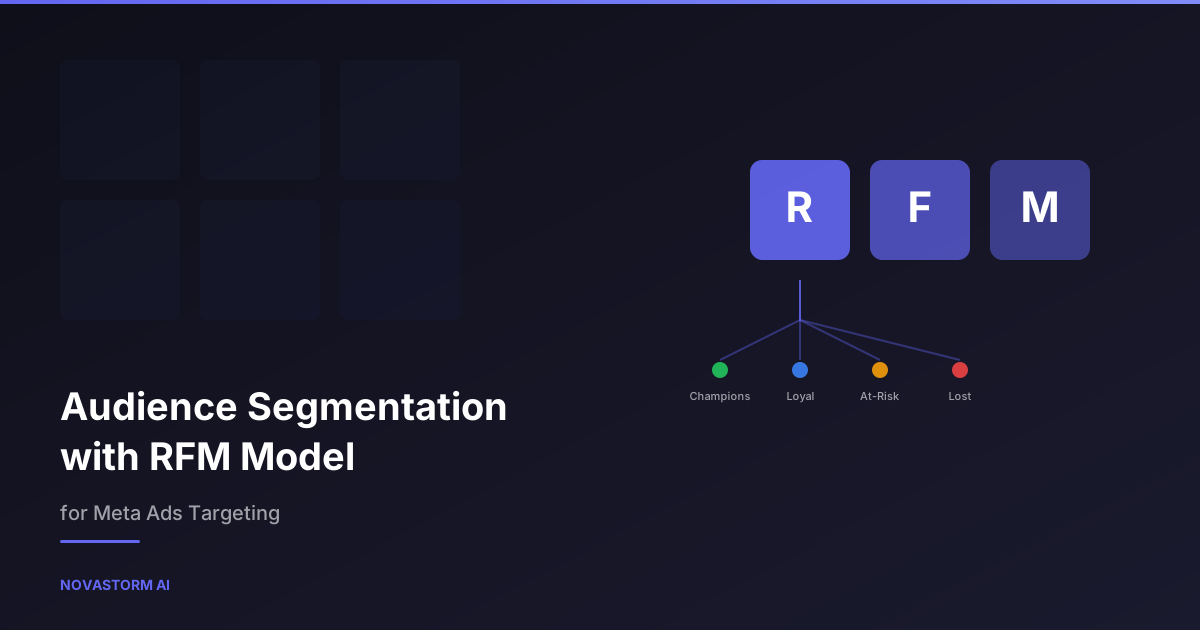
Audience Segmentation with RFM Model for Meta Ads Targeting
Calculate RFM from cleaned transactions, apply one reproducible scoring rule, export exclusive segments and test their future contribution.
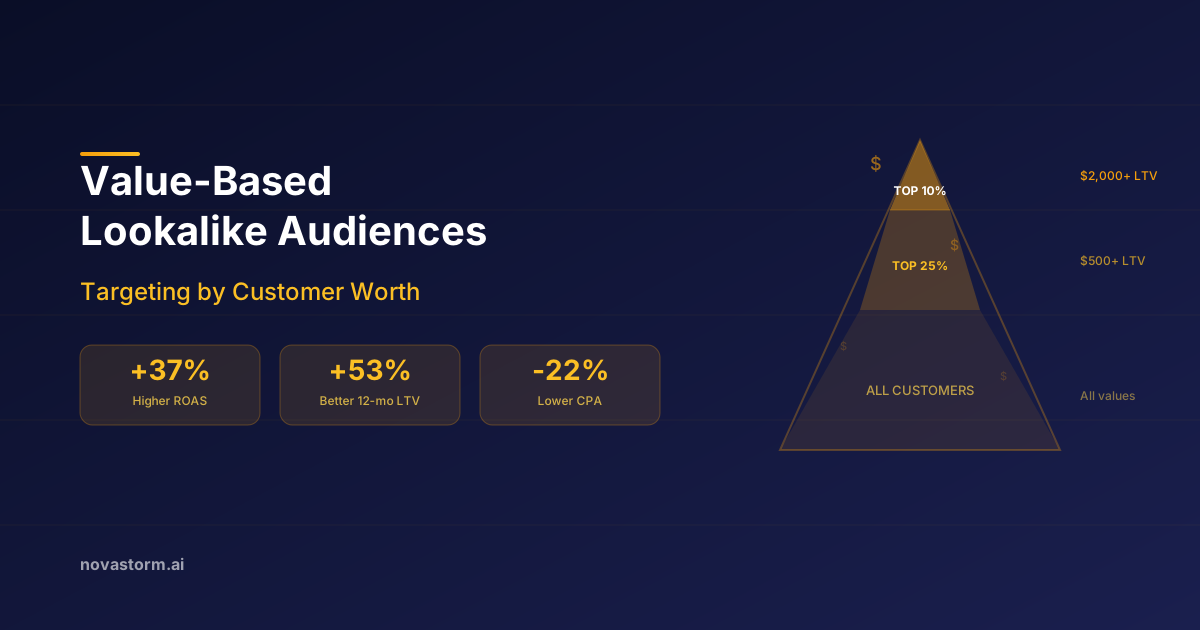
Value-Based Lookalike Audiences: Targeting by Customer Worth
Define permitted customer-value imports, currency and horizon, then compare mature cohort contribution without assuming internal model weights.
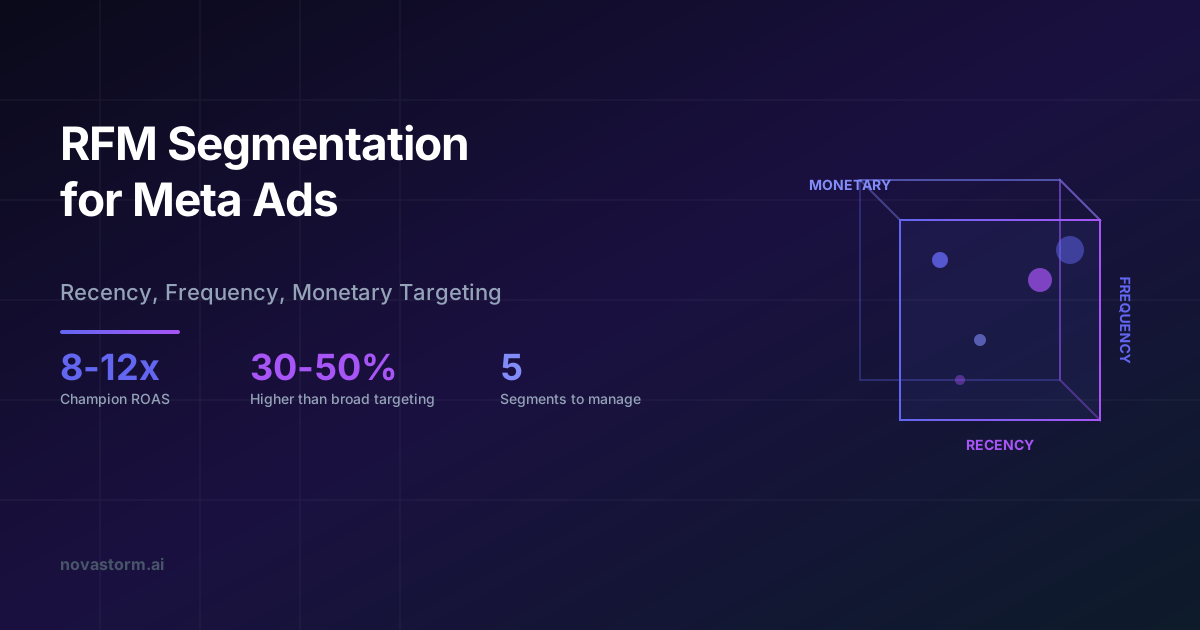
RFM Segmentation for Meta Ads: Recency, Frequency, Monetary Targeting
Learn how to apply RFM segmentation to your Meta Ads campaigns. Target audiences by recency, frequency, and monetary value to maximize ROAS and reduce wasted ad spend.
Behavioral Segmentation for Meta Ads: Action-Based Audiences
Master behavioral segmentation for Meta Ads. Build action-based audiences from website events, app activity, and engagement signals to drive higher conversion rates.