

Value-Based Lookalike Audiences: Targeting by Customer Worth
Define permitted customer-value imports, currency and horizon, then compare mature cohort contribution without assuming internal model weights.
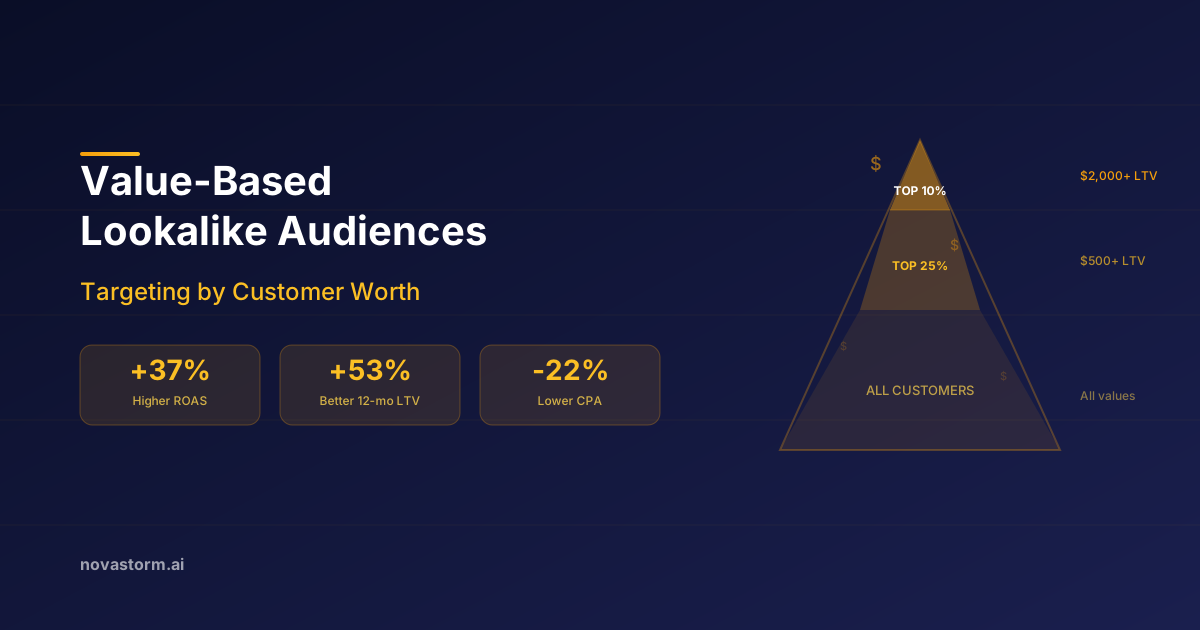
Value-Based Lookalike Audiences: Targeting by Customer Worth
Customer values can describe an acquisition hypothesis when the platform supports a value-based source and your business has permission to use the data. Define what the monetary field means, its currency and its observation horizon before upload. A larger recorded value does not disclose Meta’s internal weighting or guarantee better customer economics.
Confirm the import contract rather than guessing a header
The official Meta Custom Audience SDK includes an is_value_based field. That is not proof that naming a CSV column value or customer_value automatically enables the desired mode. In the actual customer-list flow, confirm accepted identifier normalization, explicit monetary-field mapping, currency treatment, allowed values and value-based audience status. Save the successful import/mapping record privately.
| Permitted export worksheet | Definition | Validation |
|---|---|---|
| Customer identifier | Accepted field from a source with authorized advertising use | No customer identifiers in public examples |
| Monetary value | Exactly the accepted customer-value definition | Do not silently substitute profit, AOV or a prediction |
| Currency | One documented currency; conversion method if needed | USD 100 and EUR 100 are not interchangeable |
| Horizon | Declared past period or supported forecast horizon | Separate observed versus predicted values |
| Customer state | Refund/cancellation/opt-out handling | Remove duplicates and withdrawn permitted use |
Illustrative internal values, not upload data: Customer A has $50 and B$5,000 within the same declared horizon/currency. B’s recorded monetary value is 100 times A’s. That arithmetic does not imply 100 times model influence, since the platform’s learned weighting is not exposed by this row.
Compare cohorts of the same age
Stop wasting ad budget
NovaStorm AI cuts Meta Ads CPA by 30% on average. No complex setup required.
| Hypothetical cohort | Observed maturity | Revenue after refunds | Variable/service costs | Contribution before acquisition |
|---|---|---|---|---|
| Source strategy A | 30 days | $1,000 | $650 | $350 |
| Source strategy B | 30 days | $1,200 | $900 | $300 |
| Recent strategy B cohort | 7 days | Still incomplete | Still incomplete | Do not compare to 30-day value |
Higher revenue can coexist with lower contribution. These constructed totals are not a120-account study or proof of value-based targeting improvement. Evaluate acquisition costs, repeat outcomes and cash payback after comparable cohort ages. A12-month forecast must declare that horizon and be checked against later matured cohorts; it is not observed 12-month LTV on day 30.
Review outliers and eligibility without universal thresholds
- Check the actual platform source requirements and attainable matched size. A40% match rate or 100 high-value customers is not a universal sufficient-evidence rule.
- Investigate an extreme value: duplicate transaction, mixed currency, wholesale customer, unusual refund or genuine high contribution. Do not automatically clip at the 95th percentile and label the altered values observed.
- If a transformation is needed for a supported purpose, preserve the original, definition, reason and comparison; verify it does not violate the monetary field contract.
- Compare a supported value-based configuration with an appropriate alternative under a predeclared controlled design, mature outcome window and total cash cap. Sparse differences remain inconclusive.
Prepare the approved customer-value/source brief and campaign draft in NovaStorm, then have the user verify the actual import, audience status and budget with the responsible data owner. This does not promise CRM syncing, LTV prediction or automatic source-refresh monitoring; the draft stage cannot establish a performance gap.
Published by NovaStorm AI. Worked examples and proposed tests are labeled in the article.
Disclaimer: This article was generated with the assistance of AI and reviewed by the NovaStorm AI team. While we strive for accuracy, we recommend verifying specific data points and consulting official sources (linked where available) for critical business decisions.
Ready to automate your Meta Ads?
NovaStorm AI takes full responsibility for your campaigns — from monitoring to optimization.
Start NowMore on Audience targeting and prospecting
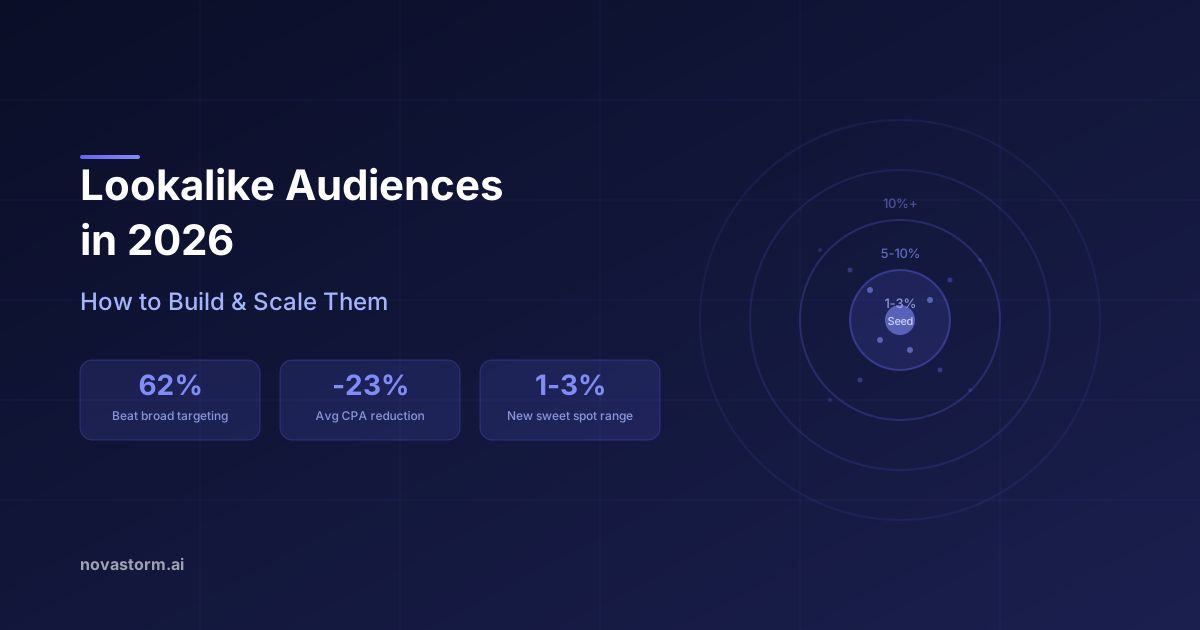
Lookalike Audiences in 2026: How to Build and Scale Them
Validate a permitted lookalike source and saved expansion behavior, then plan mature-order reviews and a total capped budget.
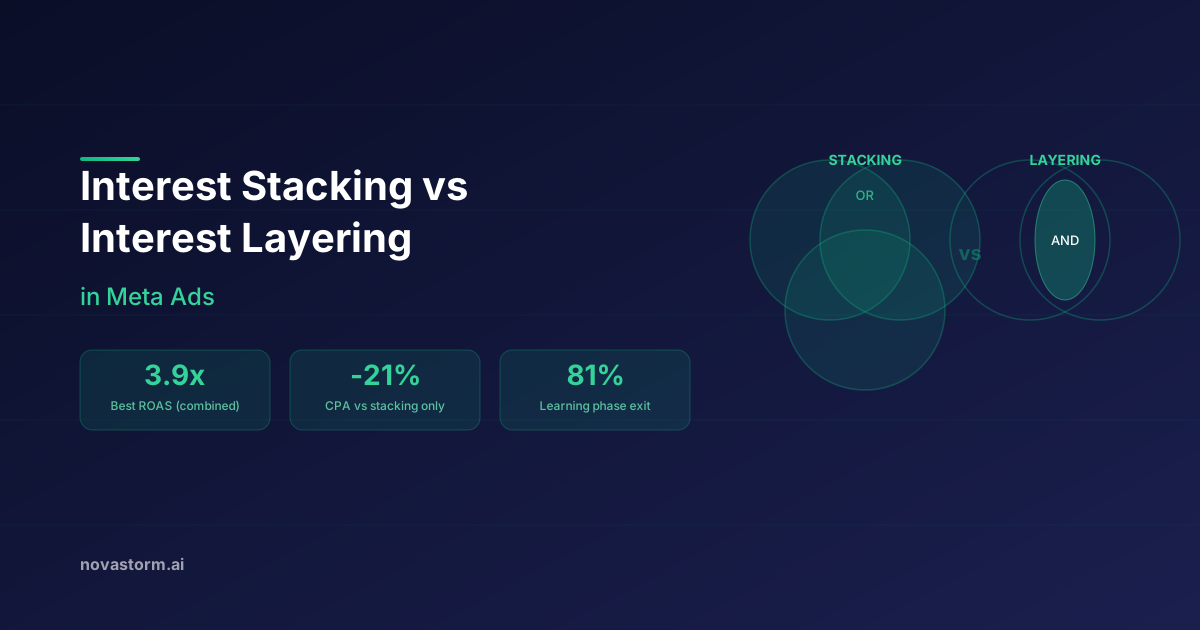
Interest Stacking vs Interest Layering in Meta Ads
Understand OR and AND audience math, verify actual expansion controls and compare mature sales quality within an approved budget.
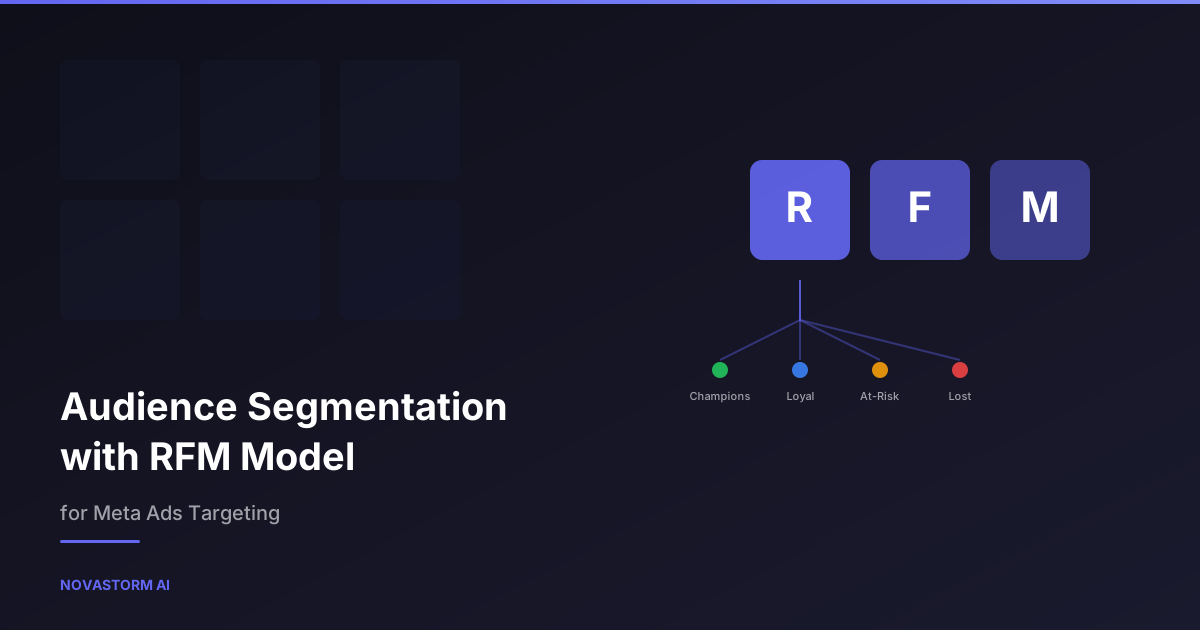
Audience Segmentation with RFM Model for Meta Ads Targeting
Calculate RFM from cleaned transactions, apply one reproducible scoring rule, export exclusive segments and test their future contribution.

Automated Audience Expansion: When to Let Meta Find New Segments
Test audience expansion with enforced service geography, qualified mature outcomes, explicit spend limits and a real assignment plan.