

RFM Segmentation for Meta Ads: Recency, Frequency, Monetary Targeting
Learn how to apply RFM segmentation to your Meta Ads campaigns. Target audiences by recency, frequency, and monetary value to maximize ROAS and reduce wasted ad spend.
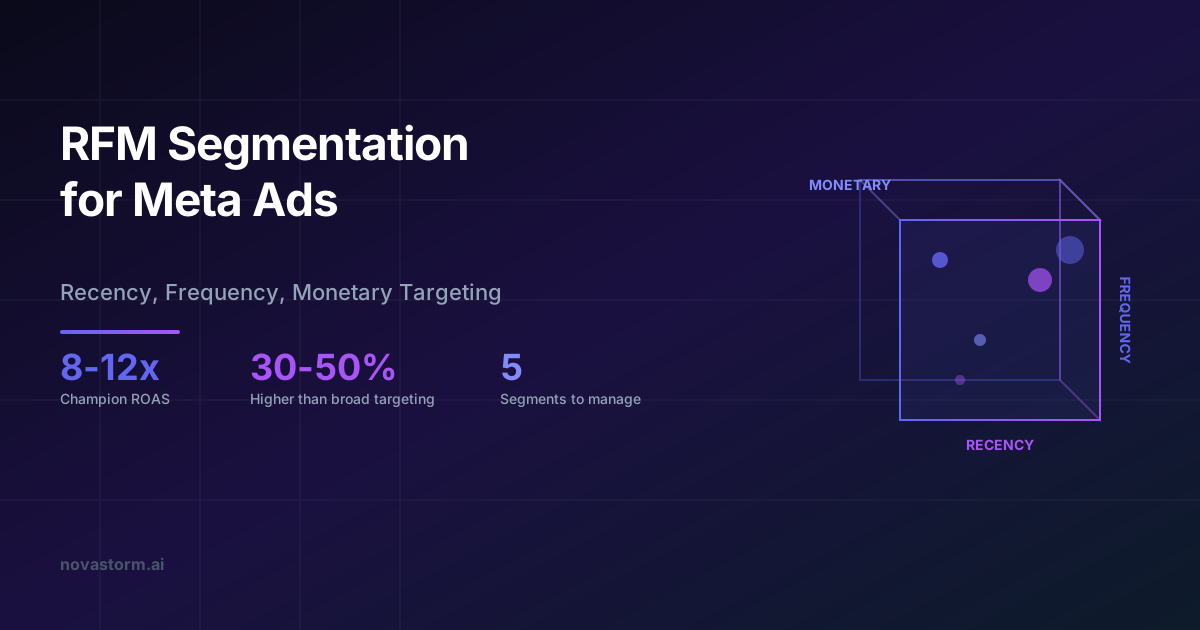
RFM describes purchase history, not the incremental effect of advertising. Define the period, refund treatment and scoring rules before building lists. Smaller recency in days should receive a higher R score; higher frequency or monetary value should receive higher F or M scores under the chosen rules.
A small, reproducible order worksheet
Hypothetical orders: snapshot October 2, 2026; included purchases from July 1 through October 1 inclusive. R is days since the latest retained purchase, F is the count of distinct retained orders in that window and M is collected order value minus recorded refunds, in USD. A fully refunded order is excluded from all three features; a partially refunded order remains once with its net value. These are chosen definitions, not universal RFM rules.
| Customer | Teaching orders and refunds | R days | F | M USD |
|---|---|---|---|---|
| A | September 1: 100; October 1: 100 | 1 | 2 | 200 |
| B | October 1: 200 | 1 | 1 | 200 |
| C | July 10: 80; September 2: 120 less refund 20 | 30 | 2 | 180 |
| D | August 3: 100 fully refunded | Not scored | 0 | 0 |
| E | July 4: 50 | 90 | 1 | 50 |
| F | July 10: 80; September 2: 100 | 30 | 2 | 180 |
Choose bins and preserve ties
This small example uses fixed illustrative bins rather than pretending six customers form equal quintiles. R scores: at most seven days = 5; 8–30 = 4; 31–60 = 3; 61–90 = 2; over 90 = 1. F scores are 1, 2, 3, 4 and 5 for one, two, three, four and five-or-more orders. M scores: below 100 = 1; 100–199.99 = 2; 200–299.99 = 3; 300–499.99 = 4; at least 500 = 5.
| Customer | R/F/M | Combined label | Interpretation within this fixture |
|---|---|---|---|
| A | 5 / 2 / 3 | 523 | Recent repeat buyer |
| B | 5 / 1 / 3 | 513 | Recent single retained order |
| C | 4 / 2 / 2 | 422 | Two retained orders, net value 180 |
| F | 4 / 2 / 2 | 422 | Same features as C; same scores |
| E | 2 / 1 / 1 | 211 | Older single retained order |
| D | Unscored | No retained purchase | Do not manufacture recency from a refunded purchase |
For a larger quintile design, sort R ascending and F/M descending, document boundary values and keep equal values together. Ties can create unequal-sized groups or fewer distinct bins. Do not arbitrarily split identical customers to force 20% in every group. Keep scoring thresholds versioned so migration can be distinguished from a changed definition.
Stop wasting ad budget
NovaStorm AI cuts Meta Ads CPA by 30% on average. No complex setup required.
Permission and audience maintenance
Eligibility for advertising is a separate filter after scoring. Verify permitted marketing use, objections, suppression and deletion requirements; a purchase or hashed email is not by itself permission. European Commission marketing-data guidance explains lawful-use and objection boundaries for received data. Use the applicable jurisdiction’s requirements for your own data.
The Meta custom-audience SDK exposes customer-list additions and removals. A practical external synchronization contract needs a snapshot version, eligible additions, explicit removals, retry identity and confirmation. A removal in your source must not be ignored by an append-only upload. SDK fields and request success do not guarantee matching, delivery size or strict boundaries in every campaign configuration.
- Apply an objection/deletion test with a synthetic customer and verify it is absent from the next eligible export and removal queue is processed.
- Inspect actual account settings, including expansion behavior and exclusions, before treating a segment as a hard audience boundary.
- Choose refresh cadence from purchase frequency and stale-offer risk. Do not use two unanswered contacts or 1,000 people as a universal effectiveness rule.
Measure natural repurchase with a control
Hypothetical comparison: 100 eligible customers assigned to a contact group and 100 comparable eligible customers assigned to a holdout. Twelve contact-group customers repeat-purchase versus ten holdout customers. The descriptive rate difference is 12% − 10% = two percentage points. At an assumed USD 20 contribution per additional purchaser, the simple point estimate is two × 20 = USD 40; USD 60 media cost would leave −USD 20 before production. These tiny fictional counts do not establish a reliable effect; random assignment, uncertainty and contamination must be checked in a real study.
Moving from 211 to a higher score can happen naturally or because the thresholds changed. It is not proof of advertising lift. Prepare a segment-specific offer brief and reviewed NovaStorm campaign draft only after eligibility and economics checks; no automatic RFM sync is claimed. The retention campaign guide connects the message to repeat-purchase decisions.
Published by NovaStorm AI. Worked examples and test fixtures in this article are illustrative, not observed customer results.
Disclaimer: This article was generated with the assistance of AI and reviewed by the NovaStorm AI team. While we strive for accuracy, we recommend verifying specific data points and consulting official sources (linked where available) for critical business decisions.
Ready to automate your Meta Ads?
NovaStorm AI takes full responsibility for your campaigns — from monitoring to optimization.
Start NowMore on Audience targeting and prospecting

Automated Audience Expansion: When to Let Meta Find New Segments
Test audience expansion with enforced service geography, qualified mature outcomes, explicit spend limits and a real assignment plan.
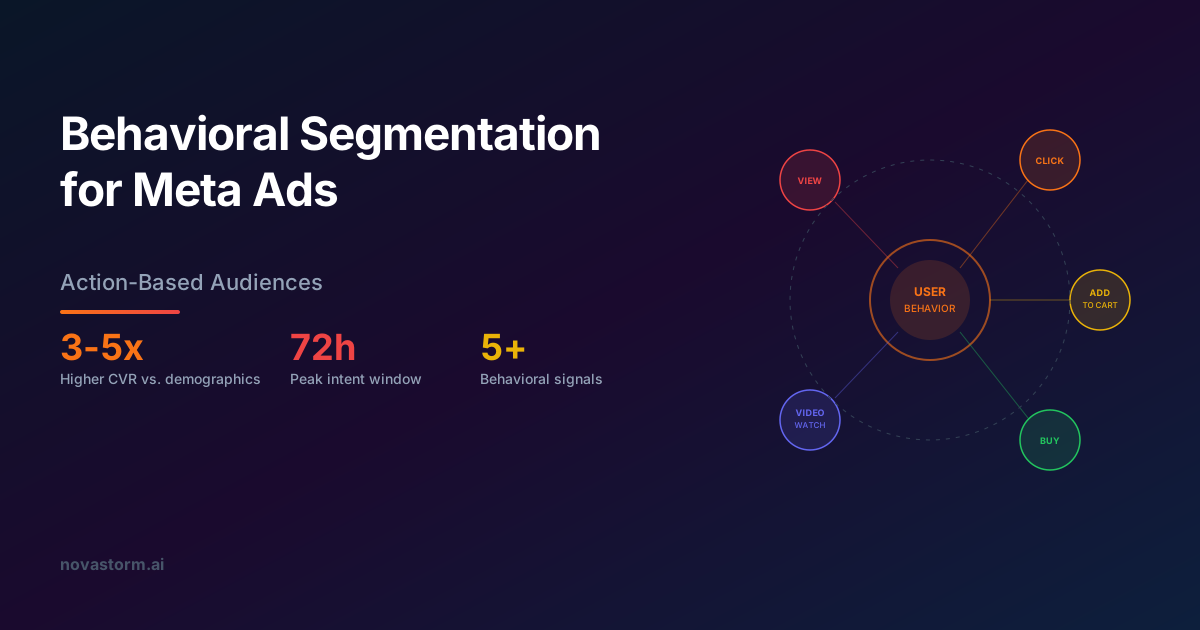
Behavioral Segmentation for Meta Ads: Action-Based Audiences
Master behavioral segmentation for Meta Ads. Build action-based audiences from website events, app activity, and engagement signals to drive higher conversion rates.
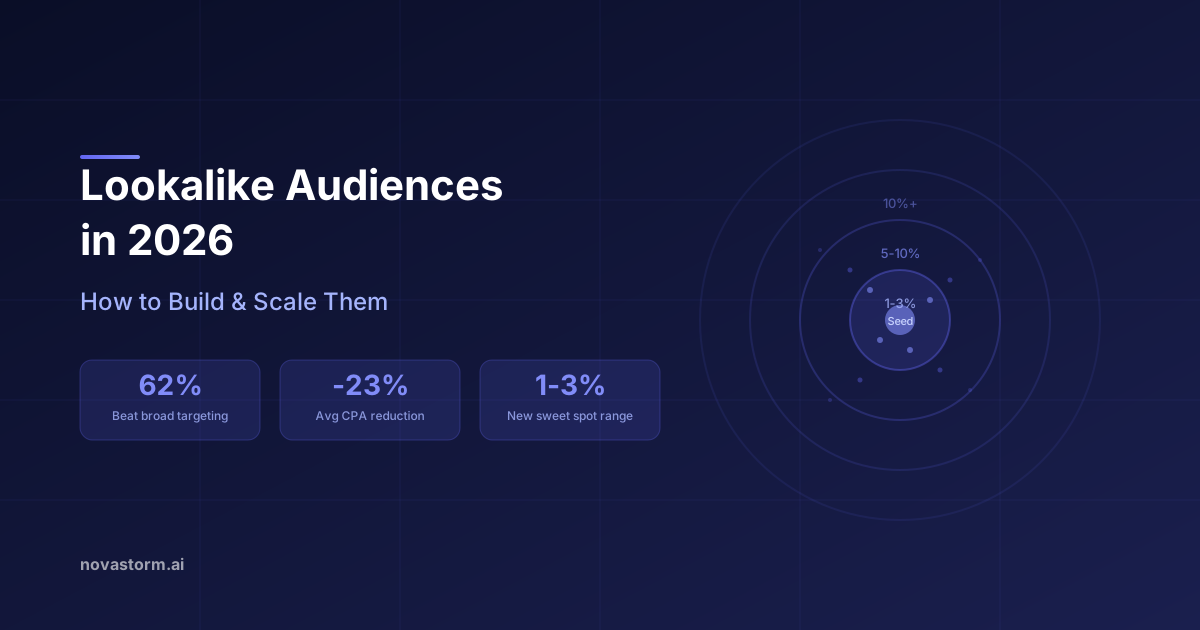
Lookalike Audiences in 2026: How to Build and Scale Them
Validate a permitted lookalike source and saved expansion behavior, then plan mature-order reviews and a total capped budget.
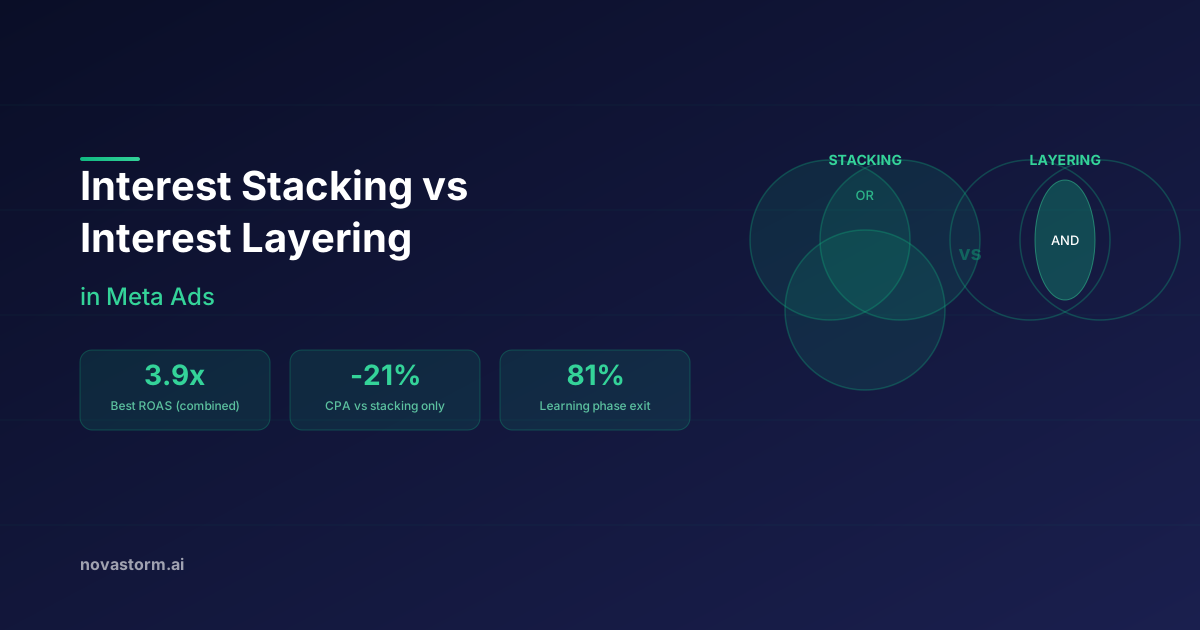
Interest Stacking vs Interest Layering in Meta Ads
Understand OR and AND audience math, verify actual expansion controls and compare mature sales quality within an approved budget.