

Micro-Conversions in Meta Ads: Diagnose the Funnel and Validate the Proxy
Use micro-conversions to diagnose a funnel, clean event counts, and test whether a proxy predicts mature business outcomes.
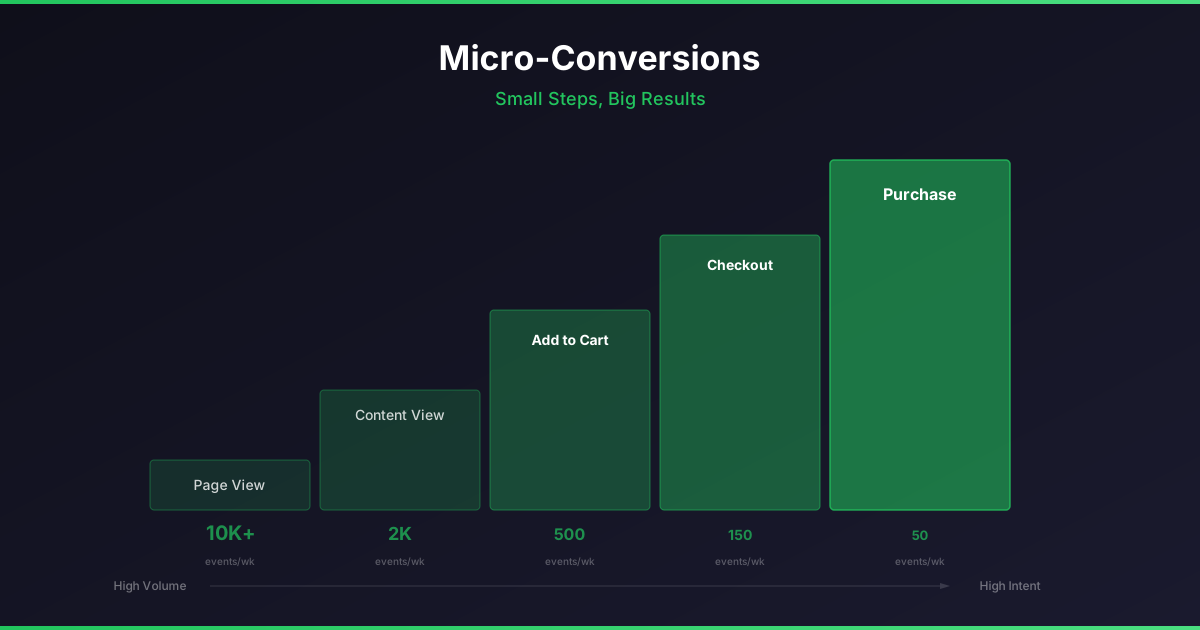
A micro-conversion is an intermediate action relative to your final business outcome. Adding an item to a cart can help diagnose purchase friction; opening a lead form can help locate abandonment. Neither action automatically becomes the best delivery goal. Optimizing for an intermediate event asks the delivery system to find that event, which may attract people who never complete the final action.
Separate the action, event and delivery goal
| Layer | Example | Decision |
|---|---|---|
| Business action | A customer completes and pays for an order. | Use settled orders and their contribution to judge commercial outcomes. |
| Collected event | A purchase or add-to-cart event is recorded. | Verify when it fires, identifiers, required parameters and duplicate handling. |
| Delivery goal | The campaign optimizes toward the selected event. | Approve the goal deliberately; event availability alone does not justify it. |
The GA4 event reference documents add_to_cart and purchase as separate events, with their own parameters. Those are GA4 contracts, not instructions for configuring a Meta event. Verify each destination independently.
Extend the funnel example with event hygiene
Illustrative, nested funnel: 1,000 eligible sessions contain 100 distinct sessions with a genuine cart addition, 40 with a checkout start and 10 with a paid order. The following event counts are synthetic troubleshooting examples, not observed customer results.
| Action | Raw events | Problem found | Corrected measure |
|---|---|---|---|
| Cart addition | 130 | 20 repeated recordings and 10 recordings without a real cart change. | 100 distinct sessions with a genuine addition. |
| Checkout start | 45 | 5 repeated recordings. | 40 distinct sessions with a genuine start. |
| Paid order | 12 | 2 repeated recordings of the same orders. | 10 unique paid order IDs. |
Define the unit before calculating a rate: sessions, people, actions and order IDs are different units. The corrected checkout-to-purchase ratio is 10 / 40 = 25% in this example. Investigate payment failures, price or shipping surprises and collection gaps before treating the ratio as evidence of low intent. A page reload or failed payment must not count as a new paid order.
Stop wasting ad budget
NovaStorm AI cuts Meta Ads CPA by 30% on average. No complex setup required.
Validate the proxy against mature purchases
Illustrative equal-age cohorts: cohort A has 1,000 eligible sessions, 100 cart sessions and 10 paid orders; cohort B has 1,000 eligible sessions, 200 cart sessions and 10 paid orders. Cart activity doubled while paid orders stayed unchanged. Purchases per cart session changed from 10% to 5%. This is a warning that increasing the proxy alone may not improve the business outcome; it does not prove why the cohorts differ.
- Define the proxy before analysis and join it to unique paid orders with the same observation window. Exclude later information that would not have been available when the proxy was scored.
- Compare equally mature cohorts, eligibility, acquisition sources, refunds and contribution. Report missing identifiers and consent-related measurement gaps. Association is not proof that optimizing for the proxy causes purchases.
- If considering a different delivery goal, use a capped comparison against the final-outcome goal where feasible. Assess mature contribution and acquisition cost, not just cheaper proxy events. Sparse final outcomes can make the result inconclusive.
Approve the objective explicitly
The funnel metrics guide helps define distinct people, business actions and stage denominators before interpreting a proxy event.
A NovaStorm brief should state the final business outcome, selected delivery goal, reason for considering a proxy, event validation owner and stop condition. Prepare as paused campaign and local ad-set drafts for user approval. The brief does not install or validate events, and a generic event-count threshold is not sufficient evidence to promote an intermediate action to the campaign goal.
Published by NovaStorm AI. Planning examples are illustrative assumptions, not measured customer results.
Disclaimer: This article was generated with the assistance of AI and reviewed by the NovaStorm AI team. While we strive for accuracy, we recommend verifying specific data points and consulting official sources (linked where available) for critical business decisions.
Ready to automate your Meta Ads?
NovaStorm AI takes full responsibility for your campaigns — from monitoring to optimization.
Start NowMore on Campaign structure and objectives
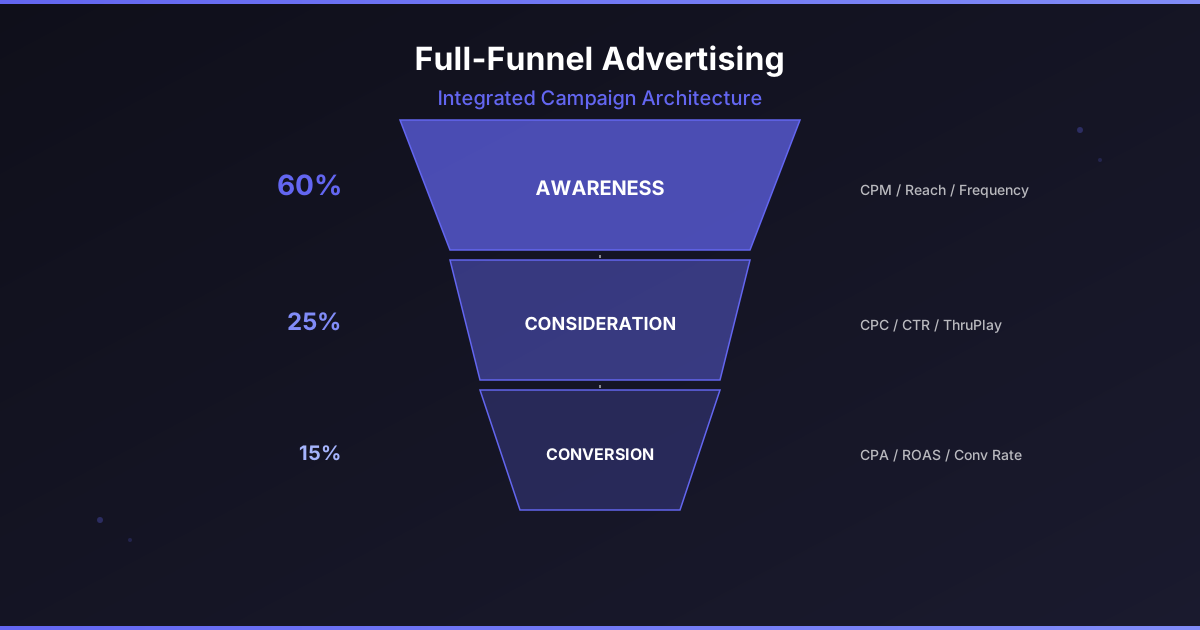
Full-Funnel Advertising on Meta: The Integrated Campaign Architecture
Plan an optional full-funnel campaign structure, prevent duplicated conversion credit, and test whether an additional stage earns its cost.
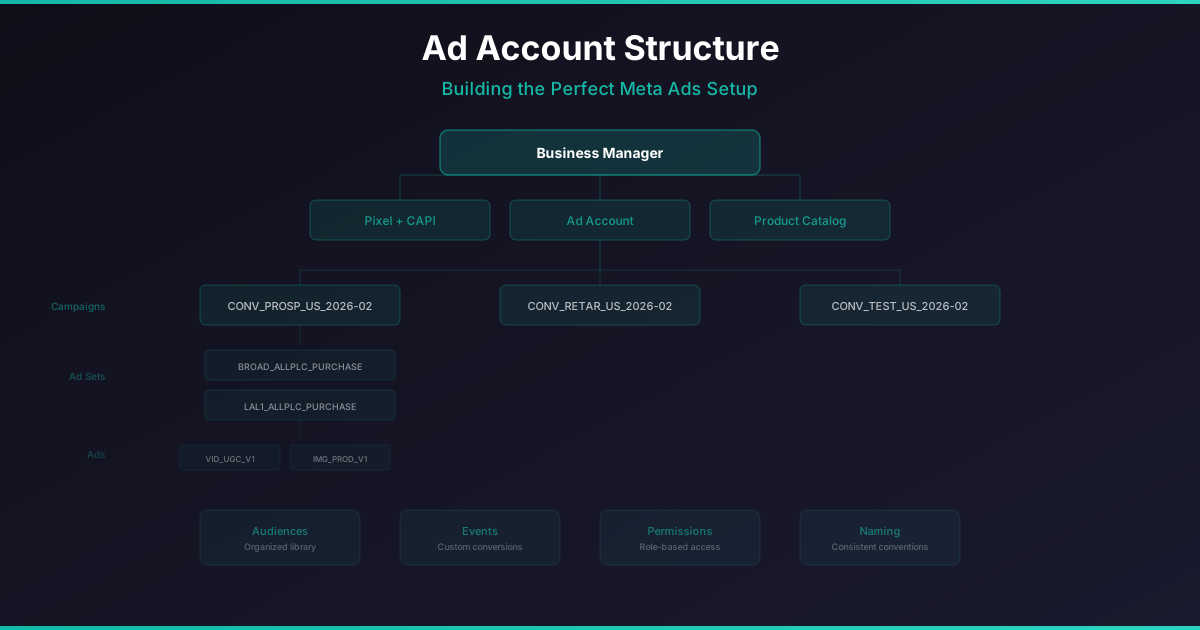
Ad Account Structure: Building the Perfect Meta Ads Setup
Audit asset owners and effective permissions, connect durable IDs to event responsibility, and approve a campaign plan for the correct account.
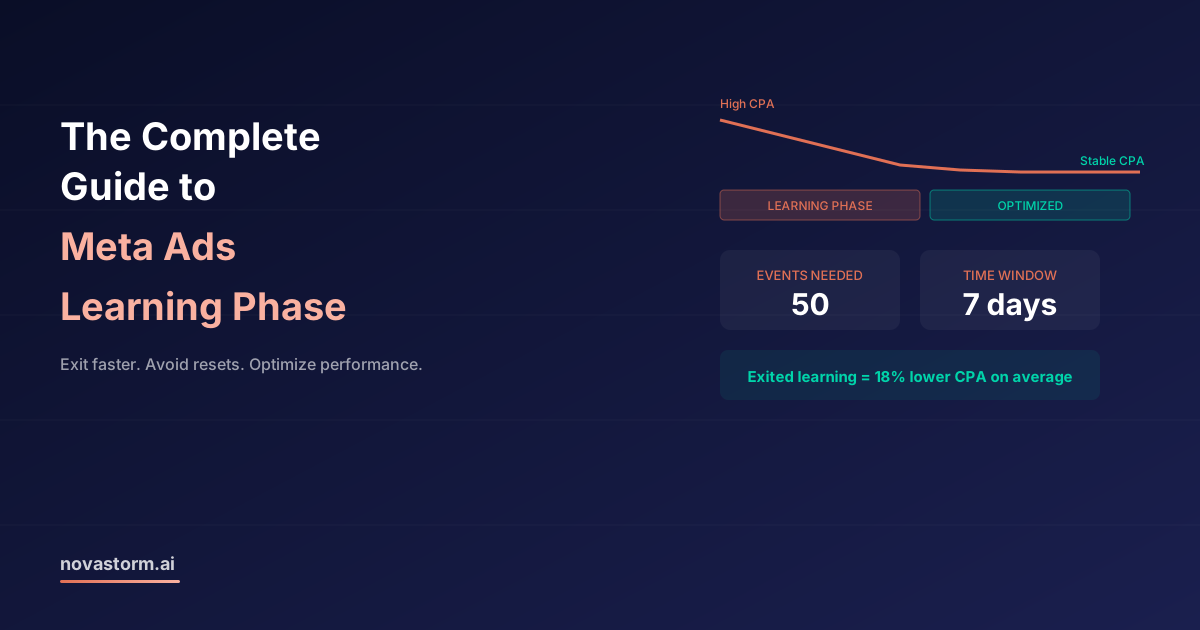
The Complete Guide to Meta Ads Learning Phase
Monitor a new Meta campaign day by day, distinguish delivery status from business performance and decide when a change is justified.
How Many Ad Sets Per Campaign: The Consolidation Rule
Choose ad-set count from the decisions you need, expected evidence and market margins, then test consolidation within approved limits.