

How Many Ad Sets Per Campaign: The Consolidation Rule
Choose ad-set count from the decisions you need, expected evidence and market margins, then test consolidation within approved limits.
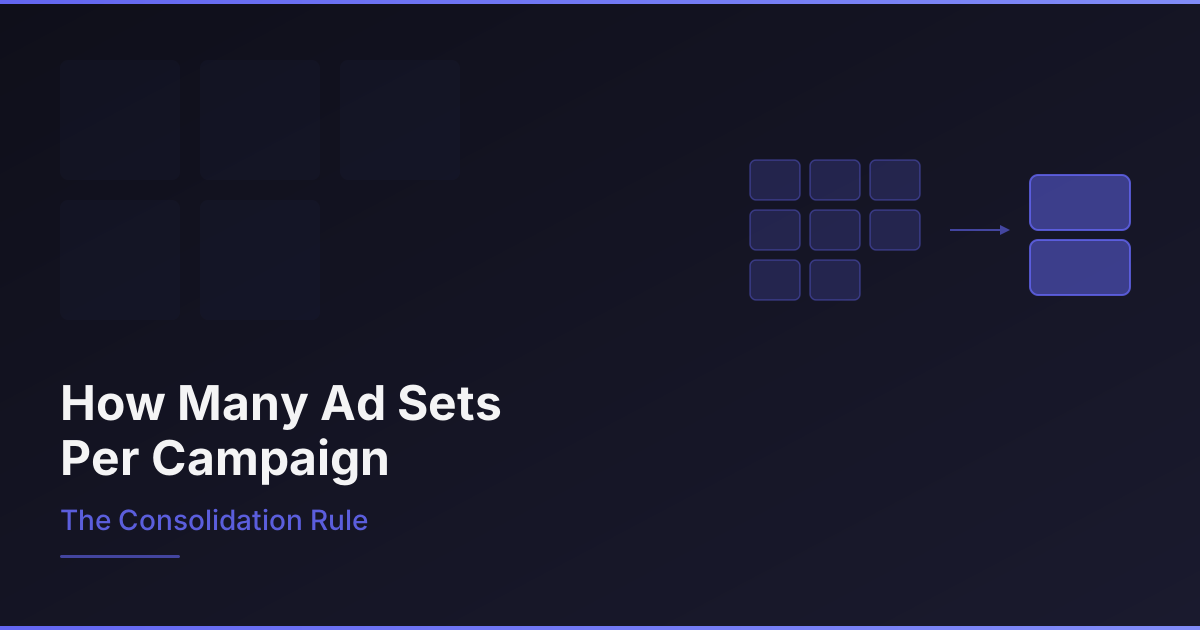
Use the smallest campaign structure that preserves distinct commercial decisions. More groups divide evidence; fewer can hide differences in service eligibility, economics or ownership. A fixed group count does not establish an optimum.
Keep the evidence calculation explicit
Hypothetical equal-allocation plan: $100/day for seven days gives $700 total. At an assumed $20 CPA, ten equally budgeted groups receive $70 each and imply 3.5 expected outcomes; three groups receive $233.33 each and imply 11.7 outcomes. These are uncertain expectations, not observed orders, sufficient samples or a promise of a learning status. A shared campaign budget need not distribute equally.
| Reason to separate | Decision it protects | Consolidation caution |
|---|---|---|
| Different service markets | Where the order can be fulfilled | Do not erase a mandatory market boundary |
| Different margin | What CPA is affordable | Cheap orders can conceal a low-margin loss |
| Controlled hypothesis | What one change causes | Use supported assignment and preserve comparison |
| Ownership or contract | Who approves spend and service | Retain required reporting and cash controls |
Illustrative market variation: market A contributes $35 per paid order before ads; market B contributes $12. At $20 CPA, A leaves $15 but B loses $8. Those are assumed inputs. Combining them can hide B’s loss in the aggregate; retain commercial controls or separate reporting rather than consolidate solely to increase event count.
A consolidation protocol
Stop wasting ad budget
NovaStorm AI cuts Meta Ads CPA by 30% on average. No complex setup required.
- Inventory each group’s goal, offer, event, audience boundaries, creative, owner and actual mature economics.
- Identify redundant hypotheses, then state what will be combined and which market/margin boundaries must remain.
- Hold offer, event, creative and outcome definitions stable for the structure comparison. Record unavoidable changes.
- The user approves incremental spend and cash-loss caps. Choose a maturity window from actual conversion/refund timing.
- Compare mature qualified orders and contribution, plus actual allocation. For a causal effect use a supported experiment; before/after comparison alone is descriptive.
- At a cap, tracking defect or boundary failure, stop/revert the affected change. Sparse outcomes end as inconclusive rather than a forced winner.
Turn expected events into an approved plan
In NovaStorm, prepare a brief naming each retained group’s decision and save the proposal as paused campaign and local ad-set drafts. Include the $700 example only as a planning assumption; the user confirms the actual group count, amounts, currency and risk. Check saved settings, then compare actual delivery with the approved plan after publication.
Use the budget-level guide for allocation and the learning-phase guide to keep platform status separate from commercial evidence.
Published by NovaStorm AI. Planning examples are illustrative assumptions, not measured customer results.
Disclaimer: This article was generated with the assistance of AI and reviewed by the NovaStorm AI team. While we strive for accuracy, we recommend verifying specific data points and consulting official sources (linked where available) for critical business decisions.
Ready to automate your Meta Ads?
NovaStorm AI takes full responsibility for your campaigns — from monitoring to optimization.
Start NowMore on Campaign structure and objectives
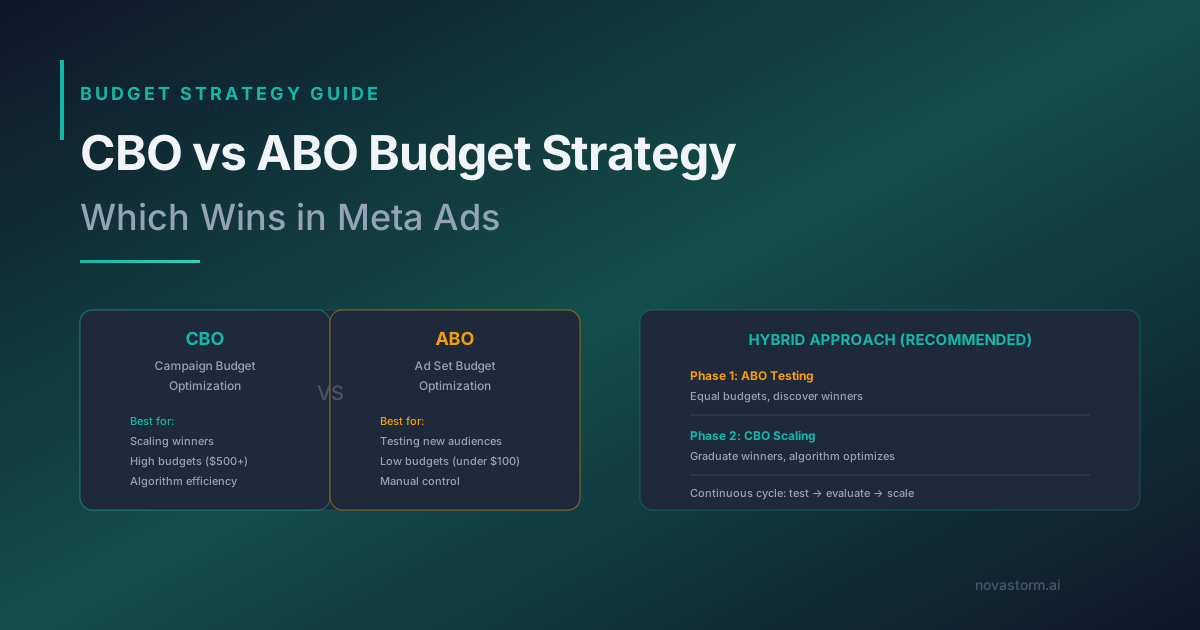
CBO vs ABO Budget Strategy: Which Wins in Meta Ads
Choose campaign- or ad-set budgeting using mature deal economics, saved spend constraints and a bounded comparison plan.
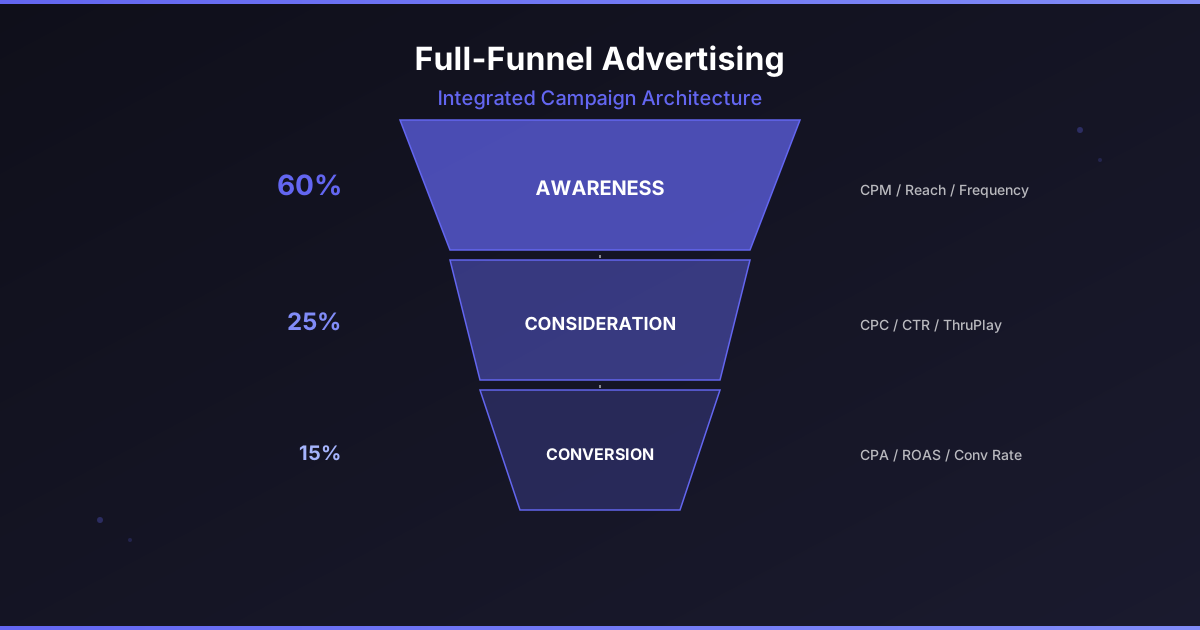
Full-Funnel Advertising on Meta: The Integrated Campaign Architecture
Plan an optional full-funnel campaign structure, prevent duplicated conversion credit, and test whether an additional stage earns its cost.
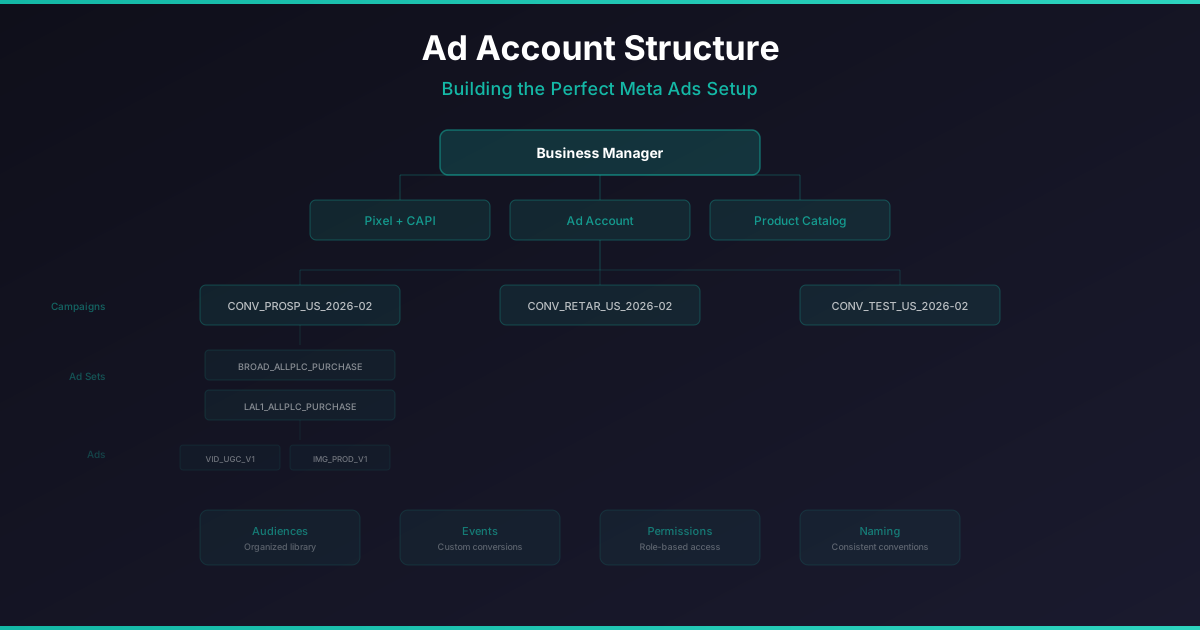
Ad Account Structure: Building the Perfect Meta Ads Setup
Audit asset owners and effective permissions, connect durable IDs to event responsibility, and approve a campaign plan for the correct account.
Micro-Conversions in Meta Ads: Diagnose the Funnel and Validate the Proxy
Use micro-conversions to diagnose a funnel, clean event counts, and test whether a proxy predicts mature business outcomes.