

Full-Funnel Advertising on Meta: The Integrated Campaign Architecture
Plan an optional full-funnel campaign structure, prevent duplicated conversion credit, and test whether an additional stage earns its cost.
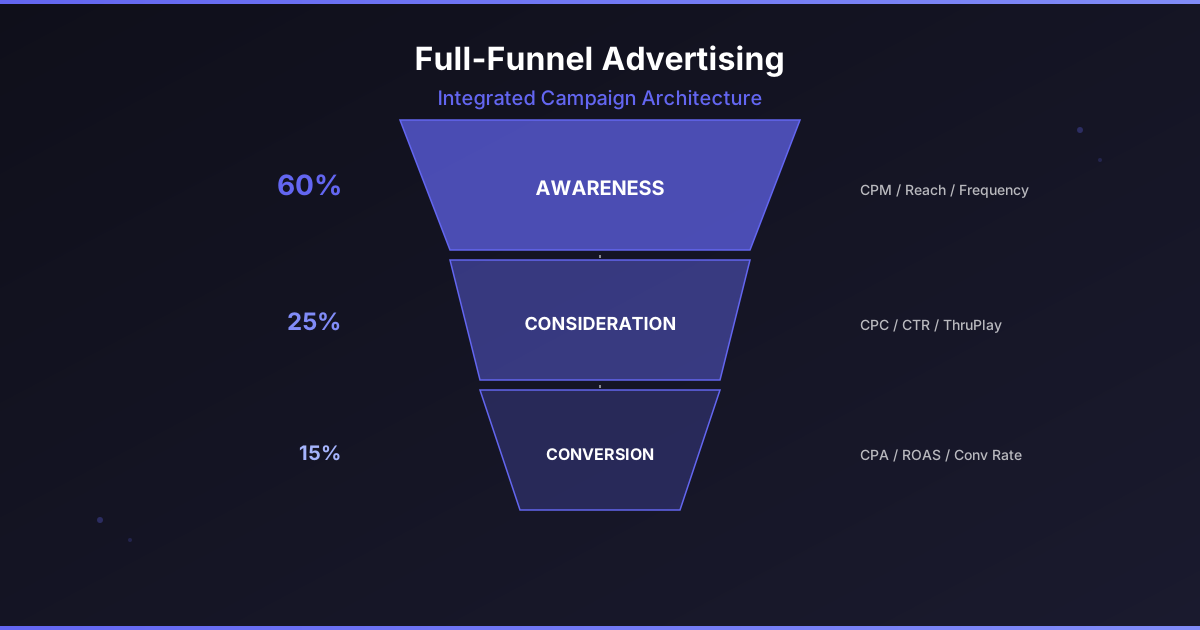
A full-funnel diagram describes different jobs for advertising. It does not establish that every customer needs an awareness campaign before a sales campaign. A customer can buy on the first visit, return through another channel, or skip your proposed sequence.
Separate campaigns only when there is a reason
| Reason | Question to answer | Evidence needed |
|---|---|---|
| Market | Does a new market require a different offer, language or delivery promise? | A verified local offer and a separately measurable outcome. |
| Message | Does one specific objection need a different explanation? | Research or real inquiries that identify the objection; a testable message hypothesis. |
| Economics | Does the additional stage need its own spending limit? | Contribution, acquisition allowance and a capped experiment budget. |
| Outcome | Can the additional campaign be assessed independently? | A defined business outcome and a comparison that addresses incrementality. |
For a consultation business, the core campaign might seek completed consultation requests. An optional explanatory campaign might address a documented concern about the process. A video view is evidence of viewing, not evidence that the viewer is ready for a consultation. Choose the objective and event from the business action, not from the label at the top of the funnel diagram.
One order can receive credit twice
Illustrative reconciliation: the core campaign reports 18 credited orders and the explanatory campaign reports 7. Five order IDs appear in both reports. The union contains 18 + 7 − 5 = 20 unique orders, not 25. If spending is $500 + $100 = $600, business-level media cost per unique order is $30. That figure describes the combined spending and outcome; it does not show that the extra $100 caused additional orders.
Keep an order ledger with a stable order ID, paid status, refund status and attribution fields. Reconcile both campaign reports to that ledger within the same outcome window. Do not add credited revenue from overlapping campaigns or assign the difference in blended CPA to one stage.
Stop wasting ad budget
NovaStorm AI cuts Meta Ads CPA by 30% on average. No complex setup required.
Test the extra stage separately from the architecture
- Write the hypothesis: “An explanation of the consultation process will increase completed, qualified consultation requests among eligible prospects.” Specify qualification before seeing results.
- Where an appropriate experiment is available, compare eligible groups with the same core offer and measurement window, with and without the additional stage. Record assignment, exposure limitations, incremental spending and mature outcomes. A before/after comparison also mixes seasonality and other changes.
- Judge the additional stage against incremental contribution and costs. If the sample is too small or groups overlap, report the uncertainty and continue within the agreed cap rather than calling the funnel proven.
Prepare the structure for approval
Use the funnel budget worksheet to cost the complete path before funding each proposed stage.
In NovaStorm, turn this plan into a campaign brief: core objective, candidate event, optional-stage rationale, offer, audience assumptions, exclusions, budget cap and outcome review date. Prepare the campaign and ad sets as paused campaign and local ad-set drafts, then have the user approve the structure and verify actual account settings. A prepared structure is not an incrementality experiment or evidence that a multi-touch sequence improves sales.
Published by NovaStorm AI. Planning examples are illustrative assumptions, not measured customer results.
Disclaimer: This article was generated with the assistance of AI and reviewed by the NovaStorm AI team. While we strive for accuracy, we recommend verifying specific data points and consulting official sources (linked where available) for critical business decisions.
Ready to automate your Meta Ads?
NovaStorm AI takes full responsibility for your campaigns — from monitoring to optimization.
Start NowMore on Campaign structure and objectives
How Many Ad Sets Per Campaign: The Consolidation Rule
Choose ad-set count from the decisions you need, expected evidence and market margins, then test consolidation within approved limits.
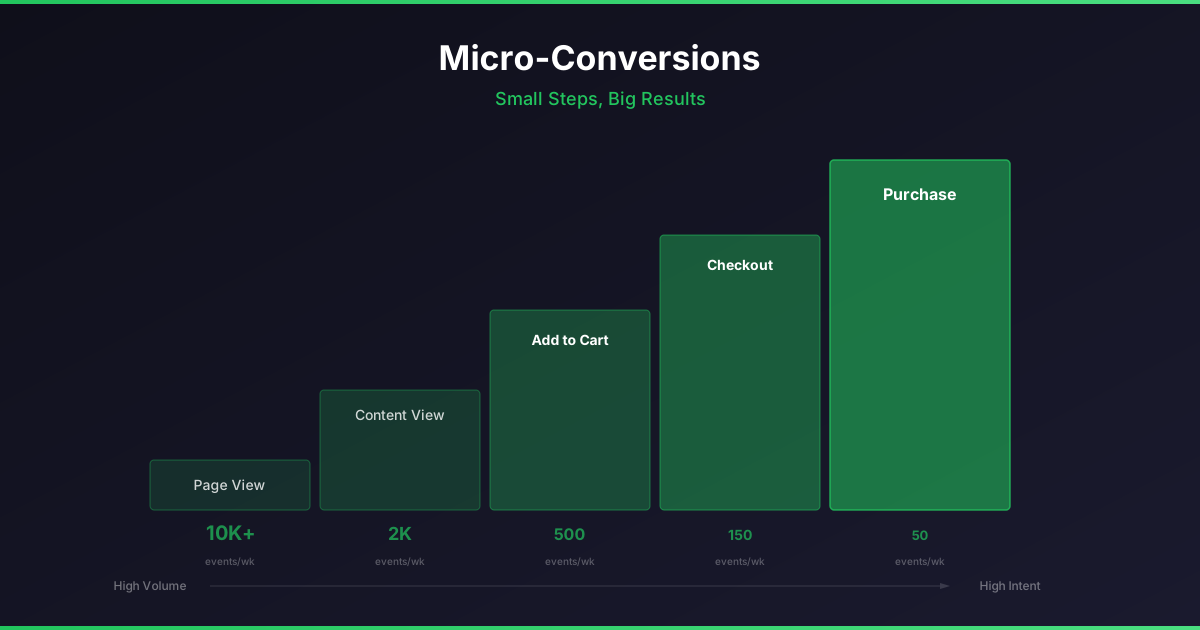
Micro-Conversions in Meta Ads: Diagnose the Funnel and Validate the Proxy
Use micro-conversions to diagnose a funnel, clean event counts, and test whether a proxy predicts mature business outcomes.
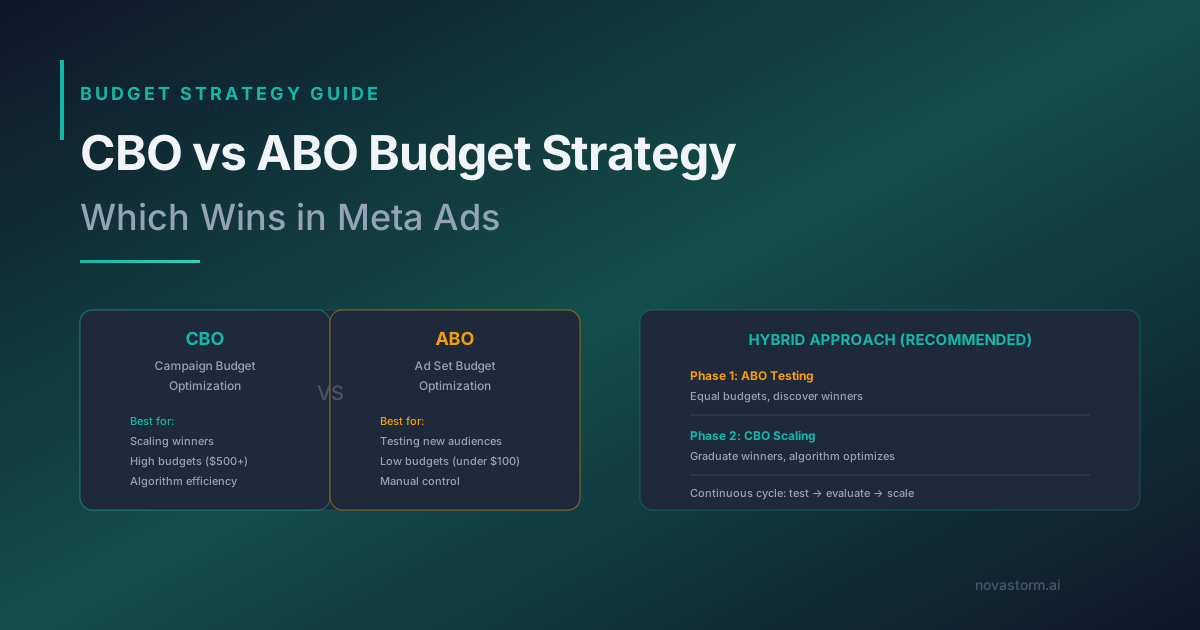
CBO vs ABO Budget Strategy: Which Wins in Meta Ads
Choose campaign- or ad-set budgeting using mature deal economics, saved spend constraints and a bounded comparison plan.
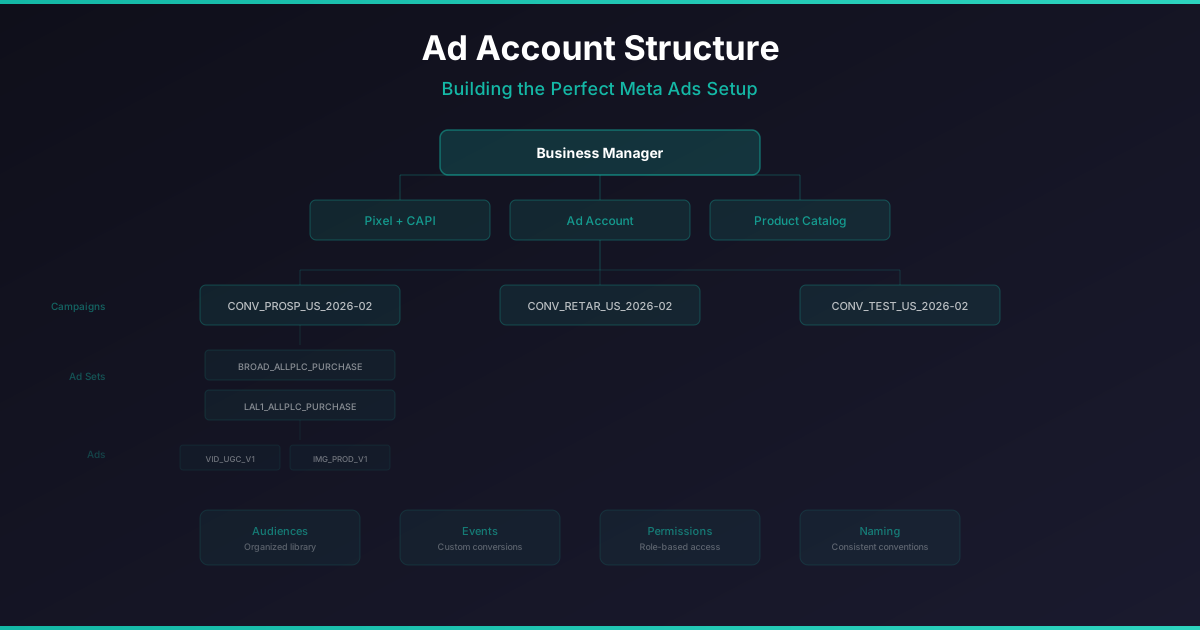
Ad Account Structure: Building the Perfect Meta Ads Setup
Audit asset owners and effective permissions, connect durable IDs to event responsibility, and approve a campaign plan for the correct account.