

Cross-Sell and Upsell Campaigns on Meta: Architecture Guide
Calculate product affinity from equal observation windows, define purchaser exclusions and test incremental contribution from cross-sell or upsell ads.
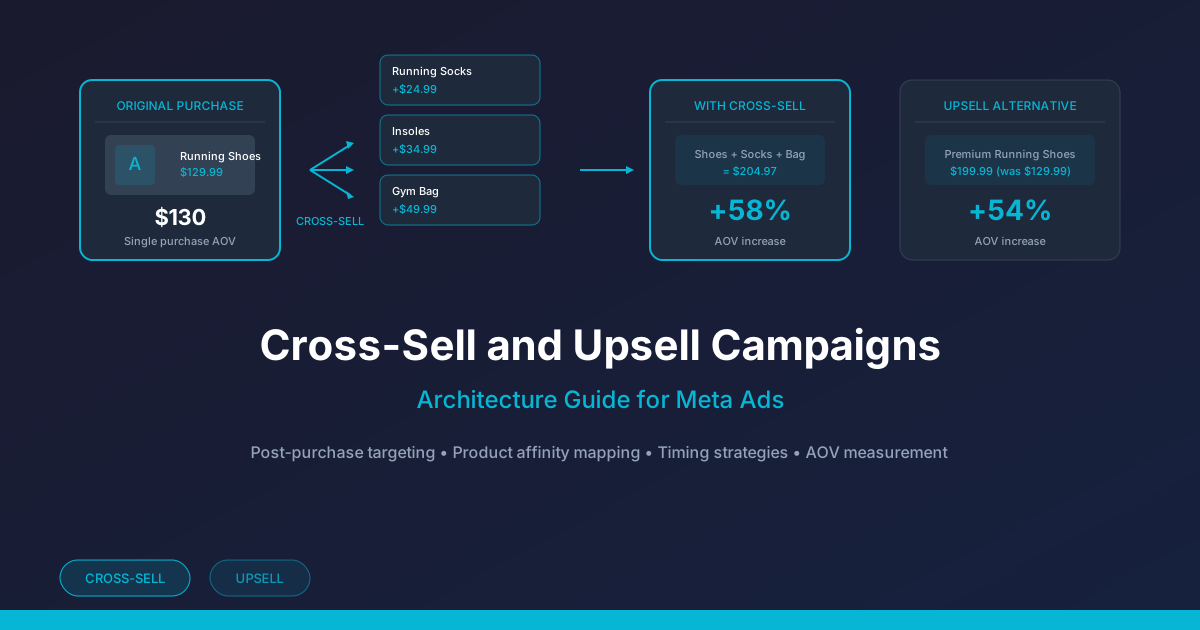
Cross-sell proposes another product; upsell proposes a higher-value version or upgrade. A familiar pairing is a hypothesis, not evidence that it increases profit. Start with private, anonymized order analysis and confirm product compatibility before preparing the offer.
Calculate affinity with a declared denominator
Synthetic analysis, not store data: select 200 distinct customers whose first qualifying purchase of A was completed during January. Exclude prior B owners if the question is a first B purchase. Give every customer 30 full days of follow-up, then count 60 who bought B afterward. The observed fictional share is 60/200 = 30%. Do not count several B orders from one person as several converting customers.
| Synthetic cohort | Eligible customers | Customers buying B in 30 days | Share |
|---|---|---|---|
| First A buyers, no prior B | 200 | 60 | 30% |
| Comparable non-A buyers, no prior B | 1,000 | 100 | 10% |
The ratio is three, but it is an association. Prior intent, promotions, acquisition mix or compatibility may explain the difference. It does not prove a cross-sell ad caused a purchase. Same-order A+B bundles are a separate analysis from purchases after A. Record refunds, stock, follow-up maturity and identifier mappings; exclude customers whose full window has not elapsed.
Define eligibility, exit and re-entry
| Rule | Illustrative setup | Check before use |
|---|---|---|
| Entry | Confirmed A delivery and no owned B; proposed days 7–30 after purchase | Supported source, consent and actual customer/product IDs |
| Exit | B paid purchase, refund/return issue or permission withdrawal | Source refresh and matching can lag; verify suppression |
| Durable B | Exclude known ownership during the relevant product lifecycle | A short rolling event window does not mean ownership ended |
| Consumable B | Re-entry only after the assumed replenishment period | Validate actual usage/reorder evidence; no universal window |
| Upsell upgrade | Eligible basic-plan owner without an active upgrade | Billing/access data and accurate upgrade terms |
Stop wasting ad budget
NovaStorm AI cuts Meta Ads CPA by 30% on average. No complex setup required.
These windows are planning assumptions. Choose actual timing from delivery, customer support and repeat-purchase data. Resolve incompatible products or unresolved service complaints before advertising an additional purchase. Do not promise exact message ordering or immediate exclusion for every matched customer.
Measure contribution against a valid control
Synthetic arithmetic: two comparable assigned groups contain 100 eligible customers each. Treatment produces 12 paid B orders; control produces 10. At $25 contribution per order and $100 treatment ad spend, the candidate net difference is (12 − 10) × $25 − $100 = −$50, before uncertainty and other costs. Higher AOV could still accompany this loss. Treat these counts as invented examples, not a measured negative test.
- Use feasible supported controlled assignment and the same eligibility, offer and observation horizon. Customers merely exposed to ads may differ from unexposed customers.
- Measure net contribution per assigned customer, including non-buyers, not only average order value among purchasers. Include discounts, returns and production costs.
- Approve sample feasibility, spend/cash-loss limits, purchase maturity and a review date before exposure. Keep an inconclusive option.
- Compare longer-term retention only when equal-age cohorts mature; never substitute a short-term AOV change for measured LTV lift.
Keep integrations and creative preparation distinct
CRM audiences, catalog product sets and event synchronization require separately verified permissions, mapping, availability and refresh ownership. NovaStorm can prepare the compatible offer and truthful creative brief as paused campaign and local ad-set drafts. Do not assume it implements purchase-based CRM suppression, catalog recommendations or DPA. See the catalog validation checklist.
Published by NovaStorm AI. Planning examples are illustrative assumptions, not measured customer results.
Disclaimer: This article was generated with the assistance of AI and reviewed by the NovaStorm AI team. While we strive for accuracy, we recommend verifying specific data points and consulting official sources (linked where available) for critical business decisions.
Ready to automate your Meta Ads?
NovaStorm AI takes full responsibility for your campaigns — from monitoring to optimization.
Start NowMore on E-commerce offers and retention
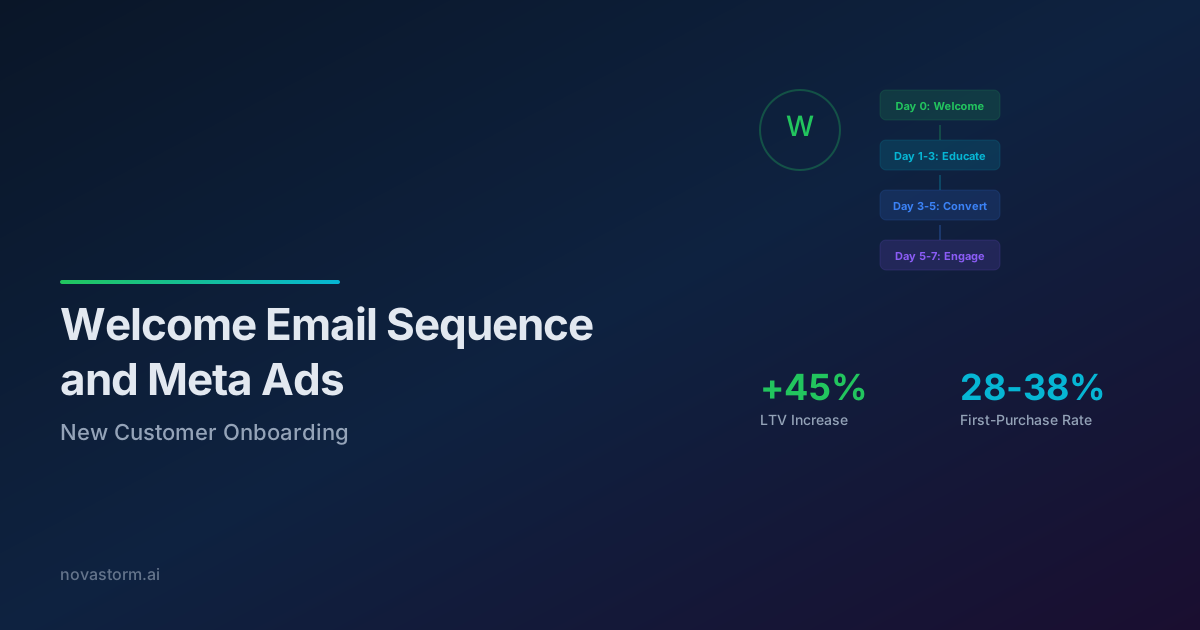
Welcome Email Sequence and Meta Ads: New Customer Onboarding
Design separate welcome paths for subscribers and buyers, verify delivery and permissions, and evaluate added Meta ads using mature useful actions.
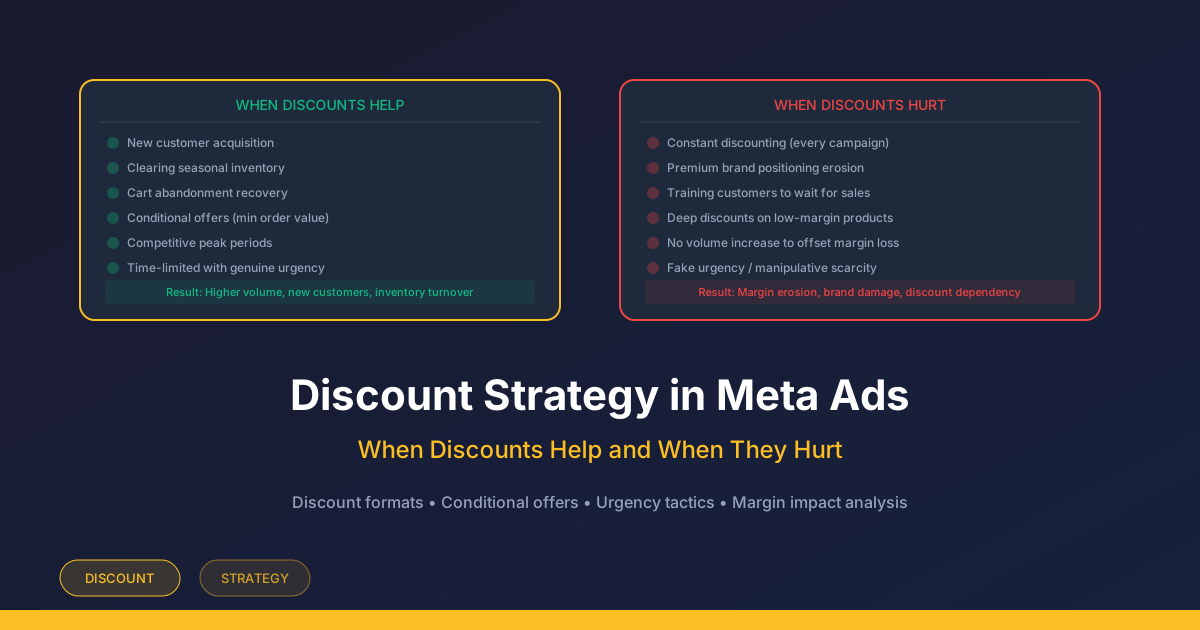
Discount Strategy in Meta Ads: When Discounts Help and When They Hurt
Compare discounts, delivery subsidies and full-price offers using contribution after advertising and returns, then run a bounded paired comparison.
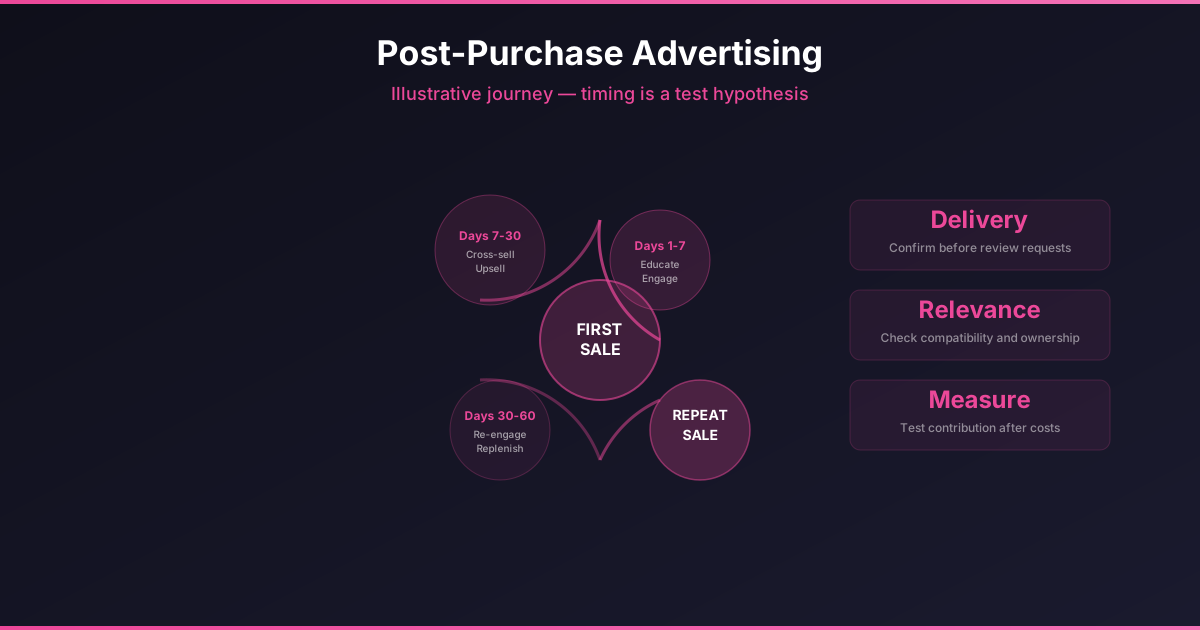
Post-Purchase Advertising: Turn Buyers Into Repeat Customers on Meta
Plan post-purchase Meta ads around delivery, product use and replenishment; define exclusions and test whether repeat orders add contribution after costs.
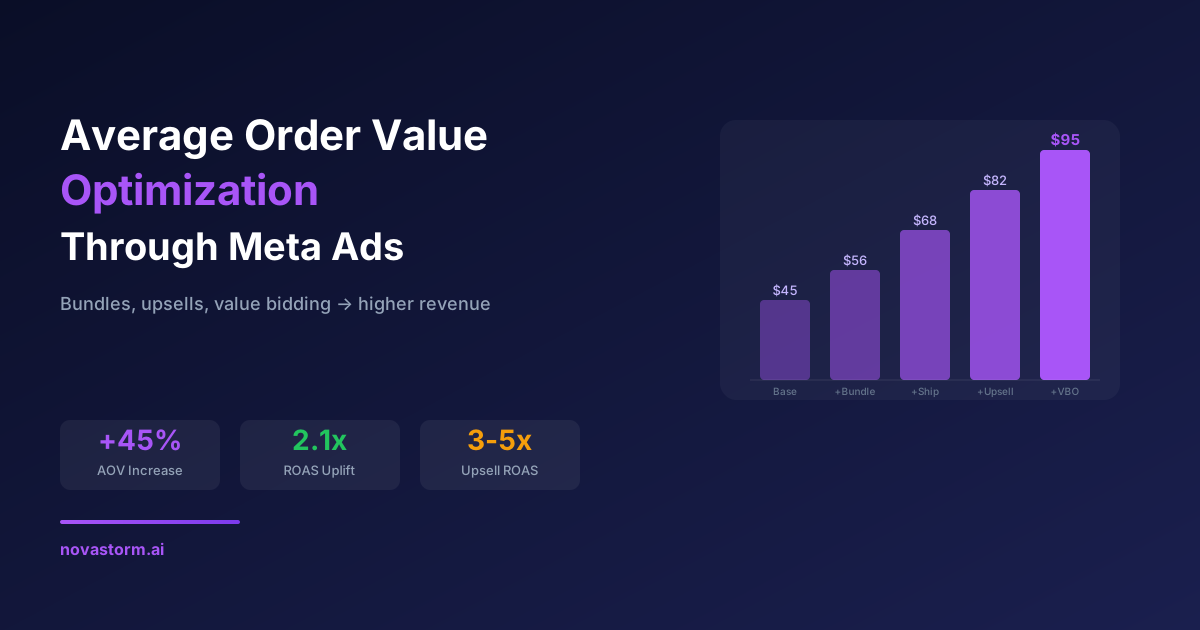
Average Order Value Optimization Through Meta Ads
Calculate AOV and contribution separately, price bundles and shipping thresholds, and compare mature offer results without assuming profit guarantees.