

Attribution Windows Explained: 1-Day Click vs 7-Day Click
Compare attribution windows using the same spend and mature orders while separating reporting credit, delivery settings and incremental lift.
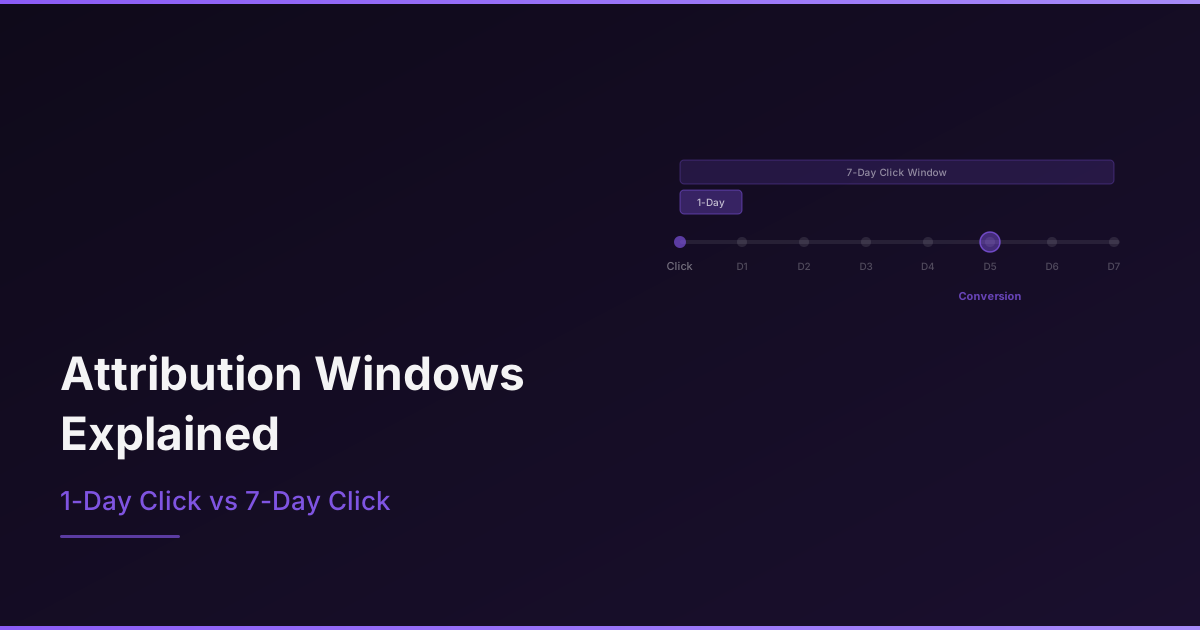
An attribution window defines which interactions can receive conversion credit within a report or configuration. It does not prove an ad caused the purchase. Keep a reporting-window comparison separate from changing the optimization setting that may alter future delivery.
Check the options for the actual configuration
- Record account/objective, conversion location, event and available click/view or other supported window options. Inspect current Meta help and saved labels; do not assume one universal default or maximum.
- Record whether the control is a report comparison or an ad-set delivery/optimization setting. Re-exporting historical data under another reporting basis is different from changing future optimization.
- Keep the saved setting, review date and full outcome definition with the export.
Use Meta’s attribution-settings reference as a starting point for the account-specific controls. A longer reporting window can include a delayed purchase; that gap alone does not establish over-attribution.
Reconcile two windows step by step
Synthetic instructional exports only: one mature campaign period has $1,000 spend. A1-day-click report credits 60 purchases and a7-day-click report credits 100. The spend is unchanged; reported CPAs are $16.67 and $10. These assumptions are not an account benchmark or a universal conversion factor.
- Select one common date range/timezone, campaign scope and outcome-maturity point; export the same spend row for both supported reporting windows.
- Confirm currency, event, tax/refunds, click/view categories and model differences. Do not attribute every extra outcome to days2–7 if the reports also differ in interaction type.
- Reconcile the order system’s unique paid order IDs and timestamps separately. Private consent/matching limitations may prevent order-level linkage; state that limit.
- Record pending/late outcomes and repeat the same comparison when both cohorts are mature.
- Explain the difference as credit/measurement scope until additional evidence shows a cause. A ratio 100/60 =1.67 in this example is not a permanent weekly correction factor.
Stop wasting ad budget
NovaStorm AI cuts Meta Ads CPA by 30% on average. No complex setup required.
Privacy and modeling are measurement limits
Apple’s tracking-permission framework and privacy choices can constrain person-level measurement. Modeled outcomes, missing identifiers and cross-device journeys require careful interpretation; do not claim every opted-out purchase is observed or recovered. Check the actual reporting definitions and permissions rather than mechanically multiplying one device’s totals.
Keep incrementality a separate question
For “How many purchases happened because of the advertising?”, design a supported holdout or other valid controlled experiment with comparable outcome maturity and cash limits. A gap between Meta ROAS and blended revenue can also reflect different revenue/spend scopes, refunds or customer mix; it does not diagnose over-attribution by itself.
Document the approved reporting basis in the NovaStorm campaign brief and paused draft workflow. The user confirms actual saved settings before delivery. This preparation does not supply an attribution correction or a causal-lift measurement. Continue with the ROAS scope worksheet.
Published by NovaStorm AI. Planning examples are illustrative assumptions, not measured customer results.
Disclaimer: This article was generated with the assistance of AI and reviewed by the NovaStorm AI team. While we strive for accuracy, we recommend verifying specific data points and consulting official sources (linked where available) for critical business decisions.
Ready to automate your Meta Ads?
NovaStorm AI takes full responsibility for your campaigns — from monitoring to optimization.
Start NowMore on Attribution and incrementality

Marketing Mix Modeling for Meta Ads: Beyond Last-Click Attribution
Prepare aligned weekly data for MMM, inspect identification and calibration, and turn uncertain model scenarios into a contribution-based budget memo.
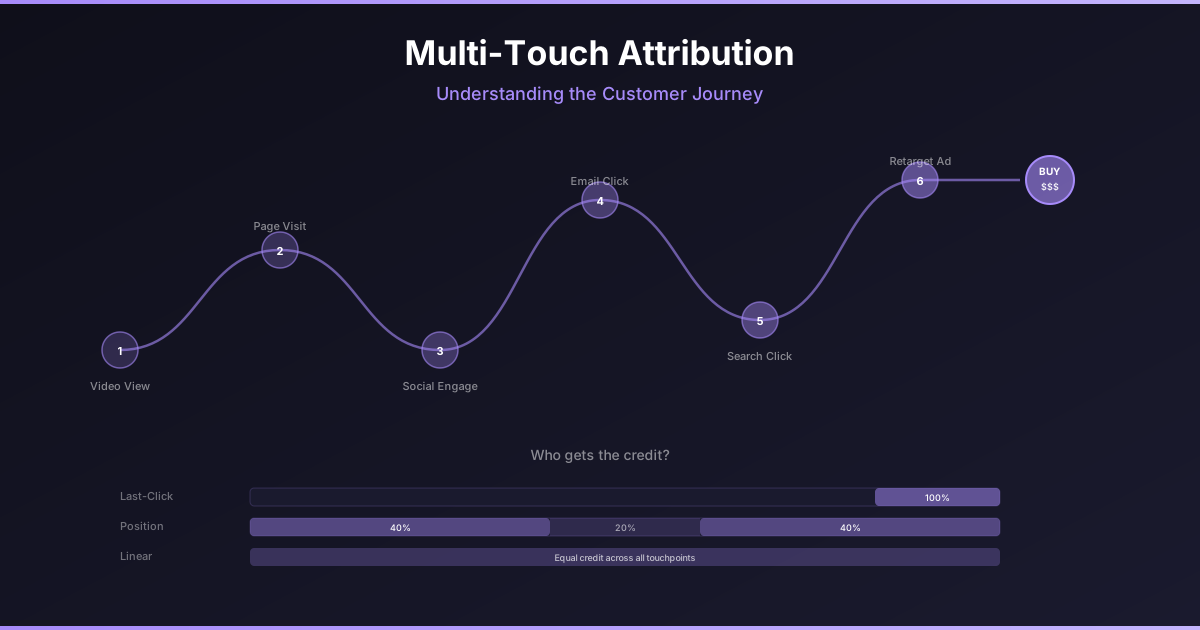
Multi-Touch Attribution: Understanding the Customer Journey in Meta Ads
Reconcile customer paths and orders across channels, compare attribution rules, and keep budget decisions separate from assigned credit.
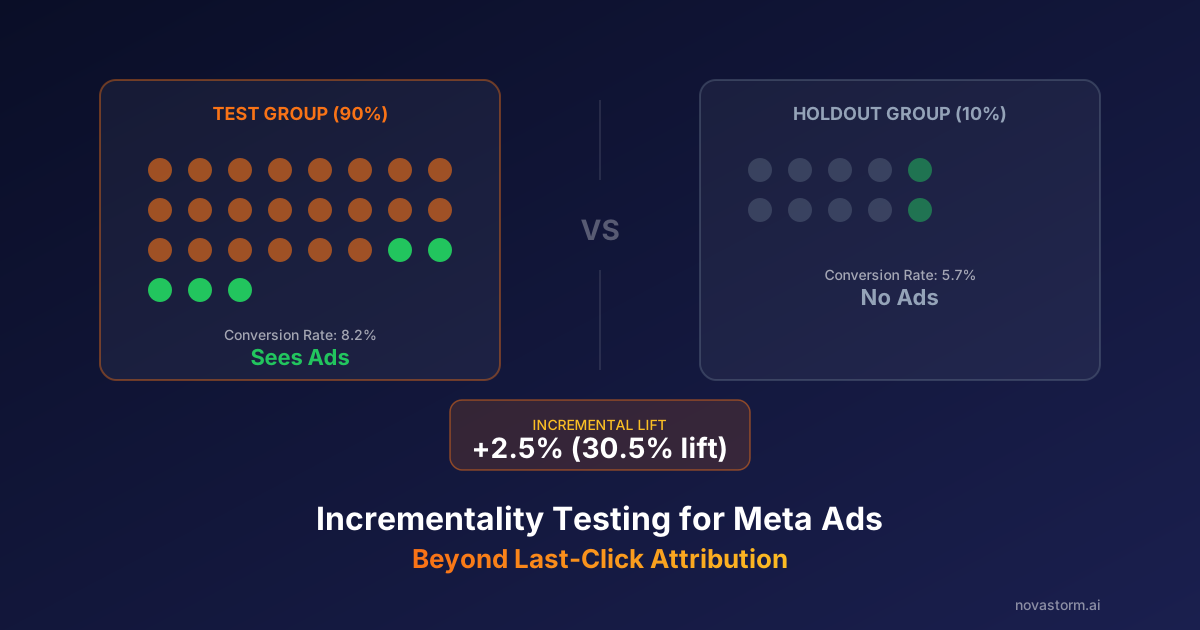
Incrementality Testing for Meta Ads: Beyond Last-Click Attribution
Design an incrementality test with a defined holdout, group-based sample assumptions, effect intervals and contribution economics.
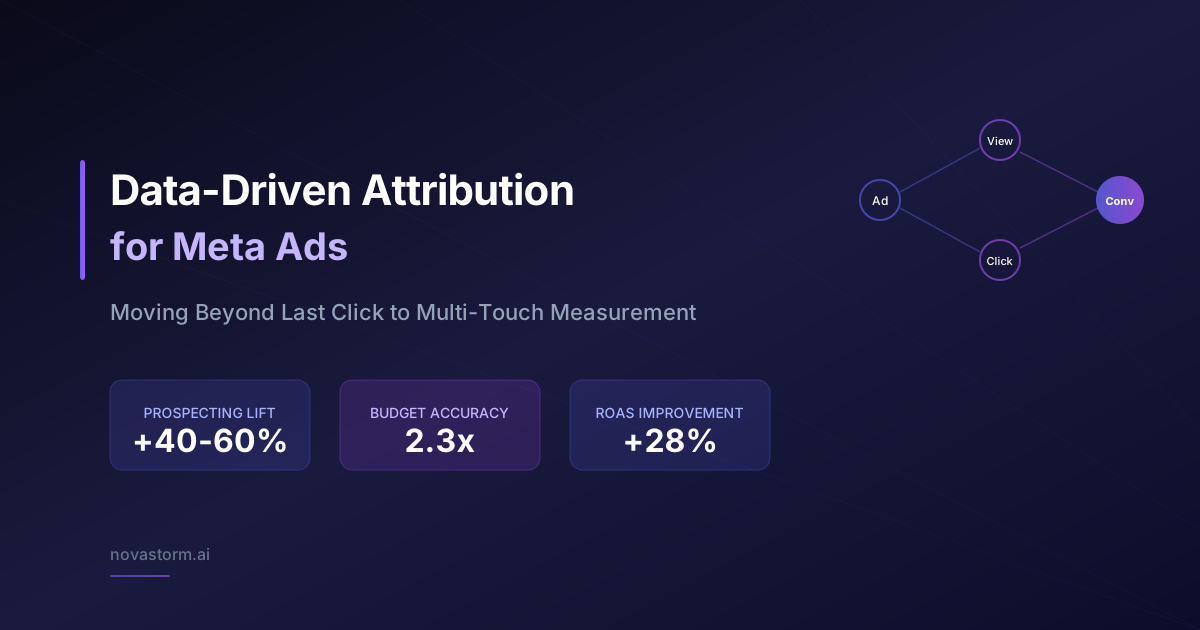
Data-Driven Attribution for Meta Ads: Moving Beyond Last Click
Compare attribution models with a reproducible credit worksheet, then use mature economics and incremental evidence for budget decisions.