

Data-Driven Attribution for Meta Ads: Moving Beyond Last Click
Compare attribution models with a reproducible credit worksheet, then use mature economics and incremental evidence for budget decisions.
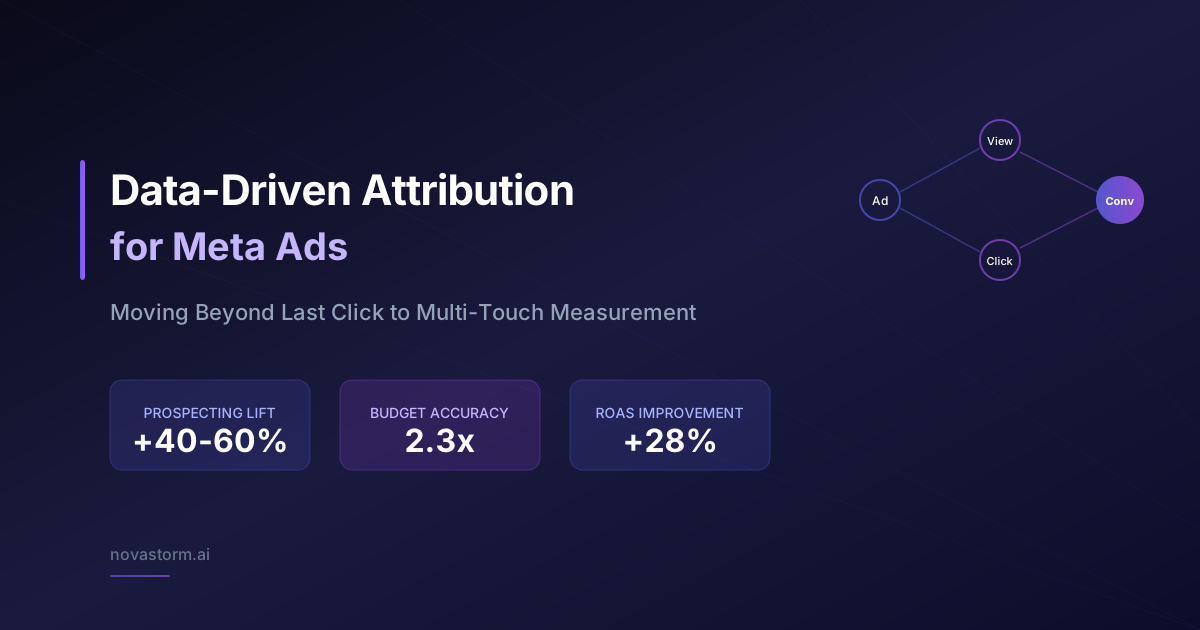
Attribution assigns credit among recorded interactions. It does not by itself identify which advertising caused a sale. Use model comparisons to inspect how your interpretation changes, then combine mature business economics with an appropriate incremental test before reallocating spend.
Use an available model-comparison path
Google Analytics’ key-event attribution models report describes comparison of data-driven and last-click models for eligible recorded key events. Confirm the report, key event, permissions and channel scope in your current property. Keep the model, lookback, date range, channel eligibility and currency consistent when comparing. This is a Google Analytics workflow, not a claim that a legacy Meta Attribution tool is available in Business Suite.
In Meta, inspect the actual campaign/ad-set attribution settings and reporting comparison controls offered in your account. Do not assume Events Manager activates a cross-channel data-driven model. If no comparison control is present, export permitted reports with settings recorded and compare definitions externally.
A reproducible credit worksheet
Synthetic data: order A, USD 100, has recorded eligible interactions Meta prospecting → Search → Direct; order B, USD 100, has Meta prospecting → Direct. These are fictional complete paths for illustrating rules, not customer journeys or a proprietary data-driven model.
| Rule for this worksheet | Meta credit | Search credit | Direct credit |
|---|---|---|---|
| Last recorded touch | USD 0 | USD 0 | USD 200 |
| First recorded touch | USD 200 | USD 0 | USD 0 |
| Equal credit per recorded interaction | USD 83.33 | USD 33.33 | USD 83.34 |
For equal credit, order A assigns 100 / 3 to each touch; order B assigns 100 / 2 to each. Meta therefore gets 33.33 + 50 = 83.33. The extra cent in Direct is a rounding adjustment so totals remain USD 200. This simple “last recorded touch” worksheet includes Direct; a platform’s last-click eligibility can exclude or handle Direct differently. It is not an exact replica of GA4’s model.
Stop wasting ad budget
NovaStorm AI cuts Meta Ads CPA by 30% on average. No complex setup required.
The same USD 200 of sales exists in every row. Rule choice changes credit, not the underlying order count. A real data-driven system estimates credit from its available data and modeling assumptions; without the model and data, do not invent exact weights or call them true causal contributions. Identity loss, consent, cross-device paths and missing nonconverters can change results.
Event quality is necessary but incomplete
Reconcile paid orders, refunds, duplicate browser/server events, permitted identity, time zone and reporting delay. An offline sale upload can add an outcome but does not recreate every earlier phone call or exposure. Advanced matching and server events are not permission to bypass privacy rules and do not guarantee full paths or a particular ROAS improvement.
Decide from contribution and uncertainty
Hypothetical planning: a campaign has USD 300 attributed net revenue, USD 180 variable costs and USD 100 spend, leaving USD 20 attributed contribution. A different attribution model assigning USD 400 is not evidence of USD 100 new revenue. Test a limited marginal spend change or an eligible holdout while recording total contribution, seasonality and uncertainty.
- Define the business outcome and maturity window, then freeze report settings during the comparison.
- Investigate model disagreements rather than automatically increasing every “assisting” campaign.
- Select a feasible randomized or geographic control design when causal lift is needed; record spillover and inconclusive results.
- Choose an affordable test ceiling and retain budget if marginal contribution is uncertain. Do not mandate a universal 70/20/10 allocation.
- Prepare the supported message and chosen spending limit as a NovaStorm campaign draft. Keep cross-channel model comparison, order reconciliation and incrementality measurement in your analytics process.
Published by NovaStorm AI. Worked examples and test fixtures in this article are illustrative, not observed customer results.
Disclaimer: This article was generated with the assistance of AI and reviewed by the NovaStorm AI team. While we strive for accuracy, we recommend verifying specific data points and consulting official sources (linked where available) for critical business decisions.
Ready to automate your Meta Ads?
NovaStorm AI takes full responsibility for your campaigns — from monitoring to optimization.
Start NowMore on Attribution and incrementality

Blended ROAS: Why You Should Stop Optimizing Per-Channel
Reconcile blended ROAS denominators, refunds and contribution margin, and separate cross-channel reporting from evidence of incremental lift.
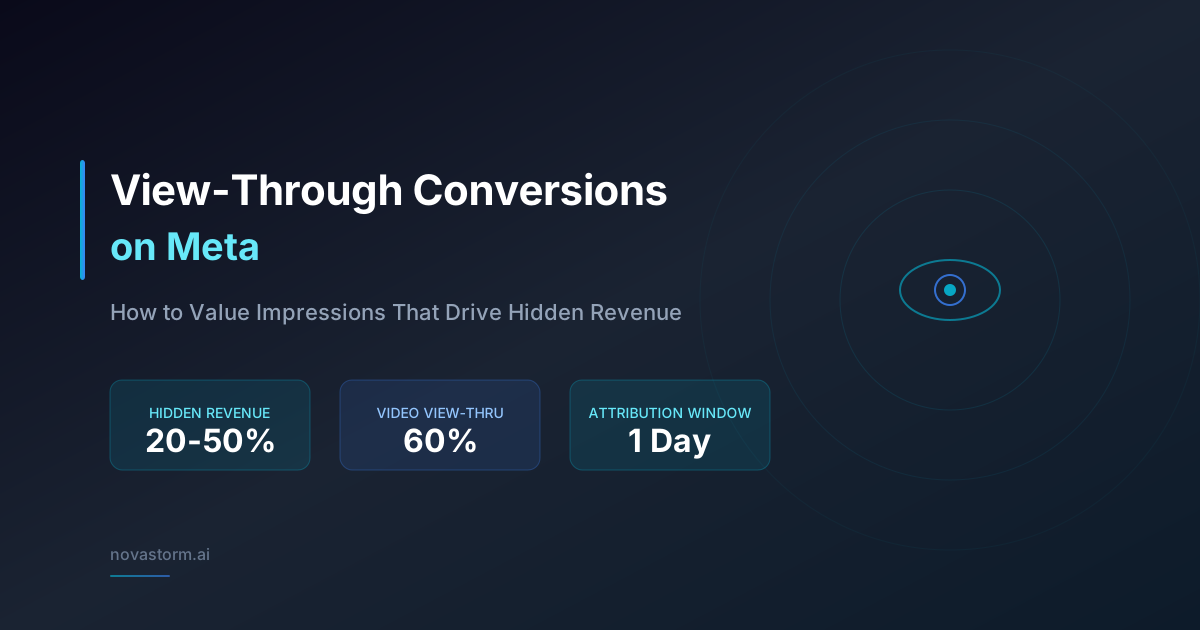
View-Through Conversions on Meta: How to Value Impressions
Compare view-through credit with click-only reports while keeping causal lift and mature contribution separate.
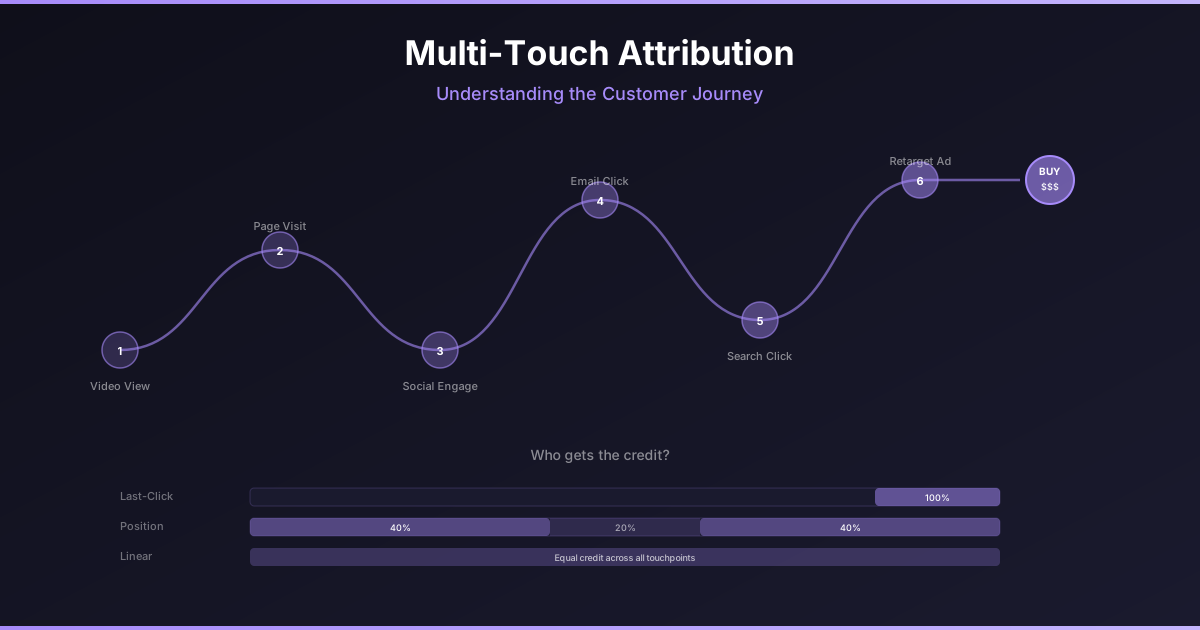
Multi-Touch Attribution: Understanding the Customer Journey in Meta Ads
Reconcile customer paths and orders across channels, compare attribution rules, and keep budget decisions separate from assigned credit.
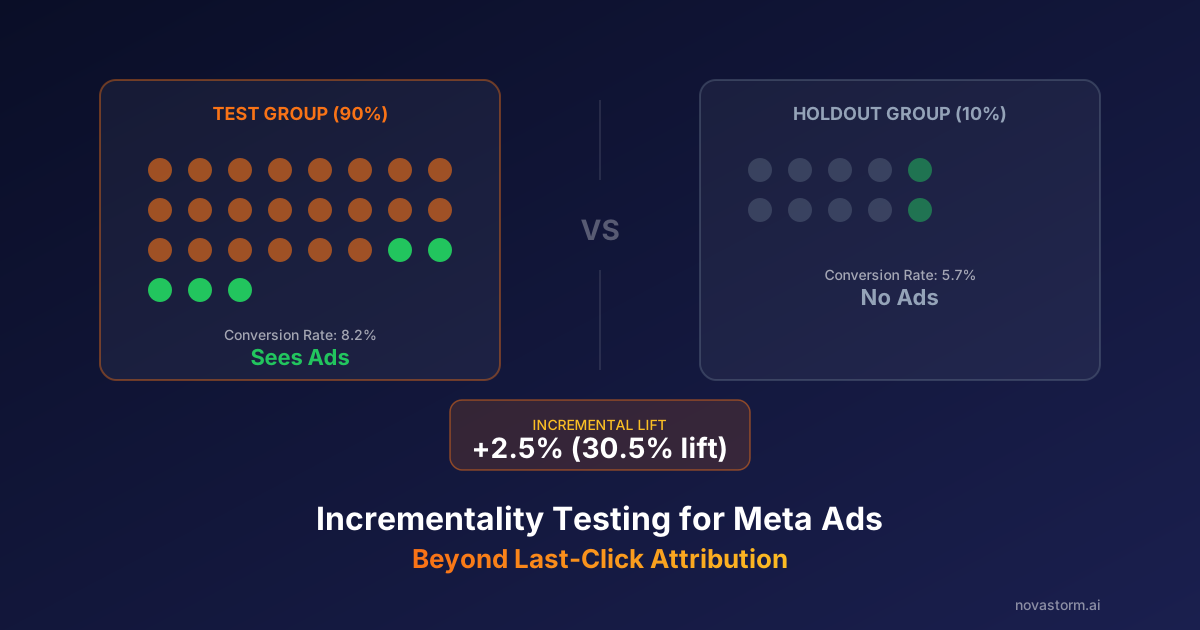
Incrementality Testing for Meta Ads: Beyond Last-Click Attribution
Design an incrementality test with a defined holdout, group-based sample assumptions, effect intervals and contribution economics.