

Meta Purchase-Value Optimization: Revenue, Refunds and Margin
Evaluate purchase-value optimization with an event-quality worksheet, refund-adjusted contribution and a separate mature-outcome comparison.
Purchase value and profit are different outcomes. Where eligible, a value-oriented delivery configuration can aim toward the reported purchase value. It does not know your full variable costs or automatically optimize accounting profit. Evaluate the data contract and commercial allowance before selecting the delivery hypothesis.
Verify VALUE in the actual account
The official Meta ad-set SDK includes VALUE. That name is not evidence of eligibility for your objective, dataset, bidding setup or account. Inspect the current available configuration and save its exact goal, currency and constraints for review. Do not infer access from a universal weekly purchase threshold.
Preserve the A/B counterexample
Illustrative per-purchase assumptions, not observed campaign results: A reports $150 revenue and contributes $60 before $50 media acquisition cost. B reports $220 revenue and contributes $55 before $60 media cost. The variable costs are therefore $90 for A and $165 for B, under this simplified definition.
| Hypothetical option | Revenue / media ROAS | Contribution after media |
|---|---|---|
| A: $150 revenue, $90 variable cost, $50 media | 150 / 50 = 3.00 | 150 − 90 − 50 = $10 |
| B: $220 revenue, $165 variable cost, $60 media | 220 / 60 ≈ 3.67 | 220 − 165 − 60 = −$5 |
The higher revenue ROAS in B coincides with a loss. Define variable costs explicitly: product, fulfillment, payment fees and other order-dependent expenses. Avoid subtracting a cost again if it is already included in contribution. The contribution-based cost ceiling makes the definition reviewable.
Add refunds before comparing a mature cohort
Hypothetical cohort extension: assume ten purchases in each option, one fully refunded A order and two fully refunded B orders. For simplicity, assume refunded orders have fully reversible variable costs except an unrecovered $10 per return. Media remains $500 for A and $600 for B.
| Option | Retained net revenue | Contribution after refunds and media |
|---|---|---|
| A: 9 retained orders | 9 × $150 = $1,350 | 9 × $60 − $10 − $500 = $30 |
| B: 8 retained orders | 8 × $220 = $1,760 | 8 × $55 − $20 − $600 = −$180 |
Stop wasting ad budget
NovaStorm AI cuts Meta Ads CPA by 30% on average. No complex setup required.
A’s refund-adjusted revenue ROAS is 1,350 / 500 = 2.70; B’s is 1,760 / 600 ≈ 2.93. B still has the higher revenue ratio and worse contribution. Real returns may leave unrecoverable product or shipping costs; replace these assumptions with the ledger and a declared maturity cutoff.
A teaching Purchase-quality check
The Meta server-side custom-data model exposes value and currency. The examples below are a reconciliation worksheet, not runnable API payloads and not accepted events.
| Teaching order | Input condition | Acceptance check |
|---|---|---|
| ORDER-A | Confirmed amount 150.00 in USD | Verify the agreed value definition against the paid transaction and currency |
| ORDER-B | Purchase has a currency but no value | Investigate missing-value coverage; do not substitute zero or catalog price without evidence |
| ORDER-C | Amount 220.00 is labeled with the wrong currency | Correct the source contract; do not sum amounts across currencies as one ROAS |
| ORDER-D | Browser/server retries represent one order | Verify stable logical event identity and one reconciled order; distinct event copies are not new purchases |
Also check discounts, tax and shipping treatment, occurrence time, cancellations and the distribution of values. A refund-adjusted finance report does not establish that an earlier platform Purchase event was automatically reversed. Verify any supported correction workflow separately. Use the event reconciliation guide for identity checks.
Compare mature margin under a spend limit
- Predeclare the retained-order contribution metric, cost scope, refund maturity window, allocation method and cash allowance. Keep offer and underlying price changes separate from the goal change.
- Where an appropriate controlled comparison is available, compare value-oriented and purchase-count treatments. Ordinary parallel campaigns can receive different traffic; describe that limitation.
- Review paid unique orders, retained revenue, variable costs, contribution after media and cash exposure together. A few high-value orders can make a short report unstable.
- Stop or retain an inconclusive result when the declared allowance is reached. Evaluate the next spending increase with marginal economics, rather than extending a favorable average ROAS indefinitely.
Prepare the comparison brief and proposed campaign as paused campaign and local ad-set drafts in NovaStorm. Verify required settings in the actual product and account before publication. This does not promise that NovaStorm supports or configures VALUE, connects the returns ledger, or proves a profitable lift.
Published by NovaStorm AI. Planning examples are illustrative assumptions, not measured customer results.
Disclaimer: This article was generated with the assistance of AI and reviewed by the NovaStorm AI team. While we strive for accuracy, we recommend verifying specific data points and consulting official sources (linked where available) for critical business decisions.
Ready to automate your Meta Ads?
NovaStorm AI takes full responsibility for your campaigns — from monitoring to optimization.
Start NowMore on Budget and unit economics
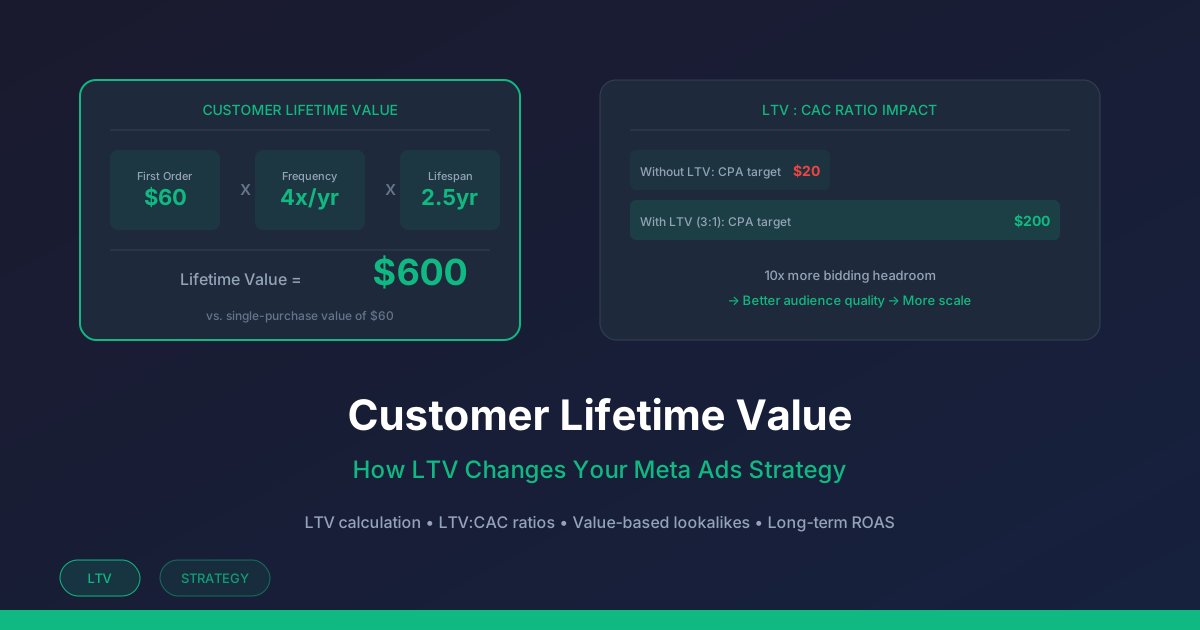
Customer Lifetime Value: How LTV Changes Your Meta Ads Strategy
Separate revenue and contribution LTV, compare equal-age cohorts, validate forecasts and set acquisition limits around cash and payback.
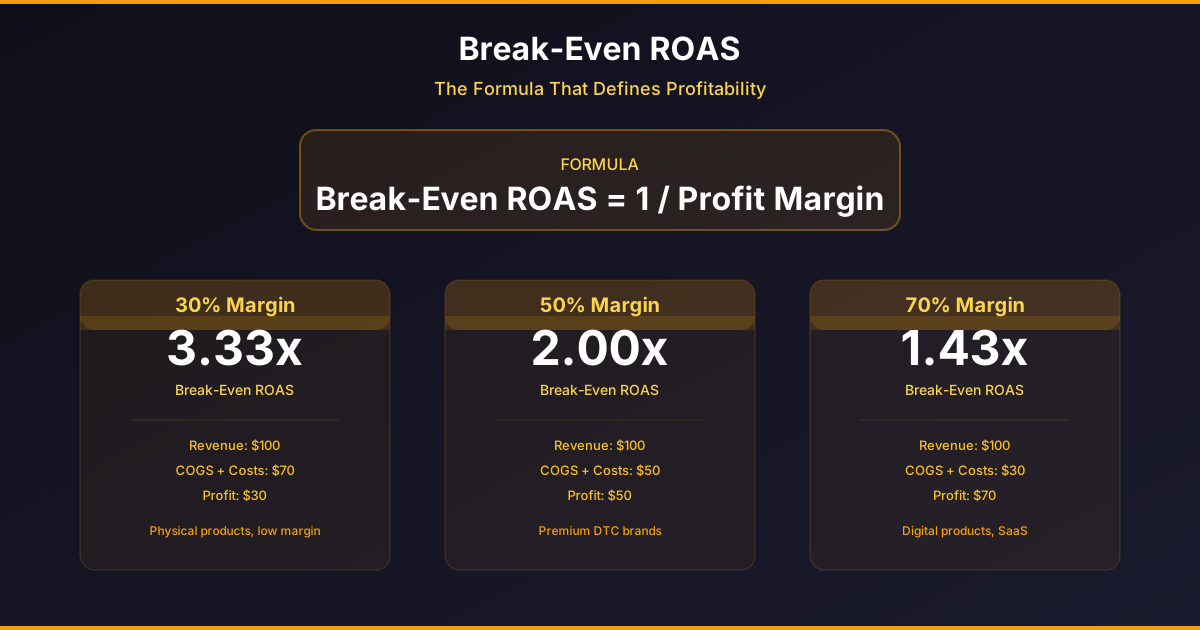
How to Calculate Your Break-Even ROAS for Meta Ads
Calculate a contribution-based CPA ceiling and ROAS target, then stress-test refunds, delivery, new-customer mix and mature campaign costs.
ROAS: The Complete Guide to Return on Ad Spend
Calculate ROAS and contribution after returns, reconcile duplicate channel credit and record comparable report scope before changing budget.
Cost Per Result: Understanding Your True Acquisition Cost
Distinguish media cost per reported result from full new-customer CAC, allocate acquisition costs once and set a commercial media ceiling.