

Triple Whale and Meta Ads: E-commerce Attribution Dashboard
Reconcile Triple Whale credit models with one paid order and its refund, verify integration access, and make budget decisions within measurement limits.
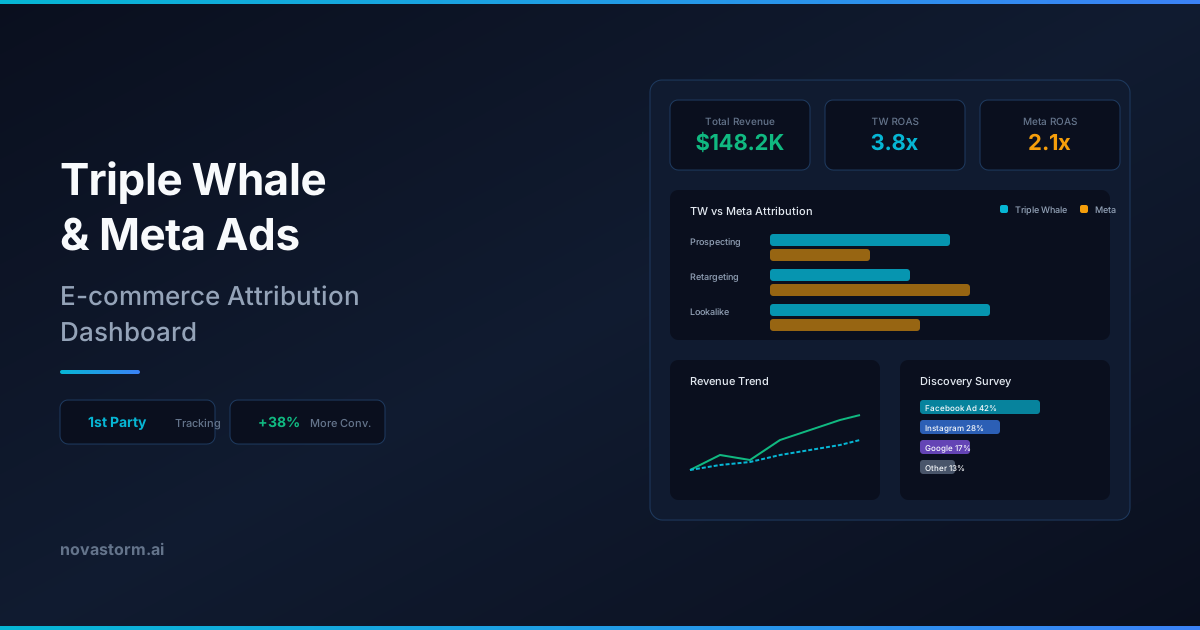
Triple Whale and Meta can apply different credit rules to the same sale. Before using their dashboards to change budgets, reconcile unique paid orders, refunds, model definitions and windows. A larger attributed total is not automatically a truer financial or causal total.
Record the selected model
Triple Whale’s attribution documentation describes Triple Attribution as full credit to each eligible platform’s last click, so channel totals can exceed business revenue. It separately describes models that distribute credit across a journey. Keep the exact model, window, click/view rules, direct treatment and report timestamp with every comparison. Do not describe every proprietary model as a blend of clicks and survey answers.
One order, two credits and a refund
Fictional ledger: order order_1 is paid on September 10 for USD 100, excluding tax and shipping in this example. A Meta click occurred September 4, a Google click September 9, and there are no other recorded touches. We select an illustrative 7-day click eligibility window. Both clicks are eligible; the last click across these recorded channels is Google.
| View | Meta credit | Google credit | Financial paid sales |
|---|---|---|---|
| Triple Attribution under stated two-platform assumptions | USD 100 | USD 100 | One USD 100 order |
| Last Click across the stated recorded journey | USD 0 | USD 100 | One USD 100 order |
| Simple equal-split illustrative allocation | USD 50 | USD 50 | One USD 100 order |
| Financial ledger after Sept 15 partial refund USD 40 | Not a model allocation | Not a model allocation | One order; USD 60 net sales |
The equal split is a teaching allocation; it is not a claim about a proprietary weighting algorithm. The sum of the first row’s credits is USD 200, but the business did not collect USD 200. After the refund, financial net sales are USD 100 − USD 40 = USD 60. Check whether each actual report restates original conversion value, shows a separate refund measure or preserves gross credit. If both gross credits remain USD 100, retain a USD 140 difference between summed credits and net sales with its explanation; do not silently force a report to match.
The date basis matters: a sale dated September 10 and a refund dated September 15 can land in different reporting periods. Preserve stable order identity and deduplicate order ingestion independently of attribution. Follow the orders and model reconciliation guide for timezone and source coverage checks. Missing touches do not mean no influence occurred.
Stop wasting ad budget
NovaStorm AI cuts Meta Ads CPA by 30% on average. No complex setup required.
Accept the integration before buying the conclusion
Triple Whale’s current plan comparison separates first/last-click features from paid model access and bases paid pricing on package and GMV. Verify the actual contracted model/window, account count, exports, retained history, billing commitment and implementation costs. Do not assume a displayed free plan includes your chosen multi-touch analysis.
- Confirm your storefront, checkout and payment path are supported by the selected integration. Test a permitted order, a failed payment, duplicate notification and a partial refund.
- Verify the order currency, tax/shipping treatment, fees and product costs required for your profit calculation. Never join by customer name or treat pending payment as a paid sale.
- Inspect the actual permissions for ad accounts and data viewers. Test refusal or withdrawal with the relevant integration owner and inspect what collection stops.
- Record missing journeys, cross-device gaps, delayed imports and the last successful synchronization. Mark stale reports explicitly.
Apple’s tracking permission guidance says apps need permission for specified tracking uses and cannot evade that choice through alternate identifiers. A server route or first-party branding does not create a universal ATT or consent bypass. Review the actual app/web data flow and applicable tracking rules rather than assuming that every integration is allowed because it operates on a server.
A limited budget conclusion
Hypothetical Meta spend for the order above is USD 50. Its Triple Attribution gross-credit ROAS is 100 / 50 = 2, while the stated Last Click model gives Meta zero. Neither proves Meta caused zero or one sale. If the refunded order’s net contribution before advertising is assumed to be USD 20, the business has at most USD 20 from that order to cover the USD 50 Meta spend and other acquisition costs. Choosing the larger credit does not improve that contribution.
Do not increase budget solely to match the preferred model. Reconcile settings, examine mature same-age order cohorts and set a limited experimental spend if uncertainty is decision-critical. A valid controlled design estimates added sales; agreement between dashboards does not. Prepare a manually reviewed campaign draft in NovaStorm with that external evidence. No Triple Whale integration, reconstructed complete customer journey or causal budget optimizer is established here.
Published by NovaStorm AI. Worked examples and test fixtures in this article are illustrative, not observed customer results.
Disclaimer: This article was generated with the assistance of AI and reviewed by the NovaStorm AI team. While we strive for accuracy, we recommend verifying specific data points and consulting official sources (linked where available) for critical business decisions.
Ready to automate your Meta Ads?
NovaStorm AI takes full responsibility for your campaigns — from monitoring to optimization.
Start NowMore on Metrics and reporting
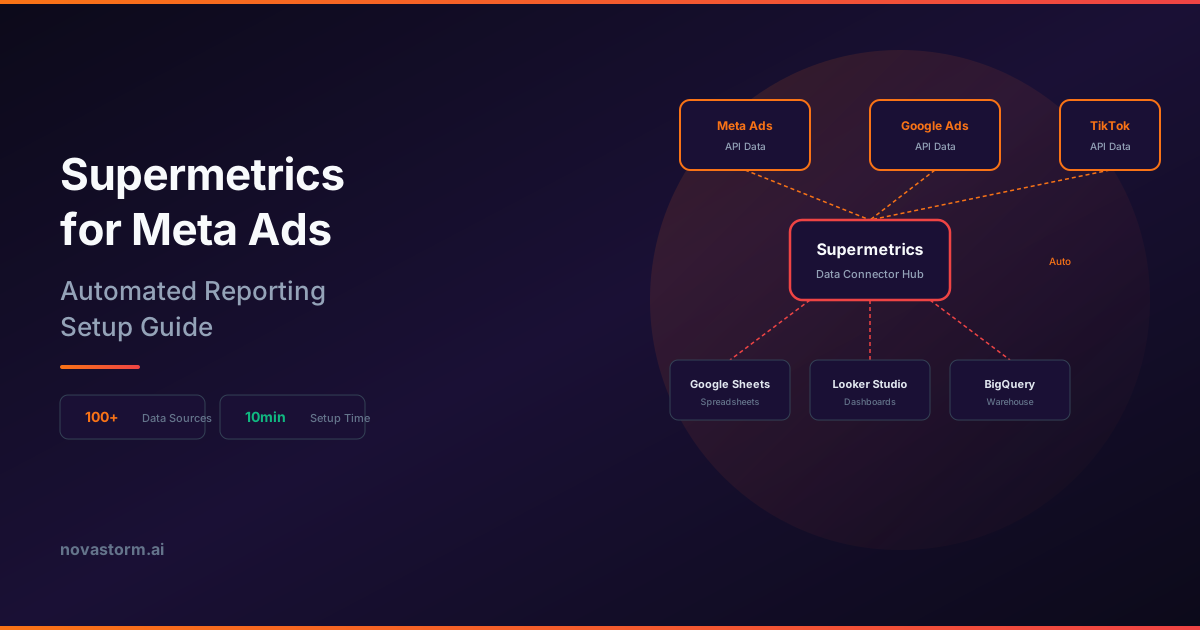
Supermetrics for Meta Ads: Automated Reporting Setup Guide
Save a Meta reporting query, reconcile two same-name campaigns, and handle late corrections, stale data and authorization failures in Supermetrics.
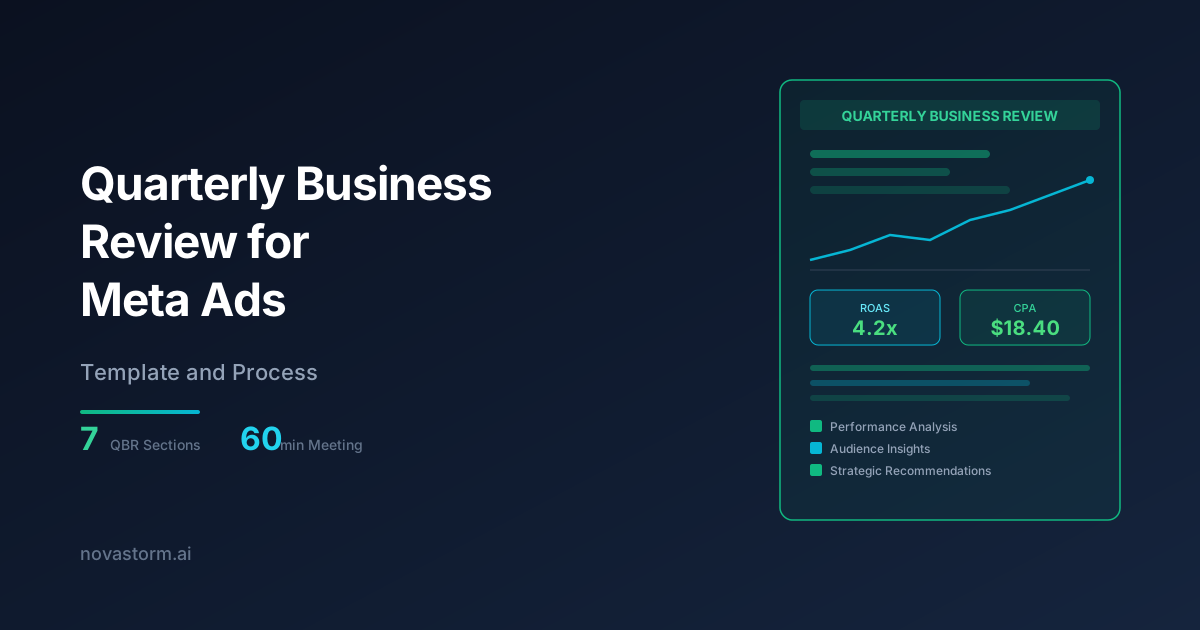
Quarterly Business Review for Meta Ads: Template and Process
Run a Meta Ads quarterly review with compatible metrics, explicit hypotheses, prioritized decisions and assigned follow-up.
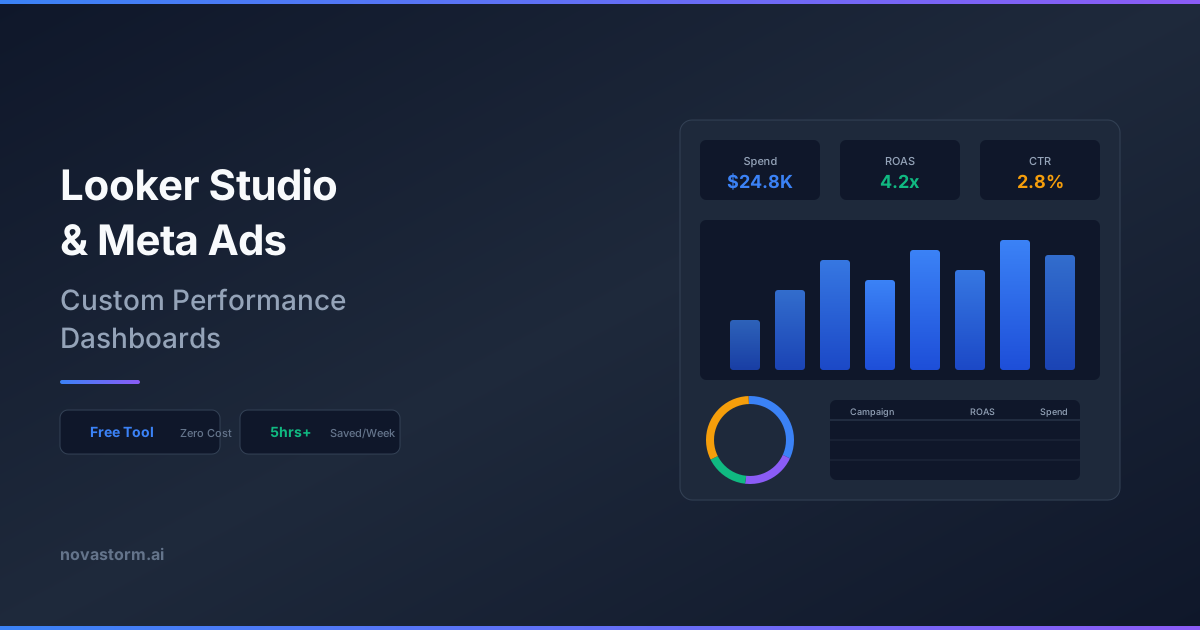
Looker Studio and Meta Ads: Building Custom Performance Dashboards
Reproduce a spend-multiplying join, reconcile a corrected Meta dashboard, and test CPA, currencies, freshness and viewer access with fictional input rows.
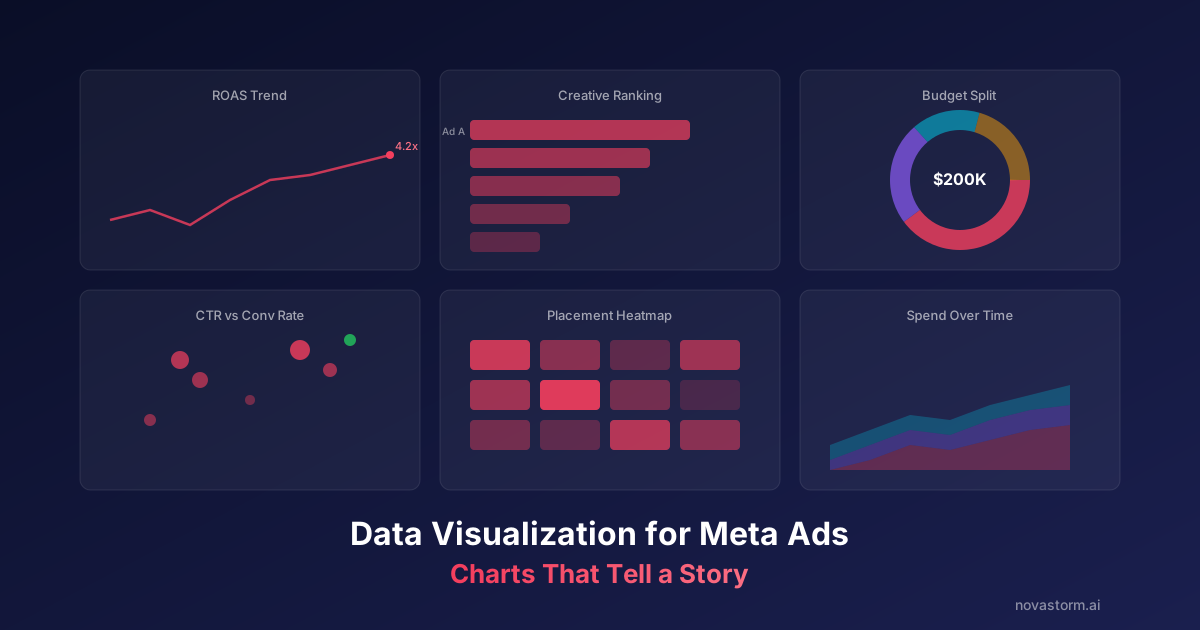
Data Visualization for Meta Ads: Charts That Tell a Story
Verify Meta reporting charts with source rows, weighted CPA, join checks and accessible labels before drawing conclusions from a visual.