

Retargeting Frequency: How Often Should You Show Ads to the Same Person
Diagnose retargeting frequency against your buying cycle, verify available controls and compare creative rotation using unique reach and mature acquisition cost.
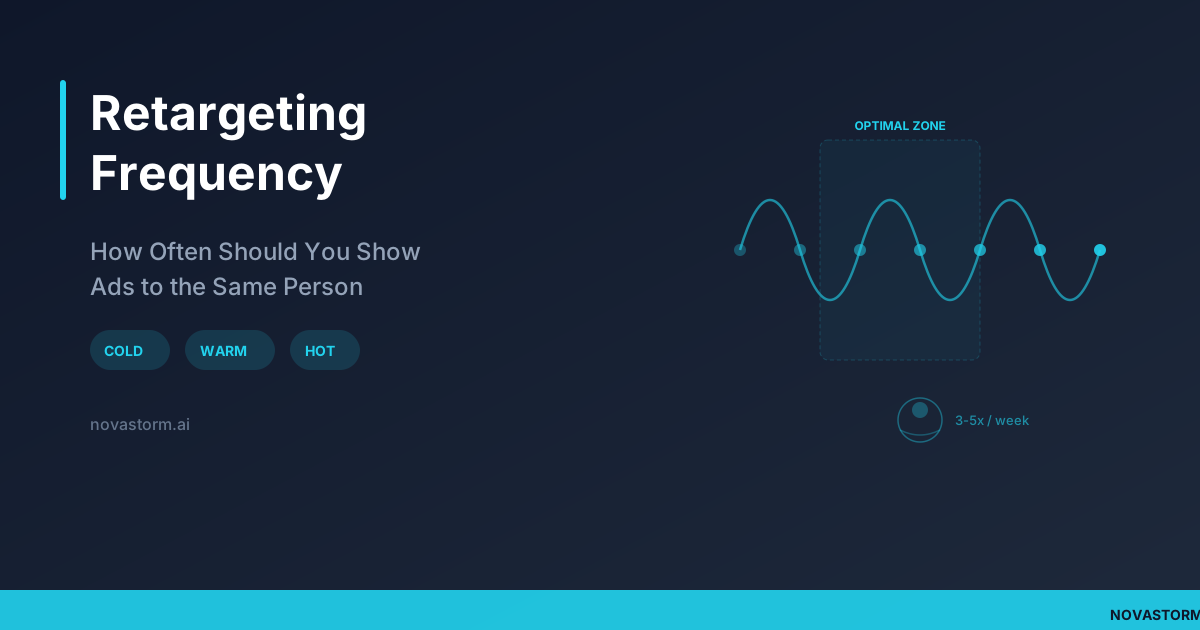
Frequency is a delivery diagnostic, not a universal target. A cart reminder and a considered B2B purchase have different decision cycles. Choose a reporting period, examine mature business outcomes and decide what useful information another impression would add before changing spend.
Separate average frequency from individual exposure
For one reporting scope and date range, average frequency is impressions divided by reported reach. A hypothetical 12,000 impressions and 3,000 people reached produce an average of four. That does not mean each person received four impressions: some may have seen one and others many more. Ad-level averages also cannot be added to establish each person’s total exposure.
Export the same period and reporting level for impressions, reach, spend, clicks and conversions. Use campaign-level deduplicated reach for a campaign comparison; do not sum the unique reach of overlapping ad sets. Watch changes alongside sales quality, conversion delay and creative response. A higher average alone does not prove fatigue or an auction penalty.
Choose a review window from the purchase cycle
| Audience situation | Question to investigate | Possible response |
|---|---|---|
| Recent cart or checkout visitor | Has the purchase already happened, and is the reminder still useful? | Check purchase suppression, delivery information and checkout friction. |
| Product researcher | What unresolved objection remains before a decision? | Test a truthful explanation, demonstration or comparison. |
| Long-cycle service prospect | Is the lead already being handled by sales? | Coordinate follow-up and exclude inappropriate duplicate acquisition messages. |
Use your own time-to-purchase distribution to choose audience retention and the review period. If those data are unavailable, state the chosen window as a hypothesis and collect them. There is no evidence here for a standard 21-day or 30-day rest period, or for different weekly limits by audience temperature. A rest interval should have a stated rationale and re-entry condition, such as a new relevant interaction, rather than being presented as a biological recovery rule.
Verify what the account can actually control
Inspect the current objective, buying type and performance goal in Ads Manager and record whether a frequency control is available. Do not change a sales goal merely to obtain a cap without assessing the resulting change in optimization. A notification threshold is a review trigger; it is not a person-level suppression mechanism.
Stop wasting ad budget
NovaStorm AI cuts Meta Ads CPA by 30% on average. No complex setup required.
A video-view audience describes an available engagement condition. It does not automatically identify people who watched exactly three times or received exactly three impressions. Do not promise exclusion after three views unless the actual audience builder supports that condition and the resulting audience has been checked. With consented first-party data, a purchaser or qualified-lead exclusion may be appropriate, but matching and audience updates are not guaranteed to suppress every impression instantly.
For a practical exclusion checklist, use the retargeting exclusions guide. Validate the event, permitted use, retention rule and actual available control before publishing.
Run one bounded rotation comparison
- Write the hypothesis: a demonstration and an objection response may improve mature acquisition cost compared with repeatedly using the current message. Specify the business outcome and loss limit.
- Choose one enrollment period for both arms and a common outcome-maturation interval based on conversion lag. Keep offer, destination, audience definition and placement policy consistent.
- Use an eligible randomized experiment for causal comparison and check overlap controls. If that is unavailable, label a before/after rotation review observational; dates, auction changes and audience aging can explain the difference.
- Record each arm’s spend, deduplicated unique reach, impressions, paid orders or qualified outcomes, refunds and mature CPA. Report exposure concentration only when the platform provides the relevant distribution.
- Stop at the agreed loss limit or a measurement failure. Review whether the alternative answers a real objection before adopting it; inconclusive evidence is a valid result.
Hypothetical worksheet: during the same enrollment period, arm A spends $240, reaches 1,000 people and records 4,000 impressions; arm B spends $240, reaches 1,200 and records 3,600. Their average frequencies are 4.0 and 3.0. After the same maturation rule, A has eight retained orders and B has ten, giving media CPA of $30 and $24. The arithmetic describes assumed data, not a measured lift. It does not establish individual exposure or statistical confidence.
Produce useful variants without promising an exact sequence
Draft introduction, objection and demonstration messages as candidate assets. Multiple ads do not guarantee that an individual sees them in a prescribed order. Verify any sequential delivery capability separately. NovaStorm can help prepare paused campaign and local ad-set drafts for human review; this workflow does not establish automatic frequency monitoring, suppression or rotation.
Keep the rotation log with asset IDs, period, hypothesis and observed outcome. Change messages when evidence or customer questions justify it, and keep successful existing assets available while an alternative is evaluated.
Published by NovaStorm AI. Planning examples are illustrative assumptions, not measured customer results.
Disclaimer: This article was generated with the assistance of AI and reviewed by the NovaStorm AI team. While we strive for accuracy, we recommend verifying specific data points and consulting official sources (linked where available) for critical business decisions.
Ready to automate your Meta Ads?
NovaStorm AI takes full responsibility for your campaigns — from monitoring to optimization.
Start NowMore on Custom audiences and retargeting
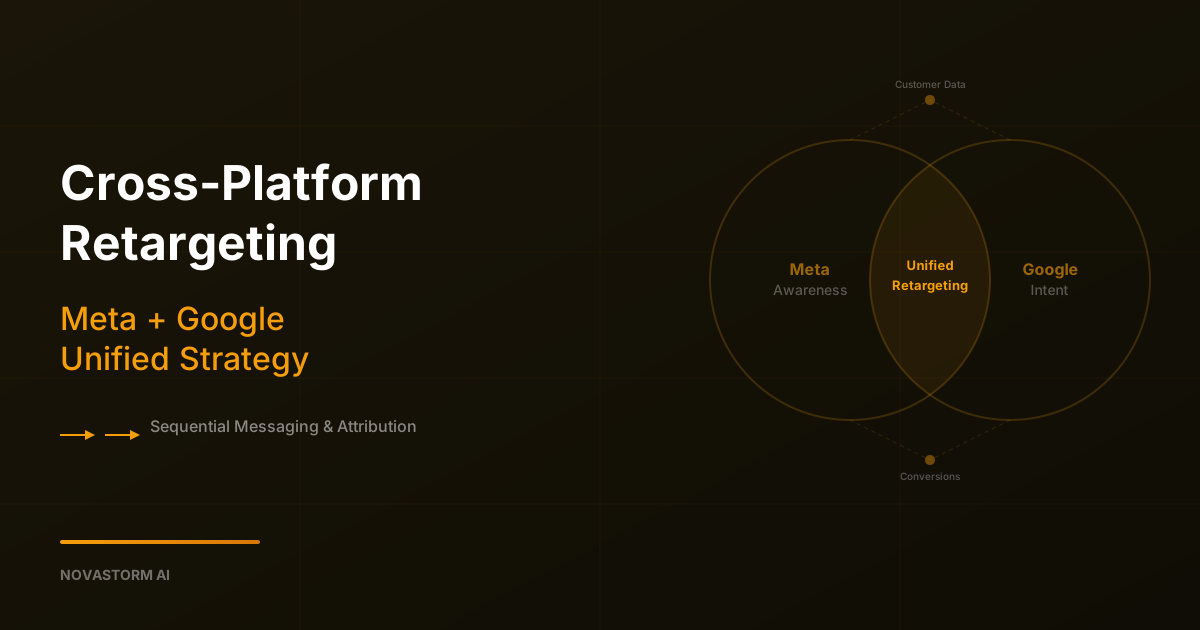
Cross-Platform Retargeting: Meta + Google Unified Strategy
Coordinate Meta and Google retargeting messages with permission-aware segment records, visible sync failures and separately tested incremental outcomes.
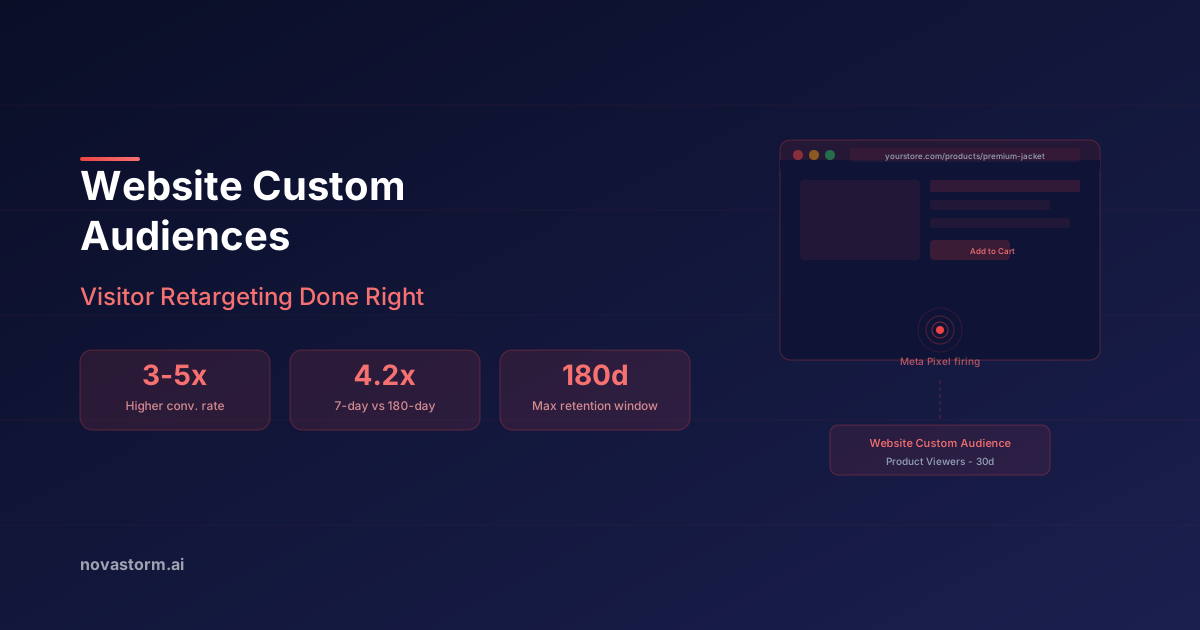
Website Custom Audiences: Visitor Retargeting Done Right
Master website custom audiences for Meta Ads retargeting. Learn pixel setup, audience segmentation, time windows, and exclusion strategies for 2026.
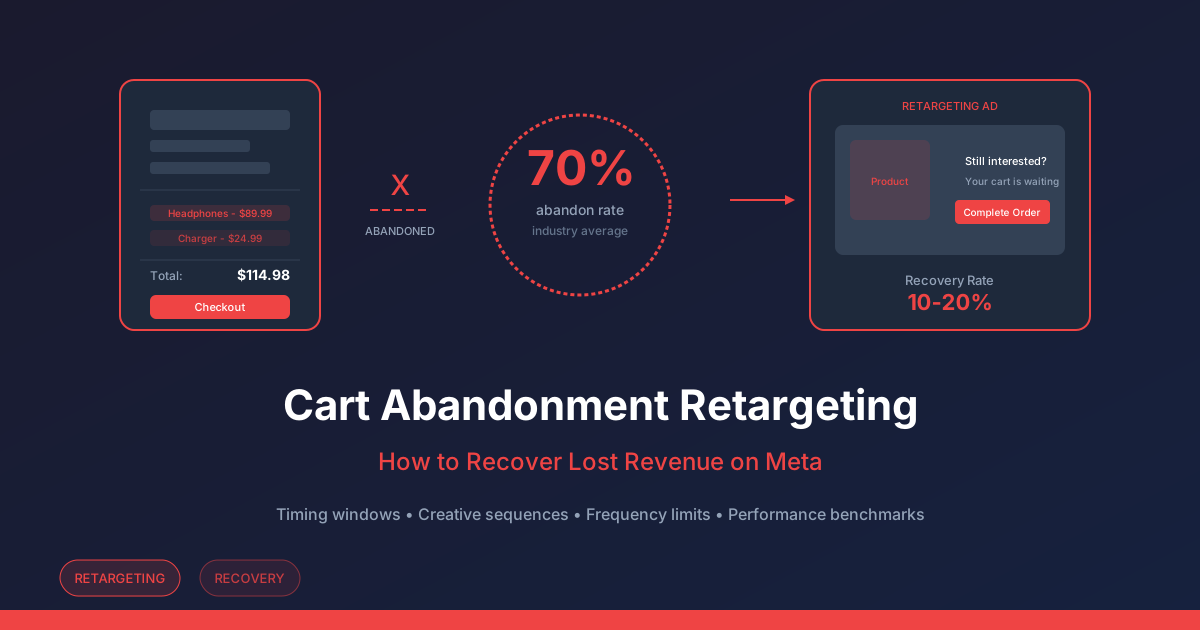
Cart Abandonment Retargeting on Meta: Test Incremental Profit
Plan a cart-retargeting sequence, verify purchases and suppression, and compare incremental contribution after discounts, delivery and advertising costs.
Engagement Custom Audiences: Retargeting Social Interactions
Build engagement custom audiences on Meta Ads to retarget people who interacted with your content. Covers page, post, video, lead form, and shopping sources.