

Cross-Platform Retargeting: Meta + Google Unified Strategy
Coordinate Meta and Google retargeting messages with permission-aware segment records, visible sync failures and separately tested incremental outcomes.
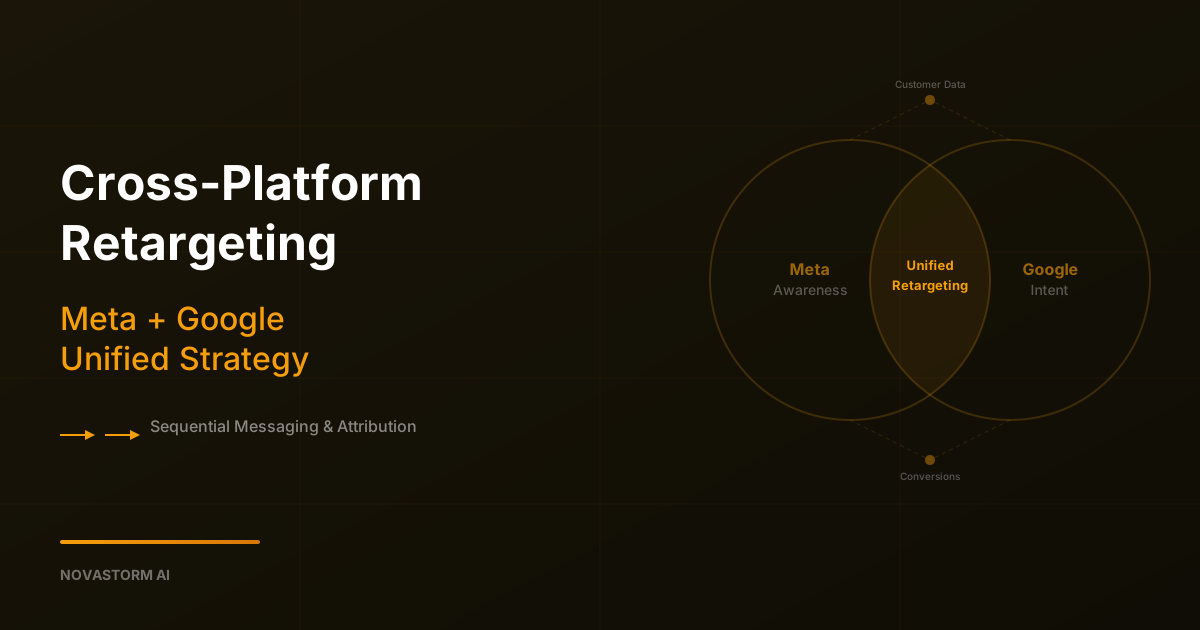
Cross-platform coordination is an option when both channels serve a clear business task. It is not automatically cheaper or necessary. A common first-party segment definition can support consistent messages, but matching, eligibility and update timing differ between destinations. A UTM tag records a traffic source; it does not grant permission or transfer audience membership.
Define the segment contract
| Internal field | Purpose | Verification |
|---|---|---|
| Opaque customer ID | Join permitted records without putting personal data in the planning journal. | Stable ID and authorized access. |
| Segment version and eligibility time | Specify why a customer enters or leaves. | Declared rule, observation window and business-action source. |
| Destination-purpose permission | Decide whether forwarding and continued use are permitted. | Current consent/revocation record and applicable destination policy. |
| Paid-order/suppression state | Prevent an inappropriate pre-purchase message after purchase. | Unique authoritative order and desired removal time. |
| Destination/list/job ID | Trace each update independently. | Request time, acknowledgment, completion and failures. |
| Last successful sync and expiry | Detect stale state. | Measured lag and declared maximum tolerable staleness. |
Use permitted matching fields only in the destination integration, with its required treatment. Do not put emails or hashes in a public spreadsheet. Google’s Customer Match documentation describes its customer-list workflow and consent requirements for EEA upload partners. Verify current account eligibility, policy, list usage and integration scope independently for Meta and Google.
Handle exclusion failures explicitly
Synthetic incident: customer C-001 purchases at 10:00. Both connectors request suppression at 10:05; Meta’s job is confirmed at 10:20, while Google’s request fails. The desired state is excluded on both, but the observed state is not synchronized. Retry the failed job under the same segment version, alert its owner and inspect completion. If the affected message must not continue, use the declared operator pause process for that campaign rather than claiming an exclusion already took effect.
Record desired state, observed state and delay separately. A successful upload is not proof that every person matched or that the audience is available instantly. Do not advance a person through a guaranteed Meta-to-Google ad sequence: competing eligibility and actual delivery can reorder or omit impressions.
Align messages without assuming a fixed budget split
Stop wasting ad budget
NovaStorm AI cuts Meta Ads CPA by 30% on average. No complex setup required.
Illustrative message plan: a product visitor may receive a truthful product explanation; an unresolved cart may receive a reminder of actual delivery terms; a paid buyer should leave that pre-purchase segment. These are hypotheses for eligible recipients, not a forced narrative. Standardize campaign identifiers, for example utm_source=meta or google, utm_medium=paid_social or paid_search, and a shared campaign key. Define naming exceptions and avoid personal identifiers in URLs.
Choose allocations from available outcomes, contribution, overlap and an affordable loss limit. A fixed 60–70% platform share or claimed 15–25% saving is not a substitute for account evidence. Reconcile one order ID across both platforms; two credited conversions can represent one purchase. A unified attribution model redistributes credit and does not itself measure additional sales.
Test the added channel with a credible control
- Choose comparable eligible regions or another appropriate assignment method before changing delivery. Keep the other channel, offer and observation method stable. Check historical demand, size differences and cross-region spillover.
- Determine test duration from outcome volume, conversion delay, refunds and the minimum economically relevant effect. Thirty days alone does not make groups comparable or orders mature.
- Compare unique mature business outcomes and incremental contribution against incremental media and operating costs. Record sync failures and contamination; call an underpowered or confounded comparison inconclusive.
Keep NovaStorm within the Meta scope
Use NovaStorm to prepare the Meta portion of the approved message plan, creative and budget assumptions as paused campaign and local ad-set drafts. The user reviews those materials. Google campaign management, customer-list synchronization, permissions and the reconciled reporting process need separately implemented owners and tools; do not assume NovaStorm supplies that coordination.
Published by NovaStorm AI. Planning examples are illustrative assumptions, not measured customer results.
Disclaimer: This article was generated with the assistance of AI and reviewed by the NovaStorm AI team. While we strive for accuracy, we recommend verifying specific data points and consulting official sources (linked where available) for critical business decisions.
Ready to automate your Meta Ads?
NovaStorm AI takes full responsibility for your campaigns — from monitoring to optimization.
Start NowMore on Custom audiences and retargeting
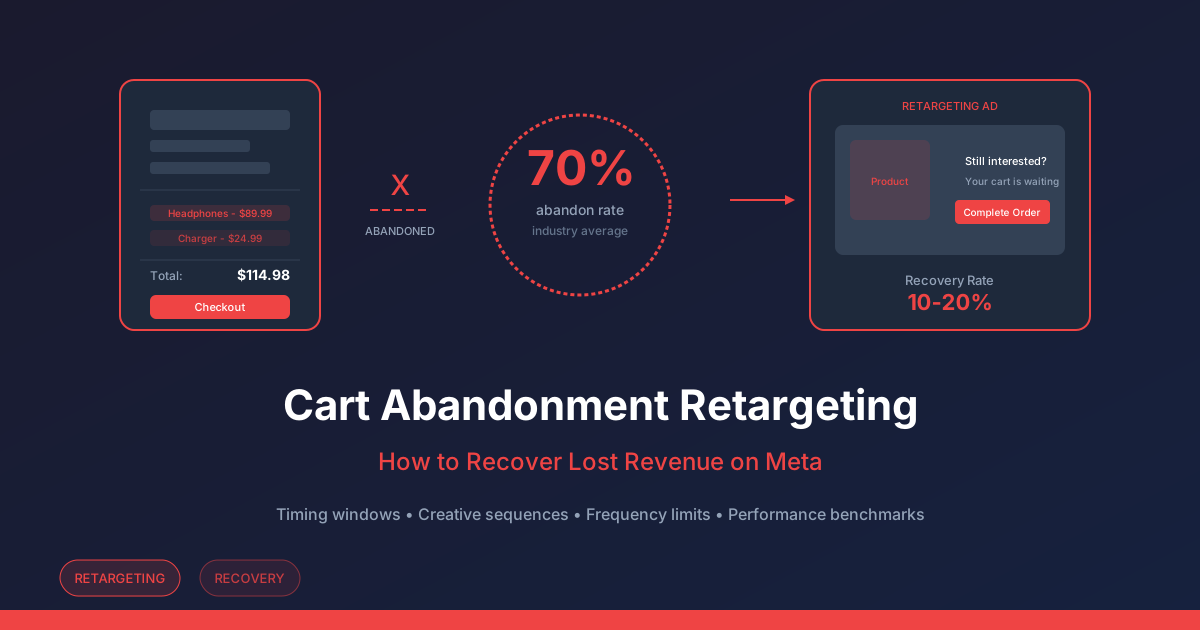
Cart Abandonment Retargeting on Meta: Test Incremental Profit
Plan a cart-retargeting sequence, verify purchases and suppression, and compare incremental contribution after discounts, delivery and advertising costs.
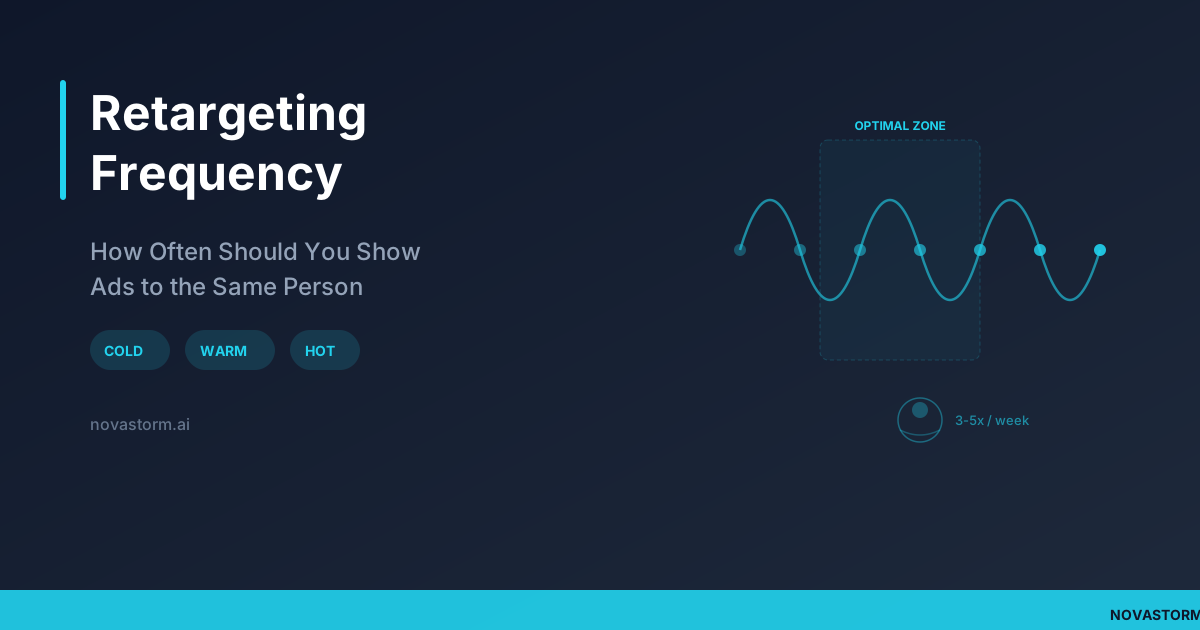
Retargeting Frequency: How Often Should You Show Ads to the Same Person
Diagnose retargeting frequency against your buying cycle, verify available controls and compare creative rotation using unique reach and mature acquisition cost.

Cross-Platform Retargeting Pools: Combining Meta and Google Data
Coordinate permitted first-party Meta and Google audiences, verify Customer Match eligibility, and reconcile attribution without inventing cross-platform identity.
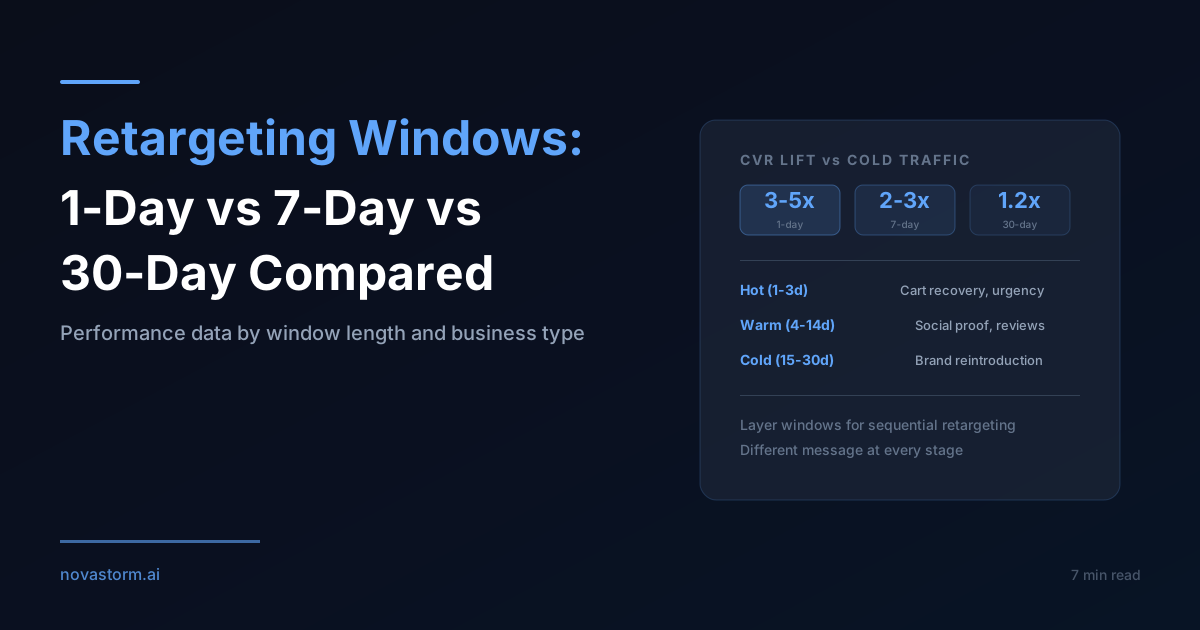
Retargeting Windows: 1-Day vs 7-Day vs 30-Day Performance Compared
Build supported 1-, 7- and 30-day retargeting tiers, plan re-entry and measure incremental paid orders rather than assume recency multipliers.