

Retargeting Windows: 1-Day vs 7-Day vs 30-Day Performance Compared
Build supported 1-, 7- and 30-day retargeting tiers, plan re-entry and measure incremental paid orders rather than assume recency multipliers.
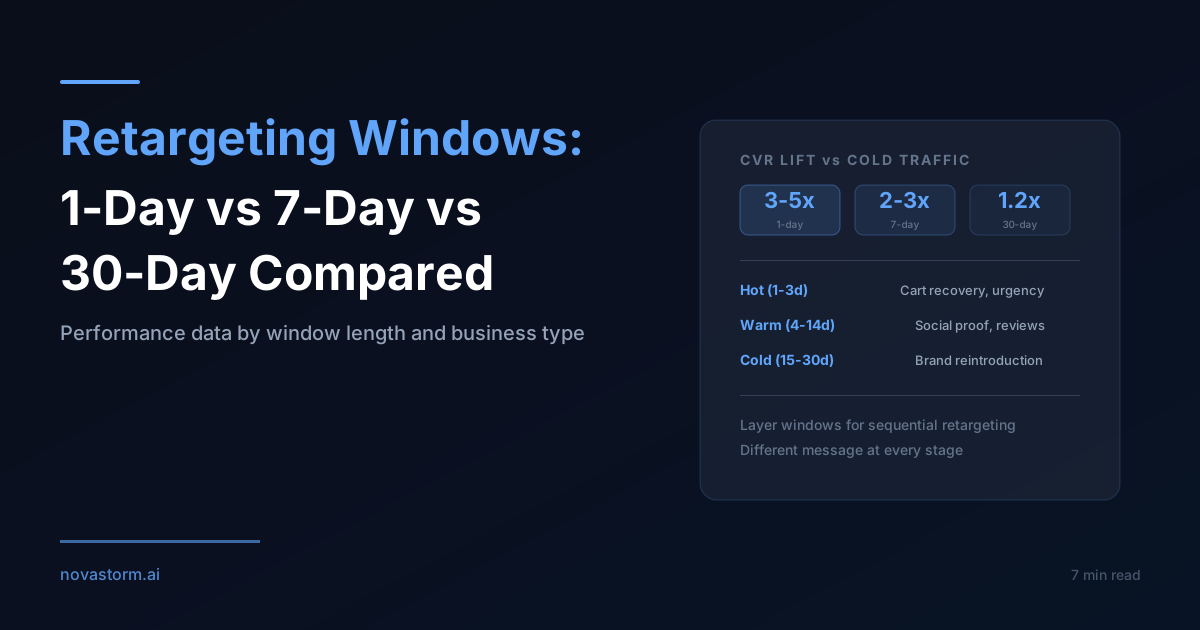
A retargeting window defines eligibility after a recorded interaction. It is not the attribution window and it does not guarantee that a person sees an ordered message sequence. Choose windows from the buying cycle, available eligible traffic and cash needed to collect evidence.
Design non-overlapping recency rules
Hypothetical source-side specification, to verify against the actual account’s supported inclusion/exclusion and retention controls:
| Tier | Eligibility expression | Message hypothesis |
|---|---|---|
| Recent | Visitors in the last1 day, excluding confirmed buyers | A factual reminder of the viewed offer |
| Intermediate | Visitors in the last7 days minus the last1 day, excluding buyers | Answer a real shipping or product objection |
| Extended | Visitors in the last 30 days minus the last7 days, excluding buyers | Reintroduce the product without invented urgency |
A new eligible visit can move a person back into the most recent tier. A paid order should trigger the appropriate purchase suppression rule; a later eligible cart can create a new recovery task. Record whether the source’s rolling clock and exclusions actually implement this specification. Even with mutually exclusive tiers, delivery availability and auctions mean message order is not guaranteed.
Size the test from traffic and economics
Illustrative assumptions:200 unique permitted visitors per day, a $140 weekly retargeting cap and $20 paid-order CPA. The budget implies seven expected orders before uncertainty and delay. Do not multiply visitors by thirty as if every visit were a new eligible person: deduplication, purchase exclusions, expiry and permissions change the pool. These are planning inputs, not measured benchmarks.
Stop wasting ad budget
NovaStorm AI cuts Meta Ads CPA by 30% on average. No complex setup required.
Recent visitors may include accidental or support visits; older visitors may still be considering a high-value purchase. Combine compatible tiers when separate delivery produces too few mature outcomes, preserving eligibility and a useful message. Do not change to a traffic objective merely to make the pool deliver without checking purchase relevance.
Measure additional orders, not just attributed recovery
- Define net paid orders and contribution after returns, ads and discounts. Distinguish them from swipes, views and attributed purchases.
- Where a supported holdout is feasible, assign comparable eligible people or markets to retargeting versus no retargeting. Protect the holdout from other recovery campaigns and record limitations.
- Hold other email/offers comparable; a person who would buy without the ad is not automatically an incremental order.
- Approve cash-loss/spend caps and a conversion-maturity rule from the purchase cycle. An insufficient sample ends as inconclusive, not a winning recency tier.
- If a holdout is infeasible, report descriptive cohort outcomes and do not call attributed ROAS causal lift.
Approve three messages before delivery
Prepare the factual reminder, objection answer and product introduction in NovaStorm as creative briefs and paused drafts. The user verifies stock, landing-page continuity and the actual saved audience rules. NovaStorm preparation does not implement the data-source exclusions or a guaranteed sequential delivery system. Continue with the buyer suppression guide.
Published by NovaStorm AI. Planning examples are illustrative assumptions, not measured customer results.
Disclaimer: This article was generated with the assistance of AI and reviewed by the NovaStorm AI team. While we strive for accuracy, we recommend verifying specific data points and consulting official sources (linked where available) for critical business decisions.
Ready to automate your Meta Ads?
NovaStorm AI takes full responsibility for your campaigns — from monitoring to optimization.
Start NowMore on Custom audiences and retargeting
Custom Audiences: The Complete Guide to First-Party Data Targeting
Prepare a permitted customer-list upload, diagnose its processing errors and plan audience refreshes without invented match-rate benchmarks.
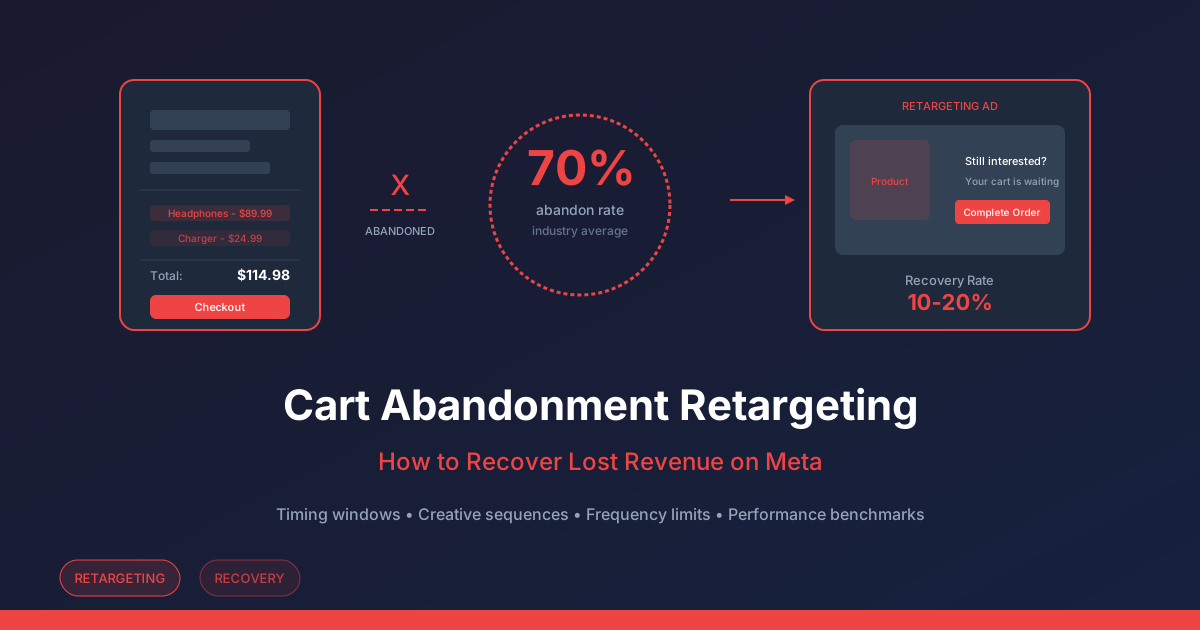
Cart Abandonment Retargeting on Meta: Test Incremental Profit
Plan a cart-retargeting sequence, verify purchases and suppression, and compare incremental contribution after discounts, delivery and advertising costs.
Cross-Platform Retargeting: Meta + Google Unified Strategy
Coordinate Meta and Google retargeting messages with permission-aware segment records, visible sync failures and separately tested incremental outcomes.
Retargeting Frequency: How Often Should You Show Ads to the Same Person
Diagnose retargeting frequency against your buying cycle, verify available controls and compare creative rotation using unique reach and mature acquisition cost.