

Minimum ROAS Bidding on Meta Ads: Value-Based Optimization
Evaluate minimum ROAS using truthful purchase values, returns, contribution and controlled comparisons rather than revenue-only profit claims.
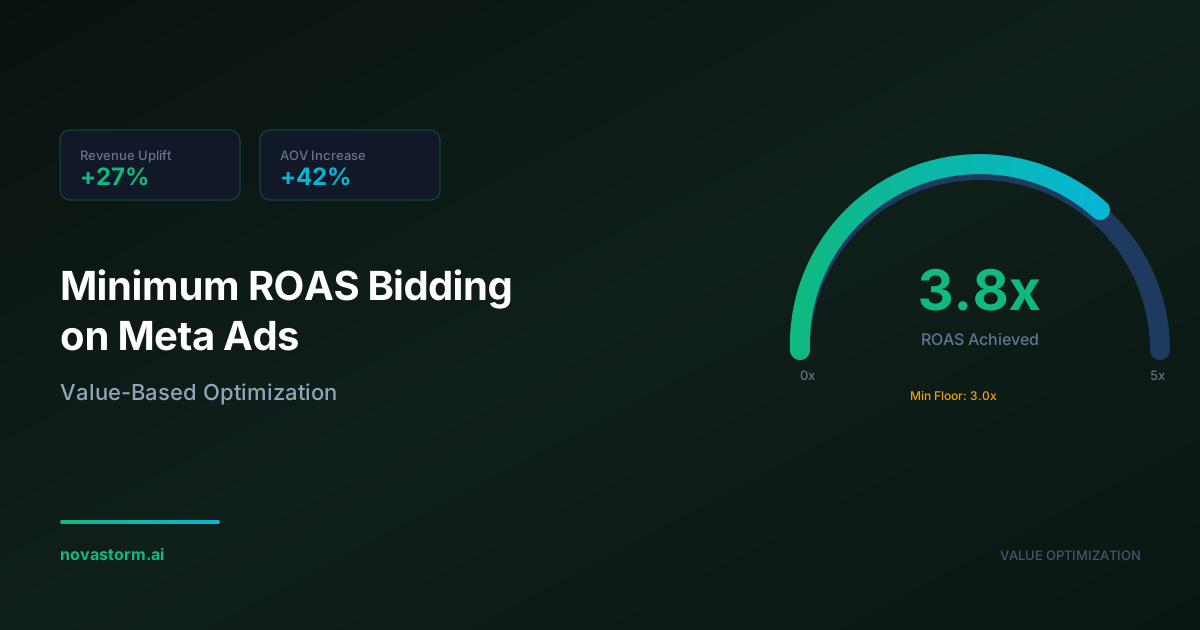
A minimum ROAS goal is a value-oriented bidding target, not a guarantee of realized return or profit. First define which purchase value is sent, its currency, attribution scope and contribution. Revenue, modeled lifetime value and profit are different quantities.
Check the value contract and account availability
The ad set SDK includes LOWEST_COST_WITH_MIN_ROAS. Its existence is not evidence that every account or objective is eligible. Verify the current account option and applicable requirements; neither thirty to fifty purchases nor spending 70% of budget is a universal eligibility or failure test.
Meta’s server-side custom data contract has separate fields for value, currency and predicted_ltv. Keep the actual purchase value faithful to the transaction and its documented contract. Do not replace it with an optimistic LTV forecast. Use an appropriate currency code and verify browser/server consistency, refunds, test transactions and duplicate logical purchases before relying on value reporting.
Preserve the ROAS example, then add contribution
Hypothetical comparison, not observed bidding results: both configurations spend USD 1,500. A generates 100 purchases at USD 45, or USD 4,500 revenue and ROAS 3.0. B generates sixty purchases at USD 95, or USD 5,700 revenue and ROAS 3.8. These chosen outcomes illustrate arithmetic; they do not prove that switching strategy produces higher-value buyers.
| Hypothetical ledger | A | B |
|---|---|---|
| Gross purchase revenue | USD 4,500 | USD 5,700 |
| Returns or refunds | USD 450 | USD 855 |
| Revenue after returns | USD 4,050 | USD 4,845 |
| Assumed contribution after direct costs | 40% of net revenue = USD 1,620 | 25% of net revenue = USD 1,211.25 |
| Contribution after USD 1,500 media | USD 120 | −USD 288.75 |
B has higher gross ROAS but lower contribution. The assumed margins include the direct product, fulfillment and payment costs for each mix; creative and fixed overhead are still excluded. Do not add refunds twice if the selected contribution definition already includes them.
The break-even formula requires a consistent margin
Stop wasting ad budget
NovaStorm AI cuts Meta Ads CPA by 30% on average. No complex setup required.
If contribution before media is a constant fraction m of the same net revenue used in ROAS, break-even ROAS is 1 ÷ m. For hypothetical m = 0.40, it is 2.5. This simplification fails if revenue includes amounts excluded from margin, product mix changes, or creative and fixed costs are omitted. An account-attributed ROAS target cannot be copied from blended company ROAS without matching revenue scope, currency and time window.
Hypothetical promotion: normal net selling price is USD 100 and direct cost USD 60, leaving USD 40 contribution. A 20% discount reduces price to USD 80 while cost stays USD 60; contribution falls to USD 20. Break-even ROAS rises from 100 ÷ 40 = 2.5 to 80 ÷ 20 = 4.0. Automatically lowering the goal because of the discount would ignore this margin deterioration.
Design a comparison with a loss limit
- Choose one business outcome and reconcile purchase value, refunds and contribution over a defined maturity window.
- Use a supported randomized, disjoint comparison where available. Ordinary duplicates do not establish random assignment or independence.
- Hold the offer, currency, event and major audience conditions comparable. Predefine the effect worth detecting and the sample plan; fourteen days is not sufficient for every buying cycle.
- Choose an affordable spend ceiling and loss limit. Pause on the economic boundary, then reconcile delayed outcomes before any restart.
- Report both assignment-level contribution and delivery. An unmet budget does not alone prove the goal should be reduced.
The break-even ROAS guide can help make the commercial allowance explicit. A campaign can meet a revenue goal and still destroy contribution.
Approve a change using reconciled evidence
Bring the value audit, delivery observation, candidate goal and contribution limit into the NovaStorm campaign brief. Prepare a paused draft and record the reviewer’s decision. This workflow does not imply automatic value integration, an implemented experiment tool, autonomous goal adjustment or guaranteed profit.
Published by NovaStorm AI. Worked examples and test fixtures in this article are illustrative, not observed customer results.
Disclaimer: This article was generated with the assistance of AI and reviewed by the NovaStorm AI team. While we strive for accuracy, we recommend verifying specific data points and consulting official sources (linked where available) for critical business decisions.
Ready to automate your Meta Ads?
NovaStorm AI takes full responsibility for your campaigns — from monitoring to optimization.
Start NowMore on Scaling and bidding
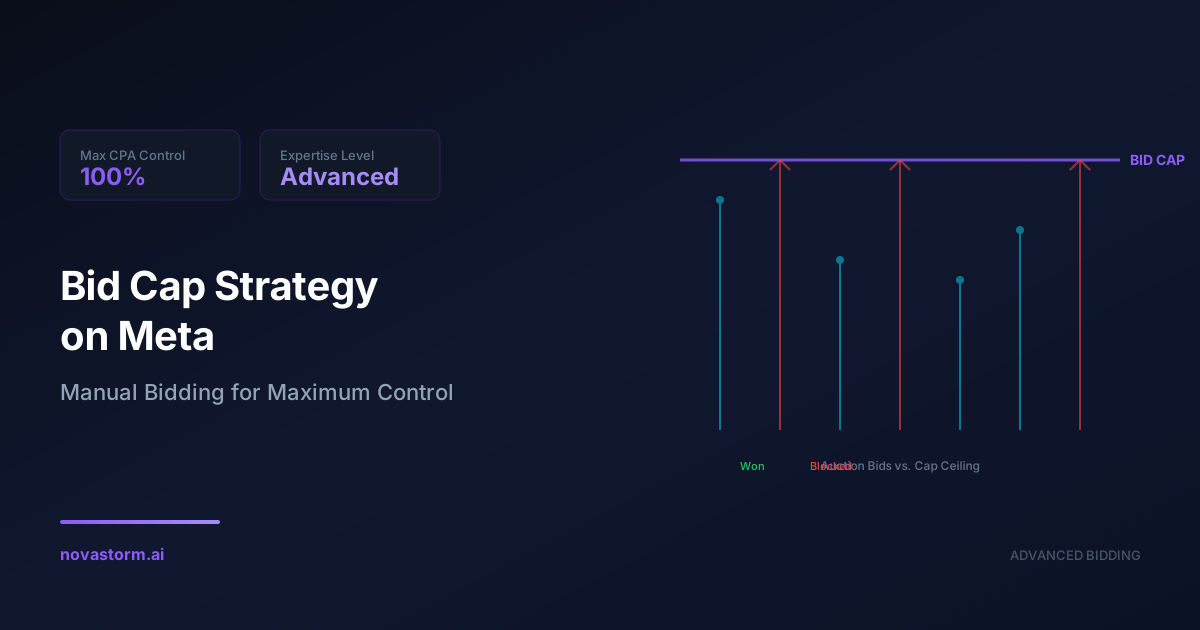
Bid Cap Strategy on Meta: Manual Bidding for Maximum Control
Use bid cap with correct units, a defensible comparison and a separate financial stop; avoid confusing auction bids with customer acquisition cost.

Horizontal vs Vertical Scaling: Two Paths to Ad Growth
Separate an existing-budget increase from a new-market test, with incremental spend limits, a review date and a reversible response.
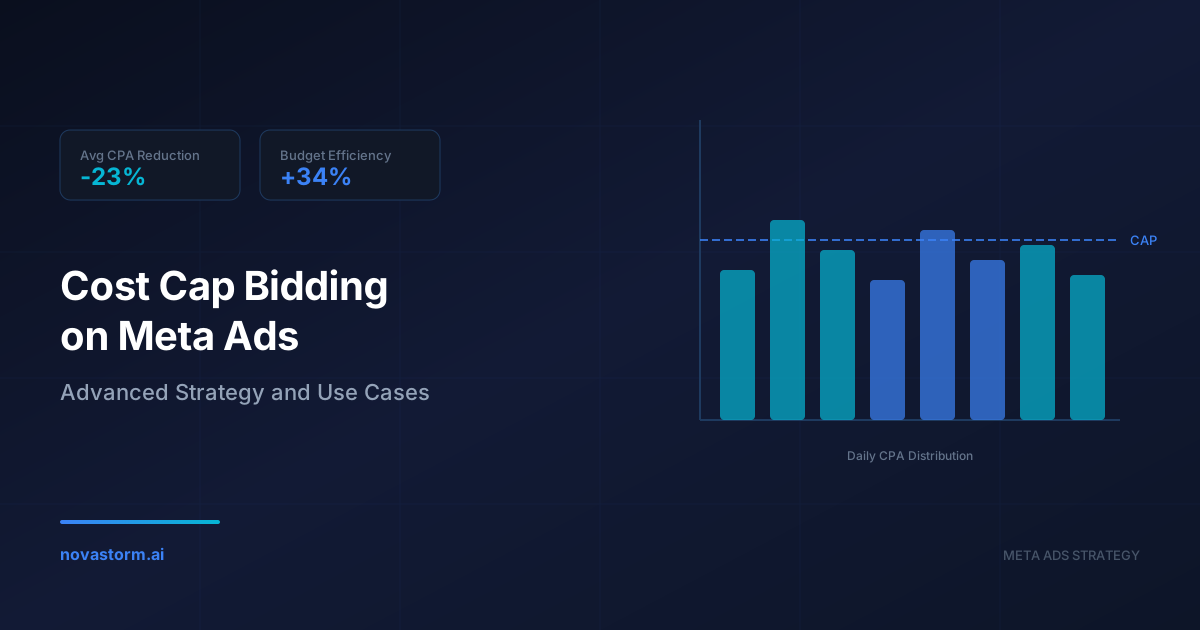
Cost Cap Bidding on Meta Ads: Advanced Strategy and Use Cases
Evaluate cost cap against mature outcomes and contribution, diagnose underspend, and approve changes with an explicit financial limit.
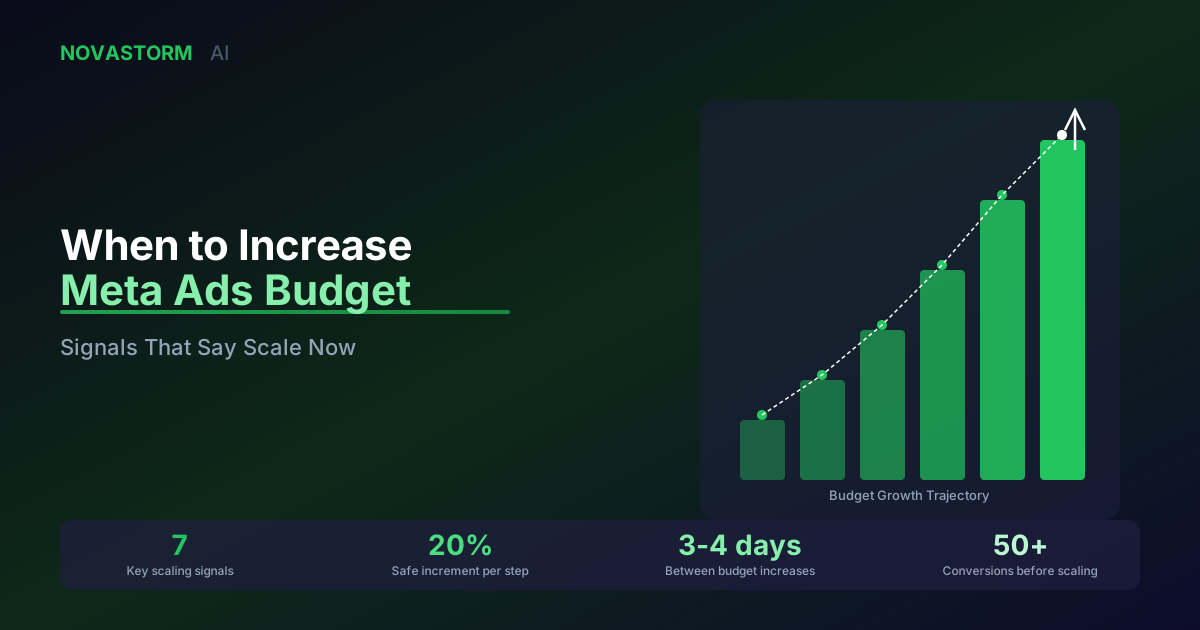
When to Increase Meta Ads Budget: Signals That Say Scale Now
Check four scaling gates, stress-test contribution, and approve a capped increase with capacity, cash timing and mature stop conditions.