

Low Click-Through Rate on Meta Ads: Creative and Targeting Fixes
Evaluate outbound CTR alongside CPM, paid conversion and retained acquisition cost. Plan one first-frame experiment with explicit maturity and spend limits.
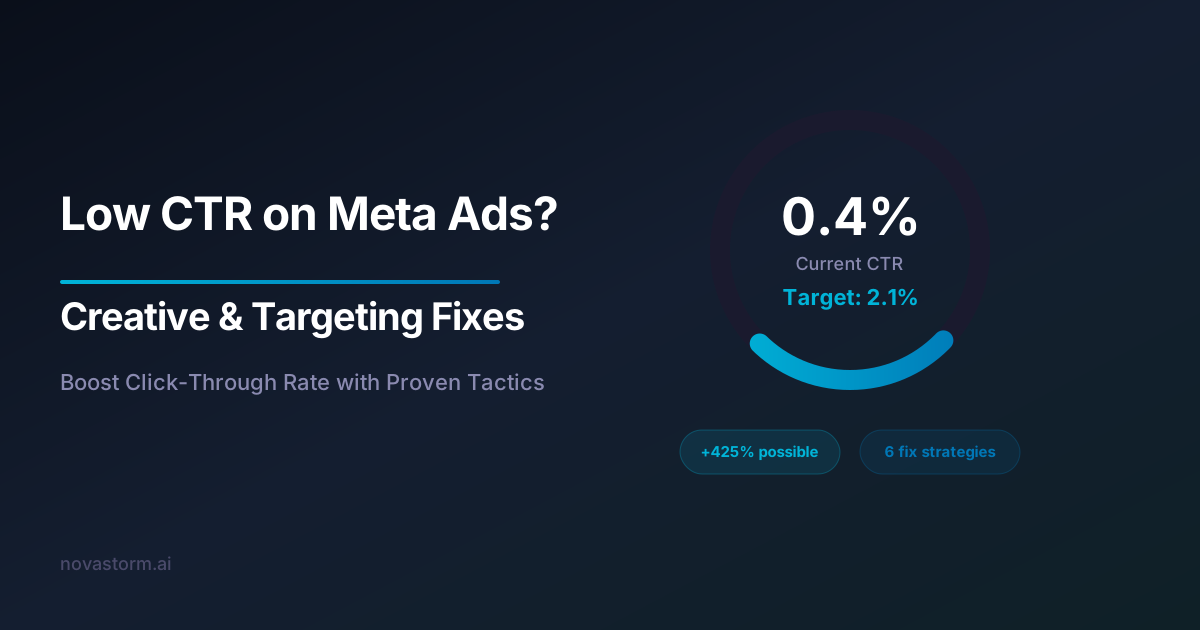
A low outbound CTR can be a useful warning, but the aim is profitable paid acquisition. A lower-CTR ad can win if its clicks convert better, its CPM is lower or its buyers retain more value. Start with a placement-specific comparison and the purchase outcome, not an industry “good CTR” threshold.
Make one placement and click definition comparable
Record outbound clicks, impressions, spend, paid acquisitions and retained outcomes for the same placement, dates, currency and attribution scope. All-click CTR includes interactions that may not leave the feed. Compare equally mature click cohorts and record price, stock, promotion and delivery changes. A weighted placement mix can move total CTR even if each placement remains stable.
| Hypothetical Facebook Feed click cohort | A | B |
|---|---|---|
| Impressions | 100,000 | 100,000 |
| Spend / CPM | USD 1,000 / USD 10 | USD 1,200 / USD 12 |
| Outbound clicks / CTR | 1,000 / 1% | 1,500 / 1.5% |
| Unique paid acquisitions / click conversion | 50 / 5% | 30 / 2% |
| Paid-acquisition CPA | USD 20 | USD 40 |
| Retained acquisitions after comparable refund window | 45 | 20 |
| Spend per retained acquisition | USD 22.22 | USD 60 |
These assumed counts show why a 50% relative CTR improvement is not a CPA improvement: spend rose and click conversion fell. With USD 35 contribution per retained acquisition after other order costs, A contributes 45 × 35 − 1,000 = USD 575 before fixed costs; B contributes 20 × 35 − 1,200 = −USD 500. If refunds leave additional unrecovered expenses, subtract those too. This is arithmetic, not observed campaign evidence.
Inspect the actual creative on a phone
- Check the product, offer and destination match. A curiosity hook that hides price or the actual product can generate clicks without the desired buyers.
- Preview the selected placement for cropping, readable type and interface overlap. Keep the product and key claim visible without requiring sound; caption important speech and inspect caption placement.
- Check a CTA reflects the next step: information, product detail or signup. Use only buttons available for the chosen setup; painted image text is not the clickable platform button.
- Check authorized photo/person/voice rights and support each factual claim. UGC is a candidate style, not a guaranteed 30–50% improvement.
Meta’s Reels guidance describes vertical 9:16 assets, audio and keeping key material in the safe zone. That placement-specific guidance is not proof of a particular CTR lift for every account or an instruction to use the same crop in Feed. Inspect the current preview for the destination placement.
Stop wasting ad budget
NovaStorm AI cuts Meta Ads CPA by 30% on average. No complex setup required.
One starting creative, one first-frame hypothesis
Hypothetical baseline: an eight-second notebook video in one eligible placement begins with a two-second empty-desk shot; seconds 2–8 show the authorized notebook photo, headline “One place for your notes” and the same product destination. Variant B replaces only the first two seconds with the same product already visible on the desk. Copy, offer, music, remaining frames, CTA and landing page stay fixed. These are original storyboard specifications, not existing campaign footage or measured winners.
| Time | A: hypothetical baseline | B: proposed first-frame change |
|---|---|---|
| 0–2 seconds | Empty desk, no product | The same authorized notebook visible immediately |
| 2–8 seconds | Notebook, verified headline and unchanged CTA | Identical frames/audio/copy to A |
| Destination and price | Approved product page and price | Unchanged |
Hypothesis: showing the product immediately will increase relevant click response without reducing paid conversion quality. The variant fails the commercial acceptance criterion if mature evidence shows that extra clicks do not produce acceptable acquisition economics. Sparse results remain inconclusive. A visual inspection proves the intended edit exists, not that attention or sales improved.
A bounded test and acceptance decision
- Choose the actual available randomized split method and one placement. If ads simply run beside each other with unequal delivery, label the result descriptive rather than a controlled causal test.
- Before launch, record primary metric (mature retained-acquisition cost), secondary outbound CTR, acceptable business ceiling, detectable change and traffic/sample assumptions. Seven days does not guarantee adequate power; allow complete comparable weekdays and the actual conversion/refund delay.
- Hypothetical authorization: USD 200 total across both cells, with manual checkpoints and a reporting-delay buffer. Do not let each cell spend USD 200. Pause on a false claim, broken destination or approaching the shared boundary.
- Compare paid outcomes after maturation. If the sample is too small or the interval wide, report inconclusive and preserve the baseline; do not promote a CTR winner as a purchase winner.
Use the testing uncertainty guide before scaling. Prepare the single proposed frame change and the approval brief in NovaStorm; verify the exported asset, claims and destination before activation. This workflow does not imply automatic randomization, significance computation or an assured click/acquisition uplift in the product.
Published by NovaStorm AI. Worked examples and test fixtures in this article are illustrative, not observed customer results.
Disclaimer: This article was generated with the assistance of AI and reviewed by the NovaStorm AI team. While we strive for accuracy, we recommend verifying specific data points and consulting official sources (linked where available) for critical business decisions.
Ready to automate your Meta Ads?
NovaStorm AI takes full responsibility for your campaigns — from monitoring to optimization.
Start NowMore on Campaign diagnostics
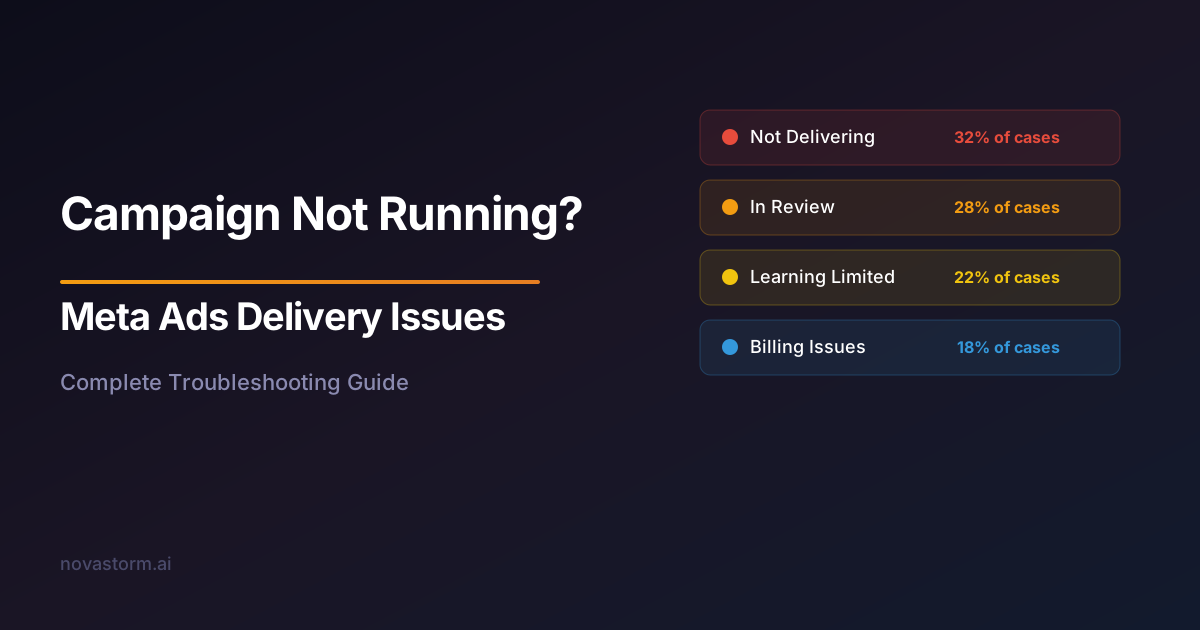
Meta Ads Delivery Issues: Why Your Campaign Is Not Running
Diagnose zero Meta Ads delivery with three-level statuses, billing and dates. Resolve budget conflicts and control replacements without duplicate activation.
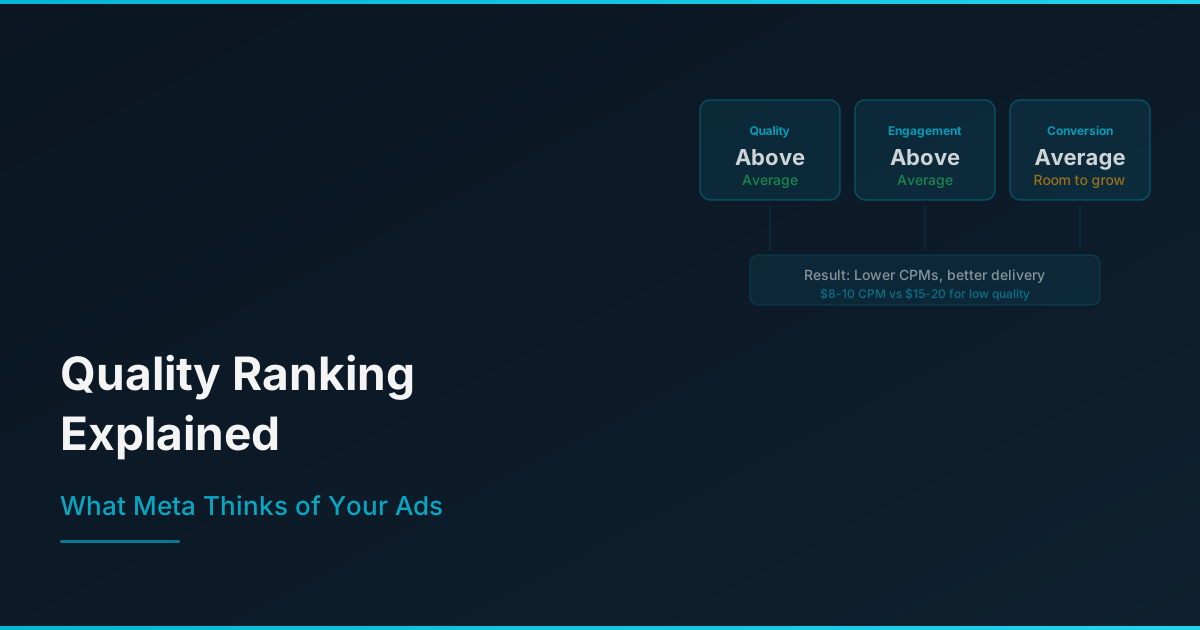
Quality Ranking Explained: What Meta Thinks of Your Ads
Treat Meta quality rankings as diagnostics, investigate missing data and verify business outcomes before changing an ad.
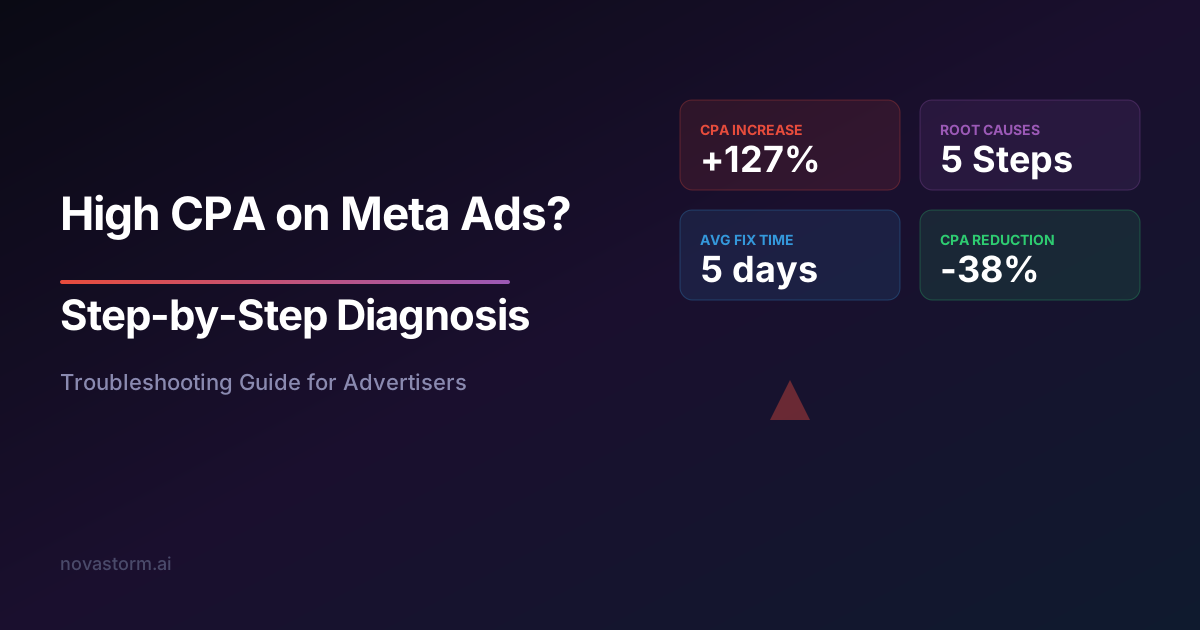
High CPA Troubleshooting on Meta Ads: Step-by-Step Diagnosis
Reconcile units and mature outcomes, then decompose CPA into CPM, outbound CTR and conversion. Includes source counts, denominator errors and a documented demo boundary.
Meta Ads Not Spending Budget: Diagnosis and Fix Guide
Diagnose low Meta Ads spend using statuses, billing, schedule and allocation. Plan a reversible cap test with explicit spend and acquisition boundaries.