

LinkedIn vs Meta for B2B Lead Generation: Head-to-Head Comparison
Compare Meta and LinkedIn B2B campaigns with reachable audience criteria, tagged CRM records, qualification costs and mature paid-customer economics.
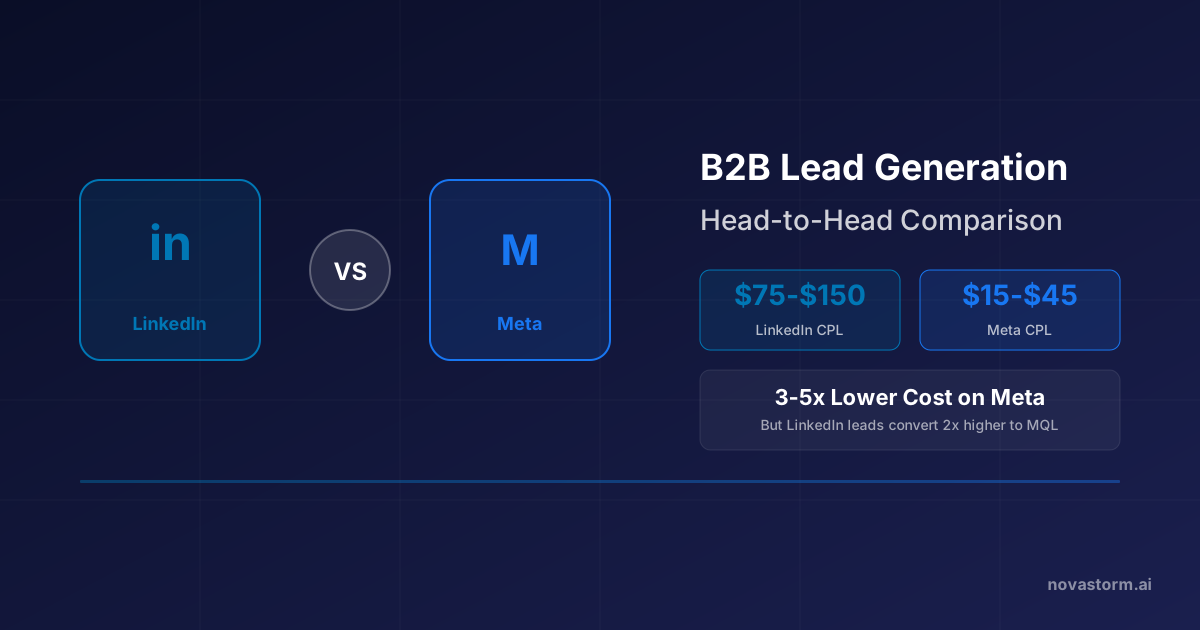
Choose between LinkedIn and Meta using the reachable audience, sales capacity and mature economics of your offer. A cheaper form submission can require more qualification work or produce fewer paid customers. Neither a global platform audience count nor an unsourced CPL benchmark answers that decision.
Compare the audience you can actually address
LinkedIn’s targeting documentation describes professional attributes and company/contact targeting. Member-provided profile information is useful but does not verify a person’s purchasing authority. On Meta, use the targeting and permitted audience controls actually available in the account; an interest or Lookalike does not establish job title or budget ownership.
- Write one eligible customer definition, geography, offer and company-size range for both platforms.
- Record account estimates and saved delivery settings at the same planning date. Estimates are not verified qualified people or guaranteed delivered reach.
- Confirm qualification capacity and allowable acquisition cost before allocating a fixed percentage to either platform.
- Do not compare monthly active users on one platform with all registered members on another as a measure of campaign reach.
A completed cost comparison
This is a hypothetical September lead cohort reviewed after its declared 60-day sales window, not our client portfolio. Assume no cross-channel duplicate buyers in this small teaching table. MQL means the contact meets service eligibility and has a stated need; SQL means sales confirms fit, buying process and a next-step meeting.
| Metric | Meta example | LinkedIn example |
|---|---|---|
| Media spend | $1,000 | $1,000 |
| Distinct valid leads | 50 | 10 |
| MQL / SQL | 10 / 5 | 8 / 4 |
| Retained paid customers | 2 | 2 |
| Qualification and follow-up cost | $500 | $200 |
| Media CPL | $20 | $100 |
| Full cost per SQL | $300 | $300 |
| Full cost per paid customer | $750 | $600 |
Assume each retained contract supplies $2,500 contribution after delivery costs, before acquisition. Two contracts give $5,000 contribution. Subtract $1,500 full Meta acquisition cost or $1,200 LinkedIn cost: $3,500 versus $3,800 contribution after acquisition. This example shows why raw CPL can disagree with the commercial choice; its tiny customer counts do not establish a reliable platform winner.
Stop wasting ad budget
NovaStorm AI cuts Meta Ads CPA by 30% on average. No complex setup required.
Connect tagged clicks to the CRM ledger
Example Meta link: https://example.invalid/demo?utm_source=meta&utm_medium=paid_social&utm_campaign=ops_demo_sep&utm_content=workflow_a. LinkedIn uses utm_source=linkedin with the same campaign naming convention. These teaching URLs carry no personal information. Capture permitted click-source fields alongside a stable internal lead ID, then map CRM SQL and paid-contract IDs to that lead.
| Teaching lead ID | Stored source | CRM outcome | Counting treatment |
|---|---|---|---|
| M01 | meta / workflow_a | SQL; retained contract D01 | One distinct SQL and one paid deal |
| L01 | linkedin / workflow_a | SQL; retained contract D02 | One distinct SQL and one paid deal |
| M01 repeated | meta / workflow_a | Second export of D01 | Deduplicate, do not count a new deal |
| U01 | Unknown | SQL; source absent | Keep unknown; do not assign a platform |
UTMs describe tagged clicks, not impressions or causal influence. If the same contact or deal appears in both platform reports, count it once in the business total and apply a declared attribution convention. Keep unlinked deals visible. Compare cohorts with equal maturation and account for refunds, open opportunities and sales labor.
Test a hybrid strategy instead of assuming savings
Hypothesis: adding Meta to a LinkedIn program improves total retained contribution for the eligible audience. Prespecify a comparison, budget ceiling, common offer, sales handling and mature outcome window. Use a feasible randomized or geographic design; a before-and-after lower blended CPL can reflect seasonality or more low-quality contacts. If overlap prevents an interpretable comparison, report that limitation.
Use the approved Meta-specific brief to prepare a NovaStorm campaign draft and review its saved budget and destination fields. Reconcile LinkedIn, Meta and CRM outcomes in the external ledger that supplies those records.
Published by NovaStorm AI. Worked examples and proposed tests are labeled in the article.
Disclaimer: This article was generated with the assistance of AI and reviewed by the NovaStorm AI team. While we strive for accuracy, we recommend verifying specific data points and consulting official sources (linked where available) for critical business decisions.
Ready to automate your Meta Ads?
NovaStorm AI takes full responsibility for your campaigns — from monitoring to optimization.
Start NowMore on B2B and lead generation

Newsletter Growth Through Meta Ads: Subscriber Acquisition Campaigns
Build a consent-aware newsletter signup test, compare confirmed and engaged subscriber cohorts, and calculate an acquisition ceiling from contribution margin.
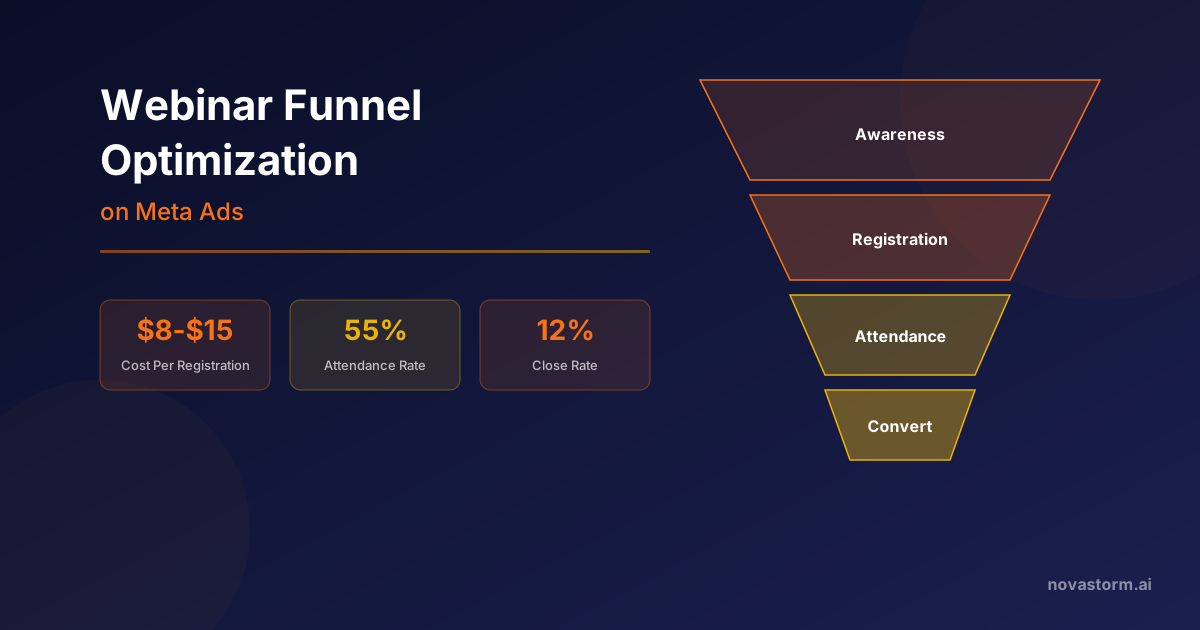
Webinar Funnel Optimization on Meta Ads
Build a webinar campaign with verified registration handoff, deduplicated attendance, complete program costs and mature sales-cohort economics.
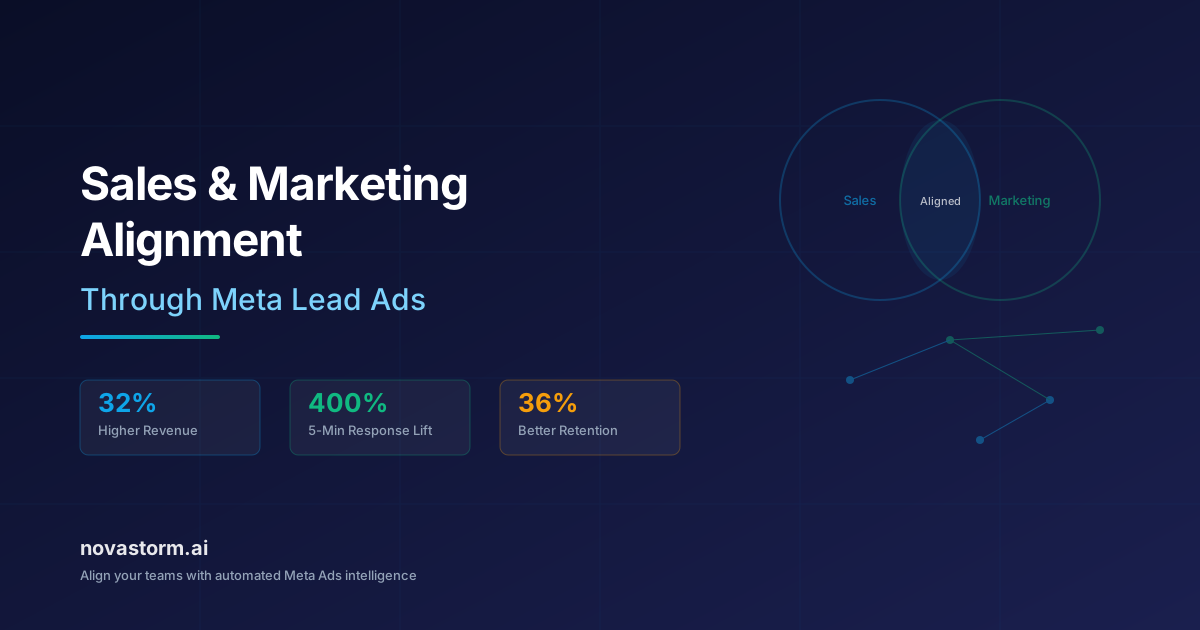
Sales and Marketing Alignment Through Meta Lead Ads
Design a Lead Ads handoff with CRM fields, safe retries, overnight SLA ownership, all-lead reconciliation and paid-outcome reporting.
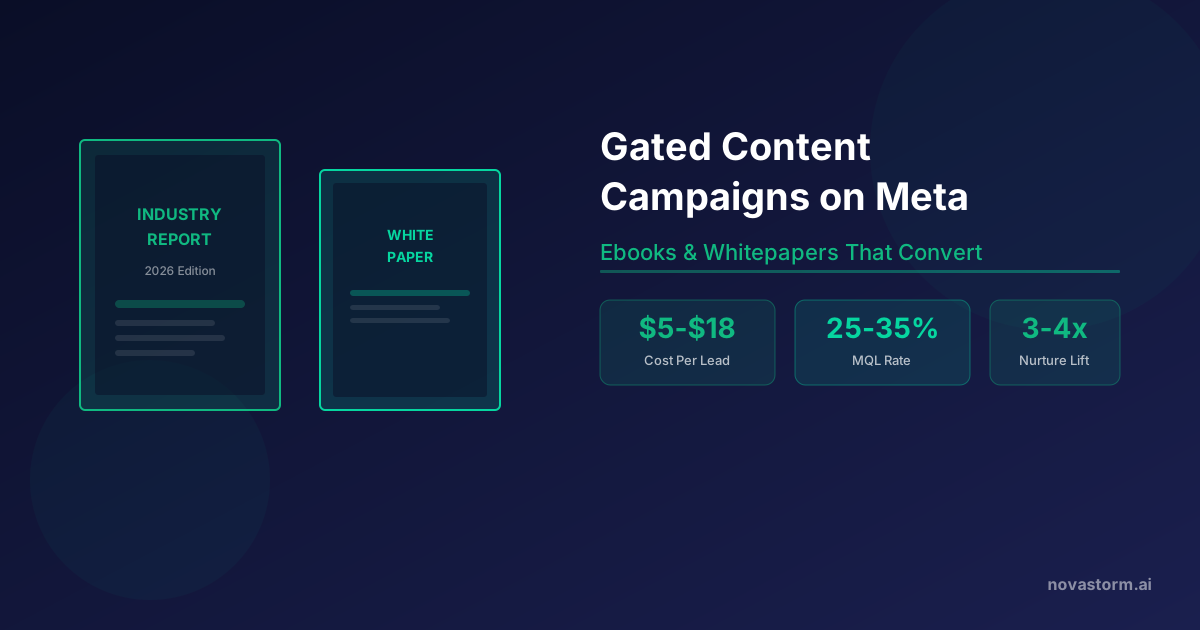
Gated Content Campaigns on Meta: Ebooks and Whitepapers That Convert
Evaluate gated-content campaigns with a useful worksheet, common MQL/SQL definitions, delivery checks and complete costs through retained contracts.