

Product Launch Ads on Meta: Budget, Stock and Approval Plan
Plan a product launch with truthful stock and bonus terms, consented waitlists, paid-order economics and measurable approval or stop gates.
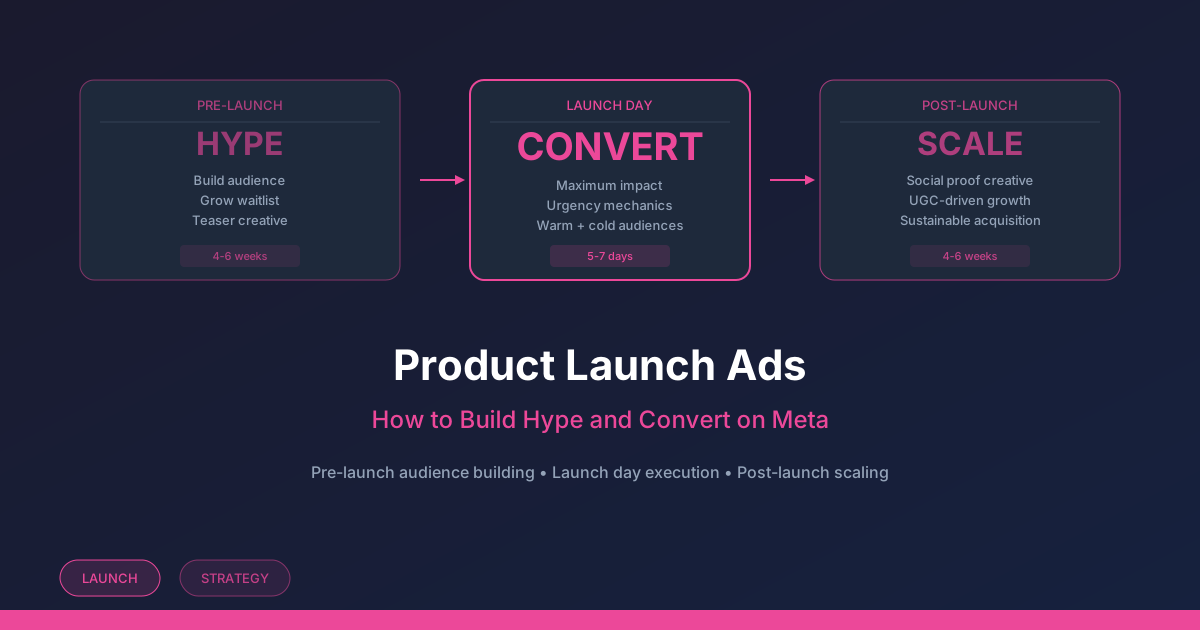
A launch plan must connect demand to fulfilled, profitable orders. Reach, views and waitlist signups can describe interest but are not launch success. Choose the number of assets and phases from the question you can afford to answer, rather than a universal eight-to-twelve asset requirement.
Define the offer and paid-order ceiling
Fictional launch brief: 100 sellable units at $100 each, $60 variable costs and a $5 bonus cost per eligible order. Contribution is $35 before ads. Reserving $15 leaves a candidate total acquisition ceiling of $20 per paid order. The bonus is genuinely limited to the first 100 qualifying orders only if stock, eligibility and order counting can enforce that promise. Reserve bonus inventory, define canceled/refunded-order treatment and publish clear terms.
An illustrative $400 acquisition budget at the assumed $20 CPA corresponds to 20 paid orders, not guaranteed sales. If $200 buys 100 waitlist signups and an assumed 20 become paid customers, pre-launch media cost alone is $10 per paid customer. Another $200 of launch spend would bring total media acquisition cost to $20 only if those same 20 unique paid customers are confirmed. Include creative costs and refunds in the real ceiling.
Size the brief to the evidence budget
Start with two complete truthful angles if that is the affordable comparison: a product-use demonstration and a problem/solution explanation. Produce required placement versions after preview checks; a resize is not a new independent hypothesis. Twenty expected orders across the whole plan may be too sparse for a reliable causal winner. Reduce questions or label the outcome exploratory rather than multiplying variants.
Use gates instead of automatic dates
Stop wasting ad budget
NovaStorm AI cuts Meta Ads CPA by 30% on average. No complex setup required.
| Stage | Evidence needed to proceed | Stop or revise when |
|---|---|---|
| Waitlist preparation | Working signup, stated contact purpose, verified permission and removal process | Consent or promised access cannot be honored |
| Launch approval | Stock, bonus terms, truthful previews, paid-order tracking and working checkout | Stock, rights, event or payment path is wrong |
| Initial spend | Approved budget/cash-loss cap and declared review time | Spend reaches the cap, fulfillment breaks or material defects appear |
| Post-launch comparison | Mature unique paid orders, refunds and contribution | Results remain immature or economically unacceptable |
| Growth proposal | Marginal economics, cash and available stock support one bounded increase | Only reach/early signups look good or capacity is exhausted |
Prepare accurate launch messages
| Situation | Example copy | Required check |
|---|---|---|
| Waitlist | "Join the list for a launch update. No purchase required." | This is the real purpose and contact permission |
| Available product | "The everyday bag is available. See dimensions and delivery details." | Stock and product details are current |
| Real bonus | "A bonus pouch with the first 100 eligible orders. See terms." | Remaining allocation and eligibility are enforced |
| After bonus runs out | "Explore the everyday bag and current availability." | Remove expired scarcity language from ads and page |
A signup is not guaranteed permission to upload a customer audience or contact through every channel. Confirm the purpose, lawful basis, platform requirements and saved audience controls separately. Do not publish customer data in briefs or claim every list member can be reached by ads.
Approve the draft and retain the evidence
- Use NovaStorm to prepare the brand/offer brief as paused campaign and local ad-set drafts. The user confirms factual claims, asset rights, limits and release readiness.
- Record budget consumed across all stages, paid customer IDs in a private ledger, returned orders and fulfillment capacity. Do not count the same customer twice across reports.
- Collect reviews only from genuine customers with appropriate rights. Until they exist, use verified product demonstrations rather than invented social proof.
- Review mature contribution at the agreed time and preserve an inconclusive result. A before/after launch improvement does not establish incremental advertising lift.
Published by NovaStorm AI. Planning examples are illustrative assumptions, not measured customer results.
Disclaimer: This article was generated with the assistance of AI and reviewed by the NovaStorm AI team. While we strive for accuracy, we recommend verifying specific data points and consulting official sources (linked where available) for critical business decisions.
Ready to automate your Meta Ads?
NovaStorm AI takes full responsibility for your campaigns — from monitoring to optimization.
Start NowMore on Seasonal and launch campaigns
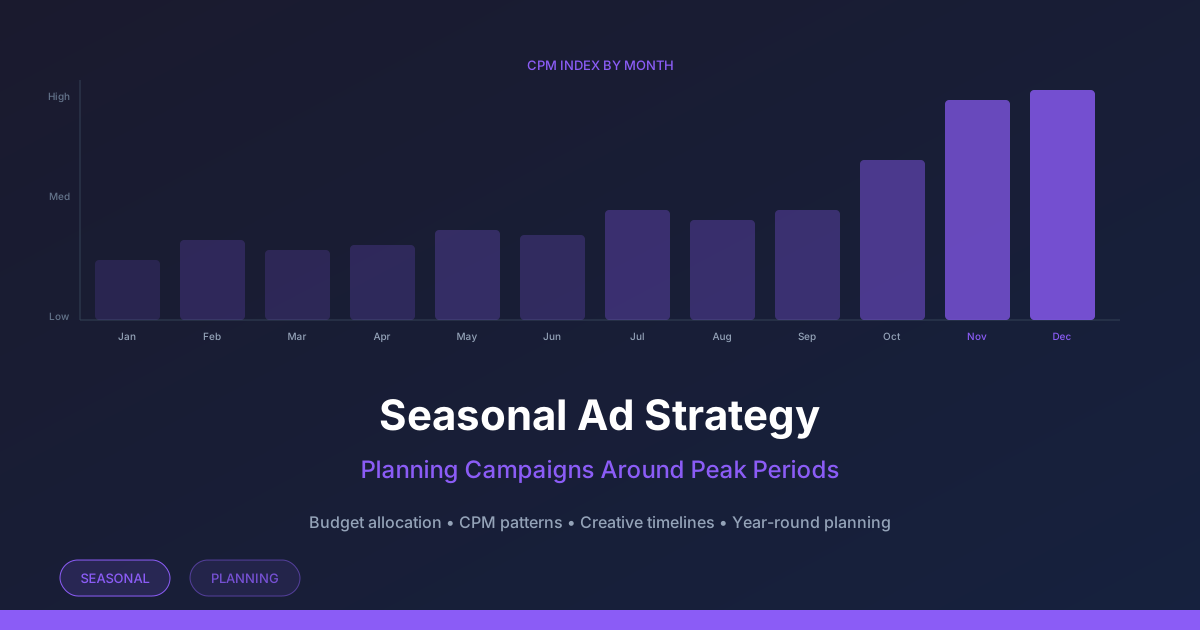
Seasonal Ad Strategy: Planning Campaigns Around Peak Periods
Build a local seasonal campaign calendar from inventory, contribution, cash and delivery deadlines, then approve a bounded creative brief.
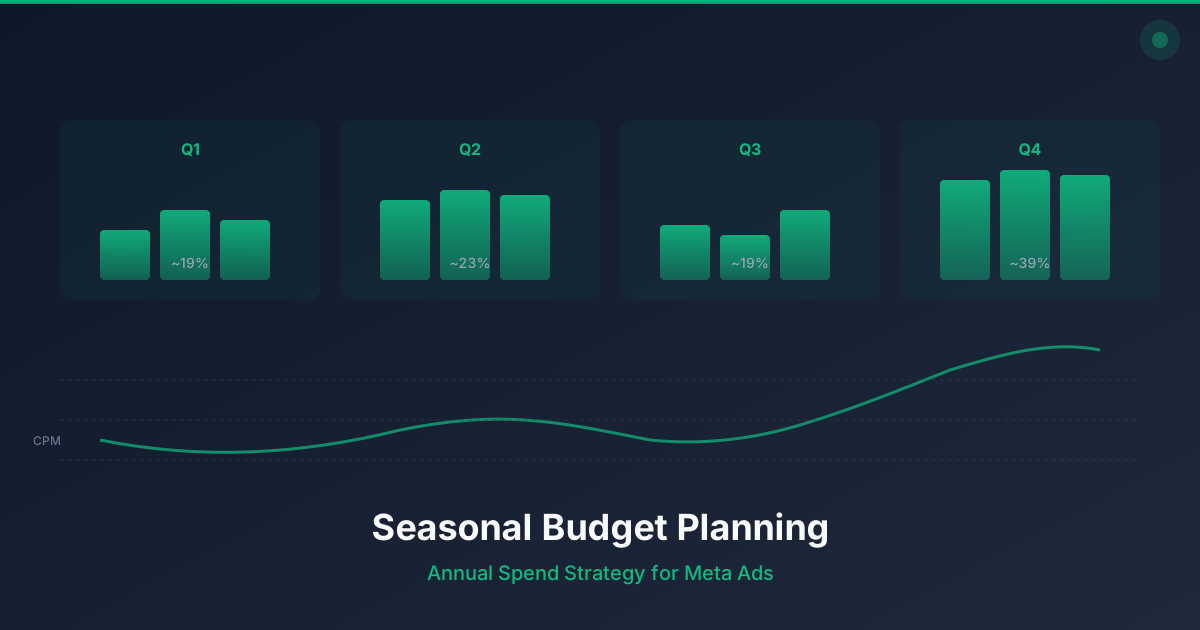
Seasonal Budget Planning for Meta Ads: Annual Spend Strategy
Build an annual advertising envelope from seasonal contribution, stock capacity and cash reserves, then approve mature-result reviews with clear owners.

Black Friday Meta Ads Strategy: From Preparation to Execution
Prepare a Black Friday and Cyber Monday brief with discount economics, truthful materials, inventory limits and mature-result spending decisions.
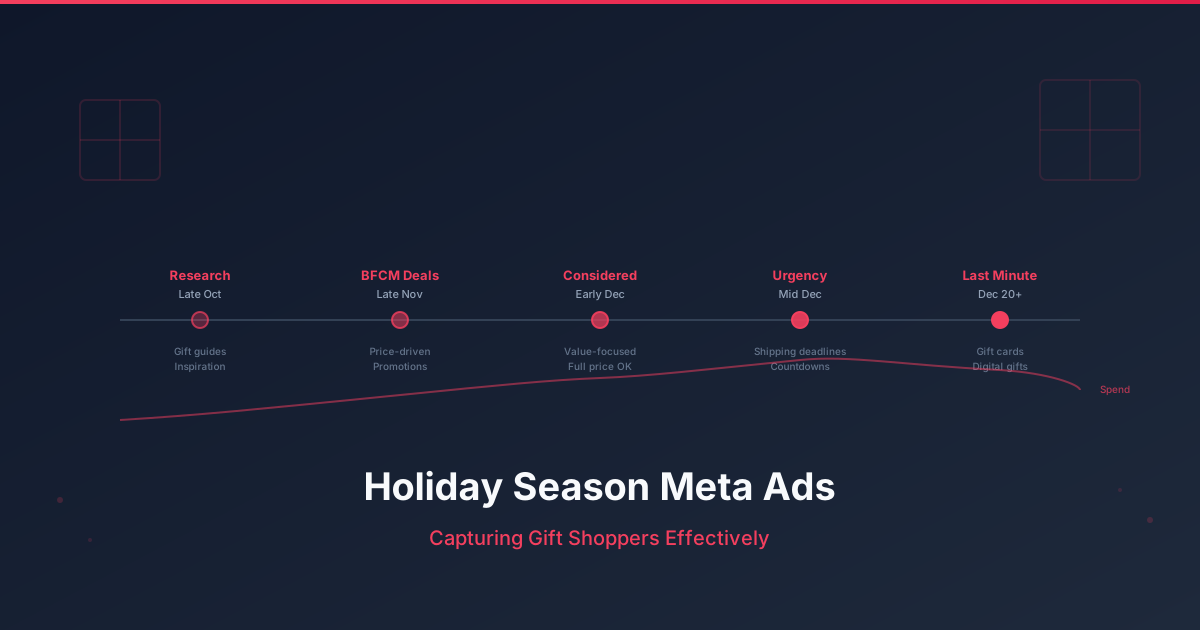
Holiday Season Meta Ads: Capturing Gift Shoppers Effectively
Build gift offers around the buyer’s decision, verified delivery and return terms, then compare price-tier creative by retained contribution.