

Lead Quality on Meta: Diagnose Forms and Sales Outcomes
Define lead quality consistently, check available form options and consent, and compare friction with reachable qualified leads and mature sales.
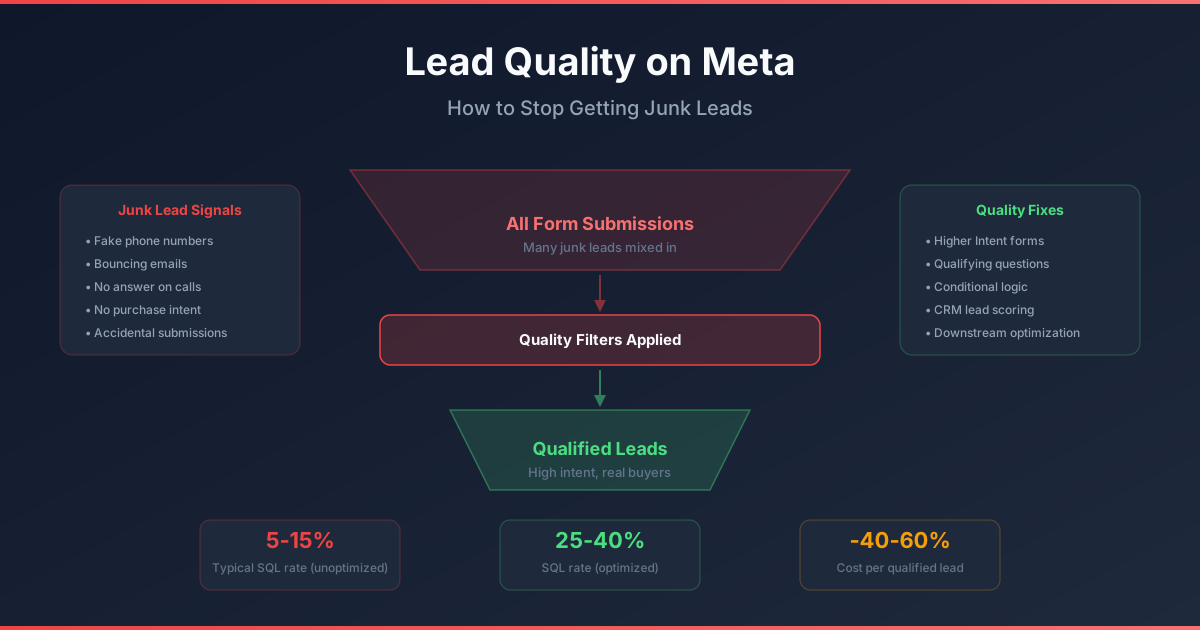
Poor lead outcomes can come from unclear offers, bad contact data, duplicates, unsuitable demand or an uneven sales process. Diagnose these separately. Manual entry, broad targeting or an extra review screen does not by itself prove high or low purchase intent.
Check available options and necessary fields
Inspect the actual account’s form types, review screens, questions and conditional routing. Use Higher Intent or branching only when the selected configuration supports them. If it cannot route to different endings, use a suitable external form or a truthful single path with manual qualification. Extra friction may remove good prospects as well as unsuitable ones.
| Required question | Synthetic answer/path | Common sales rubric |
|---|---|---|
| Service need | "Campaign planning" or "Creative production" | Match to an actual supported offer |
| Budget | Under $1,000: proposed educational resource | Not sales-qualified for this fictional offer; contact is optional and requires permission |
| Budget | Above $10,000: proposed consultation request | Budget alone is insufficient; confirm need, fit and role |
| Contact permission | Stated purpose and approved contact channel | No assumed permission for unrelated marketing |
| Reachability | Valid contact reviewed by submitter | Track unreachable separately from service fit |
These budget tiers are illustrative business choices, not NovaStorm pricing or universal qualification thresholds. All accepted leads must receive the same rubric and follow-up opportunity regardless of the branch. Do not collect contact data merely to deny an advertised service afterward.
A filled call and qualification log
| Synthetic record | Branch | Contact attempt/status | Qualification evidence | Mature outcome |
|---|---|---|---|---|
| L-001 | Consultation | Declared first attempt completed; contact reached | Needs actual offered service, agreed budget/role, approved follow-up | Qualified; sale pending |
| L-002 | Consultation | Invalid/unreachable test contact | Fit cannot yet be verified | Unreachable, not counted as qualified |
| L-003 | Resource | No sales contact requested | Resource-only permission | Not a sales lead |
| L-004 | Consultation | Same record as L-001 | Duplicate inquiry | Merge by policy, no second lead |
Use synthetic contacts in safe internal tests. Actual logs need timestamps, owner, attempt count, qualification reason and eventual paid/canceled status. Keep personal information private and allow access only for the intended process. Audit differences between sales representatives or queues before blaming the capture path.
Stop wasting ad budget
NovaStorm AI cuts Meta Ads CPA by 30% on average. No complex setup required.
Measure quality together with lost completion
Illustrative arithmetic: each of two form variants spends $300. A yields 60 unique accepted inquiries, 30 reachable contacts and six qualified leads; B yields 30 inquiries, 24 reachable contacts and six qualified leads. CPL is $5 versus $10 and mature CPQL is $50 for both. B’s higher reachable share does not prove cheaper qualified business. The counts are invented, not expected improvement ranges.
- Freeze the qualification rule, unchanged offer, eligible market and primary commercial outcome before exposure.
- Use feasible supported controlled assignment if a causal comparison matters. Record form starters and completion with their actual denominators, plus unique inquiries, contactability and mature qualification.
- Apply the same contact policy, sales capacity and observation horizon. Pending or unreachable is not automatically a lost or disqualified lead.
- Approve sample feasibility, spend/cash-loss caps and a review date. Keep an inconclusive result for sparse qualified leads or sales.
- Continue to paid-customer cost and contribution; a better CPQL may still yield less profitable customers.
Treat downstream optimization as a separate integration
Before changing an optimization event, verify actual event availability, consent/data-sharing, identity mapping, deduplication, timely accurate sales status and sufficient relevant evidence. Fifty events per week alone does not validate the event or predict commercial improvement. A new event is a hypothesis to evaluate with mature customer outcomes.
NovaStorm can prepare the truthful form/offer brief as paused campaign and local ad-set drafts. Conditional form creation, CRM scoring, contact logs and CAPI feedback require separately verified implementation. Do not assume automated qualification or percentage improvements. The capture-path comparison supplies the shared sales-outcome protocol.
Published by NovaStorm AI. Planning examples are illustrative assumptions, not measured customer results.
Disclaimer: This article was generated with the assistance of AI and reviewed by the NovaStorm AI team. While we strive for accuracy, we recommend verifying specific data points and consulting official sources (linked where available) for critical business decisions.
Ready to automate your Meta Ads?
NovaStorm AI takes full responsibility for your campaigns — from monitoring to optimization.
Start NowMore on B2B and lead generation
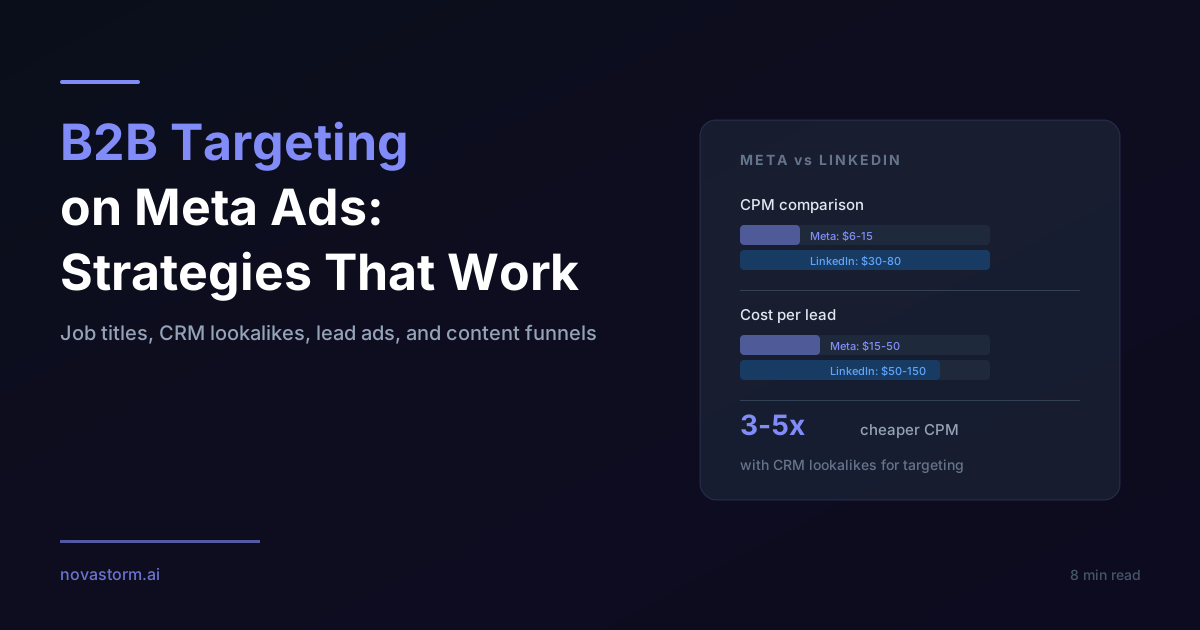
B2B Targeting on Meta Ads: Plan Qualified Leads and Paid Deals
Design B2B Meta targeting around qualification, mature deals and contribution, with an explicit decision when cheap leads do not close.
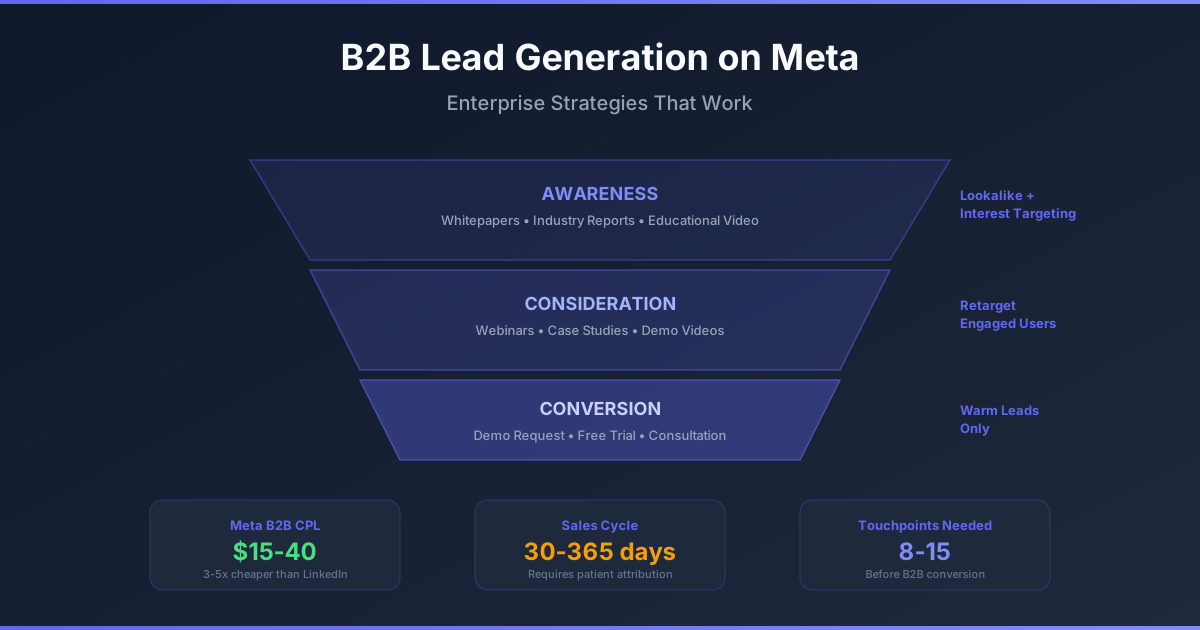
B2B Lead Generation on Meta: Enterprise Funnel and Measurement Plan
Plan a B2B content-to-demo funnel, distinguish pipeline forecasts from closed revenue and set Meta acquisition limits around mature sales and cash.
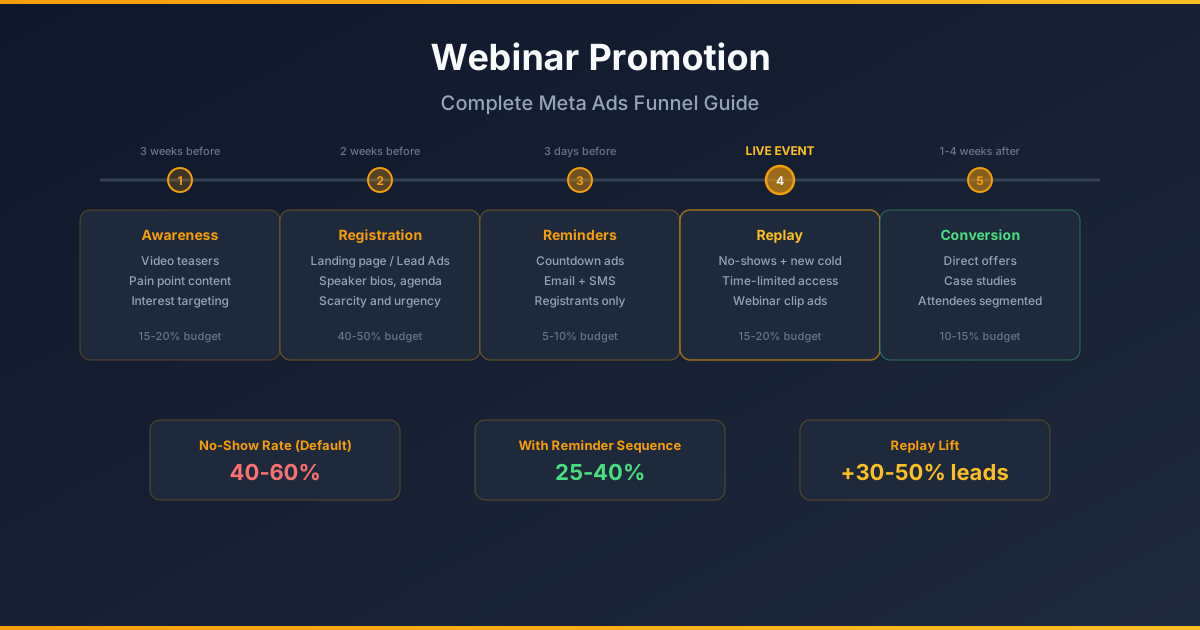
Webinar Promotion Through Meta Ads: Complete Funnel Guide
Budget a webinar funnel with explicit registration and attendance assumptions, verify handoffs and permission, and evaluate mature qualified sales.

Messenger Ads: Offer, Human Handoff and Paid-Outcome Review
Plan a Messenger ad offer with account eligibility checks, a human handoff queue and mature paid-outcome measurement instead of conversation-price benchmarks.