

Lead Ads vs Landing Page: Which Converts Better on Meta
Compare instant forms and landing pages through qualified leads, mature sales and allowable customer costs, with a tested handoff and fair assignment.
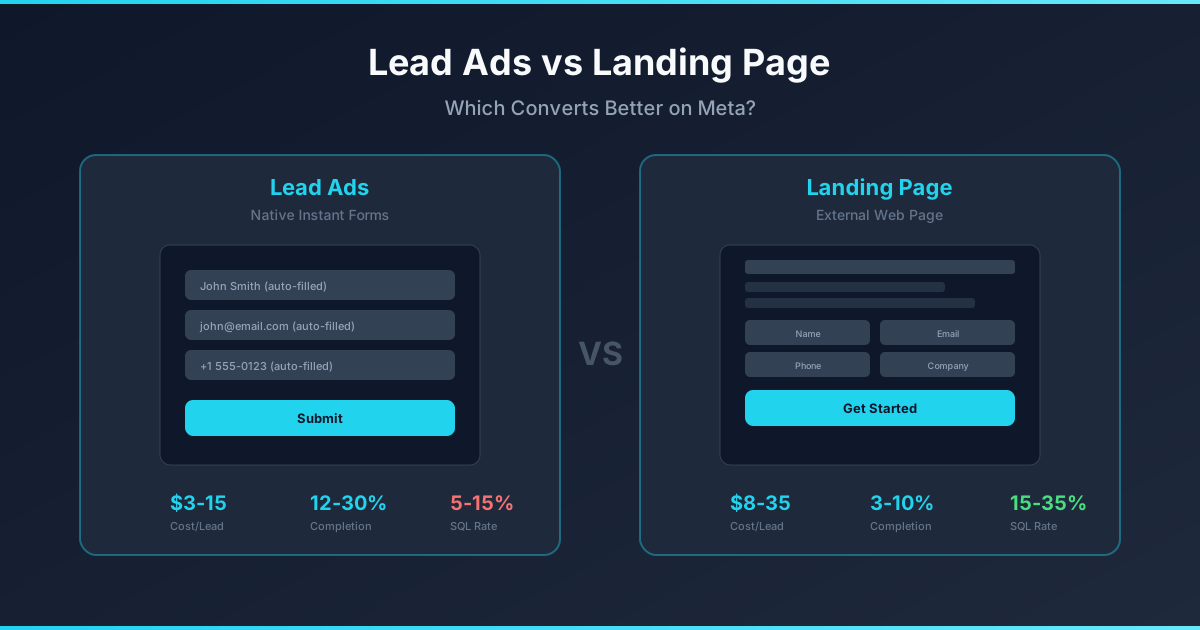
An instant form and an external landing page are two capture paths. Neither guarantees better customers. The decision depends on the explanation needed, required fields, reachable contacts, consistent sales follow-up and mature contribution.
Continue the worked comparison to paid customers
Illustrative equal-spend comparison: each path spends $300. Instant forms yield 60 valid submissions and six qualified leads; the landing page yields 30 submissions and six qualified leads. Raw CPL is $5 versus $10, but qualified CPL is $50 for both. After the declared follow-up horizon, assume three versus two completed sales: media customer costs are $100 versus $150. These are invented outcomes, not a measured test.
Suppose each paid customer contributes $200 before acquisition and the business reserves $80. Full acquisition allowance is $120. If $20 per customer is reserved for sales/creative costs, media allowance is $100: the instant-form example is at that limit and the page example exceeds it. Refunds, cancellation and actual sales costs can change the conclusion. Six qualified leads per arm are too few to declare a universal winner from this arithmetic.
Declare a fair protocol before delivery
| Protocol field | Proposed specification |
|---|---|
| Assignment unit | One eligible prospect under a supported controlled assignment; avoid the same person receiving both paths |
| Unchanged factors | Truthful offer, market, service eligibility, core message and conversion definition |
| Path change | Instant form versus page; record unavoidable UI or tracking differences |
| Primary result | Mature contribution per assigned prospect and cost per actual new customer |
| Sales process | Same qualification rubric, response policy and opportunity to contact |
| Maturity | Observe through the actual sales/payment/refund delay, not a fixed universal duration |
| Limits | Affordable per-arm spend, combined cash-loss cap and declared review time |
| Sparse result | Report inconclusive; wait only within the approved limit |
Two ordinary campaigns running beside each other do not guarantee randomization. If controlled assignment is unavailable, label the result an operational comparison and document audience and delivery differences. Page visitors and form starters also have different denominators; do not equate their completion rates.
A synthetic test-inquiry journal
Stop wasting ad budget
NovaStorm AI cuts Meta Ads CPA by 30% on average. No complex setup required.
| Record | Source and fields | Result | Acceptance |
|---|---|---|---|
| TEST-FORM-001 | Instant form ID/version; test@example.invalid; service=demo; permission record | Received once by intended owner | Field mapping and source preserved; no real outreach |
| TEST-PAGE-001 | Page version; utm_source=meta; utm_content=page_a; same required fields | Received once by intended owner | Submitted/received timestamps and source agree |
| Duplicate replay | Same synthetic inquiry identifier | Merged or marked by declared policy | Not counted as a second new lead |
| Unreachable contact | Synthetic invalid contact status | Unavailable, not automatically unqualified | Separate contactability from business fit |
| Failed handoff | Declared test delivery failure | Visible retry/escalation status | No silent loss or duplicate resend |
Example.invalid addresses are placeholders for safe internal testing, not contacts to message. Verify permitted test environments and actual connector behavior. A submission confirmation alone does not prove the sales team received the record.
Score the same outcomes in both paths
- Define qualified lead from service fit, budget/capacity, need and permission for the intended follow-up. Freeze the rubric before comparing arms.
- Log contact attempts, response, qualification, duplicate status and paid sale consistently. A busy sales queue can look like poor lead quality.
- Keep pending leads separate from lost leads until the declared horizon matures. Reconcile revenue and refunds with business records.
Use the form optimization workflow to distinguish completion from useful qualification before comparing the two lead routes.
HubSpot’s conversion-event documentation describes connector-specific prerequisites and restrictions. It does not establish a NovaStorm CRM integration. NovaStorm can prepare the offer and Meta brief as paused campaign and local ad-set drafts; form delivery, CRM mapping and sales reconciliation require separately verified systems.
Published by NovaStorm AI. Planning examples are illustrative assumptions, not measured customer results.
Disclaimer: This article was generated with the assistance of AI and reviewed by the NovaStorm AI team. While we strive for accuracy, we recommend verifying specific data points and consulting official sources (linked where available) for critical business decisions.
Ready to automate your Meta Ads?
NovaStorm AI takes full responsibility for your campaigns — from monitoring to optimization.
Start NowMore on Landing pages and conversion
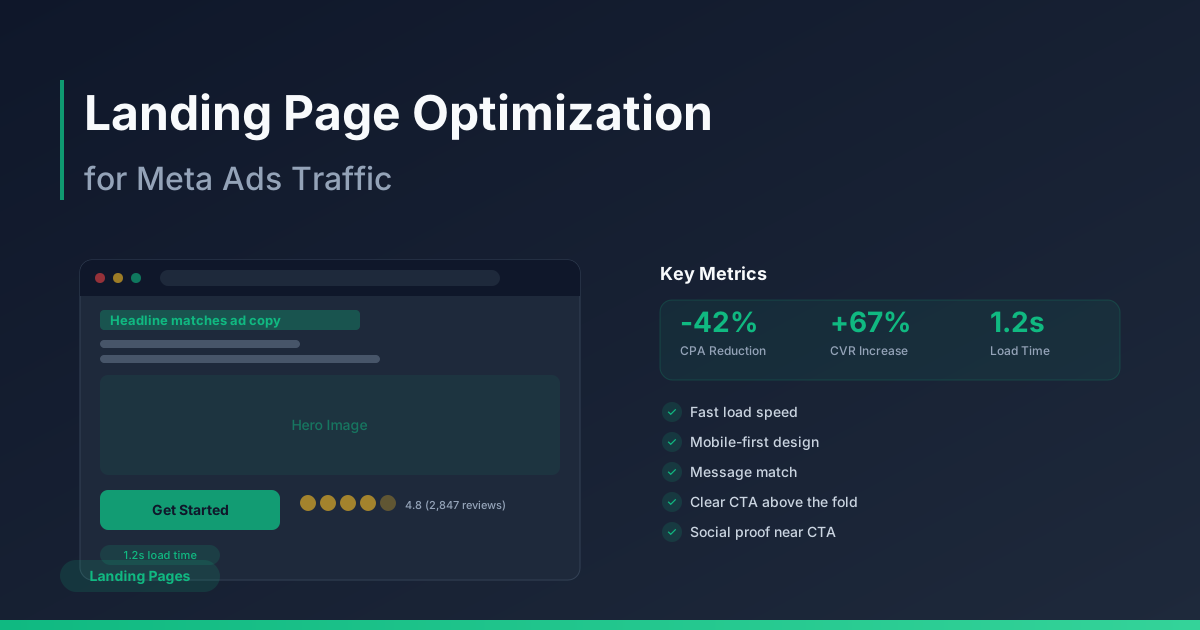
Landing Page Optimization for Meta Ads Traffic
Reproduce the mobile purchase journey, reconcile click/session/checkout/payment denominators and evaluate technical fixes separately from sales effects.
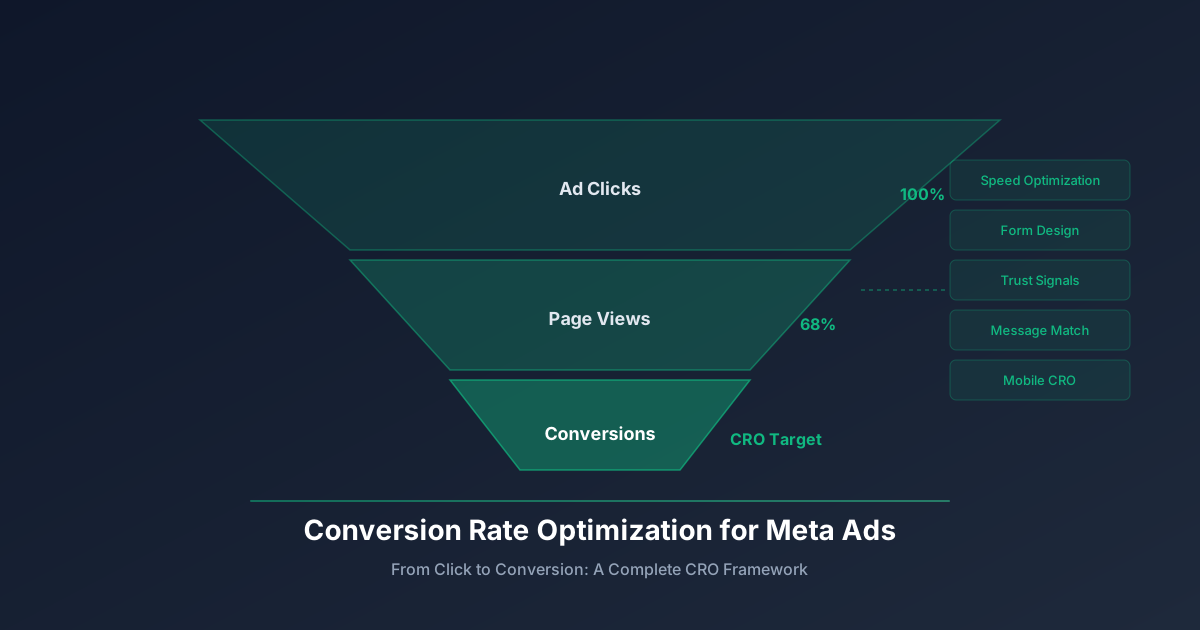
Conversion Rate Optimization for Meta Ads Landing Pages
Turn CRO observations into an owned backlog, reproduce mobile defects and separate repair acceptance from a controlled conversion hypothesis.
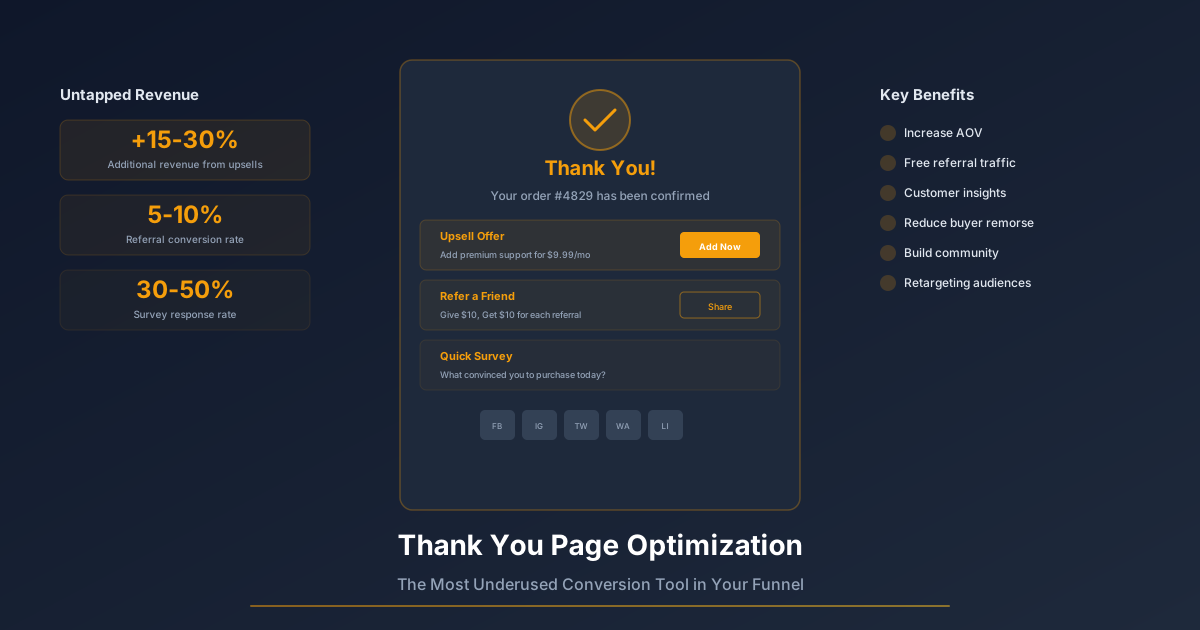
Thank You Page Optimization: Confirm Status and Prevent Duplicate Purchases
Design confirmation messages from verified lead and payment states; prevent duplicate purchases and make optional add-ons and surveys explicit.
A/B Testing Landing Pages for Meta Ads Traffic
Set up consistent landing-page assignment, check revisit and event integrity, calculate sample and budget needs, and distinguish repairs from experiments.