

Meta Engagement Campaigns: Plan Interactions and Check Paid Outcomes
Plan a Meta Engagement campaign with a declared interaction, post-ID log, complaint guardrails and a separate test of downstream paid outcomes.
Choose Engagement when the supported interaction itself serves a defined job, such as discussing an event or answering a product question. Likes and comments are observations, not revenue. A claim that engagement produces additional sales needs a comparison that estimates what would have happened without the promotion.
Check the actual saved campaign setup
The official Meta campaign SDK includes OUTCOME_ENGAGEMENT. That enum does not establish which performance goal, location, post or format is available in your account. Inspect the actual eligible options, save the chosen setup and review its placement preview before approving spending.
If the required result is a purchase or qualified lead, start with the business-outcome objective comparison. An inexpensive interaction is not necessarily an efficient purchase proxy.
Reconcile the $100 / 500 example
Hypothetical report, not a measured campaign: assume $100 spend and 500 reported interactions under one declared reporting definition. Cost per reported interaction is $100 / 500 = $0.20. The count may contain repeated actions by the same person; it is not automatically 500 unique prospects.
Assume two downstream paid order IDs appear within the chosen mature follow-up window. Reconcile payment, refunds, duplicate IDs and the order time. If one order is refunded, one retained order remains and media per retained attributed order is $100. If both remain, the arithmetic is $50 per order. Neither calculation identifies incremental revenue caused by the interactions.
- Record the interaction definition and whether unique-person counts are available. Keep likes, comments, views and conversations separate when their denominators differ.
- Declare the interaction cohort, attribution rule, order date range and maturity cutoff before analysis. Refresh late-arriving orders using the same rule.
- Record unique paid and retained order IDs rather than summing events across reports. Deduplicate an order associated with several interactions.
- Compare retained contribution after media with the business allowance, while labeling attribution as association unless a causal comparison supports more.
Keep a post and operational-risk log
Stop wasting ad budget
NovaStorm AI cuts Meta Ads CPA by 30% on average. No complex setup required.
Illustrative planning log: the identifiers below are teaching labels, not actual Meta post IDs. Replace them with verified identifiers from the saved setup and assign a named owner in your working record.
| Planning record | Purpose / setup check | Guardrail / acceptance |
|---|---|---|
| POST-A / version 1 | Product question; Engagement goal and chosen format verified in the account | Illustrative $100 maximum media allowance; reviewer approval before launch |
| POST-A / comment review | Record genuine questions separately from complaints and irrelevant interactions | Support owner checks the queue at declared intervals; pause if the team cannot handle required responses |
| POST-A / claim complaint | Save the disputed claim and relevant comment without unnecessary personal data | Correct misleading content; do not hide a valid product issue to improve apparent sentiment |
| POST-B / revised message | Confirm whether a revision or copy creates a different post ID | Preserve before/after IDs and preview; do not assume interaction transfer |
The allowance and response cadence are operator choices for this hypothetical promotion, not Meta requirements. Check current post eligibility and permissions in the account. A viewer who complains may engage heavily without any intent to purchase; read the substance instead of scoring every action as favorable.
Test the revenue hypothesis separately
Hypothesis: promotion of this useful discussion adds retained orders beyond ordinary marketing. Where a suitable controlled design is available, compare eligible groups with and without the promotion while holding the underlying offer and other activity stable. Choose the outcome, allocation, loss allowance, follow-up window and decision rule in advance. Report mature retained orders and contribution for both groups, including uncertainty.
An ordinary before/after report is vulnerable to seasonality, overlapping campaigns and changes in the offer. Two attributed orders and a cheaper interaction do not resolve those confounders. If the comparison cannot estimate incremental sales, report relevant discussion and associated orders as separate results. The video-view audience guide applies the same boundary between an interaction and purchase intent.
Prepare the message for review
Use actual customer questions to brief a clearer message in NovaStorm, keeping the post identifier, chosen interaction and complaint-response owner with the brief. Prepare a proposed campaign as paused campaign and local ad-set drafts for user review. Verify any required Engagement configuration in the actual product and account; this workflow does not claim automatic post moderation, experiment allocation or guaranteed sales.
Published by NovaStorm AI. Planning examples are illustrative assumptions, not measured customer results.
Disclaimer: This article was generated with the assistance of AI and reviewed by the NovaStorm AI team. While we strive for accuracy, we recommend verifying specific data points and consulting official sources (linked where available) for critical business decisions.
Ready to automate your Meta Ads?
NovaStorm AI takes full responsibility for your campaigns — from monitoring to optimization.
Start NowMore on Campaign structure and objectives
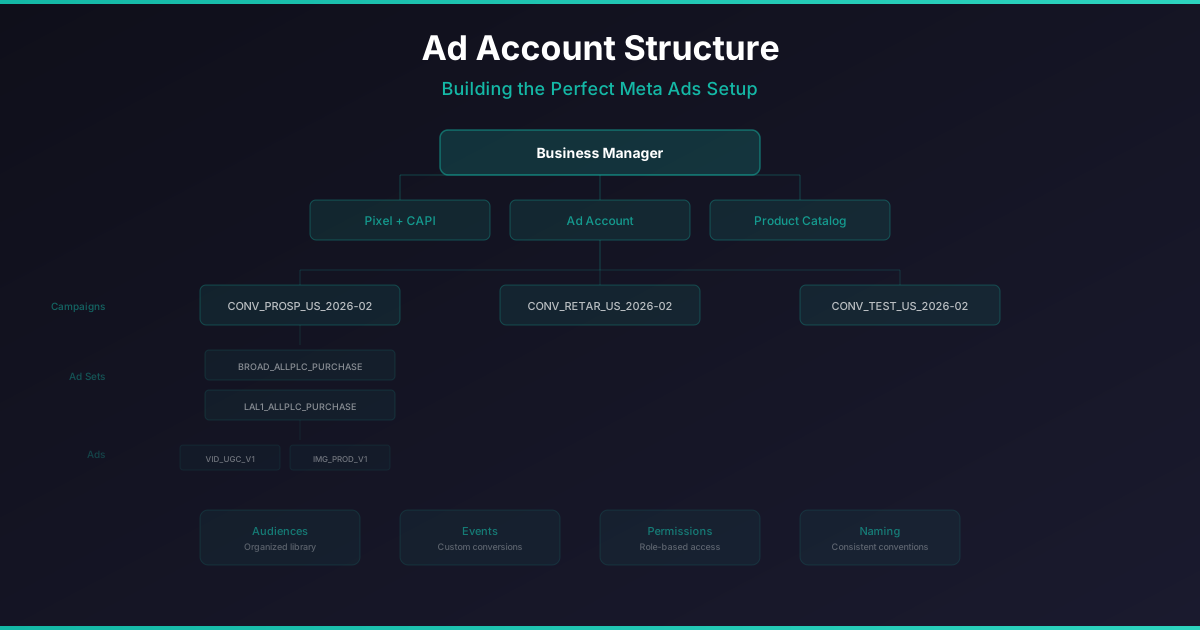
Ad Account Structure: Building the Perfect Meta Ads Setup
Audit asset owners and effective permissions, connect durable IDs to event responsibility, and approve a campaign plan for the correct account.

Brand Awareness Campaigns on Meta: When and How to Invest at Top of Funnel
Define a Meta awareness hypothesis and measurement plan before committing spend, with current objective naming and limits on proxy conclusions.
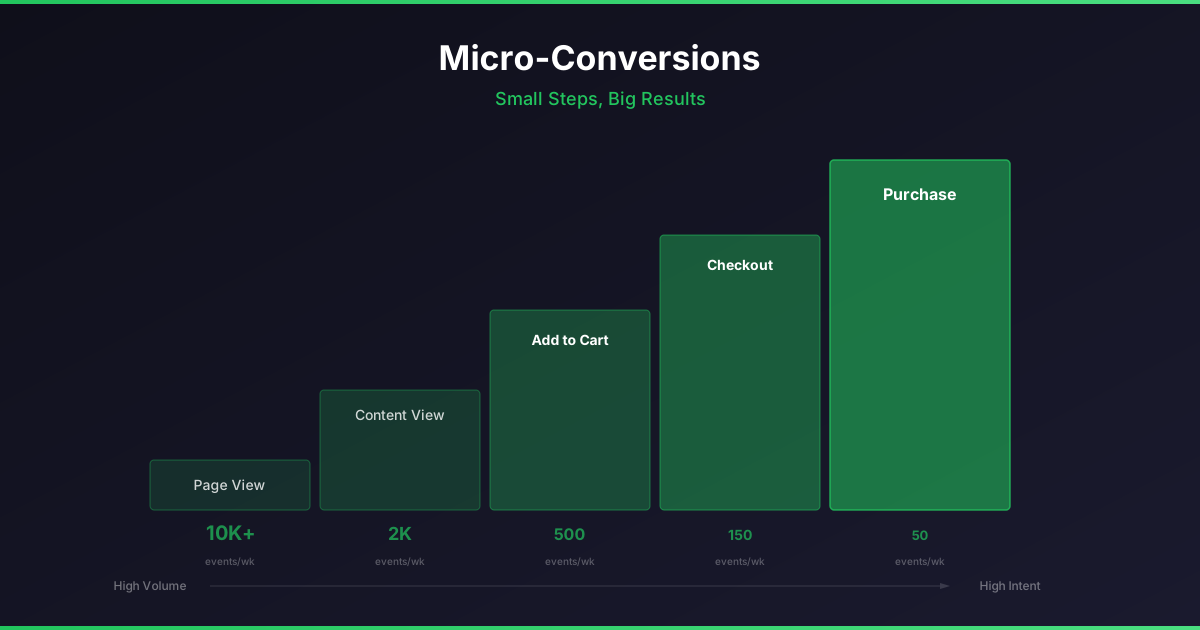
Micro-Conversions in Meta Ads: Diagnose the Funnel and Validate the Proxy
Use micro-conversions to diagnose a funnel, clean event counts, and test whether a proxy predicts mature business outcomes.

Reach and Frequency Campaigns on Meta: Predictable Delivery for Big Brands
Review reservation eligibility, forecasts, commitments and delivery measurement without promising identical exposure or universal reach guarantees.