

Competitor Analysis for Meta Ads: Tools and Tactics
Record observable competitor messages, keep spend and performance unknown, and turn a sourced public promotion into an original creative brief.
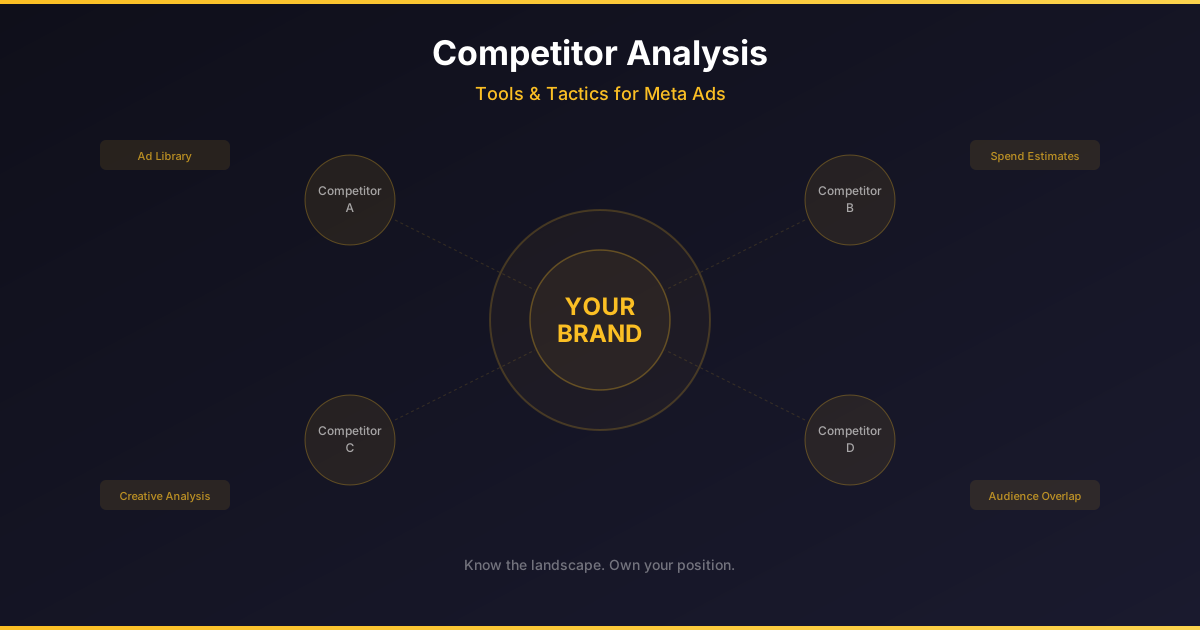
Competitor research can identify messages and offers worth testing. Public visibility does not tell you that an ad is profitable, whom it reaches or how much the advertiser spends. Keep observations, interpretations and unknown results in separate fields.
Build an evidence ledger
| Field | Record | Do not infer |
|---|---|---|
| Source | Public URL or Ad Library ID, market/filter and observation date. | That the material runs in every market or placement. |
| Creative | Opening, visible benefit, offer conditions, CTA and format. | That the opening stops scrolling or the offer converts. |
| Duration and count | Visible start/status information and count under the selected filters. | Daily spending, profitability or production cadence. |
| Unknown results | Spend, CPA, conversion rate, audience, contribution and experiment result. | A numerical estimate from ad count or survival time alone. |
When examining Meta Ad Library, retain a stable ad link or ID and the exact filters used. A long-running ad may remain visible for reasons unrelated to profit, and an ad that disappears may have ended a scheduled campaign. Public copies do not reveal actual competitor audience membership.
Evaluate tools by their observable scope
Do not plan research around an assumed legacy Audience Insights or audience-overlap feature. Check what your account currently exposes and document its purpose. A comparison between your own available audiences, if supported, is not access to a competitor’s audience. An interest proxy is your hypothesis, not a measurement of competitor targeting.
For an external spend estimate, require the provider’s method, market coverage, sampling period, uncertainty and treatment of missing placements. If those are unavailable, leave spending unknown. A warehouse can organize records but cannot turn absent performance data into facts.
A sourced public creative breakdown
Stop wasting ad budget
NovaStorm AI cuts Meta Ads CPA by 30% on average. No complex setup required.
Observed on October 2, 2026: the hero promotion on the Shopify homepage pairs aspirational business identities with a building-fast message and the CTA “Start for free.” This is a public website promotion, not a verified Meta ad or a performance case. The visible offer emphasizes a low-friction starting action. Actual eligibility, later charges and conversion results must be checked separately.
| Element | Observation | Original brief hypothesis |
|---|---|---|
| Opening | An aspirational identity anchors the hero message. | Test a specific desired task rather than generic aspiration. |
| Offer | The visible CTA offers a free starting action. | Explain precisely what our own real starting action includes and when charges apply. |
| CTA | “Start for free” names an action. | Use an accurate action that the destination completes; do not copy an unsupported free offer. |
Example original copy hypothesis for a campaign-planning product: “Turn your offer into a campaign brief you can review.” Candidate CTA: “Build your brief.” Use that wording only if the destination actually provides the described task. It takes inspiration from the action-oriented structure, without copying the brand’s creative or asserting that its message wins.
Turn research into an approved test
- Write one sourced observation, a clearly labeled interpretation and the unresolved question. Use a current linked ad record when you specifically need a Meta-ad example.
- Prepare an original brief with your own offer, evidence, brand assets, rights and landing-page action. In NovaStorm, generate candidate materials and have a user review factual accuracy and approve them. This workflow does not imply automatic competitor analysis.
- Choose a capped comparison with an existing message, common eligibility and mature business outcomes. Record production costs and media costs separately; report uncertainty before copying the approach across campaigns.
A useful monitoring cycle ends with a small number of testable questions. Revisit the ledger when offers change, preserve dated observations and avoid using competitors’ unknown economics as your own budget plan.
Published by NovaStorm AI. Planning examples are illustrative assumptions, not measured customer results.
Disclaimer: This article was generated with the assistance of AI and reviewed by the NovaStorm AI team. While we strive for accuracy, we recommend verifying specific data points and consulting official sources (linked where available) for critical business decisions.
Ready to automate your Meta Ads?
NovaStorm AI takes full responsibility for your campaigns — from monitoring to optimization.
Start NowMore on Competitive research
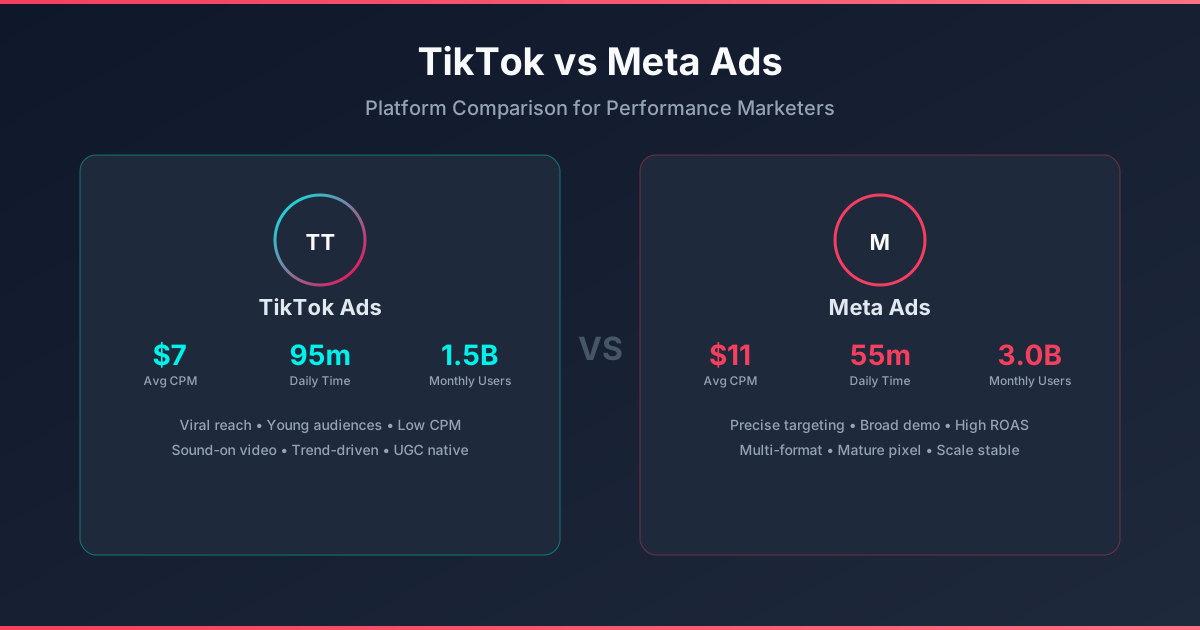
TikTok vs Meta Ads: Platform Comparison for Performance Marketers
Adapt one truthful offer for TikTok and Meta Reels, reconcile paid orders and plan a valid bounded cross-platform comparison.

How to Use Meta Ad Library for Competitive Research
Reproduce a dated Meta Ad Library research log, troubleshoot blocked or empty searches and turn a verifiable observation into your own test brief.
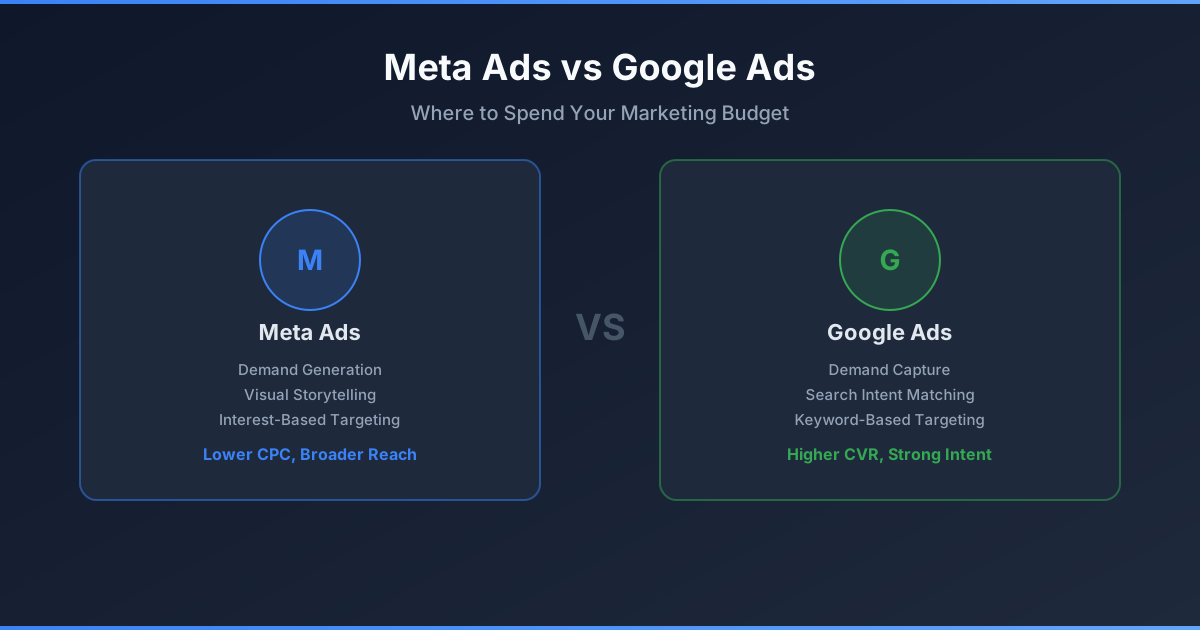
Meta Ads vs Google Ads: Where to Spend Your Marketing Budget
Assign Meta and Google clear channel tasks, reconcile shared orders and test a bounded budget change using contribution and demand limits.
Competitor Ad Spy Tools: How to Research Meta Ads Competitors
Compare competitor research tools by verifiable fields, keep a dated evidence log, and turn creative inspiration into an honest campaign hypothesis.