

Brand Lift Studies on Meta: Measuring Awareness and Recall
Plan a brand-lift survey with account eligibility, neutral questions, response denominators and properly interpreted uncertainty.
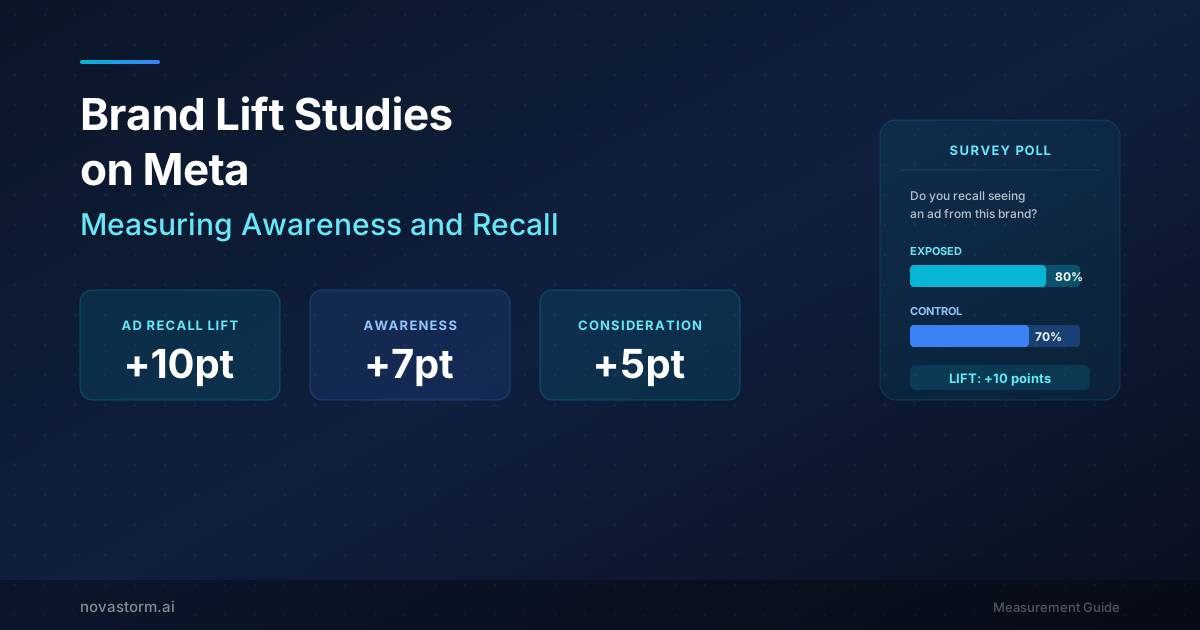
Brand lift compares survey answers under an advertising strategy with answers in a suitable control group. It measures specified perceptions such as awareness or recall; it does not directly prove sales lift. Design the question, sampling and business decision before committing media spend.
Eligibility is an account-specific gate
Meta Blueprint’s measurement lesson distinguishes brand lift, conversion lift and A/B tests. Check current Brand Lift eligibility through the account’s offered study workflow or measurement representative. Record the supported study type, scope, budget, population, timing, questions and survey method. Do not assume a universal USD 30,000 or 1.5-million-person threshold, a guaranteed setup deadline or a frequency cap for every objective.
Questions and contamination checks
| Construct | Illustrative neutral question | Risk to inspect |
|---|---|---|
| Recall | Which of these brands, if any, do you remember seeing advertised recently? | Prompting a brand can affect recall |
| Awareness | Which of these brands have you heard of? | Keep option order neutral or randomized where supported |
| Consideration | Which would you consider for this defined purchase? | Intent is not a purchase |
| Message association | Which brand, if any, do you associate with this message? | Do not give the intended answer in the question |
Use approved study questions and identical measurement in both groups. Record sampling frame, invitation timing, completed responses, nonresponse and weighting. Ensure control users are withheld from the specific campaigns being tested; other brand ads, TV, organic exposure and shared households can contaminate the comparison. Assigned treatment is not identical to confirmed exposure.
A response-based calculation
Synthetic responses: 60 of 200 respondents in the strategy-assigned group and 40 of 200 in control report awareness. Rates are 30% and 20%; absolute lift is ten percentage points and relative difference is 50%. These are fictional counts, not category benchmarks. Denominators are completed responses, not all impressions or eligible people.
Stop wasting ad budget
NovaStorm AI cuts Meta Ads CPA by 30% on average. No complex setup required.
Under a simple independent-binomial normal approximation, the standard error is sqrt(0.30 × 0.70 / 200 + 0.20 × 0.80 / 200) ≈ 0.0430. An illustrative 95% interval is 0.10 ± 1.96 × 0.0430, approximately 1.57–18.43 percentage points. The NIST two-proportion reference describes the comparison. Survey weighting, clustering and selective response require the appropriate study estimator, not this shortcut.
Plan the sample before interpreting confidence
Illustrative rough planning for equal independent groups: detect five percentage points with two-sided 5% significance and 80% power, conservatively around a 50% baseline. n ≈ 2 × (1.96 + 0.84)² × 0.5 × 0.5 / 0.05² = 1,568 completed responses per group. This is an approximation, not a Meta minimum. Required reach and invitations depend on response rate; consult an analyst for the actual design and multiple-question correction.
A frequentist 90% confidence interval describes a procedure that covers the fixed parameter in 90% of repeated valid samples. It does not mean there is a 10% probability this observed lift arose by chance. If a platform uses a Bayesian probability label, read that method separately rather than translating it into this frequentist claim. Do not stop early simply because a favorable interval appears.
A limited business interpretation
Later increases in branded search or lower retargeting CPA are useful observations, not proof that the study’s ads caused those changes. Record seasonality, promotions, price and other media. A conversion-lift design is needed for a causal sales question. No revenue uplift or universally effective weekly frequency is assumed.
Prepare the approved brand message as a NovaStorm campaign draft with the study owner’s chosen ceiling and timing. Review the draft and monitor actual campaign conditions through your existing reporting process. Survey randomization, response collection, confidence calculations and study eligibility are separate measurement responsibilities.
Published by NovaStorm AI. Worked examples and test fixtures in this article are illustrative, not observed customer results.
Disclaimer: This article was generated with the assistance of AI and reviewed by the NovaStorm AI team. While we strive for accuracy, we recommend verifying specific data points and consulting official sources (linked where available) for critical business decisions.
Ready to automate your Meta Ads?
NovaStorm AI takes full responsibility for your campaigns — from monitoring to optimization.
Start NowMore on Attribution and incrementality
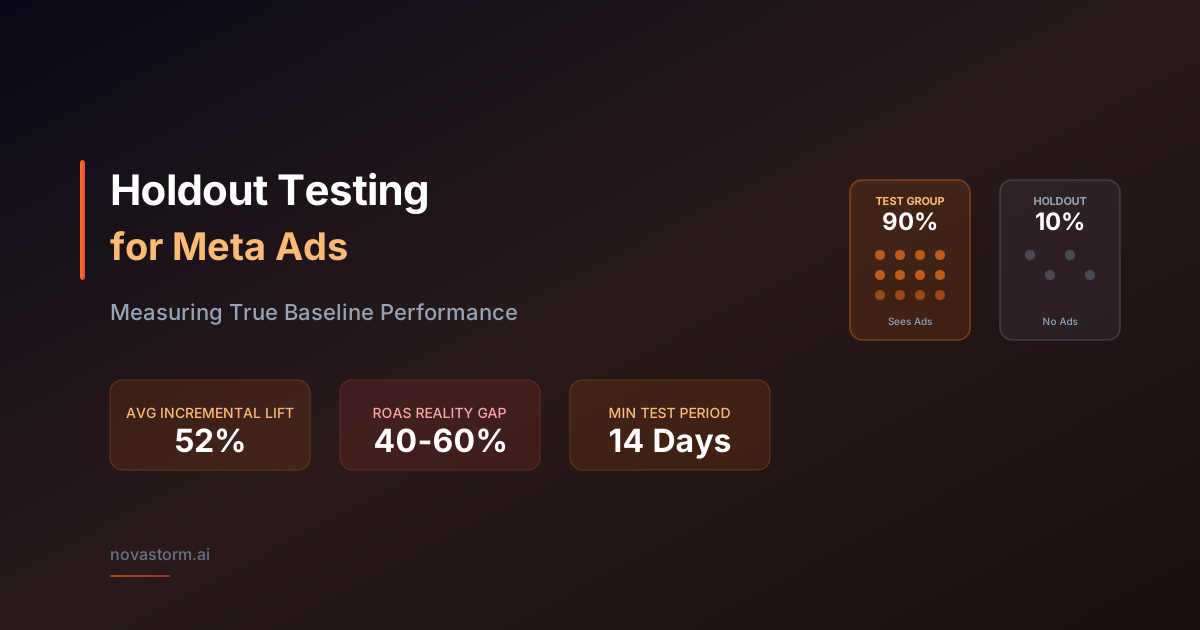
Holdout Testing for Meta Ads: Measuring Baseline Performance
Design a holdout with explicit scope, power and opportunity cost, then calculate consistent incremental outcomes with uncertainty.

Marketing Mix Modeling for Meta Ads: Beyond Last-Click Attribution
Prepare aligned weekly data for MMM, inspect identification and calibration, and turn uncertain model scenarios into a contribution-based budget memo.
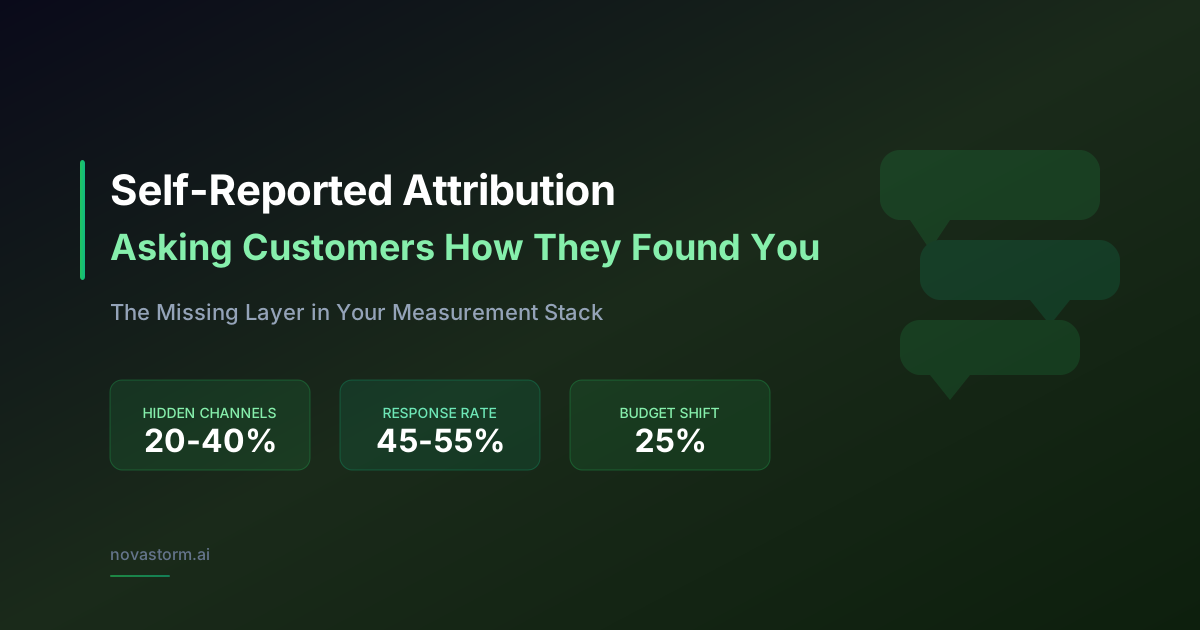
Self-Reported Attribution: Asking Customers How They Found You
Use optional self-reported discovery answers with order-linked storage, unknown categories and honest nonresponse reporting.
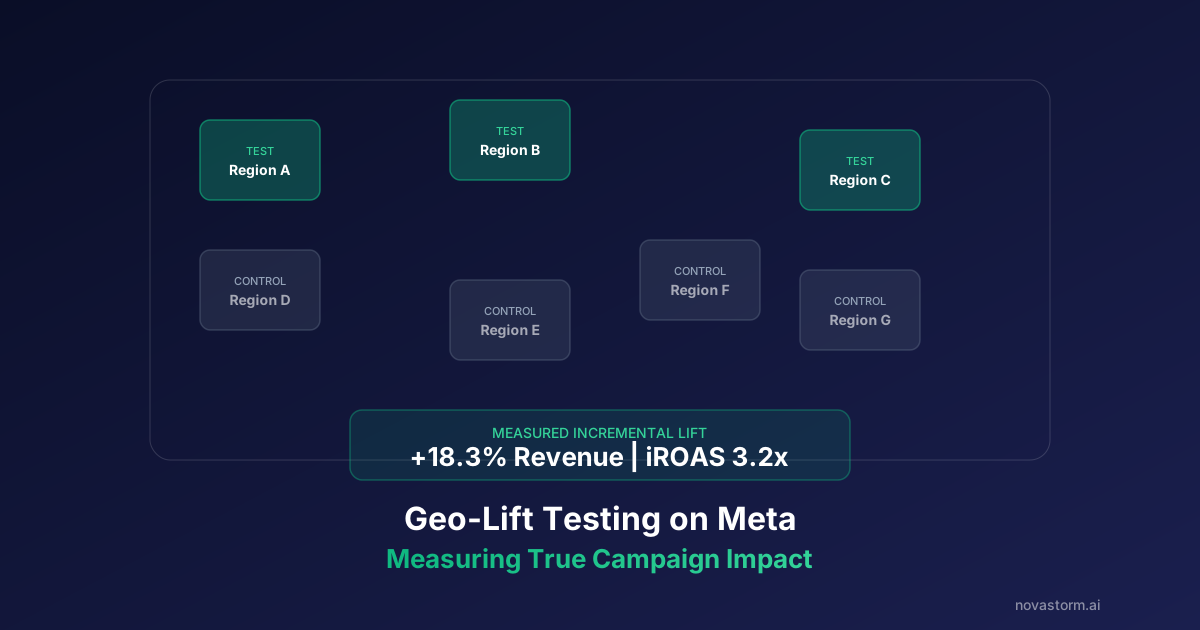
Geo-Lift Testing on Meta: Measuring True Campaign Impact
Design a geo-lift test with GeoLift tutorial data, pre-period checks, power planning and margin-based decisions that account for uncertainty.