

B2B Targeting on Meta Ads: Plan Qualified Leads and Paid Deals
Design B2B Meta targeting around qualification, mature deals and contribution, with an explicit decision when cheap leads do not close.
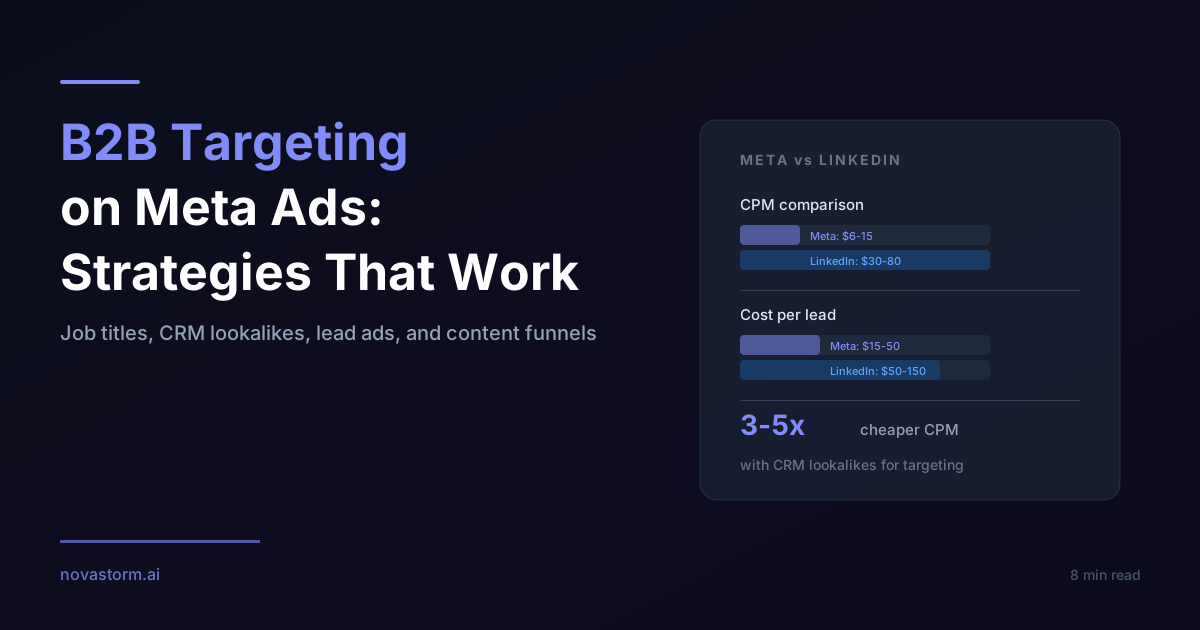
A B2B campaign should be evaluated through qualified opportunities and paid deals, not the cheapest form submission. Job-title labels or a customer-similarity audience are hypotheses about relevance; neither proves purchasing authority.
Define qualification before choosing an audience
| Record | Decision-useful field | Owner/check |
|---|---|---|
| Submitted lead | Stable lead ID, timestamp, permission and offer/version | Marketing verifies allowed fields and contact permission |
| Qualified lead | Serviceable market, relevant company/use case, authority or buying process, timeline | Sales uses one written definition across channels |
| Opportunity | Meeting held, accepted need and documented next step | Deduplicate retries and record disqualification reasons |
| Paid deal | Deal ID, payment/date, net revenue and fulfilment cost | Finance reconciles cancellations and refunds |
Collect only necessary permitted fields. Verify the form types, questions and targeting attributes available in the actual account; a Higher Intent label is not a promise of improved deal quality. Neither Meta-versus-LinkedIn CPM ranges nor job-title inaccuracy percentages are treated as benchmarks here because no comparable dataset was supplied.
Calculate the lead ceiling from deals
Hypothetical example: assume $1,000 contribution before acquisition per paid deal, a desired $600 remaining contribution,20% of submitted leads qualifying and 10% of qualified leads closing. The allowed acquisition cost per deal is $400. Submitted-lead close probability is 0.20 ×0.10 =2%; therefore the illustrative CPL ceiling is $400 ×0.02 =$8. A qualified-lead ceiling is $40. These are assumptions, not a recommended CPL or observed close rates; include sales-service costs in the calculation.
A $5 lead can still be commercially worse than a $20 lead if mature close probability differs. Compare channels with the same qualification definition, contribution horizon and sales follow-up treatment. Do not assume a content-first funnel or the narrowest available similarity percentage is mandatory.
Stop wasting ad budget
NovaStorm AI cuts Meta Ads CPA by 30% on average. No complex setup required.
Make cohort maturity explicit
- Record the lead acquisition week and offer/audience version through qualification and payment. Estimate the sales-cycle maturity from your own history.
- For an illustrative pilot, choose a review date 90 days after the last lead only if that matches the expected cycle. Report pending opportunities separately instead of counting them as losses or wins.
- Approve lead-handling capacity and a spend/cash-loss cap. Keep permission, response responsibilities and failed lead-delivery handling documented in the separately implemented CRM pipeline.
- Use a supported controlled design for a causal audience comparison. Parallel campaigns and before/after CPL alone do not establish superiority.
If qualification is poor, change one cause at a time
| Observed problem | One testable change | Acceptance metric |
|---|---|---|
| Many leads outside coverage | Clarify eligibility in the offer or supported saved control | Mature qualified lead rate and paid-deal CPA |
| Wrong use case | Test one relevant qualification question | Qualified pipeline without excessive useful-lead loss |
| People expect a free service | Clarify actual pricing/offer on the ad and page | Mature contribution per lead |
| Qualified but not closing | Inspect sales follow-up and product fit before changing audience | Paid deals and service cost |
Prepare the campaign for review
Use NovaStorm for a clear B2B creative brief and paused campaign/local ad-set drafts. Have the user approve the offer, audience hypothesis and budget. CRM routing, sales qualification and feedback events require separately verified systems; this preparation workflow does not promise those integrations. Use the B2B retargeting guide for follow-up planning.
Published by NovaStorm AI. Planning examples are illustrative assumptions, not measured customer results.
Disclaimer: This article was generated with the assistance of AI and reviewed by the NovaStorm AI team. While we strive for accuracy, we recommend verifying specific data points and consulting official sources (linked where available) for critical business decisions.
Ready to automate your Meta Ads?
NovaStorm AI takes full responsibility for your campaigns — from monitoring to optimization.
Start NowMore on B2B and lead generation
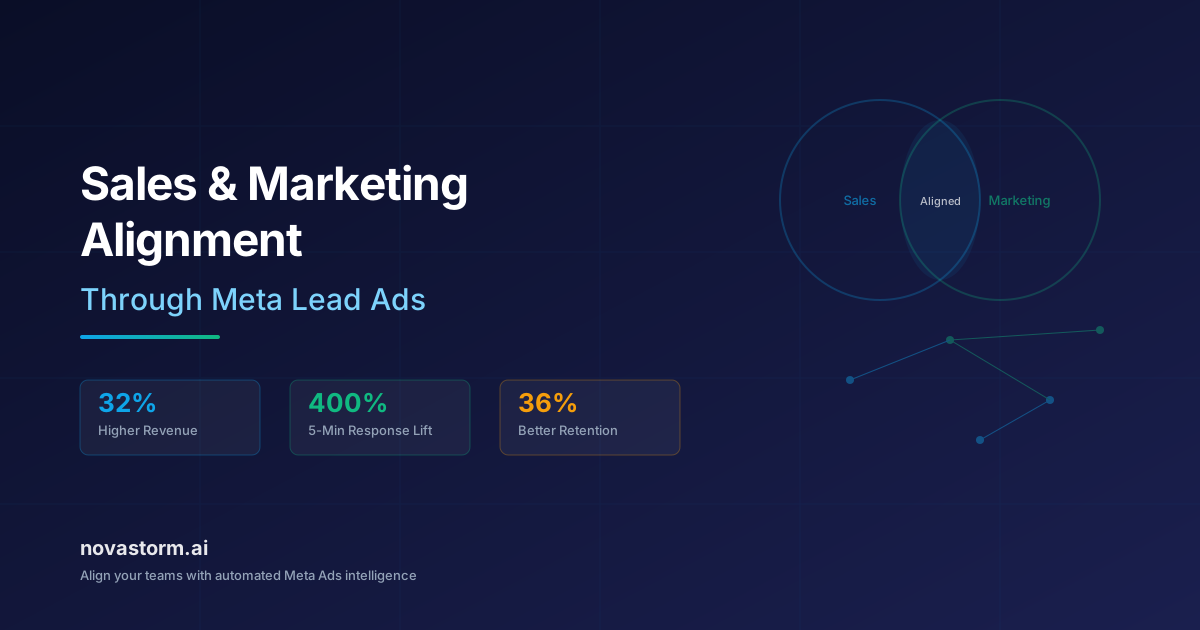
Sales and Marketing Alignment Through Meta Lead Ads
Design a Lead Ads handoff with CRM fields, safe retries, overnight SLA ownership, all-lead reconciliation and paid-outcome reporting.
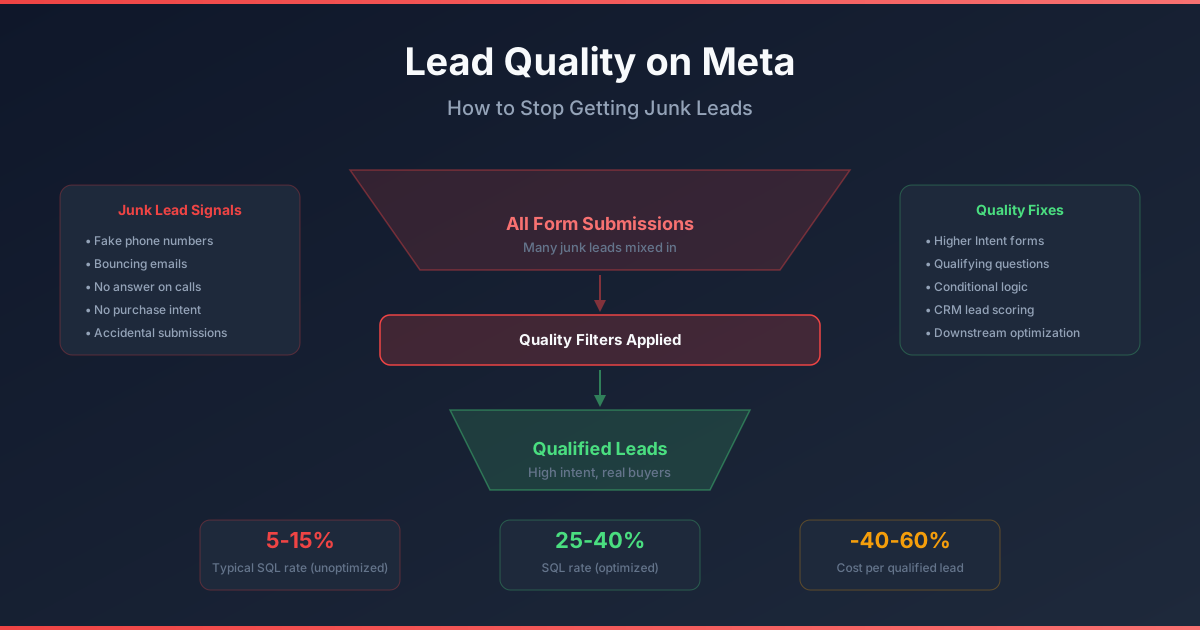
Lead Quality on Meta: Diagnose Forms and Sales Outcomes
Define lead quality consistently, check available form options and consent, and compare friction with reachable qualified leads and mature sales.
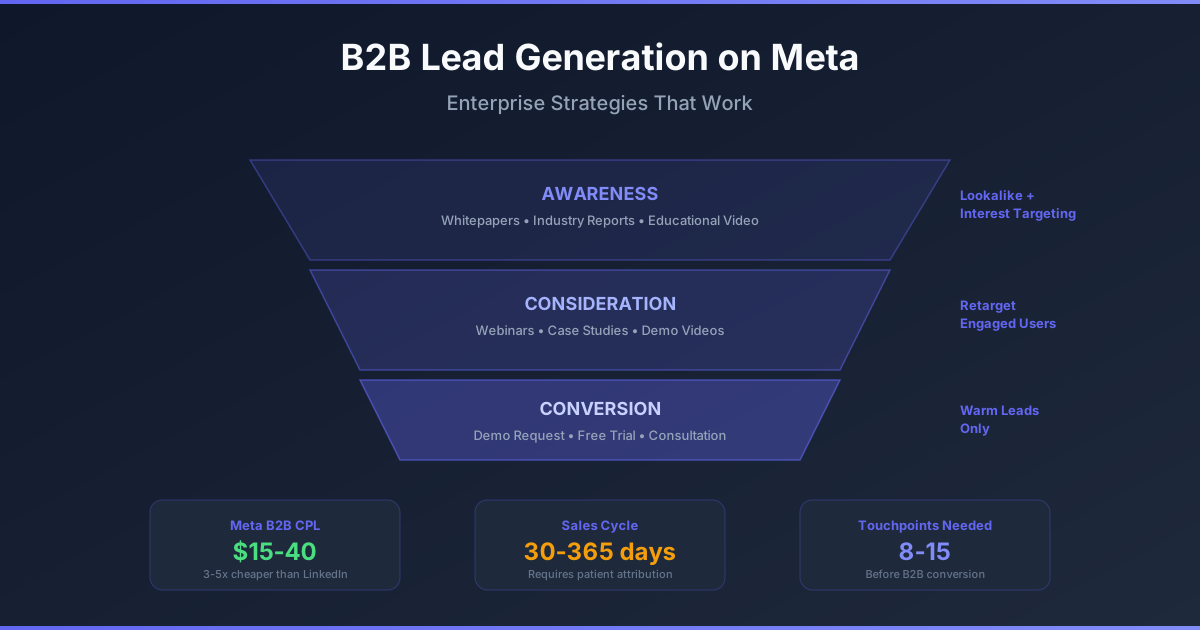
B2B Lead Generation on Meta: Enterprise Funnel and Measurement Plan
Plan a B2B content-to-demo funnel, distinguish pipeline forecasts from closed revenue and set Meta acquisition limits around mature sales and cash.
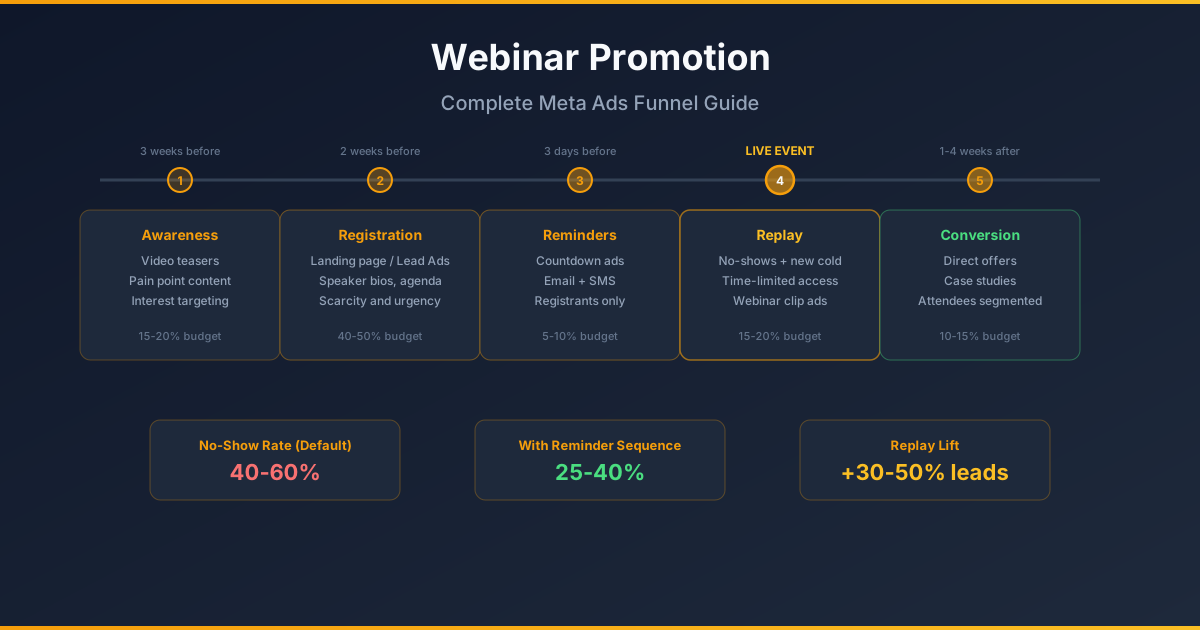
Webinar Promotion Through Meta Ads: Complete Funnel Guide
Budget a webinar funnel with explicit registration and attendance assumptions, verify handoffs and permission, and evaluate mature qualified sales.