

B2B Lead Generation on Meta: Enterprise Funnel and Measurement Plan
Plan a B2B content-to-demo funnel, distinguish pipeline forecasts from closed revenue and set Meta acquisition limits around mature sales and cash.
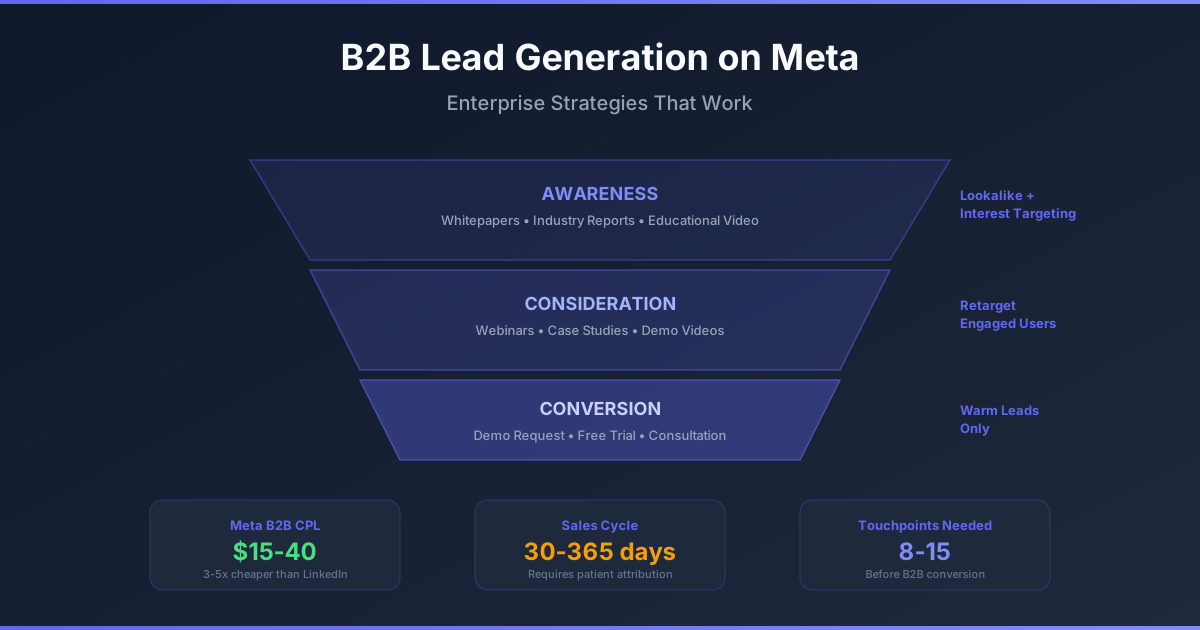
B2B advertising needs a defined customer problem, eligible audience and consistent sales process. A long cycle calls for longer CRM observation; it does not make unsupported Meta attribution windows available or turn potential deals into revenue.
Separate the two measurement clocks
| Clock | What it measures | Limit |
|---|---|---|
| Meta report | Credit under actual available event/window settings | Record exact configuration; do not claim arbitrary CRM-length attribution |
| CRM cohort | Lead creation through qualification, payment and cancellation | Keep mature and pending stages separate over the business cycle |
| Business ledger | Actual settled sales, costs and refunds | One deal/customer identity; platform credit is not extra revenue |
Keep source identifiers where permitted, but do not force a late CRM sale into an unavailable platform window. A lead-source report is an association unless the advertising contribution is established through a valid control.
A filled educational funnel
Fictional enterprise offer: an educational guide on reducing creative approval delays, followed by a real workflow webinar and an optional demonstration. The suggested timing below is a planning assumption, not a required number of touches. A ready buyer may request a demo immediately; content engagement is not a compulsory gateway.
| Stage / assumed timing | Useful material | Qualification definition | Exit/gate |
|---|---|---|---|
| Guide / day 0 | Actual approval checklist, no invented customer savings | No MQL from a download alone | Proceed only with permitted contact/audience use |
| Webinar / day 7 | Demonstration of real approval steps and limitations | MQL: confirmed service fit, real need and permitted follow-up | No assumed attendance or SQL status |
| Demo / day 14 onward | Demonstrate only available product behavior | SQL: sales confirms buying process, fit and a feasible next step | Not a paid customer until actual deal/payment |
| CRM review / business-specific horizon | Same opportunity rubric and private ledger | Paid sale versus pending/lost | Reconcile cash and mature contribution |
Set the ceiling from customer economics
Stop wasting ad budget
NovaStorm AI cuts Meta Ads CPA by 30% on average. No complex setup required.
Illustrative assumptions: a new contract contributes $10,000 after delivery/variable costs. Reserving $6,000 leaves a $4,000 full acquisition allowance. If $1,000 is reserved for sales/content costs, media ceiling is $3,000 per paid customer. If 10% of MQLs become paid customers, candidate media MQL cost is at most $300. That close rate is a hypothesis until equal-age cohorts validate it.
A proposed $3,000 media test at assumed $300 per MQL corresponds to ten MQLs and one expected customer under the model, not guaranteed sales or a sufficient causal sample. Check cash coverage for the actual sales cycle. Use available serviceable demand and supported audience controls; no universal 1,000/5,000 CRM-list requirement or eight-to-fifteen-contact plan is asserted.
Pipeline is a probability-weighted forecast
Synthetic example: $50,000 acquisition spend is associated with $500,000 potential contract value. The ten-to-one pipeline/spend ratio is not ROAS. With an assumed 20% close probability, expected contract revenue is $100,000 before cost and timing. If contribution margin is assumed 30%, expected contribution is $30,000, below the spend. Probability and margin must come from relevant mature cohorts, and correlated deal risks can make this forecast overly optimistic.
- Freeze MQL/SQL definitions, deal values, horizon and probability estimates before evaluating the cohort. Track all acquired leads, including no-response cases.
- Review contactability, sales capacity, qualified opportunities and paid outcomes at equal ages. Separate probability-weighted forecast from closed and settled amounts.
- Approve spend/cash-loss caps, review dates and maturity rules. Do not continue indefinitely because pipeline looks large.
- Use feasible controlled assignment for incremental claims. Without it, describe channel-associated pipeline and preserve an inconclusive result.
NovaStorm can prepare Meta creative briefs for the real guide, webinar and demo as paused campaign and local ad-set drafts. CRM segmentation, sales-status feedback and customer-list upload require separately confirmed permissions and integrations. The B2B audience guide helps check actual eligibility rather than assuming job-title targeting or exact decision-maker reach.
Published by NovaStorm AI. Planning examples are illustrative assumptions, not measured customer results.
Disclaimer: This article was generated with the assistance of AI and reviewed by the NovaStorm AI team. While we strive for accuracy, we recommend verifying specific data points and consulting official sources (linked where available) for critical business decisions.
Ready to automate your Meta Ads?
NovaStorm AI takes full responsibility for your campaigns — from monitoring to optimization.
Start NowMore on B2B and lead generation
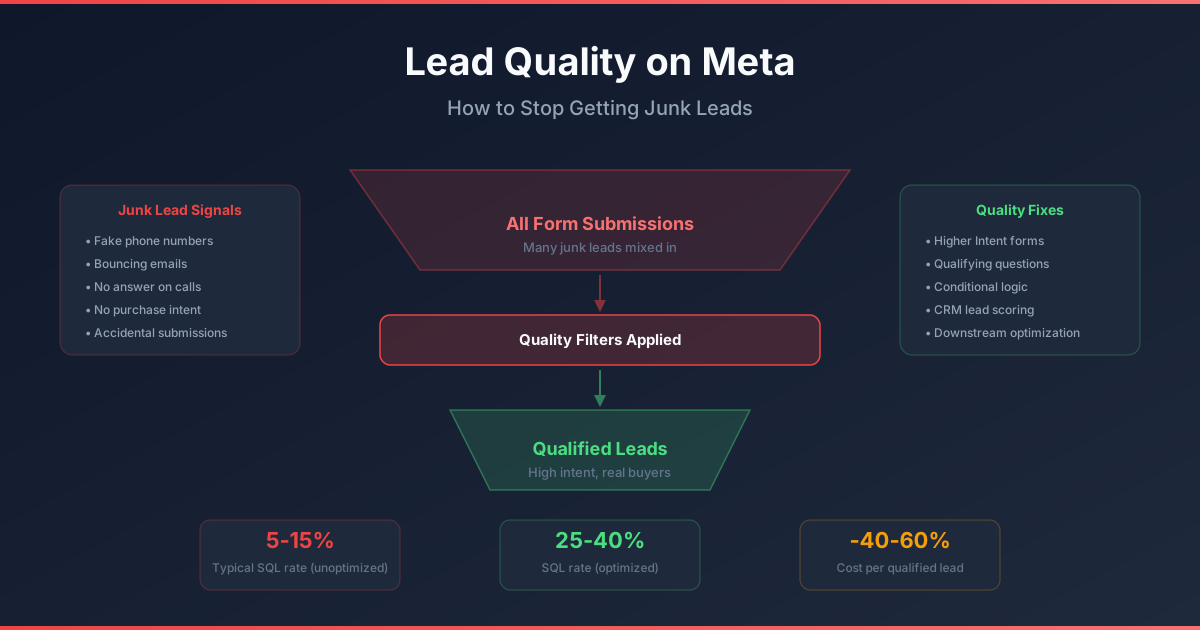
Lead Quality on Meta: Diagnose Forms and Sales Outcomes
Define lead quality consistently, check available form options and consent, and compare friction with reachable qualified leads and mature sales.
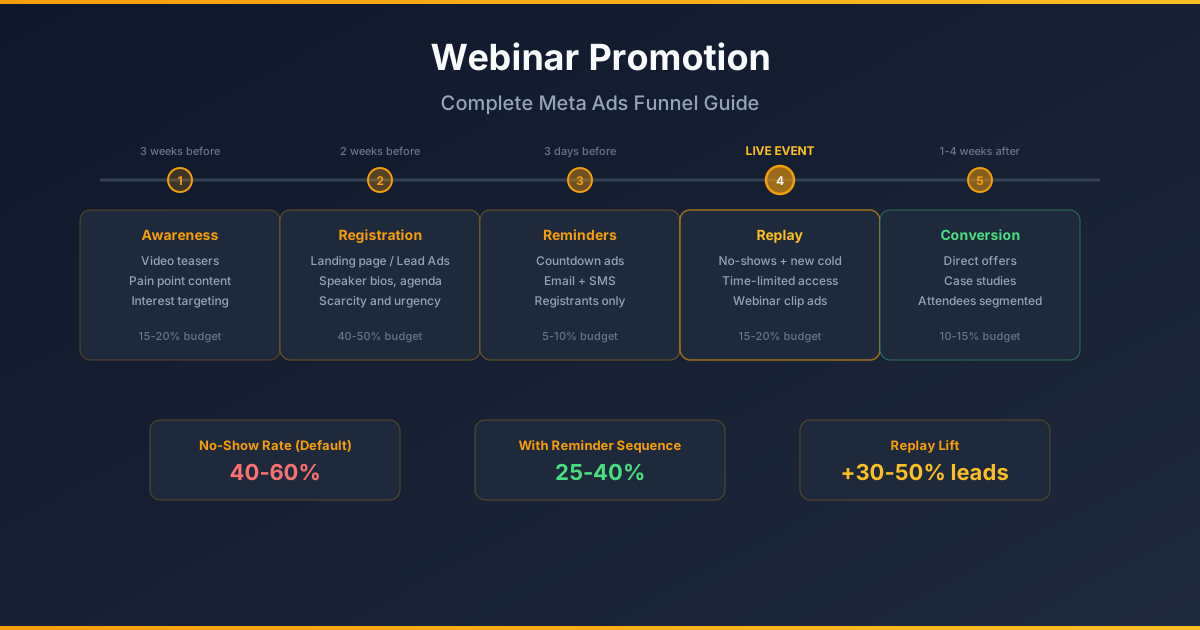
Webinar Promotion Through Meta Ads: Complete Funnel Guide
Budget a webinar funnel with explicit registration and attendance assumptions, verify handoffs and permission, and evaluate mature qualified sales.
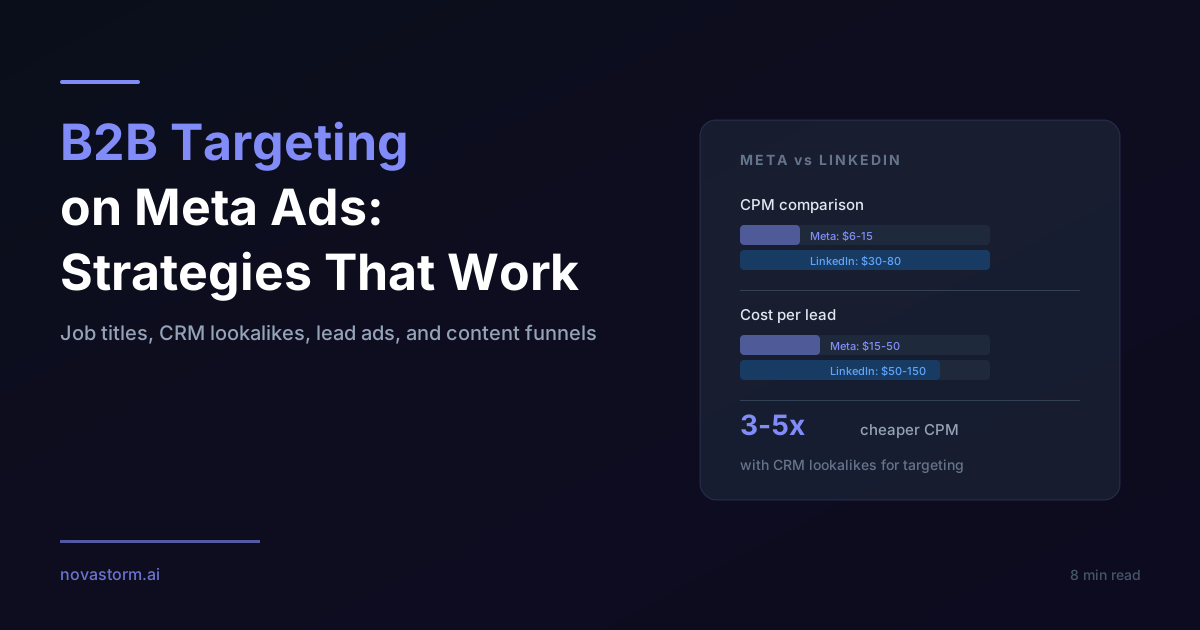
B2B Targeting on Meta Ads: Plan Qualified Leads and Paid Deals
Design B2B Meta targeting around qualification, mature deals and contribution, with an explicit decision when cheap leads do not close.

Messenger Ads: Offer, Human Handoff and Paid-Outcome Review
Plan a Messenger ad offer with account eligibility checks, a human handoff queue and mature paid-outcome measurement instead of conversation-price benchmarks.