

TikTok vs Meta Ads: Platform Comparison for Performance Marketers
Adapt one truthful offer for TikTok and Meta Reels, reconcile paid orders and plan a valid bounded cross-platform comparison.
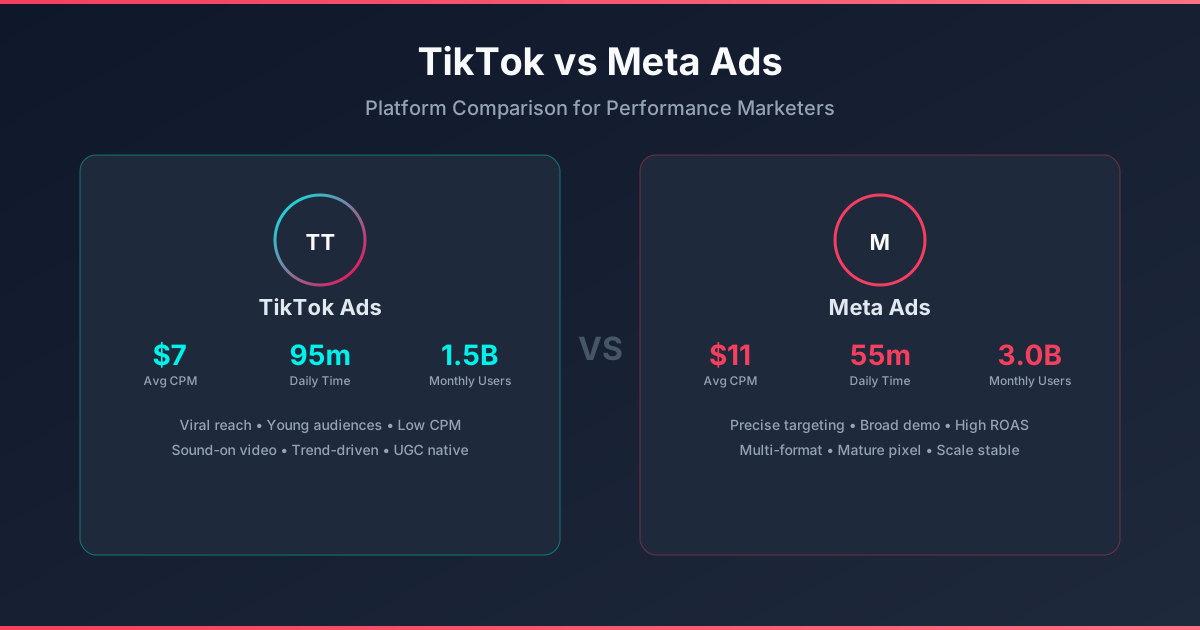
Paid ad delivery and organic sharing are different outcomes. Organic popularity does not guarantee profitable paid distribution, and a successful Meta video does not establish TikTok performance. Compare the actual market, offer and customer economics rather than unsourced global usage or ROAS averages.
Adapt one offer with comparable facts
Fictional offer: an $80 everyday bag, with verified dimensions and published delivery terms. The hypothesis is that a hands-on packing demonstration can attract useful customers. The following versions are proposed creative, not measured winners.
| Element | TikTok version | Meta Reels version |
|---|---|---|
| Opening | Hands pack the bag: "What fits in an everyday bag?" | Same demonstration and question; readable opening text |
| Proof | Show the actual compartments and dimensions | Show the same facts without unsupported comparative claims |
| Audio/text | Licensed sound, clear captions and visible offer terms | Separately cleared audio and captions; check readability without sound |
| CTA | "See dimensions, price and delivery details." | Same truthful action and destination |
| Tagging | utm_source=tiktok; utm_medium=paid_social; utm_campaign=bag_demo; utm_content=packing_a | utm_source=meta; utm_medium=paid_social; utm_campaign=bag_demo; utm_content=packing_a |
Preview the actual chosen formats and current account requirements before export. TikTok’s commercial music guidance distinguishes business use from its general music library. Do not assume music permission transfers between platforms; confirm rights for each intended use.
Build a comparison ledger
- Record dates, market, currency, objective, placement, creative version and total production/media costs for each campaign. Separate paid distribution from organic views.
- Test landing and purchase paths on representative devices, preserving campaign tags where permitted. Reconcile actual paid orders, refunds and unique new customers privately.
- Keep platform-attributed orders beside the business total and document different attribution windows, modeling and missing IDs. UTMs identify available click paths, not every exposure or causal contribution.
- Compare mature contribution after media, refunds and production, plus customer quality. A lower CPM, higher CTR or attributed ROAS is not the final commercial outcome.
Stop wasting ad budget
NovaStorm AI cuts Meta Ads CPA by 30% on average. No complex setup required.
A feasible geographic control needs conditions
| Condition | Required evidence | If it fails |
|---|---|---|
| Comparable markets | Similar baseline demand, capacity, offer and order trends | Do not infer causality from unlike regions |
| Low spillover | Advertising and fulfillment do not routinely cross assigned boundaries | Use another supported design or label results observational |
| Assigned treatment | Declare the budget change and control before exposure | Avoid selecting control after seeing results |
| Mature orders | Observe the actual purchase/refund delay in both arms | Extend only within approved limits or report immature |
| Affordable evidence | Sample feasibility, spend/cash-loss caps and review date | Reduce scope or report inconclusive |
For example, a proposed comparison may add TikTok spend in assigned eligible markets while holding Meta and other marketing consistent, then compare total business outcomes against controls. The design tests that incremental addition, not a universal platform winner. A seven-day review is useful only if the actual cohort and sample can mature by then.
A filled economics check
Illustrative assumptions: the $80 bag has $50 variable costs, leaving $30 before ads. If a test spends $200 media plus $100 production and obtains ten mature paid orders, its $300 contribution equals those costs, before overhead and other acquisition costs. The ten orders are invented for arithmetic, not a result or forecast. Include a reserve and cash ceiling before deciding to spend.
A media mix model also requires suitable variation, history and validation; a $50,000 monthly budget alone does not make a model reliable. NovaStorm can prepare the Meta creative brief as paused campaign and local ad-set drafts for user approval. TikTok publication, music licensing and cross-platform experiment execution require separate verified workflows.
Published by NovaStorm AI. Planning examples are illustrative assumptions, not measured customer results.
Disclaimer: This article was generated with the assistance of AI and reviewed by the NovaStorm AI team. While we strive for accuracy, we recommend verifying specific data points and consulting official sources (linked where available) for critical business decisions.
Ready to automate your Meta Ads?
NovaStorm AI takes full responsibility for your campaigns — from monitoring to optimization.
Start NowMore on Competitive research
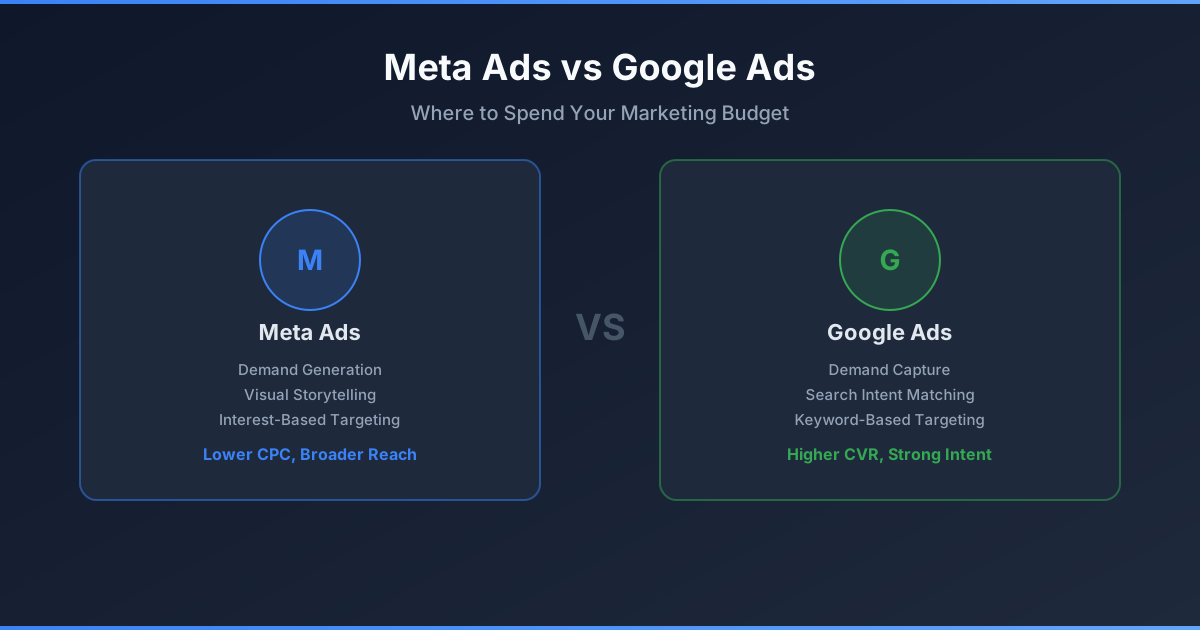
Meta Ads vs Google Ads: Where to Spend Your Marketing Budget
Assign Meta and Google clear channel tasks, reconcile shared orders and test a bounded budget change using contribution and demand limits.
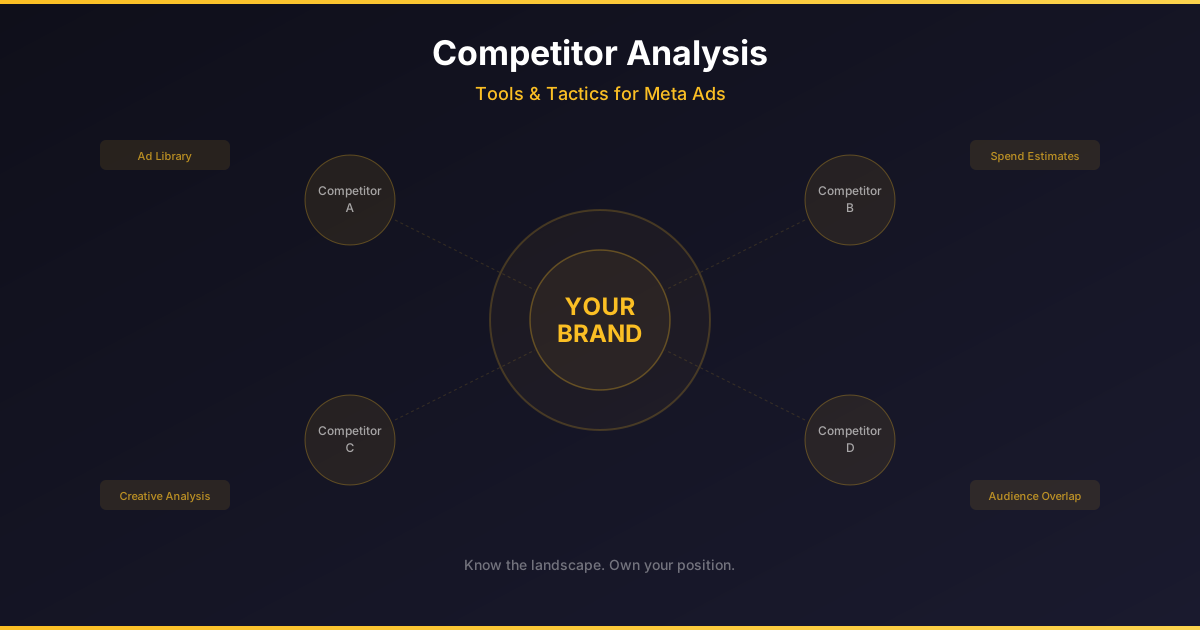
Competitor Analysis for Meta Ads: Tools and Tactics
Record observable competitor messages, keep spend and performance unknown, and turn a sourced public promotion into an original creative brief.

How to Use Meta Ad Library for Competitive Research
Reproduce a dated Meta Ad Library research log, troubleshoot blocked or empty searches and turn a verifiable observation into your own test brief.
Competitor Ad Spy Tools: How to Research Meta Ads Competitors
Compare competitor research tools by verifiable fields, keep a dated evidence log, and turn creative inspiration into an honest campaign hypothesis.