

Seasonal Ad Strategy: Planning Campaigns Around Peak Periods
Build a local seasonal campaign calendar from inventory, contribution, cash and delivery deadlines, then approve a bounded creative brief.
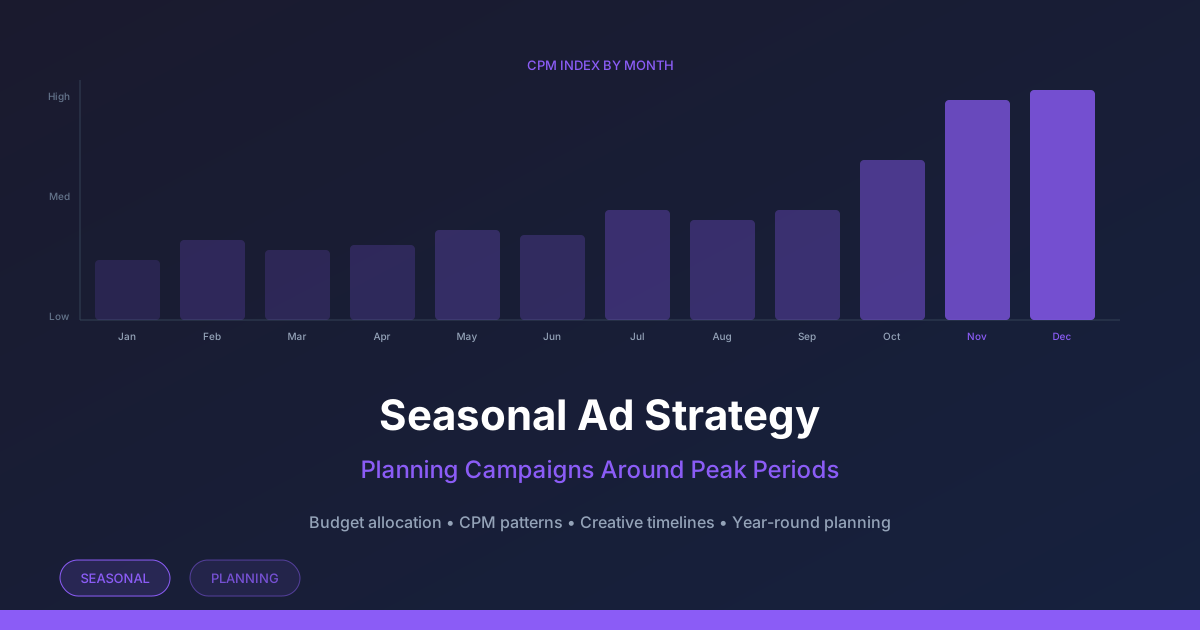
Seasonal planning starts with your serviceable market and delivery promise. A holiday name or an expected CPM increase does not justify a fixed quarterly budget share. Use local demand observations, product availability and contribution to decide whether the campaign can earn its costs.
Localize the calendar before allocating money
| Calendar field | What to record | Planning implication |
|---|---|---|
| Market and language | Actual selling region, local event relevance and customer language | Do not reuse US shopping events for every market |
| Customer deadline | Desired arrival/use date and local time zone | Work backward from fulfillment |
| Carrier and production limits | Verified dispatch, production and delivery lead times | Leave a contingency or remove the arrival promise |
| Creative approvals | Rights, truthful offer, translations and placement previews | Reserve review time before spending |
| Observed seasonality | Comparable market/year/placement, spend, CPM and mature conversion data | Do not assume an industry-wide cost increase |
When comparing last year with this year, record changes in offer, stock, audience, attribution and format. CPM is spend/impressions × 1,000, but a higher CPM can coexist with either better or worse contribution. Use scenarios for unknown future costs and label them assumptions.
A filled local brief
Fictional Polish gift campaign, all dates and economics are planning assumptions: Polish-language ads in Europe/Warsaw; the store chooses December 20, 2026 as a desired arrival date. Assume five calendar days from order to arrival and three calendar days from first click to order. The candidate last launch date for that promise is December 12. Confirm real lead times and add a buffer before publishing any delivery claim.
| Brief field | Synthetic decision |
|---|---|
| Inventory | 100 sellable bags after existing commitments; no replenishment assumed |
| Price and variable costs | PLN 300 price; PLN 190 variable costs before any discount |
| Discount ceiling | At most PLN 30, subject to approved terms and actual margin |
| Contribution after maximum discount | PLN 270 − PLN 190 = PLN 80 per order before ads |
| Desired retained contribution | PLN 30 per order; candidate media CPA ceiling PLN 50 |
| Spend/cash-loss cap | PLN 2,000 approved maximum for this test, only if affordable |
| Hypothesis | A truthful gift-use demonstration may attract profitable orders before the deadline |
At the assumed PLN 50 CPA, PLN 2,000 corresponds to 40 orders, not a forecast guarantee. At PLN 80 contribution each, 40 orders would yield PLN 3,200 before advertising and PLN 1,200 after it. Confirm other campaign sales cannot consume the same stock and reserve required fulfillment cash. Stop or change the offer if the remaining inventory or delivery promise fails.
Stop wasting ad budget
NovaStorm AI cuts Meta Ads CPA by 30% on average. No complex setup required.
Work backward to approval and launch
| Candidate date | Deliverable | Gate |
|---|---|---|
| November 10 | Market, inventory, costs and truthful offer brief | Owner confirms cash, stock and calendar assumptions |
| November 20 | Polish copy, creative assets and consent/rights evidence | No fabricated reviews, urgency or availability |
| November 27 | Placement previews and mobile purchase-path check | Correct prices, images, delivery and payment flow |
| December 1 | Optional bounded comparison begins | Approved assignment, spend limit and mature outcome definition |
| December 12 | Last assumed launch date for December 20 arrival | Recalculate from actual fulfillment and purchase delay |
| After cutoff | Remove or update arrival messaging | No obsolete promise in active ads or destination |
These dates are a proposed workflow, not production-speed evidence. If preparation or fulfillment runs late, revise the promise or postpone the campaign. Do not spend more to compensate for an unsupported delivery deadline.
Approve the materials and review the economics
- Use NovaStorm to prepare the brief as paused campaign and local ad-set drafts. The user approves language, facts, inventory, offer and limits before any actual action.
- Review actual spend, net orders, inventory and cash at a declared cadence. If outcomes are immature, wait only within the approved limit.
- After the season, reconcile discounts, refunds, late deliveries and contribution. Compare with the frozen plan and keep the limitations; attributed revenue does not prove seasonal incremental lift.
A recurring calendar can include local school terms, regional gift occasions and store-specific replenishment cycles only after confirming their relevance. Choose future spending from actual marginal economics rather than a universal Q4 allocation.
Published by NovaStorm AI. Planning examples are illustrative assumptions, not measured customer results.
Disclaimer: This article was generated with the assistance of AI and reviewed by the NovaStorm AI team. While we strive for accuracy, we recommend verifying specific data points and consulting official sources (linked where available) for critical business decisions.
Ready to automate your Meta Ads?
NovaStorm AI takes full responsibility for your campaigns — from monitoring to optimization.
Start NowMore on Seasonal and launch campaigns
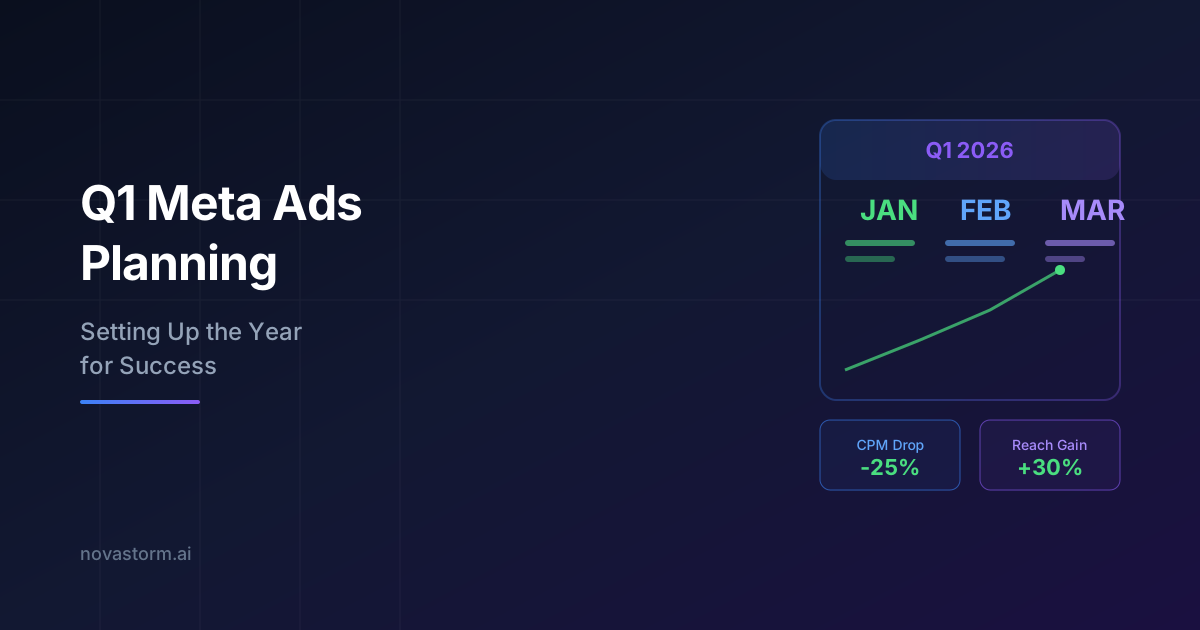
Q1 Meta Ads Planning: Setting Up the Year for Success
Master Q1 Meta Ads planning with proven frameworks for budget allocation, audience strategy, and campaign structure that set the foundation for year-long success.
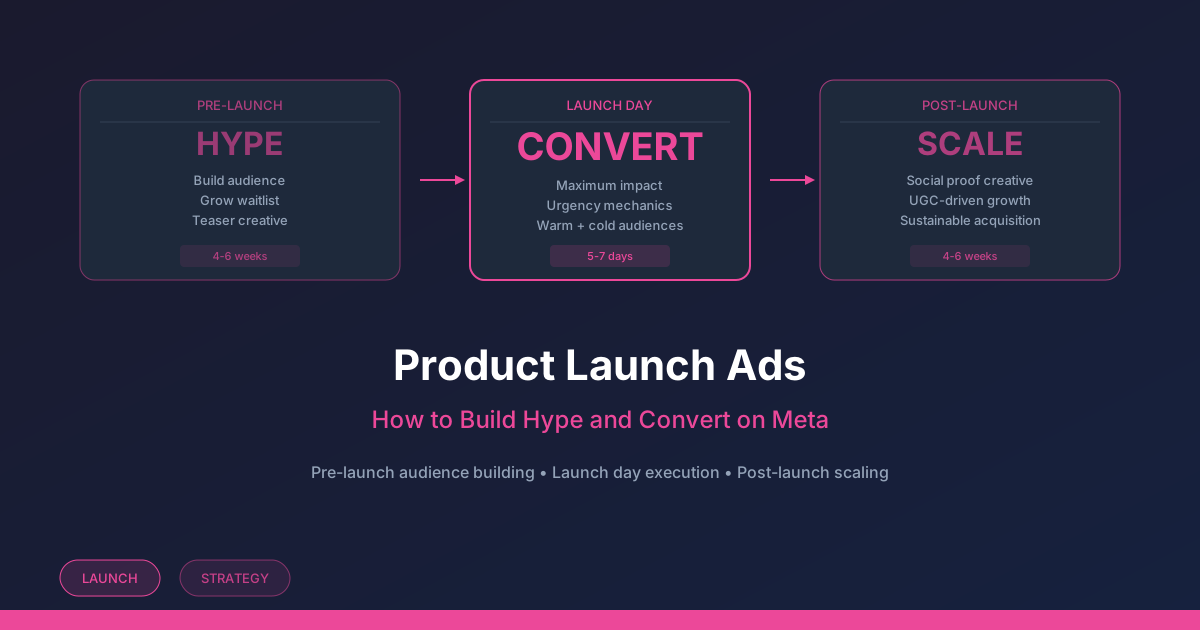
Product Launch Ads on Meta: Budget, Stock and Approval Plan
Plan a product launch with truthful stock and bonus terms, consented waitlists, paid-order economics and measurable approval or stop gates.
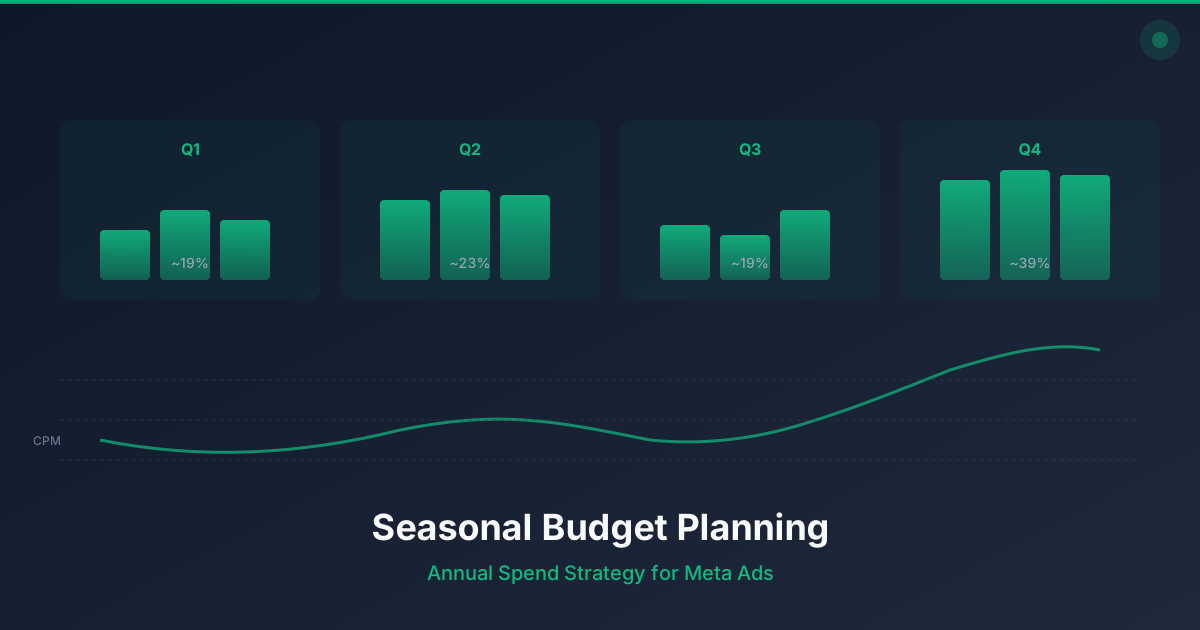
Seasonal Budget Planning for Meta Ads: Annual Spend Strategy
Build an annual advertising envelope from seasonal contribution, stock capacity and cash reserves, then approve mature-result reviews with clear owners.

Black Friday Meta Ads Strategy: From Preparation to Execution
Prepare a Black Friday and Cyber Monday brief with discount economics, truthful materials, inventory limits and mature-result spending decisions.