

Meta Ads Special Ad Categories: Housing, Credit, and Employment Rules
Classify special-category offers using current market rules, validate saved targeting and review borderline creative before publishing.
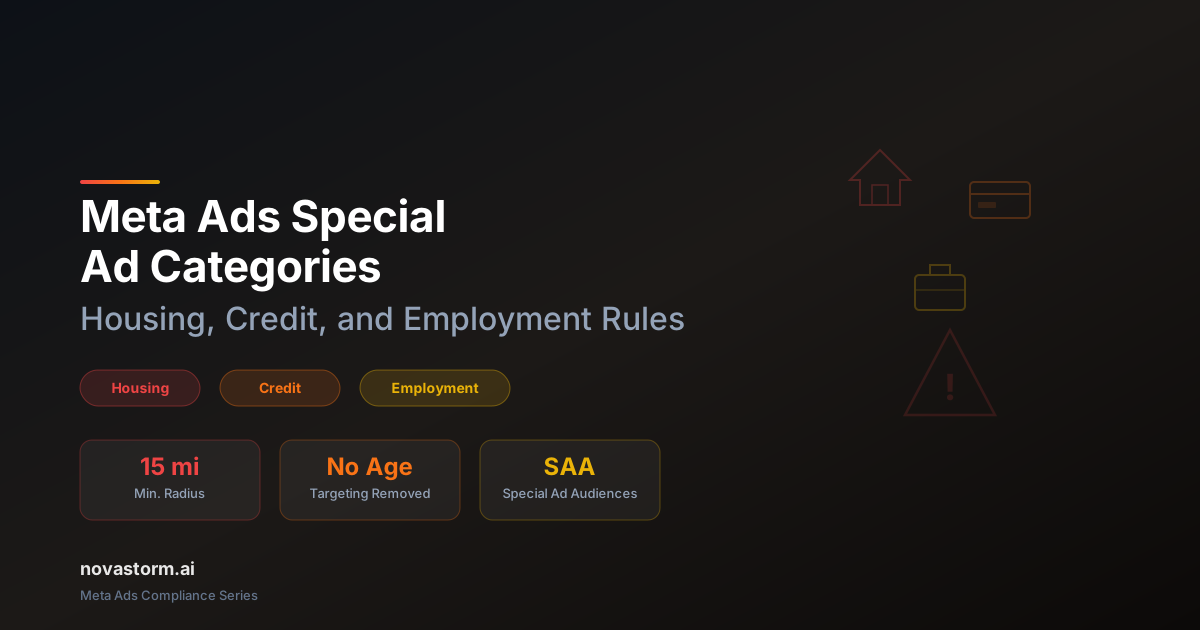
Classify the actual advertised opportunity, its destination and the market before choosing targeting. Special categories are platform settings; a correct selection is not legal approval of the offer or proof that discriminatory outcomes cannot occur.
Update the assumptions before configuration
Meta’s ads-fairness update, originally January 2023 with later 2023 updates states that Special Ad Audiences were discontinued and describes restrictions on age, gender and ZIP targeting for housing, employment and credit in the US, Canada and certain European countries. This is dated evidence with stated geography, not a global current radius specification. Do not build a new launch around the old Special Ad Audience tool.
The current Meta Business SDK campaign model includes HOUSING, EMPLOYMENT and FINANCIAL_PRODUCTS_SERVICES, alongside legacy CREDIT. An enum proves the model contains a label, not which category is required for every market or whether a legacy value is accepted for a new campaign. Inspect the current policy and the actual market-specific Ads Manager declaration before launch, especially insurance, payments and credit-related offers.
| Offer to classify | Decision evidence needed | Scope caution |
|---|---|---|
| Apartment available for rent | Housing definition, advertiser/delivery country and destination | Do not use narrow demographic proxies to exclude eligible people |
| Specific job vacancy | Employment definition and actual role requirements | Creative qualifications must relate to the job |
| Insurance or financing offer | Current financial-products definition for the market and regulated product | Do not assume all insurance uses a legacy Credit setting |
| Painting service or home-decor guide | Actual destination, sale offered and current housing-service definition | A topic word alone is not an expert classification |
A conservative configuration worksheet
Fictional US apartment listing: declare Housing after confirming the current definition; select a supported lead/inquiry workflow; use the city or broader geographic option permitted by the actual account; leave age and gender unrestricted within its locked controls; avoid ZIP/neighborhood exclusions, lookalikes, Special Ad Audiences and sensitive proxy segments. Show rent, availability and inquiry terms accurately, and collect only information appropriate to the inquiry.
This is an educational candidate configuration, not an approved campaign or legal opinion. Its pass condition is current policy confirmation, successful saved-setting validation and the responsible housing reviewer’s approval. If radius targeting is used, record the minimum displayed for that category, advertiser location and delivery country; do not apply a US 15-mile rule universally. Capture the saved controls and review the destination as well as the creative.
Stop wasting ad budget
NovaStorm AI cuts Meta Ads CPA by 30% on average. No complex setup required.
Resolve a borderline ad explicitly
Fictional draft: “Fresh paint for your home—request a contractor quote.” If the landing page offers ordinary painting with no property or financial opportunity, send the complete creative and destination to the reviewer for classification under the current service definition. If the page also promotes rent-to-own financing or property listings, that materially changes the assessment. There is no actual expert sign-off supplied here; do not claim one or evade a required category by rewriting the headline.
- Record advertiser country, every delivery market, category decision, original policy URL/date and reviewer role. Resolve ambiguous financial and housing-service scope before publication.
- Validate category, geographic controls, age/gender fields, exclusions, objective and data-source restrictions in the actual setup. Do not assume all conversion events remain available.
- If an existing campaign is misclassified, pause affected delivery and use the supported correction or new-campaign workflow. The SDK exposes category update parameters, but that is not proof that every published campaign permits the edit.
- Keep the policy/rejection reason and appeal evidence. Do not duplicate a rejected ad to bypass the same unresolved issue.
Understand what the legal evidence establishes
The US DOJ’s June 2022 Meta settlement announcement concerns allegations of discriminatory housing-ad delivery and Fair Housing Act obligations in that case. It is not proof that Meta routinely reports every advertiser to regulators or that a category mistake automatically creates a lawsuit. Evaluate the advertiser’s actual offer, targeting and applicable housing/employment/financial laws with the responsible specialist.
Prepare the reviewed creative and classification record for a NovaStorm campaign draft. Confirm that the publishing route supports the required category and saved controls before proceeding; otherwise complete the supported setup in Ads Manager. NovaStorm draft preparation does not perform specialized legal classification. See recruitment campaigns for communicating actual job requirements.
Published by NovaStorm AI. Worked examples and test fixtures in this article are illustrative, not observed customer results.
Disclaimer: This article was generated with the assistance of AI and reviewed by the NovaStorm AI team. While we strive for accuracy, we recommend verifying specific data points and consulting official sources (linked where available) for critical business decisions.
Ready to automate your Meta Ads?
NovaStorm AI takes full responsibility for your campaigns — from monitoring to optimization.
Start NowMore on Policy, privacy and international ads

Cookie Consent and Meta Pixel: Impact on Tracking and Optimization
Implement consent-aware browser and server advertising events, test refusal and withdrawal, and distinguish reporting changes from business performance.
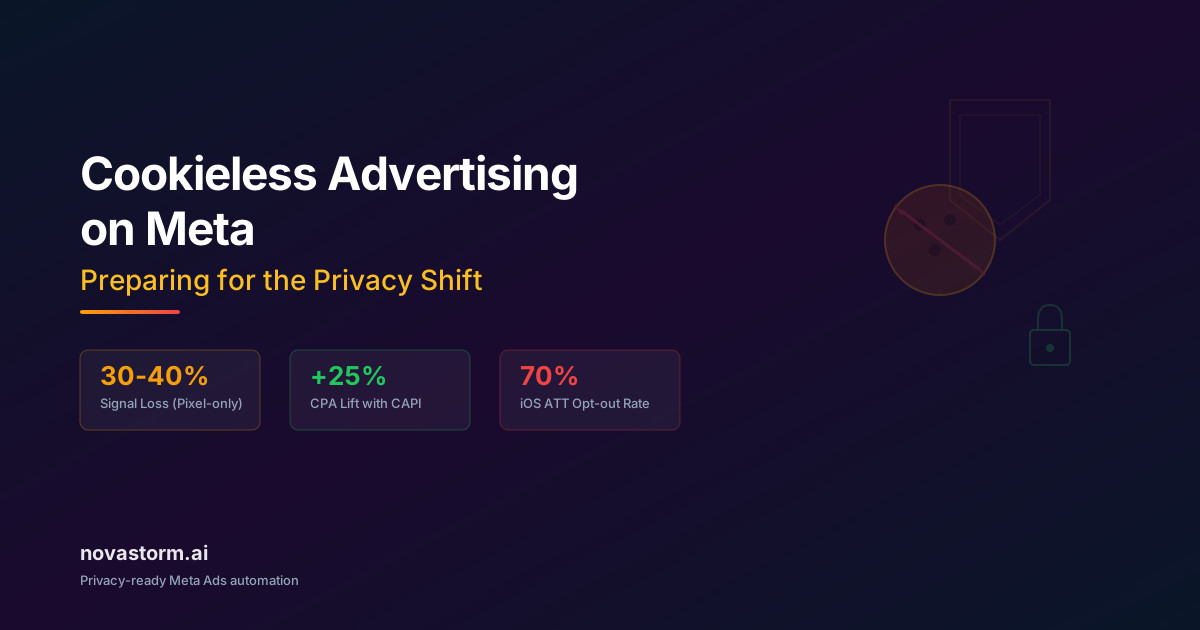
Cookieless Advertising on Meta: Preparing for the Privacy Shift
Plan restricted Meta measurement with dated browser evidence, consent and event deduplication tests, and a campaign brief with business boundaries.
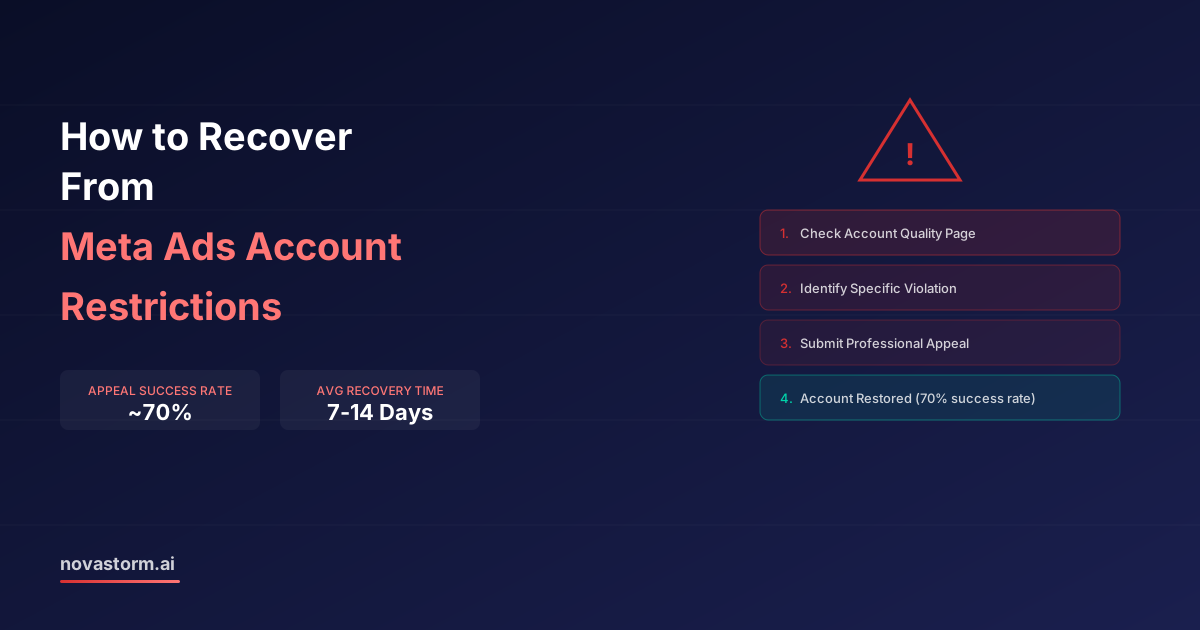
How to Recover From Meta Ads Account Restrictions
Identify the exact Meta restriction, prepare truthful evidence and a case log, and use the official action available without promising reinstatement.

EU Market Meta Ads: GDPR Compliance and Targeting Limitations
Map EU advertising purposes and test CMP choices across browser and server flows, with country guidance and accountable privacy review.