GDPR and Meta Ads: European Data Privacy Compliance Guide
Learn how to run Meta Ads campaigns that comply with GDPR. Complete guide to European data privacy for advertisers, consent management, and audience targeting.
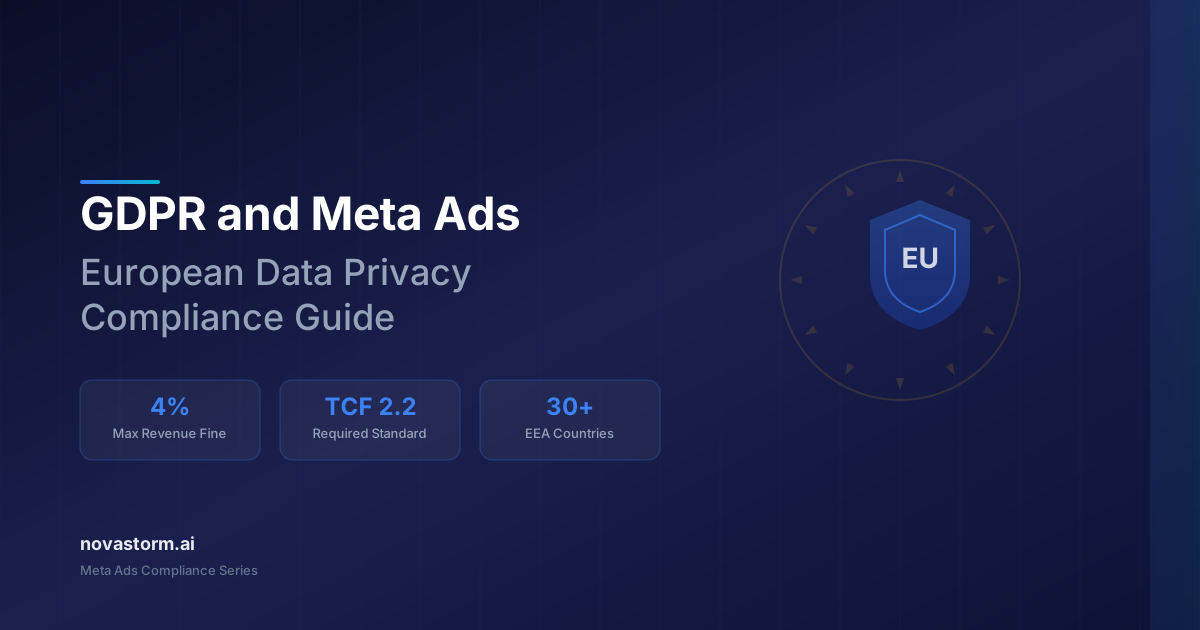
Running Meta Ads in Europe without understanding GDPR is like navigating a minefield blindfolded. The General Data Protection Regulation has fundamentally changed how advertisers collect, process, and use personal data for targeting. With fines reaching up to 4% of global annual revenue, GDPR Meta Ads compliance is not optional — it is a business imperative.
Since its enforcement in May 2018, GDPR has reshaped the digital advertising landscape across the European Economic Area. Meta has adapted its platforms multiple times, most notably introducing the consent-based advertising model in late 2023. For advertisers, this means rethinking everything from pixel implementation to audience building.
What GDPR Means for Meta Advertisers
GDPR governs how personal data of EU and EEA residents is collected and processed. For Meta advertisers, personal data includes email addresses used in Custom Audiences, pixel tracking data, conversion events, and any information gathered through lead generation forms. Understanding this scope is the first step toward GDPR Meta Ads compliance.
The regulation establishes six lawful bases for processing data, but for advertising purposes, the two most relevant are consent and legitimate interest. Following the European Court of Justice rulings and regulatory guidance, Meta now primarily relies on user consent for ad personalization in the EU.
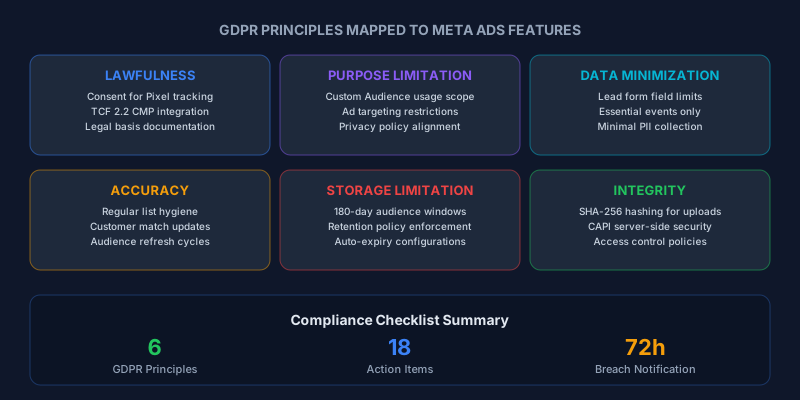
| GDPR Principle | Impact on Meta Ads | Advertiser Action Required |
|---|---|---|
| Lawfulness | Must have legal basis for data processing | Implement consent collection before tracking |
| Purpose Limitation | Data collected for one purpose cannot be repurposed | Define clear data usage in privacy policy |
| Data Minimization | Collect only what is necessary | Limit form fields and tracking events |
| Accuracy | Personal data must be kept accurate | Regular Custom Audience list cleaning |
| Storage Limitation | Data cannot be kept indefinitely | Set retention periods for audience data |
| Integrity | Data must be protected against breaches | Use Meta's data encryption and hashing |
Consent Management for Meta Pixel and CAPI
The Meta Pixel and Conversions API (CAPI) are essential tools for tracking ad performance, but both involve processing personal data. Under GDPR, you must obtain explicit consent before firing tracking pixels or sending server-side events for users in the EEA.
A compliant Consent Management Platform (CMP) is non-negotiable. Your CMP must meet the IAB Transparency and Consent Framework (TCF) v2.2 standards. Meta integrates with TCF signals, meaning it will automatically restrict data processing when consent is not granted.
Critical: Since March 2024, Meta requires advertisers in the EU to use a certified CMP that integrates with the TCF v2.2 framework. Non-compliant advertisers face restricted ad delivery and potential account penalties.
- Deploy a TCF v2.2-compliant CMP on all landing pages and websites
- Configure the Meta Pixel to fire only after consent is granted
- Set up Conversions API to check consent status before sending events
- Implement consent mode in Google Tag Manager or your tag management system
- Store consent records with timestamps for audit purposes
- Provide clear opt-out mechanisms accessible from every page
Custom Audiences and GDPR Meta Ads Compliance
Custom Audiences built from customer lists present unique GDPR challenges. When you upload email addresses, phone numbers, or other identifiers to Meta, you are sharing personal data with a third party. This requires explicit consent from each individual on your list.
Your privacy policy must clearly state that customer data may be shared with Meta for advertising purposes. Blanket consent buried in terms of service does not meet GDPR standards. Each data subject must actively opt in with a clear understanding of how their data will be used.
Lookalike Audiences based on Custom Audiences inherit the same compliance requirements. If your source audience was built without proper consent, the derived Lookalike Audience is also non-compliant. This cascading effect makes initial consent collection even more critical for sustained GDPR Meta Ads compliance.
The Impact of Meta's Consent-Based Advertising Model
In response to regulatory pressure, Meta introduced a subscription model in the EU allowing users to pay for an ad-free experience or consent to personalized ads. This shift has significant implications for advertisers targeting European audiences.
Advertisers have reported audience size reductions of 15-30% in EU markets following the consent changes. However, the remaining audience tends to show higher engagement rates, as these users have actively chosen to interact with personalized advertising content.
Stop wasting ad budget
NovaStorm AI cuts Meta Ads CPA by 30% on average. No complex setup required.
| Metric | Pre-Consent Model | Post-Consent Model | Change |
|---|---|---|---|
| Reachable Audience Size | 100% | 70-85% | -15 to -30% |
| Click-Through Rate | Baseline | +12-18% | Improved |
| Cost Per Click | Baseline | +8-15% | Increased |
| Conversion Rate | Baseline | +10-22% | Improved |
| Return on Ad Spend | Baseline | +5-10% | Slightly Improved |
Data Processing Agreements and Documentation
GDPR requires a Data Processing Agreement (DPA) between controllers and processors. Meta provides its Data Processing Terms, which serve as the DPA between your business and Meta. Review these terms carefully — they outline the responsibilities of each party in protecting user data.
Beyond the DPA with Meta, maintain comprehensive documentation of your data processing activities. This includes Records of Processing Activities (ROPA), Data Protection Impact Assessments (DPIA) for high-risk processing, and evidence of consent collection for all audience data.
- Review and accept Meta's Data Processing Terms in Business Settings
- Maintain a Record of Processing Activities for all Meta Ads data flows
- Conduct Data Protection Impact Assessments for Custom Audience uploads
- Document lawful basis for each type of data processing
- Establish data breach notification procedures (72-hour reporting requirement)
- Appoint a Data Protection Officer if required by your processing activities
Practical Steps for Achieving GDPR Meta Ads Compliance
Achieving and maintaining GDPR Meta Ads compliance requires a systematic approach. Start with a thorough audit of your current data collection and processing practices. Identify every touchpoint where personal data enters your Meta Ads ecosystem — from website pixels to CRM integrations.
Pro Tip: Use Meta's Privacy Center in Business Suite to review your data practices and generate compliance reports. This tool helps identify gaps in your consent framework and provides actionable recommendations.
Implement a quarterly compliance review cycle. GDPR enforcement is evolving, and Meta regularly updates its policies. What was compliant six months ago may not meet current standards. Schedule regular audits of your consent mechanisms, data processing activities, and audience management practices.
Penalties and Enforcement Trends
GDPR enforcement has intensified significantly. Meta itself received a record EUR 1.2 billion fine from the Irish Data Protection Commission. Individual advertisers face penalties too — several businesses have been fined for improper use of tracking technologies and inadequate consent mechanisms.
The trend is clear: regulators are moving beyond targeting only large platforms and now scrutinize individual advertisers. Small and medium businesses are increasingly subject to enforcement actions, particularly for cookie consent violations and unauthorized data sharing with advertising platforms.
Investing in GDPR Meta Ads compliance is not just about avoiding fines. It builds consumer trust, improves data quality, and creates a sustainable foundation for long-term advertising success in European markets. The businesses that treat privacy as a competitive advantage will outperform those that view it as a regulatory burden.

The path to GDPR Meta Ads compliance may seem complex, but it is achievable with the right tools and processes. By implementing proper consent management, maintaining thorough documentation, and staying current with regulatory developments, you can run effective Meta Ads campaigns that fully respect European data privacy standards.
Novastorm AI automates Meta Ads routine — from monitoring to optimization. Learn more at novastorm.ai
Disclaimer: This article was generated with the assistance of AI and reviewed by the NovaStorm AI team. While we strive for accuracy, we recommend verifying specific data points and consulting official sources (linked where available) for critical business decisions.
Ready to automate your Meta Ads?
NovaStorm AI takes full responsibility for your campaigns — from monitoring to optimization.
Start NowRelated Articles
CCPA and Meta Ads: California Privacy Law for Advertisers
Master CCPA compliance for Meta Ads campaigns. Complete guide to California Consumer Privacy Act requirements for audience targeting and data collection.
Meta Ads Special Ad Categories: Housing, Credit, and Employment Rules
Complete guide to Meta Ads Special Ad Categories for housing, credit, and employment. Learn targeting restrictions, compliance requirements, and best practices.
Insurance Ads on Meta: Compliance and Performance Balance
Learn how to run insurance ads on Meta that balance regulatory compliance with high performance. Proven strategies for life, auto, health, and property insurance campaigns.