

Meta Ad Headlines: Clear Promises, Placement Review and Testing
Write a truthful Meta headline, check its actual placement display and compare one wording change under a spend allowance and mature-outcome rule.
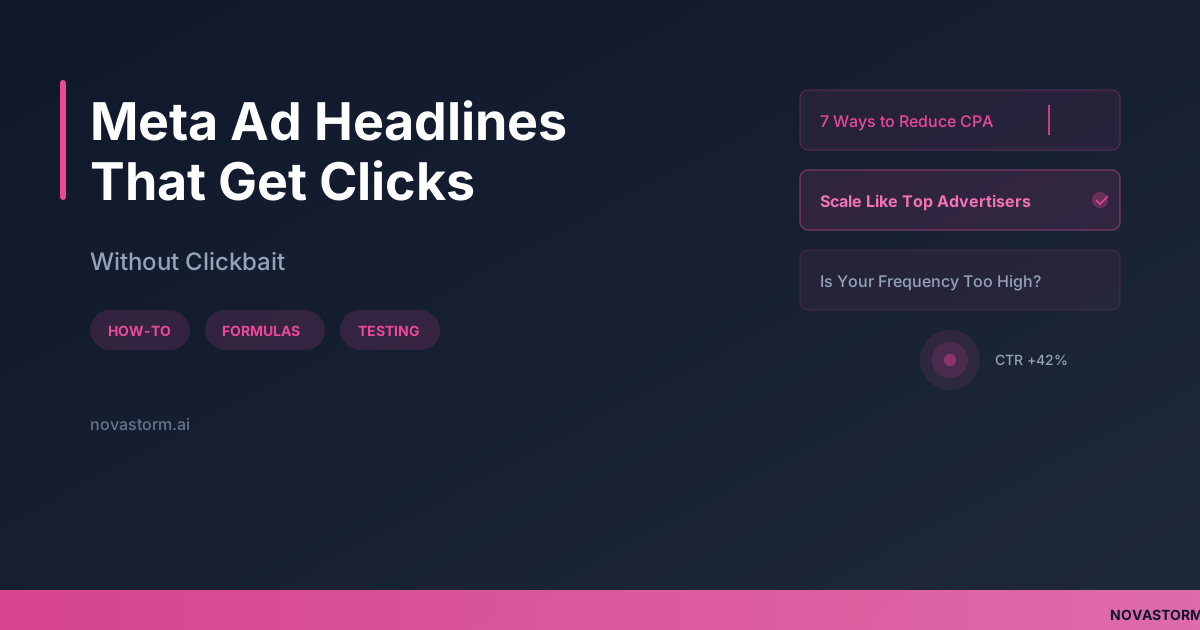
A useful headline tells someone what they can expect after clicking. Its job is to support the offer and destination, not promise a numerical improvement without evidence. Write candidates as hypotheses and review the exact saved ad before publication.
Match the headline to primary text and destination
Illustrative copy brief for an article offering an account-audit worksheet, not a customer campaign: the primary text explains “Review orders, event identity and the mobile checkout before changing spend.” Candidate headline A is “Review Your Ad Account.” Candidate B is “Start With Order Reconciliation.” Both must lead to a page that actually provides the promised worksheet and explanation.
| Candidate style | Teaching wording | Evidence required before use |
|---|---|---|
| Task summary | “Review Your Ad Account” | Destination contains the described account-review process |
| Specific next step | “Start With Order Reconciliation” | Reader can perform the reconciliation using the destination |
| Question | “Do Your Reports Match Paid Orders?” | Copy explains the comparison rather than implying the advertiser knows the viewer’s private results |
| Real deadline | “Offer Ends Friday” | The actual offer has that documented deadline, with time zone and relevant terms clear |
These are writing exercises, not proven winning formulas or approved Meta ads. A claim of a percentage saving, doubled leads or a deadline needs its own supporting evidence. If that evidence is absent, name the action or information the reader receives instead of inventing a result.
Review every selected placement
- Save the ad with the actual image/video, primary text, headline, description, CTA and destination. Inspect each intended placement on a phone and any relevant desktop context.
- Record whether the headline is displayed, omitted or truncated. Do not assume one character count guarantees visibility across all placements and devices.
- Check that any displayed fragment remains accurate. Keep essential offer terms in the visible creative or text where needed; do not make an optional field the sole place the offer is explained.
- Open the destination and verify the same product, task, price and qualification. Record creative version, placement, device and reviewer decision.
- If the account transforms text or creative, inspect the actual saved variant. Do not assume the comparison still differs only by your intended headline.
Use the mobile preview protocol to capture the rendering. Text length is a practical display constraint, not a guaranteed performance threshold.
Review the whole claim rather than a punctuation rule
Stop wasting ad budget
NovaStorm AI cuts Meta Ads CPA by 30% on average. No complex setup required.
Capitalization and emoji need a readability and context review. Neither their presence nor their removal establishes a policy decision. A general fitness sentence cannot guarantee approval for a regulated product or contradictory image. Use the specific notice and current rule through the policy-review packet when eligibility or a rejection needs investigation.
A reader should understand the promised destination without a misleading curiosity gap. A number in a list headline must match the actual list. An endorsement, customer count or “top advertiser” comparison requires its real source, scope and permission; a confident tone cannot supply that evidence.
Compare one headline with a declared risk limit
Hypothesis: headline B makes the reconciliation task clearer and attracts more qualified readers than headline A. Keep primary text, media, description, CTA, offer and destination unchanged. Choose the mature business outcome in advance: retained paid orders or qualified leads, depending on the actual offer. For an informational page, declare a relevant task-completion outcome without presenting it as revenue.
- Document assignment method, meaningful difference, baseline rate, evidence requirement, conversion delay and cash allowance. A single ad set with several ads does not guarantee random or equal delivery.
- If a suitable controlled comparison is available, use it for the intended causal question. Otherwise label ordinary delivery differences as observational, including traffic and placement mix.
- Check cumulative spend against the chosen allowance and investigate a proven broken destination immediately. Avoid declaring significance from an elapsed week alone.
- Review mature unique paid or qualified outcomes and contribution, plus diagnostic CTR and destination completion. Do not choose the variant solely because its clicks are cheaper.
- Preserve an inconclusive result when evidence is insufficient. A later offer or audience change belongs to a new test record.
Keep publication approval with the user
Put the real offer, supporting claims and two reviewed headline candidates in the NovaStorm brief. Prepare the proposal as paused campaign and local ad-set drafts. A person approves the exact saved text, placement previews and test allowance before publication. This is a preparation workflow, not automatic randomization, policy approval or a guarantee of more leads.
The creative testing framework keeps the hypothesis, unchanged conditions and decision together, so the result can inform the next headline without turning a small observation into a universal formula.
Published by NovaStorm AI. Planning examples are illustrative assumptions, not measured customer results.
Disclaimer: This article was generated with the assistance of AI and reviewed by the NovaStorm AI team. While we strive for accuracy, we recommend verifying specific data points and consulting official sources (linked where available) for critical business decisions.
Ready to automate your Meta Ads?
NovaStorm AI takes full responsibility for your campaigns — from monitoring to optimization.
Start NowMore on Ad copy and messaging
Social Proof in Meta Ads: Verify Reviews and Test the Treatment
Turn genuine reviews into a documented Meta ad brief, preserve permissions and claim evidence, and compare proof formats against mature retained sales.

How to Write and Test Body Copy for Meta Ads
Write evidence-backed Meta primary text, verify category and landing-page alignment, then test one copy-length hypothesis against mature customer cost.

The Curiosity Gap in Meta Ad Headlines: Intrigue Without Clickbait
Write curiosity headlines with an answer the page actually delivers, verify claims, and compare useful actions and customer costs rather than clicks alone.
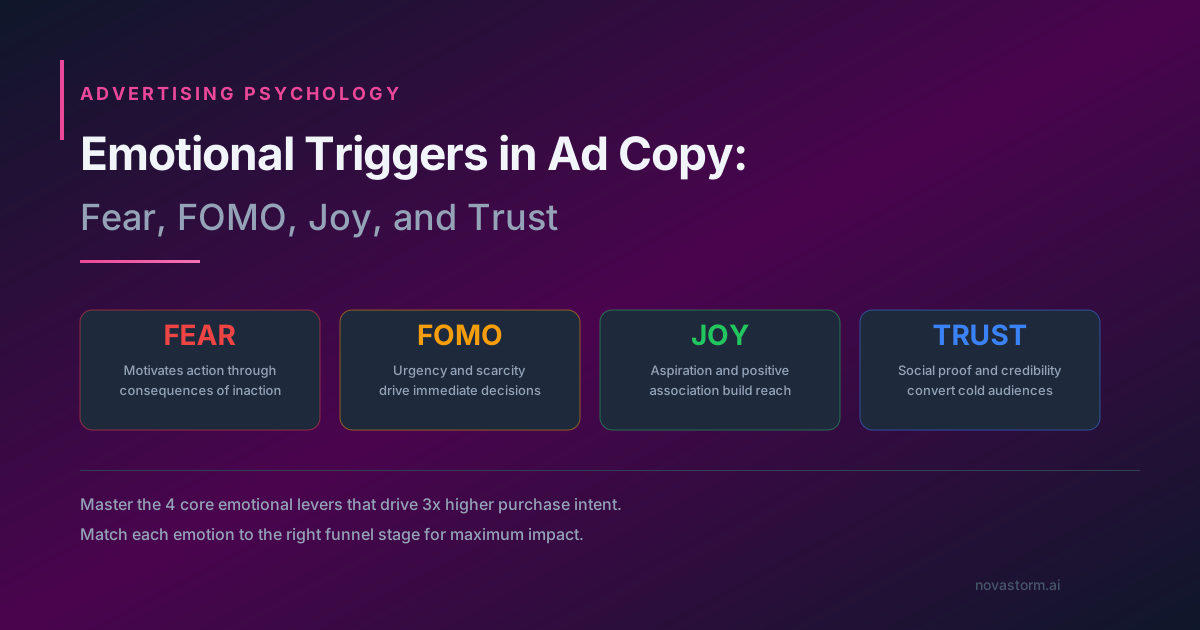
Emotional Triggers in Ad Copy: Fear, FOMO, Joy, and Trust
Build truthful emotional copy variants with verified urgency and testimonial permissions, then evaluate qualified outcomes rather than CTR alone.