

Jobs-to-Be-Done Framework for Meta Ad Creative Development
Turn a Jobs-to-Be-Done decision story into a truthful ad brief, verify targeting separately and evaluate mature customer outcomes.
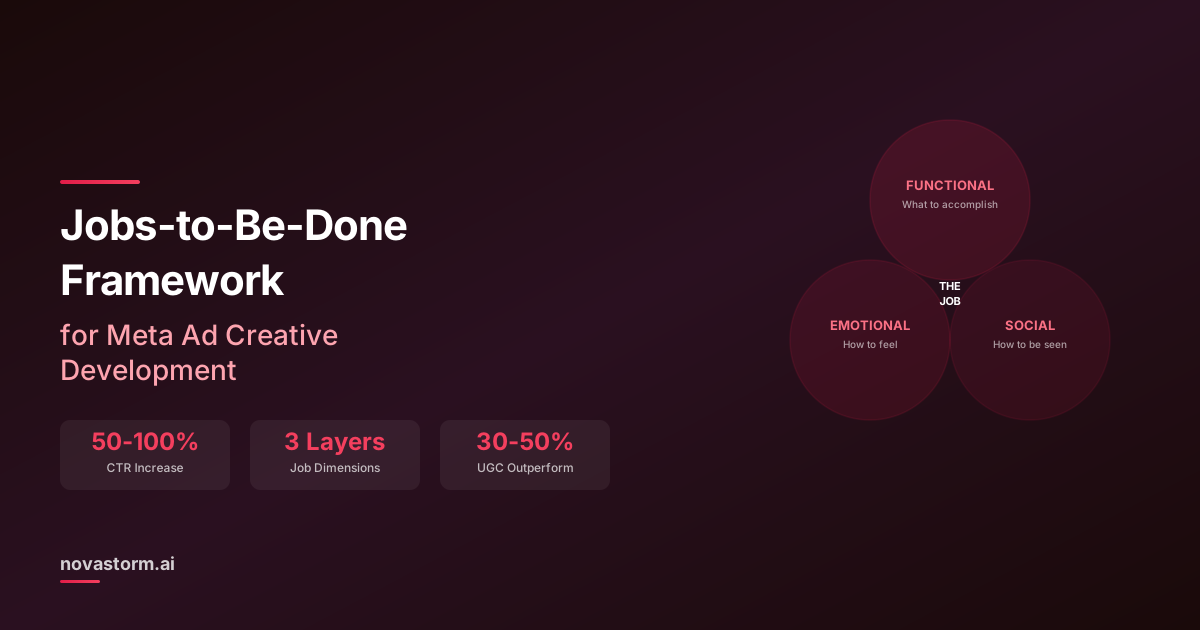
Jobs-to-Be-Done can organize customer research into a concrete creative brief. It does not prove that a job-focused headline always beats features, or that Meta can target the moment a customer privately decides to look for a solution.
Start from the source and a purchase circumstance
The Christensen Institute’s Jobs to Be Done explanation describes progress sought in particular circumstances, including functional, social and emotional considerations. Use that lens to investigate an actual decision story, not to invent a motive or a performance guarantee.
Fictional interview for training, not a customer quote: interviewer asks,"What happened just before you started looking?" Participant says,"I had to prepare a campaign proposal and could not explain which assumptions were still unverified." Follow-up asks what they tried, who approved the decision and what would count as a usable outcome. In real research, preserve contradictory accounts and obtain permission before publishing identifying excerpts.
Turn the story into a promise the product can support
| Illustrative research-to-brief field | Filled example |
|---|---|
| When | Preparing a campaign proposal that needs approval |
| I want | A draft with clear offer, destination and limits |
| So I can | Review the plan before authorizing publication |
| Supported promise | Prepare a campaign draft for review |
| Unsupported promise to reject | Know which ads to scale in30seconds, guaranteed lowerCPA or never lose a file |
| Evidence check | Actual draft boundary and reviewer acceptance, not invented customer outcomes |
Hypothetical copy pair: A="Prepare your campaign draft." B="Prepare a campaign draft for your next review." Keep imagery, offer and destination constant for this wording test. A useful job story still needs an accurate price, terms and product demonstration; motivational language does not justify health, safety or unconditional outcome promises.
Stop wasting ad budget
NovaStorm AI cuts Meta Ads CPA by 30% on average. No complex setup required.
Separate a circumstance from a targeting control
Recently promoted professionals, job-title changes or an upcoming personal occasion are not assumed current targetable options. Verify the actual eligible audience controls and policy for your account before using any circumstance-based selection. A plausible creative situation can be expressed within a verified audience without claiming access to that private circumstance.
Choose a concept by mature business value
No campaign dataset supports +50–100% CTR or a measured2.1–4.1% comparison here. CTR can help diagnose comprehension but a concept with more clicks may acquire unsuitable customers. Declare assignment, primary confirmed/qualified outcome, observation maturity and owner-approved loss limit. Include refunds and contribution after acquisition; inspect uncertainty rather than declaring a winner from one attractive click rate.
- Document the interview context and which claims remain hypotheses.
- Verify that the draft’s promise corresponds to implemented behavior.
- Test one concept difference with comparable eligibility and a credible assignment method.
- Review mature paid/qualified outcomes and customer suitability, retaining failed or missing cases.
- Keep the research rationale and the final approved version together.
Use the job story, verified promise and exclusions as a NovaStorm campaign brief. Review generated variants before approval. Draft preparation is not comparative performance evidence, and this workflow does not promise private circumstance targeting or automatic validation of customer research.
Published by NovaStorm AI. Worked examples and test fixtures in this article are illustrative, not observed customer results.
Disclaimer: This article was generated with the assistance of AI and reviewed by the NovaStorm AI team. While we strive for accuracy, we recommend verifying specific data points and consulting official sources (linked where available) for critical business decisions.
Ready to automate your Meta Ads?
NovaStorm AI takes full responsibility for your campaigns — from monitoring to optimization.
Start NowMore on Buyer psychology
Herd Mentality in Meta Ads: Test Truthful Social Proof
Use permissioned social proof in Meta creative, verify existing-post rendering and measure acquisition cost including any engagement seeding.
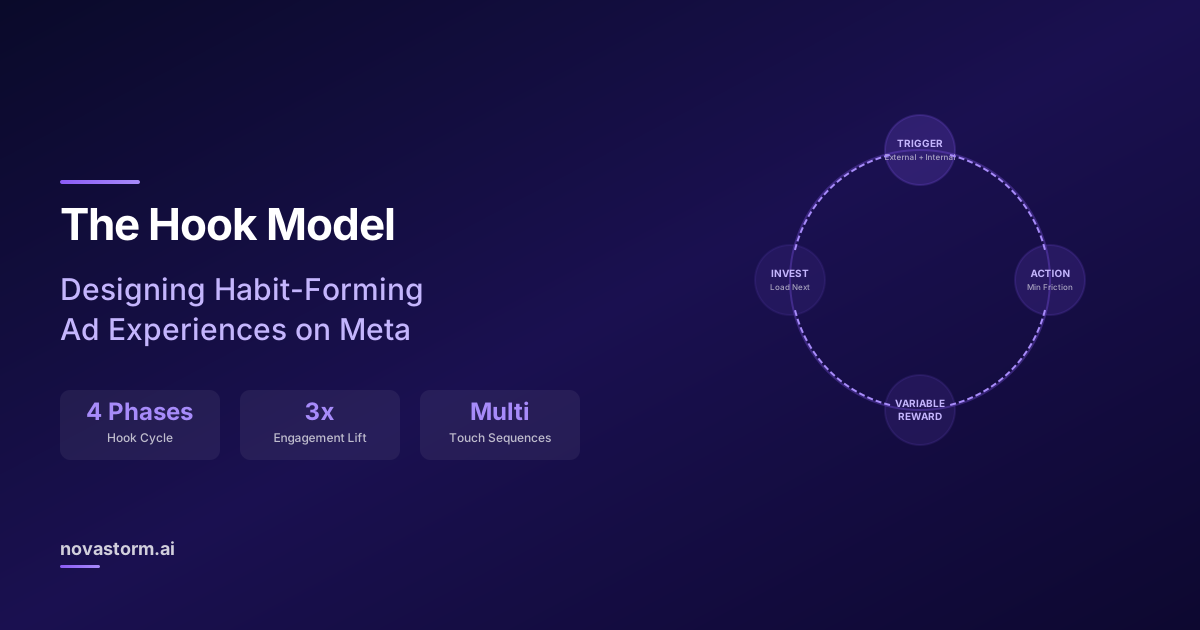
The Hook Model: Designing Habit-Forming Ad Experiences on Meta
Design a voluntary ad-to-quiz journey, separate contact permission and measure cohort costs without assuming habits or personalization support.
The Von Restorff Effect: Making Your Meta Ad Stand Out in the Feed
Test a contrasting Meta ad layout while preserving the offer; distinguish isolation research, measurable attention and mature business outcomes.
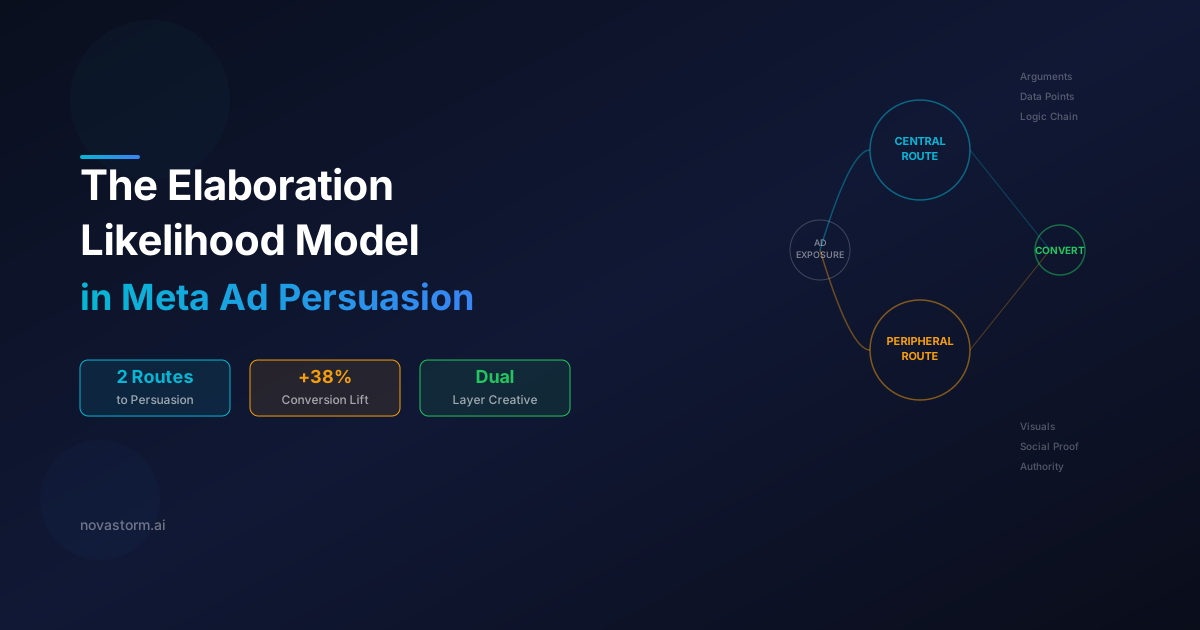
The Elaboration Likelihood Model in Meta Ad Persuasion
Learn how the Elaboration Likelihood Model shapes Meta ad persuasion through central and peripheral routes. Build ads that persuade at every engagement level.