

Influencer Whitelisting: Running Ads From Creator Accounts on Meta
Prepare creator-ad permissions, rights and disclosures, verify expiry and revocation, and compare creator versus brand identity without assuming performance gains.
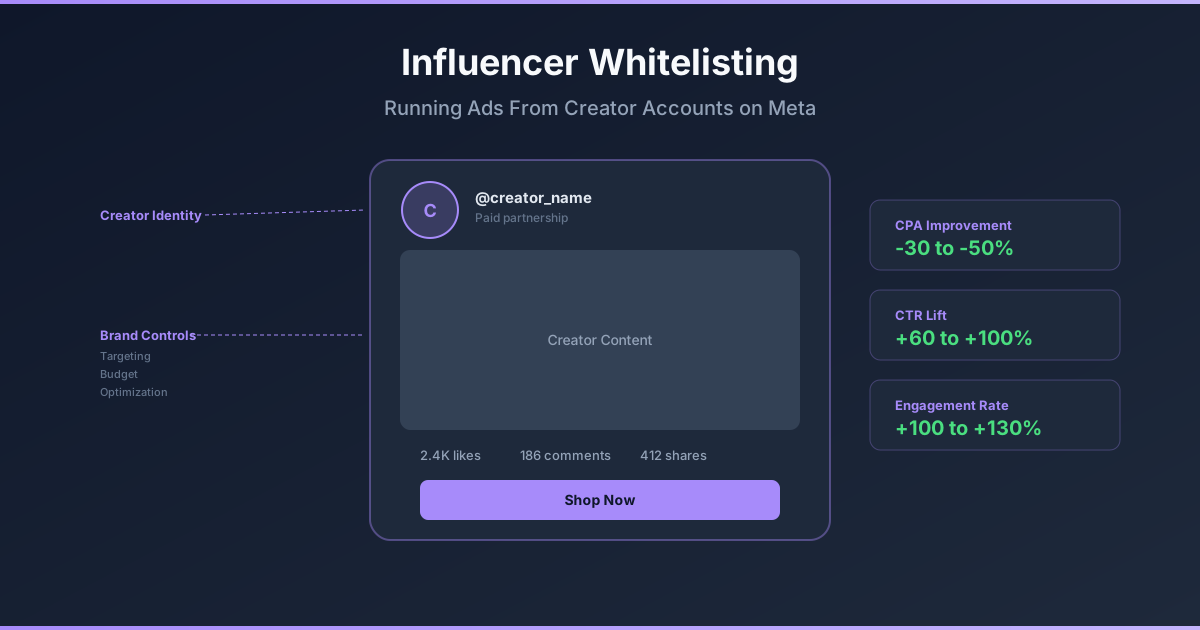
Partnership advertising uses a creator’s identity or content only through supported permissions and agreed rights. A creator-looking ad remains advertising. Treat identity as a testable variable rather than promising lower CPA or access to the creator’s followers.
Verify the actual permission path
- Before contracting, check current Meta partnership-ad eligibility for the selected Facebook/Instagram accounts, content and format. Use the account’s current eligibility/status screens and Help Center; do not assume every account or post qualifies.
- Agree permitted content, identity, markets, edits, placements, dates, spend limits and approval rights. Account-level or content-level platform permission is separate from the legal license.
- Grant only the supported permission needed for the approved use. Verify the brand, creator identity and exact asset in a saved draft/preview before delivery. Never request shared login credentials.
- Record the permission owner, expiry and revocation steps. If eligibility or authorization fails, stop the creator-identity version and resolve the actual reported issue.
- At expiry or revocation, pause every affected ad and verify delivery/spend status, schedules and duplicates. Do not rely on automatic cessation or assume removing a label revokes all rights.
Use Meta’s partnership-ad help as a starting point alongside the current account controls. Save the applicable eligibility and permission evidence at approval. A right to use creator identity does not itself establish permission to export followers, build their audience seed or access private audience data.
Make the commercial relationship clear
For US-directed endorsements, the FTC disclosure guide says the relationship should be apparent with the endorsement and cautions against relying solely on platform disclosure tools. Video disclosure should be in the video, not just its description. Verify the actual preview with and without sound and in the endorsement’s language.
For UK-targeted content, ASA/CAP guidance requires obviously identifiable advertising. Confirm the rules applicable to the market and message; a "Paid partnership" label is not blanket proof of compliance. Endorsements must describe genuine experience and supported product facts.
Stop wasting ad budget
NovaStorm AI cuts Meta Ads CPA by 30% on average. No complex setup required.
A filled rights and expiry checklist
| Contract field | Synthetic example | Acceptance |
|---|---|---|
| Usage period | October 10–November 8, 2026, agreed local time | Exact start/end and renewal approval recorded |
| License | One approved bag demonstration in two identity versions | Creator agrees edits, territory, formats and paid use |
| Fees | $600 production plus $200 paid-use license | Illustrative negotiated amounts, not market rates or a 20–40% rule |
| Disclosure | Visible "Ad" plus approved platform labeling where applicable | Actual market/format preview reviewed |
| Expiry owner | Named advertiser operator and creator contact | Affected ad IDs and pause/revoke checklist available |
| Unexpected revocation | Immediate affected-ad pause and delivery check | No new spend until authorization is resolved |
Compare identity while holding the material constant
Proposed hypothesis: creator identity may change useful response compared with brand identity. Use the same licensed demonstration, truthful offer, destination, eligible market and outcome definition, with required disclosures in both versions. If format or permission forces other changes, record that the comparison is not identity alone.
- Use feasible supported controlled assignment if a causal conclusion matters. Separate ordinary ads may receive different customers and exposure.
- Approve sample feasibility, media/cash-loss limits, conversion maturity and a review date. Include production and license costs in the commercial decision.
- Compare mature paid-customer CPA and contribution, not just engagement. Record actual counts and preserve inconclusive results; there is no assumed percentage improvement.
- If rights expire before evidence matures, pause delivery and continue permitted outcome observation rather than extending use without agreement.
NovaStorm can prepare the approved Meta creative brief as paused campaign and local ad-set drafts. The creator and advertiser must handle verified platform permissions, contract rights and actual delivery approval separately; access to creator followers or automated partnership authorization is not assumed.
Published by NovaStorm AI. Planning examples are illustrative assumptions, not measured customer results.
Disclaimer: This article was generated with the assistance of AI and reviewed by the NovaStorm AI team. While we strive for accuracy, we recommend verifying specific data points and consulting official sources (linked where available) for critical business decisions.
Ready to automate your Meta Ads?
NovaStorm AI takes full responsibility for your campaigns — from monitoring to optimization.
Start NowMore on Creative production and UGC

AI Image Generation for Meta Ads: Product Accuracy, Tools and Approval
Check current image models, product accuracy, rights and AI transparency before approving an advertising asset. Includes an illustrative prompt and correction worksheet.
How to Repurpose Content Into Meta Ad Creatives at Scale
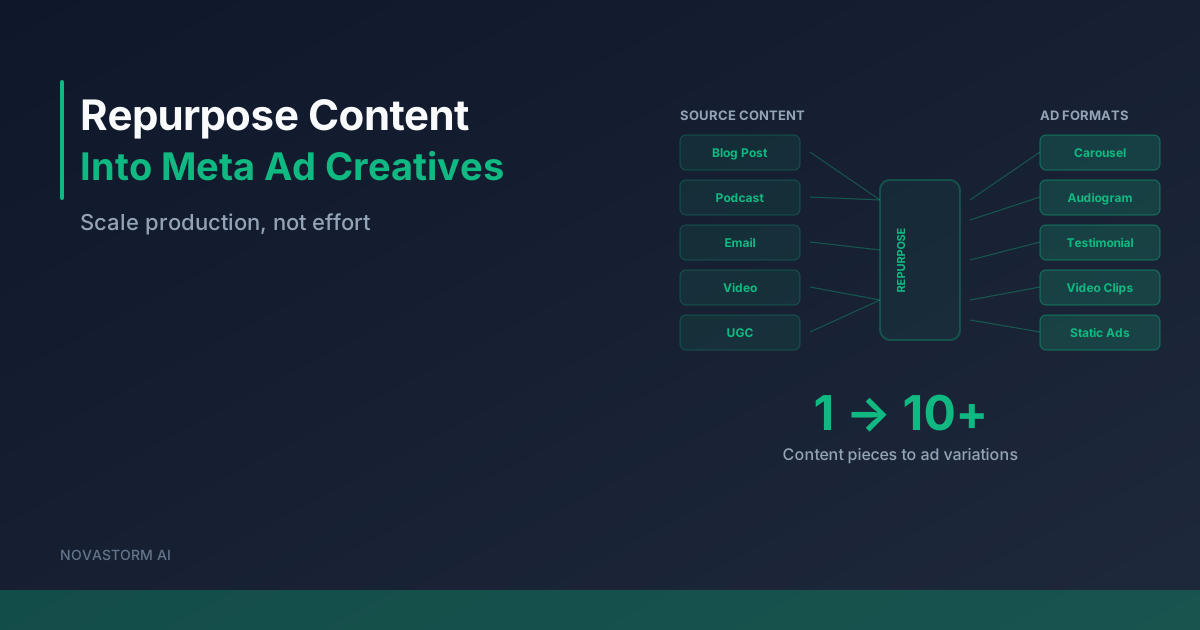
Turn a traceable source into self-contained Meta ad copy and video briefs, verify rights and numbers, and account for production and test costs.

Branded Content Ads on Meta: Partnering With Creators at Scale
Check partnership-ad permissions and license expiry, compare brand and creator identity under a controlled plan, and include creator fees in acquisition cost.
UGC Ads on Meta: How to Source and Scale User-Generated Content
Build a licensed creator-content pipeline with truthful briefs, a rights and quality card, all-in acquisition costs and a budgeted testing queue.