

How to Find Your Ideal Audience Size in Meta Ads
Calculate feasible audience tests from budget, expected CPA and order margin instead of universal audience-size benchmarks.
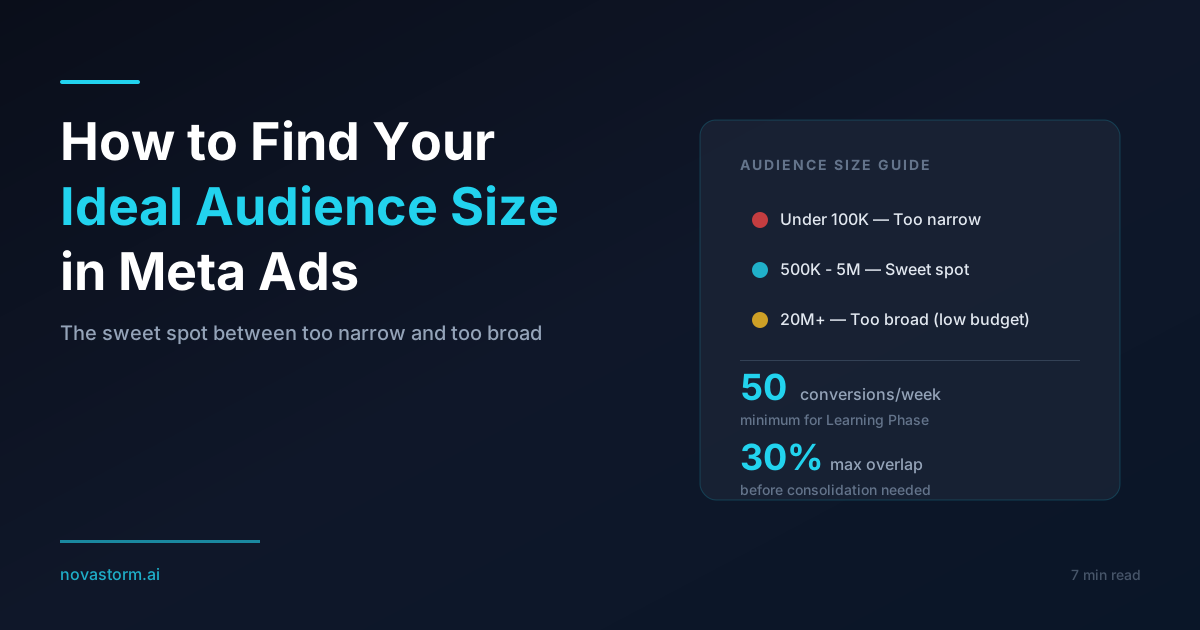
Audience size is an estimate of eligible people, not a forecast of purchases. Start with the market you can serve, the business outcome and your available cash. A large eligible pool does not mean every person will receive an impression; a small pool is not automatically unsuitable.
Calculate expected evidence before choosing a structure
Hypothetical planning example: assume $30 daily spend and a $10 paid-order CPA based on a proposed scenario, not an observed account. Expected weekly orders = $30 × 7 / $10 = 21. With three equally funded ad sets that is seven orders per set, before conversion delay and uncertainty. The calculation tests budget feasibility; it does not predict an ideal audience size or promise a learning status.
| Illustrative scenario | Weekly budget / assumed CPA | Expected orders | Commercial implication |
|---|---|---|---|
| One serviceable market | $210 / $10 | 21 | Assess whether the planned comparison can resolve the useful difference |
| More expensive market | $210 / $20 | 10.5 | Extending the test or reducing separate hypotheses may be necessary |
| Lower-margin market | $210 / $10; contribution before ads $8 | 21 | CPA exceeds contribution: lower CPA or improve economics before expansion |
| Higher-margin market | $210 / $20; contribution before ads $35 | 10.5 | Sparse evidence still matters even with positive assumed contribution |
Inputs are assumptions and outputs are calculations, not benchmarks. For an actual plan, replace CPA with mature historical outcomes from comparable offers and allow a range. Estimate the useful effect size and uncertainty; there is no universal purchase count that proves a campaign should continue.
Inspect saved controls rather than numerical audience rules
Stop wasting ad budget
NovaStorm AI cuts Meta Ads CPA by 30% on average. No complex setup required.
- Record geography, service eligibility, objective, conversion event, exclusions and any expansion/suggestion labels actually available in the account.
- Separate mandatory market boundaries from optional audience hypotheses. Verify the saved state after changes.
- Review reach, frequency, spend and qualified purchases together. A rising CPM alone does not establish that the audience is too small.
- Document tracking and conversion maturity. A shift to a higher-funnel event changes the optimization goal; first test its relationship with genuine purchases.
This guide does not retain CPM ranges of $6–15, fixed 500,000–5 million audience targets or a 30% overlap consolidation rule: no supporting sample or method was available. Overlap can coexist with a valid structure. Evaluate fragmented evidence and business boundaries, rather than assuming your ad sets simply bid up their own prices.
Turn the calculation into an approved draft
In NovaStorm, prepare a campaign brief and paused campaign/local ad-set drafts for review. Proposed review entry: service market confirmed; assumed CPA range $10–20; weekly cap $210; contribution input pending replacement with actual order costs; one initial audience hypothesis approved by the user. Confirm current account controls before separately approving delivery.
Compare mature paid-order CPA and contribution after ads within a declared spend and cash-loss cap. If outcomes are too few, record an inconclusive result rather than expanding simply to increase audience size. Use the broad-targeting brief and test design guide to define the next decision.
Published by NovaStorm AI. Planning examples are illustrative assumptions, not measured customer results.
Disclaimer: This article was generated with the assistance of AI and reviewed by the NovaStorm AI team. While we strive for accuracy, we recommend verifying specific data points and consulting official sources (linked where available) for critical business decisions.
Ready to automate your Meta Ads?
NovaStorm AI takes full responsibility for your campaigns — from monitoring to optimization.
Start NowMore on Audience targeting and prospecting
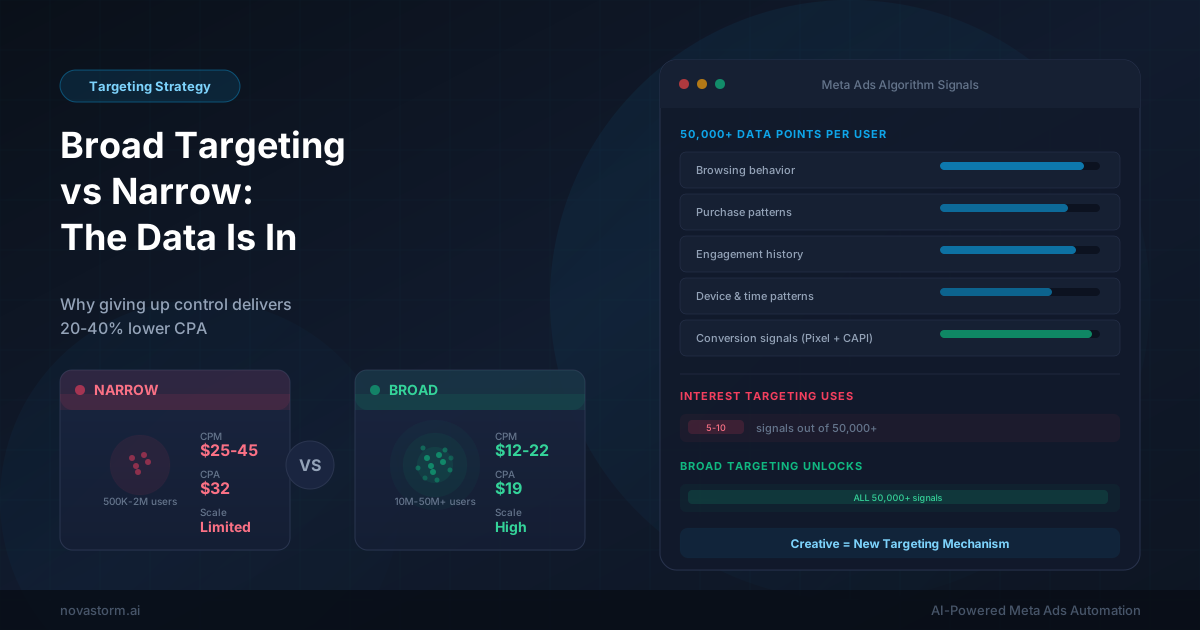
Broad Targeting in Meta Ads: Set Boundaries Before Testing
Prepare a broad-versus-narrow targeting comparison with business boundaries, mature paid-order metrics, a loss cap and an explicit inconclusive outcome.
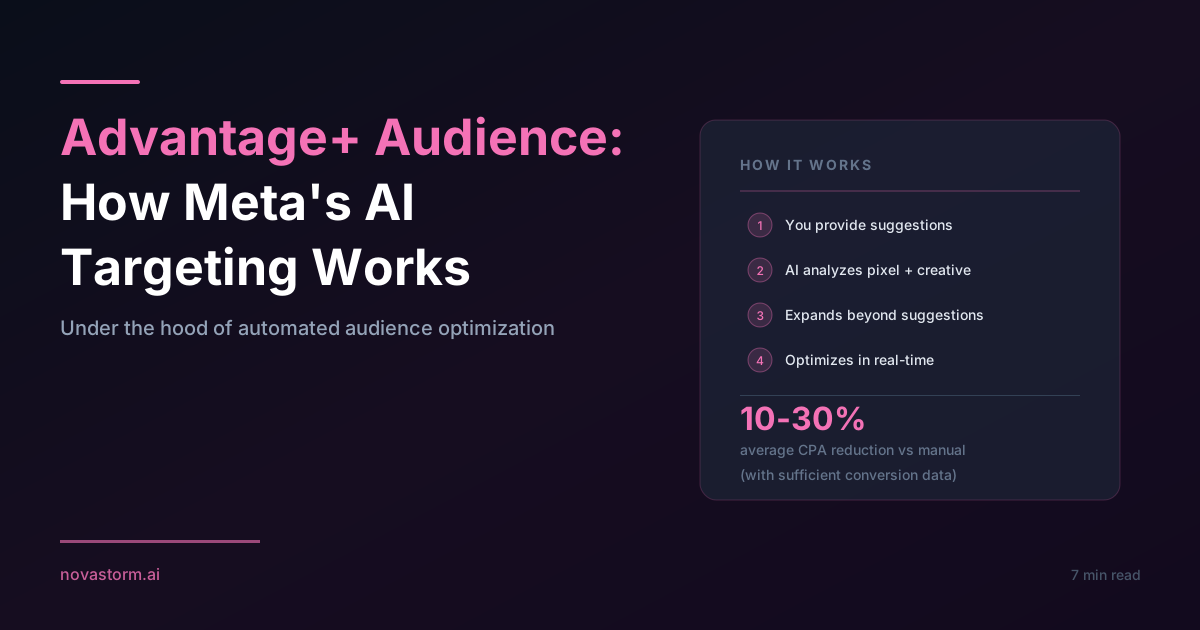
Advantage+ Audience: How Meta's AI Targeting Actually Works
Distinguish audience suggestions from enforceable controls, document saved settings and stop publication when eligibility cannot be enforced.
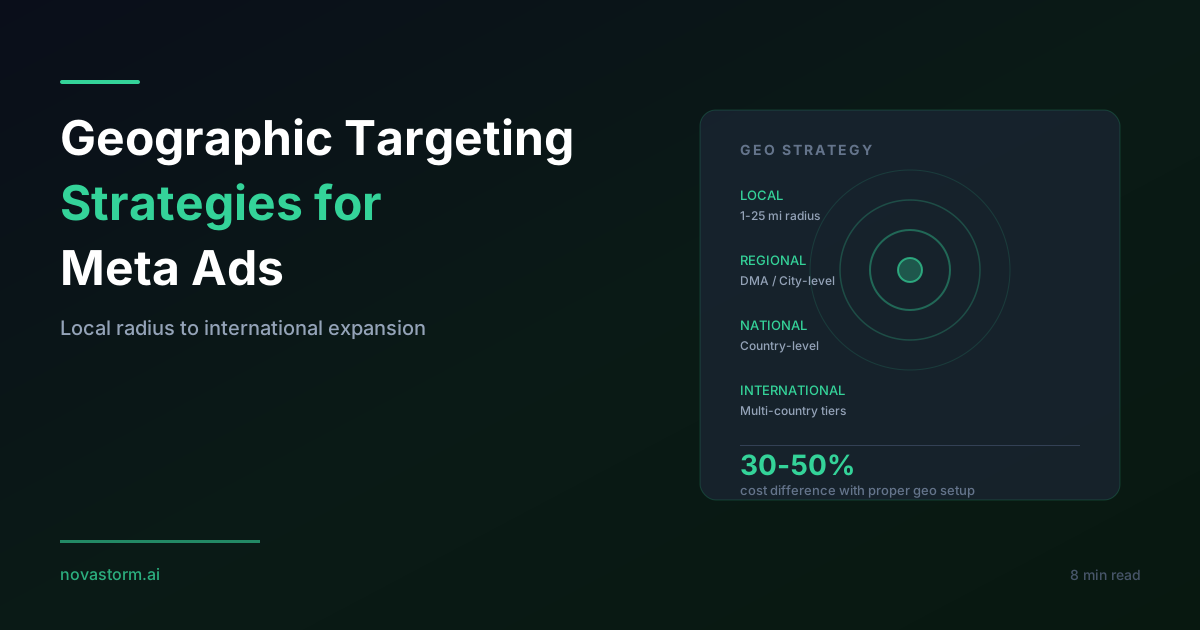
Geographic Targeting Strategies for Meta Ads: Local vs International
Plan local and international Meta audiences from service coverage, market contribution and a two-market localization worksheet.
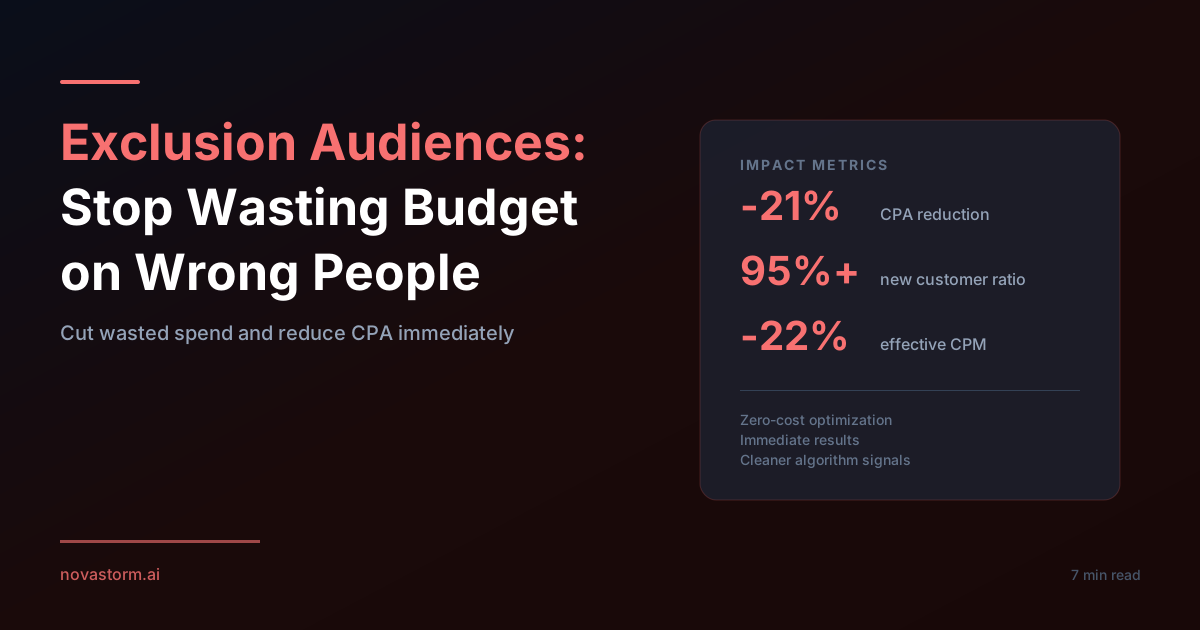
Exclusion Audiences: Stop Wasting Budget on Wrong People
Choose buyer suppression windows from repurchase behavior, verify saved exclusions and measure new-customer outcomes without promising CPA gains.