

Growth Loops vs Funnels: Modern Customer Acquisition on Meta
Measure a referral, content or data feedback loop by its real outputs, costs and delay, without assuming every customer makes the next acquisition cheaper.
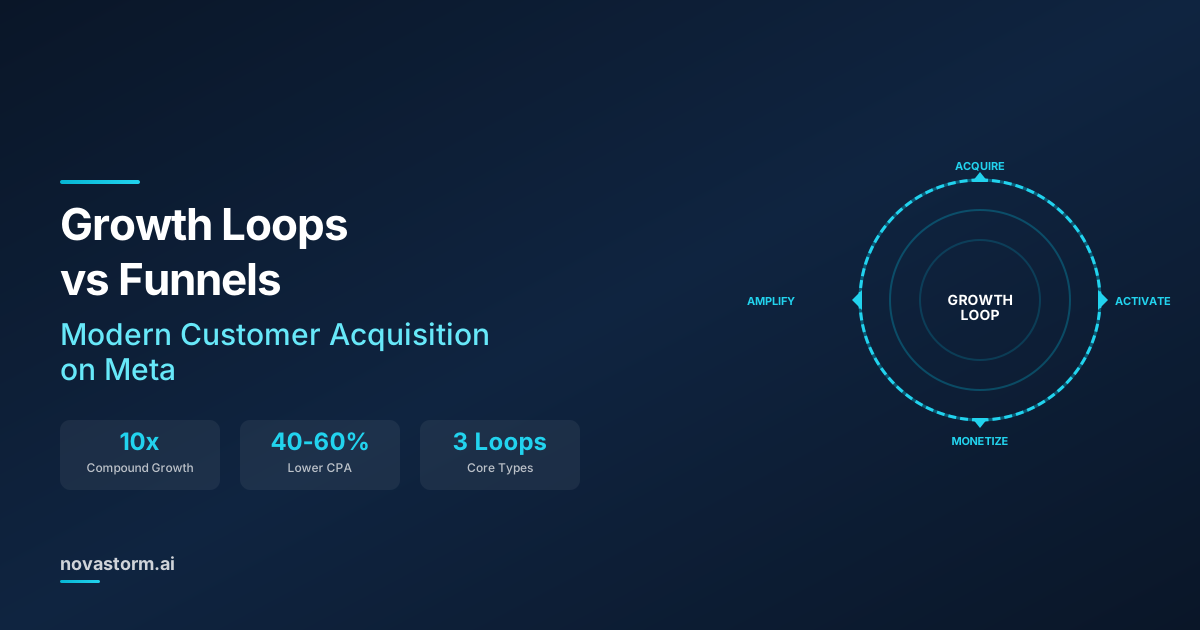
A funnel describes progression through a customer path. A growth loop proposes that an output can feed a later acquisition cycle. Neither model guarantees profitable scale. Use a funnel to locate losses and a loop to investigate a specific reusable output.
Specify the loop mechanism
| Proposed loop | Reusable output | Cost or limitation |
|---|---|---|
| Customer content | Permissioned, reviewed assets | Collection, rights, review and production work |
| Referral | Verified new eligible customer | Incentives, duplication and fraud |
| Measurement feedback | Reliable permitted business signals | Collection gaps, privacy choices and attribution limits |
A new purchase can produce no usable review, no referral and incomplete measurement. Even a reliable event does not guarantee cheaper future acquisition. Write what must happen between the purchase and the next input rather than assuming a data flywheel works automatically.
An illustrative referral calculation
Suppose 100 fictional customers send 20 recorded invitations that produce four verified new paying customers. The calculated invitation-to-new-customer rate in this hypothetical fixture is 20%. Include incentive, support and advertising costs when calculating the cost of those four. Repeated invitations, returning customers and conversions that would have occurred anyway must be distinguished.
This is not a reproduction rate of four customers per original customer. A self-sustaining claim would need the new cohort’s outputs and costs as well. An attractive single cycle does not demonstrate exponential growth.
Follow a second cohort rather than extrapolating
| Synthetic cycle | Unique customers | Invitation records | Unique new paid customers |
|---|---|---|---|
| Cycle 1 | 100 existing customers | 20 records; assume 20 distinct eligible recipients | 4 after the illustrative 14-day maturity |
| Cycle 2 | The 4 acquired customers | 3 records;2 target the same recipient | 1 unique new paid customer after the same maturity |
Illustrative cost assumptions: cycle 1 media USD 80, incentive payouts USD 40 and support USD 20 yield (80+40+20)/4=USD 35 per new customer. Cycle 2 media USD 10, incentive USD 10 and support USD 5 yield USD 25/1=USD 25. Include unpaid/outstanding incentives and production costs if they exist; none are secretly zero in a real assessment. The second cohort produced one customer from four, not another four from every customer; this fixture does not establish a self-sustaining loop.
Define eligibility and fraud review before incentives
Stop wasting ad budget
NovaStorm AI cuts Meta Ads CPA by 30% on average. No complex setup required.
- Assign a stable customer identity from the authoritative payment/account records, using permitted processing rather than a browser session alone.
- Exclude returning customers and repeated recipient invitations from the unique-new outcome; keep duplicates in a separate delivery log.
- Document attribution/eligibility when more than one referrer contacts the same prospect; one payment must not fund multiple unintended incentives.
- Review self-referral, linked-account abuse, cancelled payments and refunds before releasing a payout; record appeal and correction ownership.
- Do not require a positive review in exchange for a reward; content reuse requires permission and honest context.
Match the campaign to the next action
Use the business-outcome objective guide for the paid job supporting the loop. If promoting a referral explainer means buying visits, the Traffic configuration guide defines arrival and engagement. Neither step proves that every visitor becomes a qualified referral.
Keep the measurement reviewable
- Give each cycle a defined cohort and start/end event.
- Track usable output, unique new customers and associated costs.
- Record the lag between an original outcome and reusable input.
- Check consent and rights before reusing data or content.
- Separate an observed cycle from a forecast of later cycles.
The Meta’s official campaign SDK exposes available campaign identifiers, not evidence of a guaranteed platform-wide data-loop return. Evaluate the proposed business mechanism independently of a software label.
Choose the next cycle from evidence
A useful result may be a verified content process or a small capped referral hypothesis. It may also reveal that follow-up cost exceeds contribution. Keep the funnel diagnosis where it is useful and expand only the mechanism that can be demonstrated. No universal UGC lift, referral saving, quarterly CPA decline or 60–90-day compounding timetable follows from calling the process a loop.
A supporting NovaStorm campaign brief should state the real referral offer, eligible new-customer definition, destination, incentive conditions and approved cash ceiling. Prepare the draft and review it before launch. Campaign software does not make each buyer a source of permissioned content, provide fraud adjudication or prove the next cohort will reproduce profitably.
Published by NovaStorm AI. Worked examples and test fixtures in this article are illustrative, not observed customer results.
Disclaimer: This article was generated with the assistance of AI and reviewed by the NovaStorm AI team. While we strive for accuracy, we recommend verifying specific data points and consulting official sources (linked where available) for critical business decisions.
Ready to automate your Meta Ads?
NovaStorm AI takes full responsibility for your campaigns — from monitoring to optimization.
Start NowMore on Campaign structure and objectives
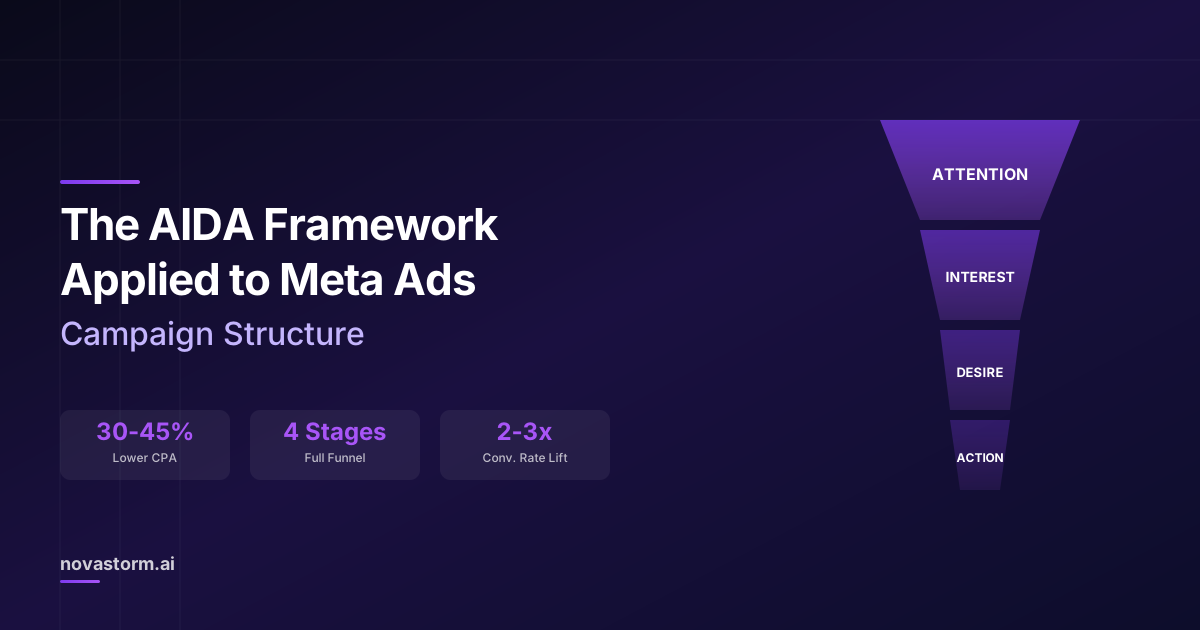
The AIDA Framework Applied to Meta Ads Campaign Structure
Use Attention, Interest, Desire and Action as message-planning questions, without mandatory campaign objectives, funnel ratios or promised CPA improvement.
Traffic Campaigns on Meta: When to Optimize for Link Clicks
Set up a Traffic visit diagnostic with a tagged final URL, consent-aware click reconciliation and scoped local attribution evidence.
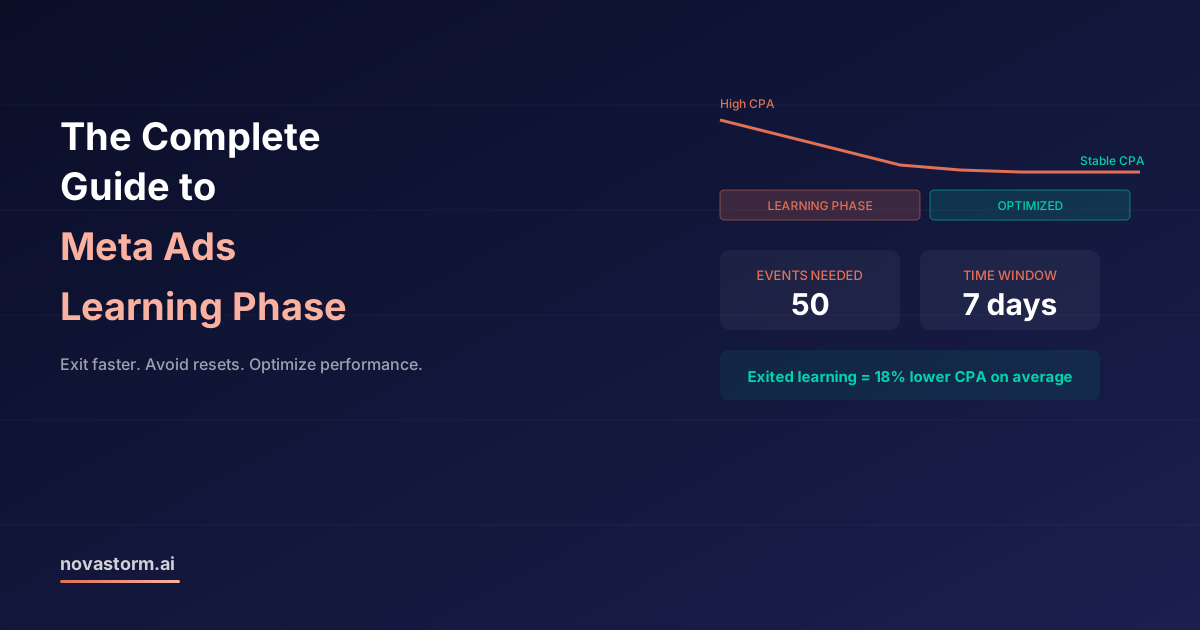
The Complete Guide to Meta Ads Learning Phase
Monitor a new Meta campaign day by day, distinguish delivery status from business performance and decide when a change is justified.
Conversion Campaigns vs Traffic Campaigns: Which to Choose on Meta
Choose Sales, Leads or Traffic with valid event gates, retained-order economics and a concrete paused-draft approval checklist.