

Geographic Targeting Strategies for Meta Ads: Local vs International
Plan local and international Meta audiences from service coverage, market contribution and a two-market localization worksheet.
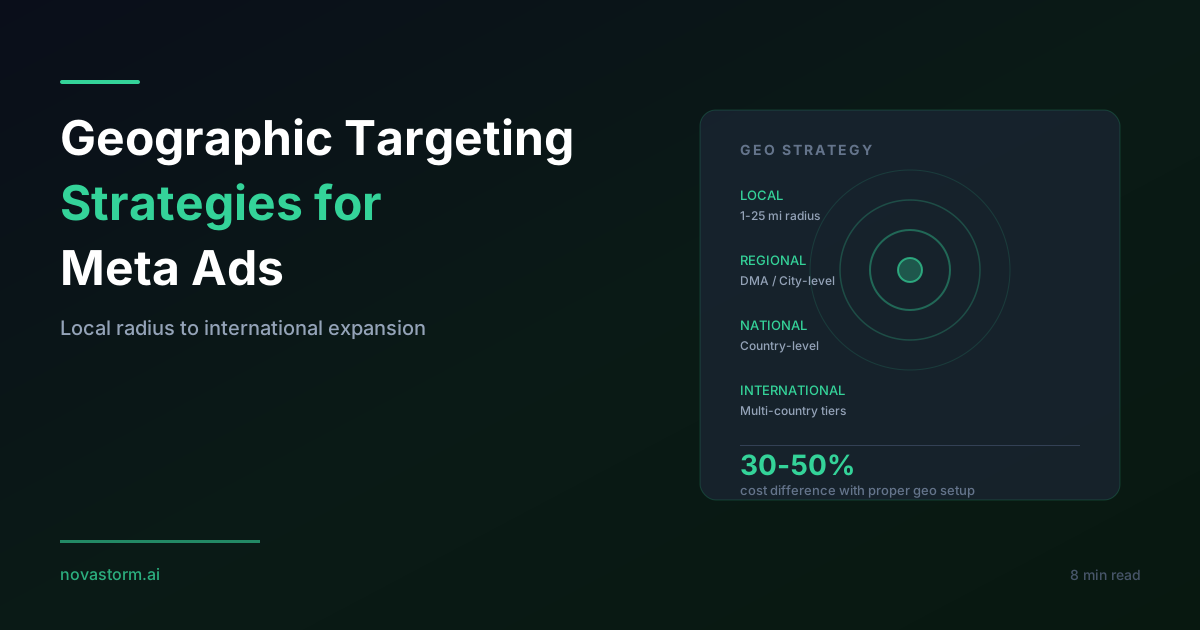
Geographic targeting starts with where an order or service can actually be fulfilled. CPM alone cannot select the right market: delivery charges, currency, returns, travel time and demand affect contribution. No universal geographic budget split or guaranteed cost saving is established here.
Map service coverage before drawing a radius
- List the addresses or postal areas you can serve, working hours, capacity and excluded locations. For a local service, check realistic travel time at the relevant time of day; a circle on a map does not capture bridges, traffic or delivery routes.
- Inspect geographic controls actually offered for your objective and account, their location definition and any expansion behavior. Do not assume a residents-only selector, a particular radius range or DMA control exists in every configuration.
- Compare the saved map with fulfilment coverage and the landing-page eligibility statement. Record approval before delivery.
- If small geographic tiers produce too few mature outcomes, consider combining serviceable areas with comparable offers and economics. Keep separate reporting when currency, margin or contractual coverage requires it.
Localize one offer for two markets
Hypothetical example: the same backpack is offered in the US and UK. These are invented planning assumptions, not actual prices, shipping terms or a currency conversion. Native reviewers must verify copy, taxes and delivery before publication.
| Field | US planning version | UK planning version |
|---|---|---|
| Price and currency | $80 USD | £70 GBP |
| Language and CTA | US English: “See backpack details” | UK English: “See backpack details” |
| Fulfilment promise | Assume tracked domestic delivery; verify actual date | Assume local delivery; confirm duty/tax treatment and postcode exclusions |
| Variable costs | Assumed $50 per net order | Assumed £50 per net order |
| Contribution before ads | $80 − $50 = $30 | £70 − £50 = £20 |
| Test CPA target | Assumed $20 leaves $10 per order | Assumed £15 leaves £5 per order |
Check ad, product page and final checkout as one journey. A user must see the same eligible price, stock and delivery promise. Language targeting is not always necessary merely because the country changed; choose it only for a documented language requirement and check the effect on eligibility.
Stop wasting ad budget
NovaStorm AI cuts Meta Ads CPA by 30% on average. No complex setup required.
Allocate evidence and cash rather than fixed percentages
Illustrative test plan: reserve $200 for the US and £150 for the UK. At the assumed target CPAs, each would produce ten orders; actual outcomes can differ. Do not add the currencies without a dated accounting conversion. Before allocating more, calculate contribution after ads from mature net orders, confirm demand and fulfilment capacity, and set the next cash-loss cap. A high historical ROAS does not establish the marginal return from extra spend.
- Declare the business metric separately for each market and a conversion/return maturity period from its own order data.
- Hold product, proposition and measurement rules comparable; localize only what fulfilment and language need.
- For a causal expansion claim, plan suitable assignment or a geographic holdout rather than an uncontrolled before/after comparison.
- Stop at the approved cap or a service-boundary failure. With sparse outcomes, report inconclusive and combine only economically compatible segments.
Prepare the market brief in NovaStorm
Prepare two creative briefs and paused campaign/local ad-set drafts in NovaStorm. The user approves currency, delivery statements, service boundaries and budget before any delivery. This is preparation, not automatic translation validation or a promise of lower CPM. Use the international campaign guide to continue market QA.
Published by NovaStorm AI. Planning examples are illustrative assumptions, not measured customer results.
Disclaimer: This article was generated with the assistance of AI and reviewed by the NovaStorm AI team. While we strive for accuracy, we recommend verifying specific data points and consulting official sources (linked where available) for critical business decisions.
Ready to automate your Meta Ads?
NovaStorm AI takes full responsibility for your campaigns — from monitoring to optimization.
Start NowMore on Audience targeting and prospecting
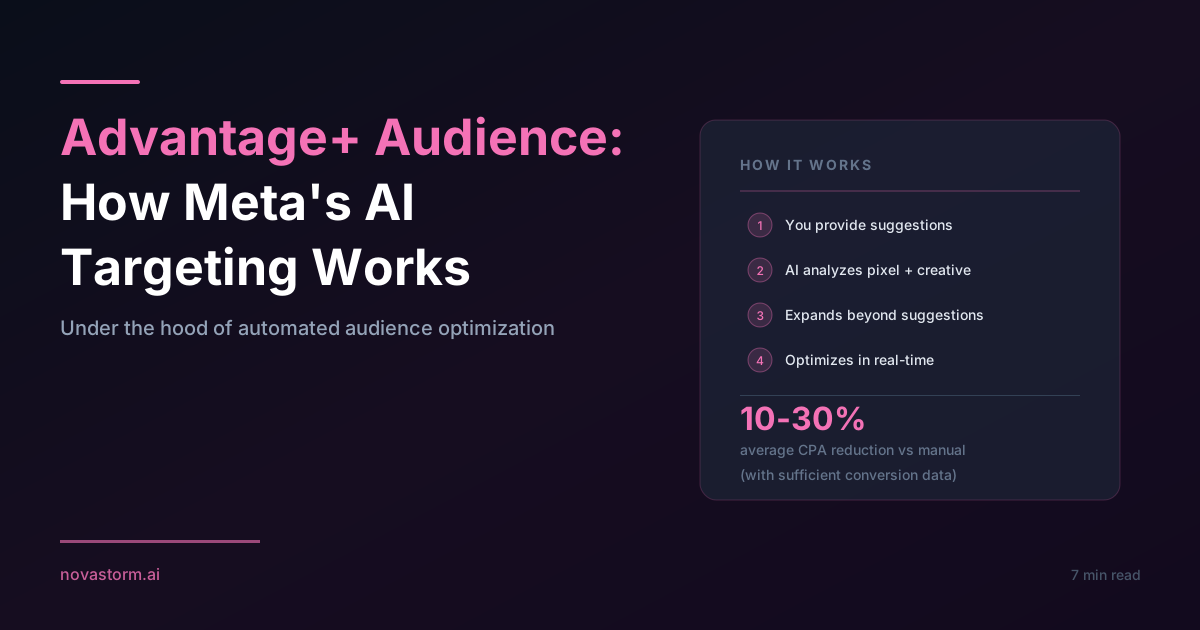
Advantage+ Audience: How Meta's AI Targeting Actually Works
Distinguish audience suggestions from enforceable controls, document saved settings and stop publication when eligibility cannot be enforced.
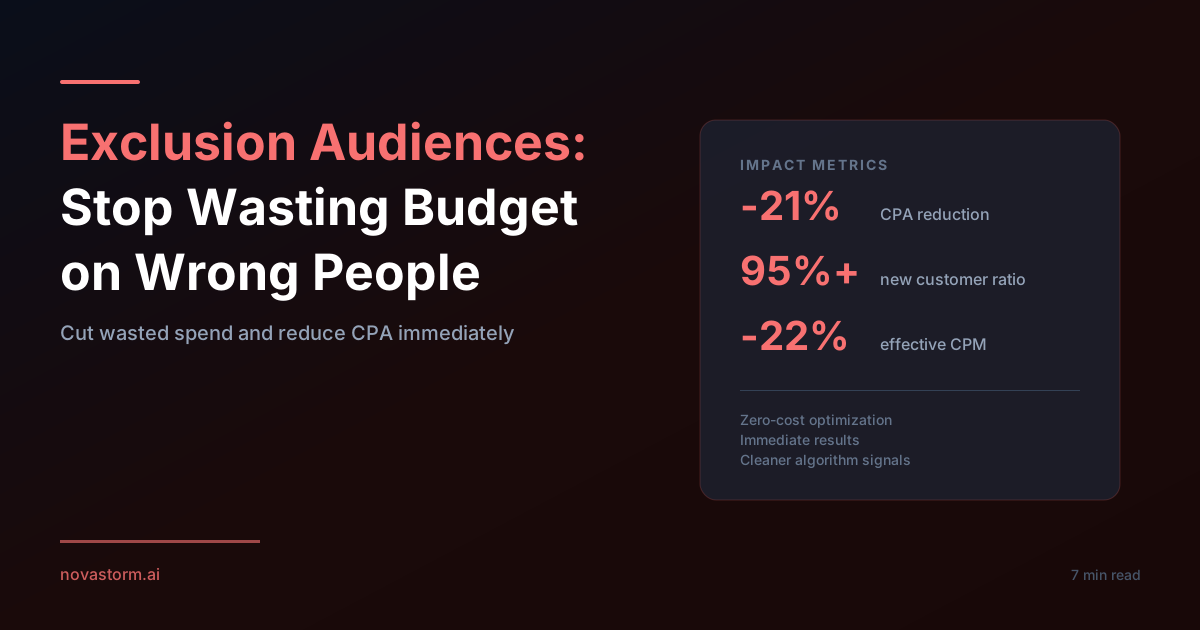
Exclusion Audiences: Stop Wasting Budget on Wrong People
Choose buyer suppression windows from repurchase behavior, verify saved exclusions and measure new-customer outcomes without promising CPA gains.
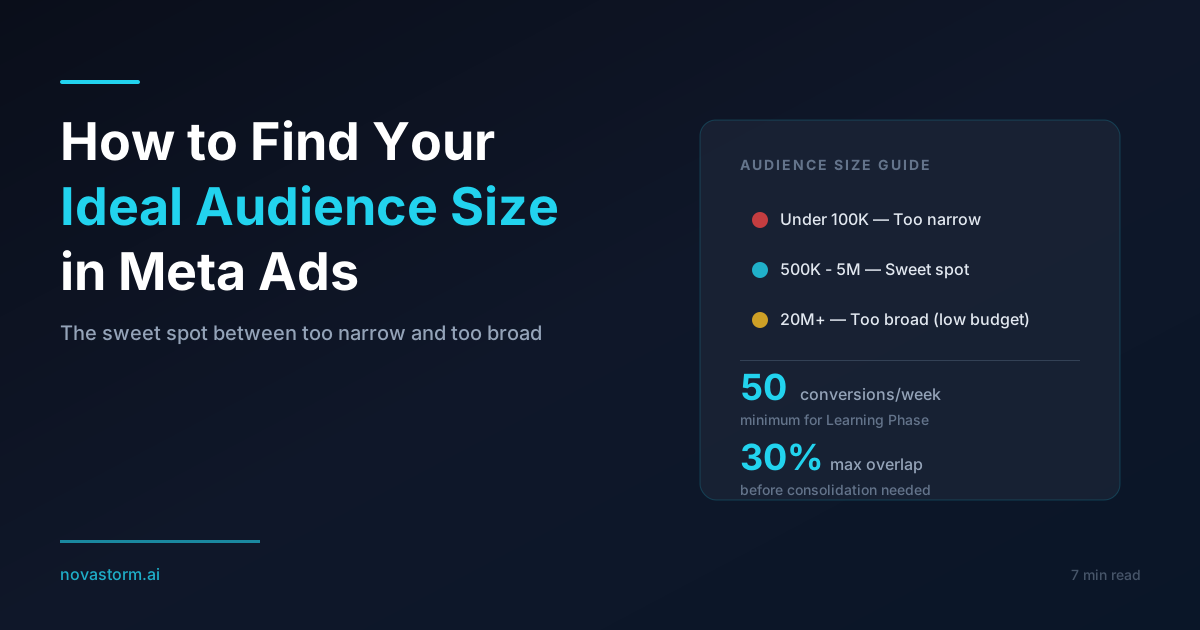
How to Find Your Ideal Audience Size in Meta Ads
Calculate feasible audience tests from budget, expected CPA and order margin instead of universal audience-size benchmarks.
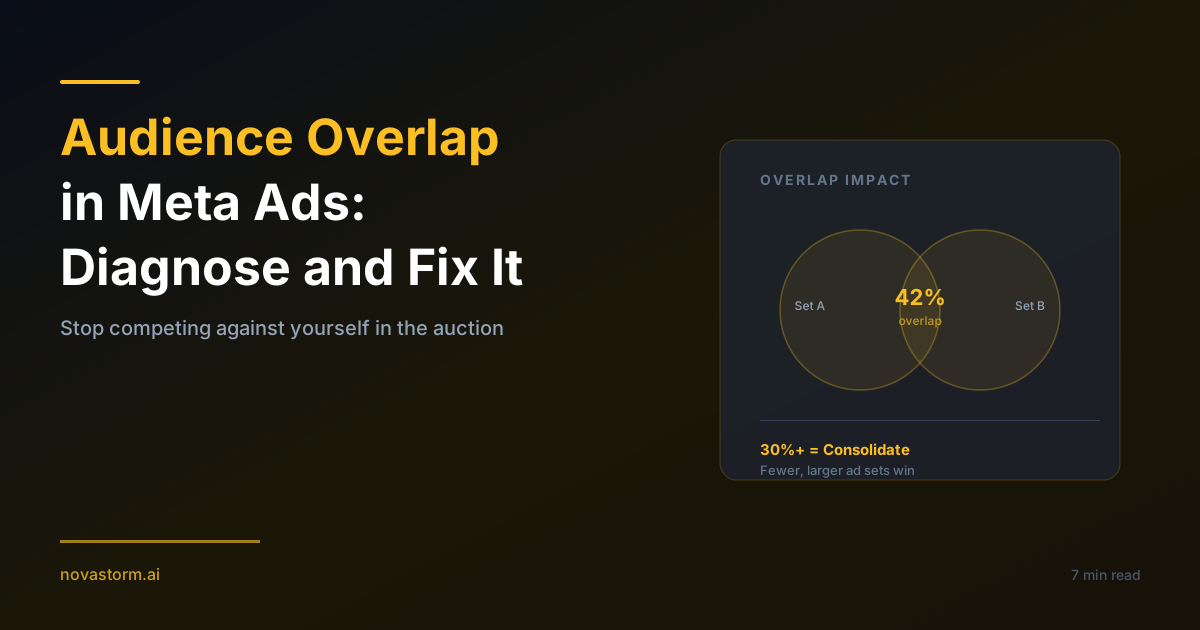
Audience Overlap in Meta Ads: How to Diagnose and Fix It
Diagnose overlapping Meta audiences as a structure and evidence problem, then test consolidation while preserving commercial boundaries.