

Flash Sale Campaigns on Meta: Urgency-Driven E-commerce Ads
Plan a flash sale with genuine deadlines, verified stock and checkout terms, a hard allowance and contribution after displaced full-price demand.
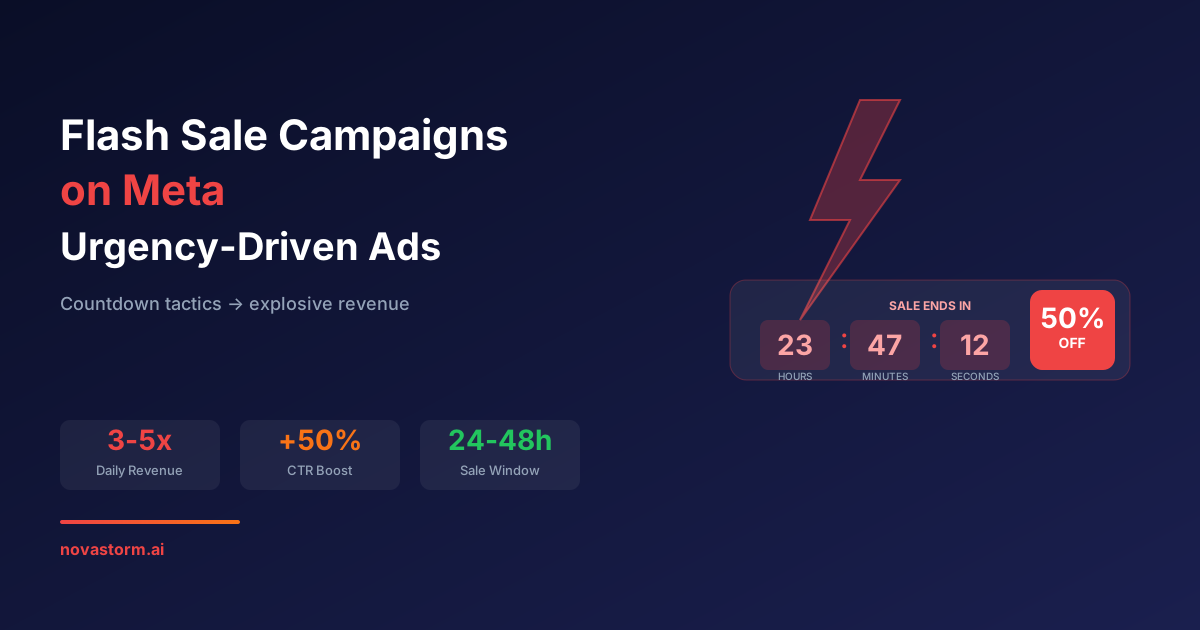
A flash sale needs a real end, accurate stock and a maximum affordable loss before it needs a countdown. Build a timeline that assigns every dollar and every promotional claim to one valid interval. Then judge retained contribution and displaced full-price orders, not the sale-day revenue spike alone.
A single timeline and a hard allowance
Hypothetical planning example, not a recommended universal split: public sale Friday 09:00 to Saturday 21:00 in the store’s named timezone, lasting 36 hours. Early access is Friday 03:00–09:00 under separately disclosed eligibility. A $1,000 total media allowance is divided below. These are maximum allocations, not promised spend or delivery; unused amounts remain unused unless a fresh allocation is approved.
| Phase | Non-overlapping interval | Media allowance | Valid message |
|---|---|---|---|
| Teaser | Before Friday 03:00 | $150 | Sale starts Friday 09:00; eligible early access described separately |
| Early access | Friday 03:00–09:00 | $100 | Early access eligibility and deadline |
| Main sale | Friday 09:00 to Saturday 09:00 | $550 | Sale price valid until Saturday 21:00 or approved stock condition |
| Last chance | Saturday 09:00–21:00 | $150 | The actual final 12 hours; no resetting timer |
| After sale | After Saturday 21:00 | $50 | Ordinary offer only; no expired discount claim |
The $550 main allowance covers 24 hours, not the first 12. Verify available lifetime/daily budgets, schedules, spend controls and account timezone before saving. Campaign-level allocation and a bid cap do not guarantee front-loaded delivery or a particular CPA. A bid controls auction behavior under its contract; it is not an order-cost ceiling. Plan creative review in advance, but neither a paused campaign nor a fixed preparation lead time guarantees approval or auction priority.
A promotional promise must stop when it becomes false
| Condition | Owner action | Evidence |
|---|---|---|
| Deadline reached | Stop expired ads; end discount/page timer; remove promotional follow-up claims | Saved schedules plus actual stopped delivery and checkout-price verification |
| Stock condition reached earlier | Stop affected SKU/message and update catalog availability | Inventory source, processed item status and actual product-set state |
| Sync or review delayed | Hold affected launch rather than advertise unavailable terms | Current item/ad state and owner decision |
| Timezone mismatch | Correct before publication; rehearse the cutoff in the actual timezone | Schedule preview and page/checkout clock agreement |
Do not use a prerecorded countdown that implies a live remaining time it cannot keep accurate. A static “Ends Saturday at 21:00 [store timezone]” can be clearer. The FTC dark-pattern report identifies misleading countdowns for offers that are not truly time-limited. A real deadline, documented stock condition and verified cutoff are operational requirements for the promise, not a guaranteed conversion tactic.
Finished creative and checkout brief
Stop wasting ad budget
NovaStorm AI cuts Meta Ads CPA by 30% on average. No complex setup required.
- Teaser hypothesis: “Our desk collection sale starts Friday at 09:00. See the participating products and terms.” Do not invent a discount before it is approved.
- Main-sale hypothetical copy: “Desk organizer: $40 during this sale, from the genuine applicable $50 price. Ends Saturday at 21:00 [named store timezone]. See delivery and return terms.” Replace these assumptions with approved real terms before use.
- Last chance: use the same accurate price/deadline. “While participating stock lasts” requires a genuine stock condition; no fabricated “only two left.”
- Preview the actual image, variant, catalog price, sale period, checkout discount, shipping cost, failed-payment behavior and expiry. Stop any item whose source state cannot be verified.
Discount margin determines the CPA ceiling
Illustrative assumptions, not measured sales: genuine full-price merchandise $50; sale merchandise $40; product cost $20, fulfilment/payment $4, merchant delivery $5 and expected return allowance $3. Sale contribution before media is $8 versus $18 at full price. Reserve $2 for other costs/surplus, leaving a media CPA ceiling of $6. At a $1,000 allowance, roughly 167 retained orders would be needed at that media ceiling; available stock and reachable demand may make that unrealistic. Reduce the allowance or change the offer before assuming volume will rescue it.
Estimate displaced full-price demand
Hypothetical counterexample: 100 retained sale orders yield $800 contribution before media. If a valid comparison estimated that 40 would otherwise buy at full price, their counterfactual contribution is 40 × $18 = $720. Incremental contribution before campaign cost is only $80; with assumed $100 acquisition/creative cost, the change is −$20. The counterfactual is an assumption in this illustration, not something sale revenue proves.
Use an eligible randomized holdout or carefully matched market test with comparable stock, seasonality and full-price access, a planned sample and common purchase/refund horizon. Include the period after the sale to examine purchases brought forward, returns and depleted stock. A week-before/week-after drop is descriptive and can reflect other demand changes. Report uncertainty and alternatives; do not declare cannibalization from one percentage cutoff.
Campaign preparation and owner checks
Prepare the approved phases, product brief, loss allowance and expiry tasks in a NovaStorm campaign draft. Review saved budgets, dates, audiences and creative before publication; the campaign owner checks actual spend, stock and cutoff behavior in the supported tools. No automatic pacing feature can be assumed to maximize revenue. If the discounted contribution is inadequate, keep the ordinary offer or revise the bundle using order-contribution calculations.
Published by NovaStorm AI. Worked examples and proposed tests are labeled in the article.
Disclaimer: This article was generated with the assistance of AI and reviewed by the NovaStorm AI team. While we strive for accuracy, we recommend verifying specific data points and consulting official sources (linked where available) for critical business decisions.
Ready to automate your Meta Ads?
NovaStorm AI takes full responsibility for your campaigns — from monitoring to optimization.
Start NowMore on E-commerce offers and retention
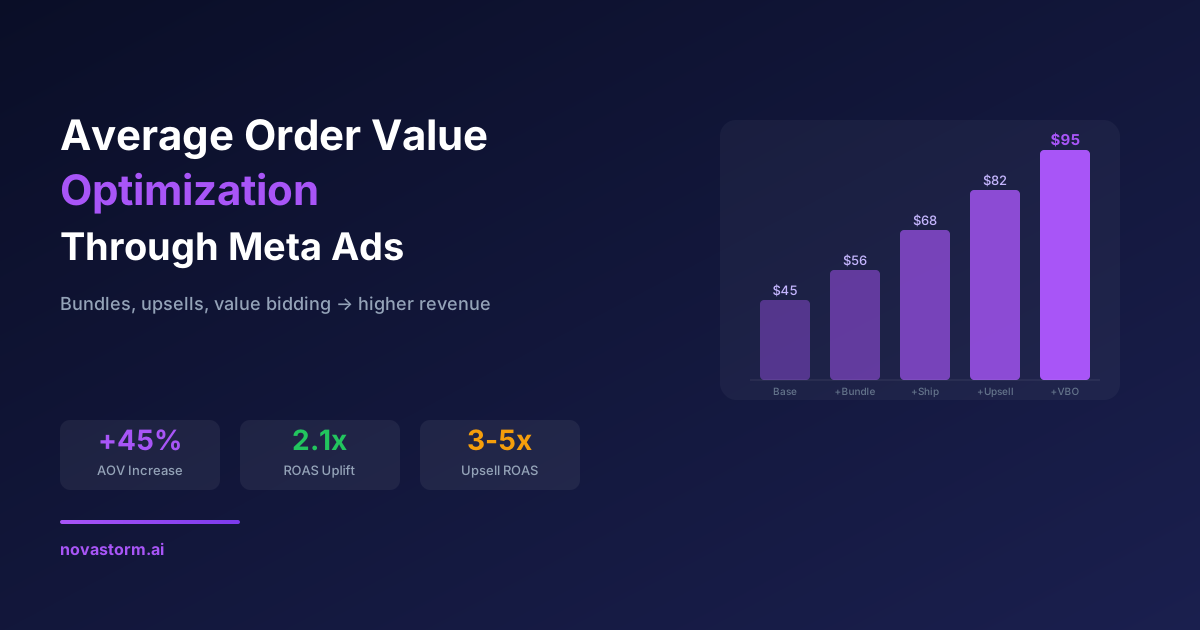
Average Order Value Optimization Through Meta Ads
Calculate AOV and contribution separately, price bundles and shipping thresholds, and compare mature offer results without assuming profit guarantees.
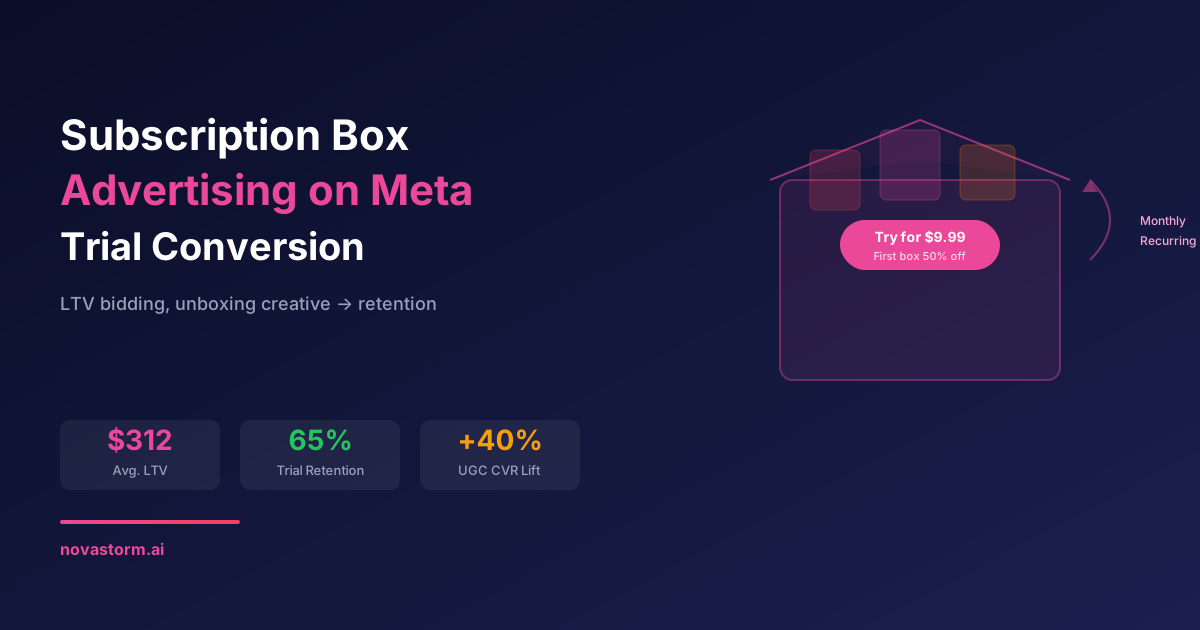
Subscription Box Advertising on Meta: Trial Conversion Strategies
Set a subscription-box acquisition ceiling from mature payment contribution, renewal uncertainty and cash delay, with truthful recurring offer terms.

Discount Strategy in Meta Ads: When Discounts Help and When They Hurt
Compare discounts, delivery subsidies and full-price offers using contribution after advertising and returns, then run a bounded paired comparison.
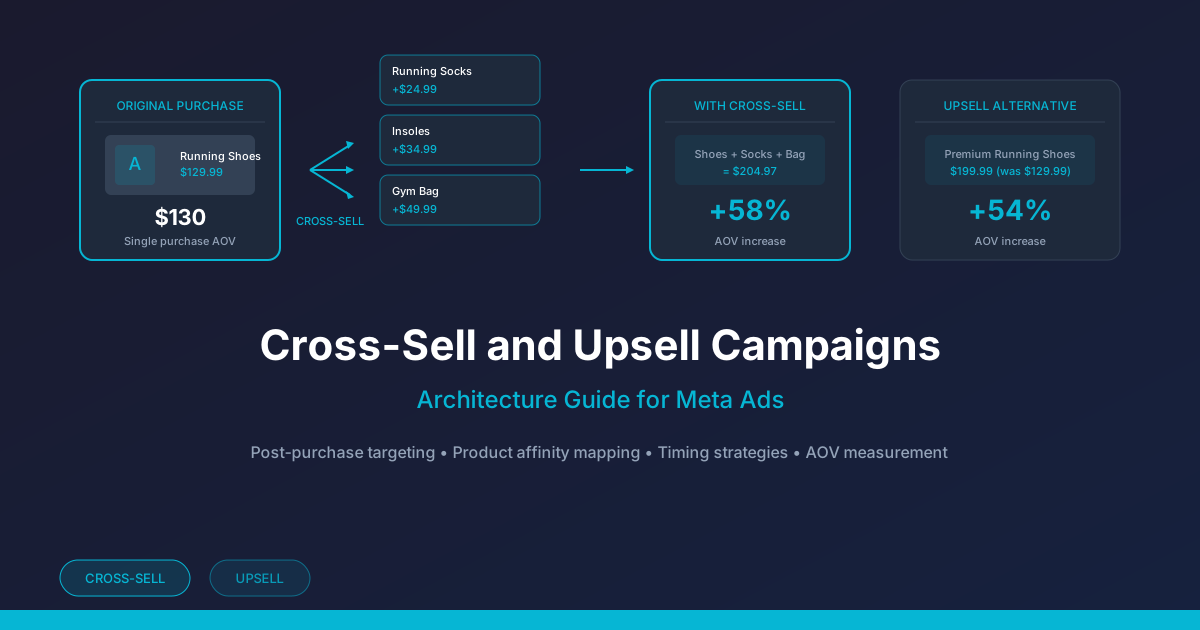
Cross-Sell and Upsell Campaigns on Meta: Architecture Guide
Calculate product affinity from equal observation windows, define purchaser exclusions and test incremental contribution from cross-sell or upsell ads.