

Cognitive Load Theory: Simplifying Your Meta Ad Message
Review Meta ad clarity with a seven-second usability probe, a before-and-after message example and quality outcomes that preserve material disclosures.
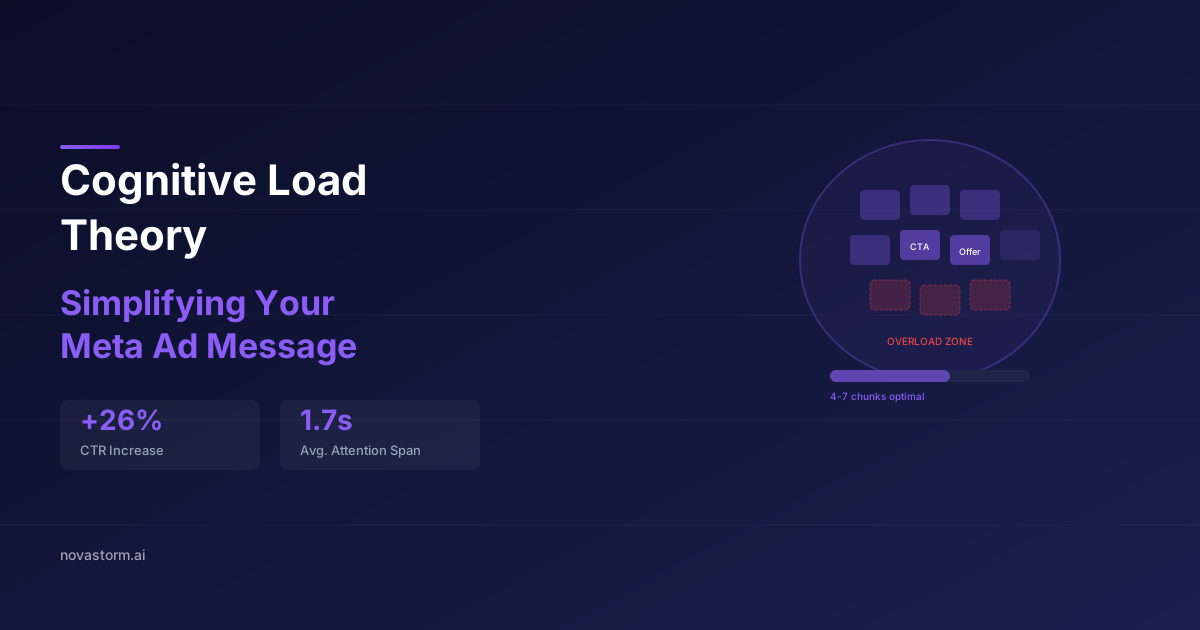
A clear ad helps the viewer understand the offer, intended use and next step. Simplification is a testable design choice, not a guaranteed CTR improvement. Sweller (1988) studied cognitive load in problem solving and learning; that work does not measure advertising returns or assign a fixed memory cost to every image.
Use the seven-second review as a heuristic
Show the actual mobile ad to a person unfamiliar with the product for seven seconds, then ask: What is offered? Who could use it? What should you do next? This is a chosen usability probe, not a validated diagnosis or a recreation of everyone’s feed exposure. Record answers, device, version and sample; test material disclosures without relying on seven seconds alone.
| Teaching layout | Offer / audience / action answers | Revision |
|---|---|---|
| Before: many feature badges and “Unlock synergy now” | Synthetic reviewer: “Some business software; unclear use; click somewhere.” | Choose one supported workflow and named next step. |
| After: one workflow image and “Review your project handoff. See the plan and next steps.” | Synthetic reviewer: “Project handoff for teams; inspect plan and workflow.” | Keep pricing obligations and relevant limitations readable. |
These answers are invented teaching responses, not a usability study. A real review may reveal a different issue. Preserve necessary qualifications: cutting text should not hide a subscription commitment, eligibility limit or material offer condition.
Check the actual rendering and accessible meaning
Stop wasting ad budget
NovaStorm AI cuts Meta Ads CPA by 30% on average. No complex setup required.
- Review mobile placement previews for cropping, text truncation, readable contrast and a sound-independent message.
- Use a clear focal point and understandable labels; do not impose two fonts or three colors as a scientific rule.
- An unfamiliar icon can add ambiguity; test its meaning instead of assuming it replaces explanatory text.
- A carousel can add explanation, but each card should remain understandable if order or exposure differs.
- Use the source table/copy to explain complex terms on the destination, while retaining material disclosures where required.
Choose available metrics and a quality outcome
Do not assume Meta reports “average time on ad” or “read-more rate” as universal standard fields. Verify the exported metric definition, denominator and availability before using it. Video-watch metrics are not equivalent to time spent understanding static copy.
Hypothesis: a clearer workflow message improves informed qualified responses. Compare it with the current version for the same offer and eligible audience, with prespecified allocation, comprehension questions, mature retained contribution and a loss ceiling. Track incorrect expectations, refunds and support workload. A simpler ad attracting more unsuitable clicks has not met that goal.
Prepare the revised message brief and campaign draft in NovaStorm. Have the offer owner approve clarity and disclosures, then inspect saved fields and actual placement previews before publication.
Published by NovaStorm AI. Worked examples and proposed tests are labeled in the article.
Disclaimer: This article was generated with the assistance of AI and reviewed by the NovaStorm AI team. While we strive for accuracy, we recommend verifying specific data points and consulting official sources (linked where available) for critical business decisions.
Ready to automate your Meta Ads?
NovaStorm AI takes full responsibility for your campaigns — from monitoring to optimization.
Start NowMore on Buyer psychology

The Bandwagon Effect: Why Social Proof Numbers Matter in Ads
Audit social-proof numbers with a dated claim register and correct CTR comparisons, then test retained contribution with approved evidence.
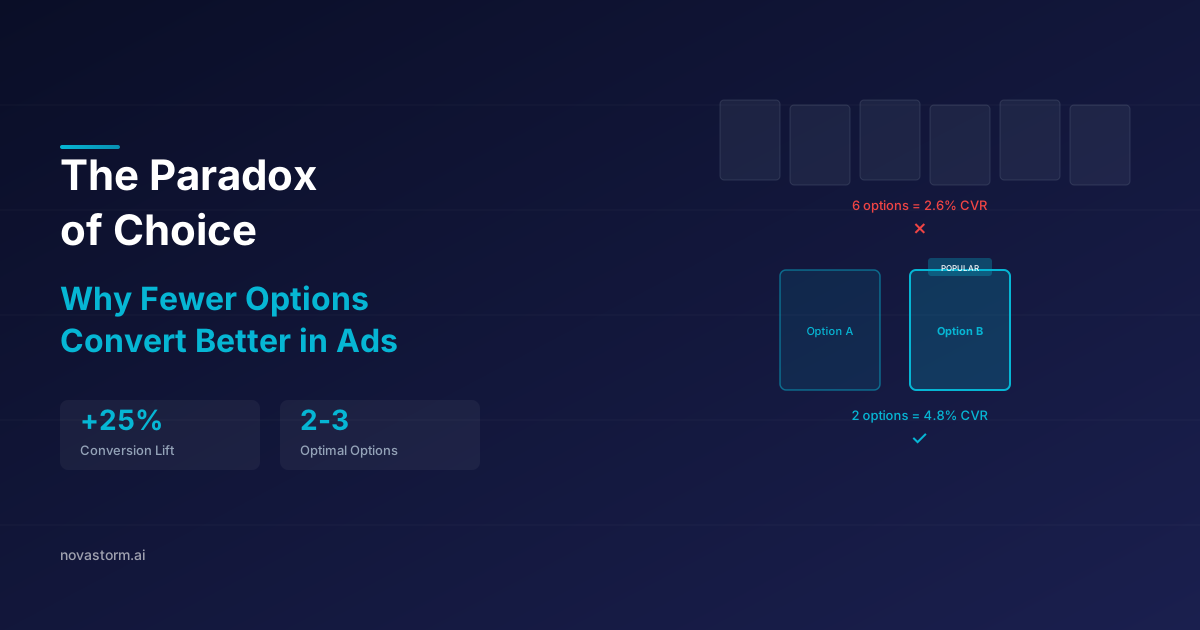
The Paradox of Choice in Meta Ads: Test Clearer Product Selection
Test choice reduction by distinguishing narrative cards from assortment decisions, using truthful recommendations and retained-contribution outcomes.

Anchoring Bias in Meta Ads: Setting the Right Price Frame
Prepare truthful price frames with documented references, visible subscription commitments and a retained-contribution test of anchoring hypotheses.

The Von Restorff Effect: Making Your Meta Ad Stand Out in the Feed
Test a contrasting Meta ad layout while preserving the offer; distinguish isolation research, measurable attention and mature business outcomes.