

Case Study Ads on Meta: Turning Customer Success Into Creatives
Build case study ads from verifiable claims, permissions and transparent comparisons, then test the story using mature paid outcomes.
A case study ad should let a prospect understand the starting problem, the intervention and the limits of the evidence. A precise percentage does not establish that the product caused the change. Build a claim packet before turning a customer story into paid creative.
An educational case packet you can reproduce
The following Northline Studio example is entirely fictional, not a NovaStorm customer, approved endorsement or measured campaign. Its dataset may be reused as a labeled training exercise. Do not publish it as a customer success story.
| Fictional input | Baseline: April | Follow-up: May | Meaning |
|---|---|---|---|
| Completed paid orders | 100 | 147 | Count unique paid orders after the same refund window |
| Net revenue | USD 10,000 | USD 14,700 | Refunds and tax excluded; USD 100 net per order assumed |
| Ad spend | USD 2,000 | USD 3,000 | Spend changed as well as the creative |
| Promotion | None | New bundle | Offer changed; not an isolated creative comparison |
Illustrative calculation: (14,700 − 10,000) / 10,000 = 47% more net revenue. Spend also increased 50%; there was a new bundle and a different month. These inputs support a description of this fictional comparison, not a claim of a 47% product effect, typical outcome or guaranteed return.
| Required real document | What it must establish | Publication decision |
|---|---|---|
| Order ledger and refunds | Date, paid status, unique order ID, currency and mature net revenue | Publish aggregates only after rights and privacy review |
| Spend export and change log | Same timezone, intervention date, audience, offers and other changes | State concurrent changes beside the result |
| Customer approval | Permitted name, logo, quote, channels, term and revocation process | No identifiable story without approval |
| Typical-outcome evidence | Comparable customer population, exclusions, denominators and result distribution | A standout success alone cannot establish expected performance |
From a verified packet to a story
Stop wasting ad budget
NovaStorm AI cuts Meta Ads CPA by 30% on average. No complex setup required.
For a real story, write one sentence for each stage: who faced what problem; what changed; what was measured and when; which alternative explanations remain. Use the customer’s actual approved words. Do not invent a quote or convert a before/after association into causal language.
Fictional training storyboard: card 1, “Northline wanted more repeat orders”; card 2, “The team introduced a bundle and revised the message”; card 3, “Net revenue: $10,000 in April, $14,700 in May”; card 4, “Spend and offer also changed; this comparison does not isolate the ad’s effect”; card 5, “See the measurement worksheet.” Keep the fictional label prominent on every exported creative. This exercise is educational material, not a ready customer-performance ad.
For US advertising, FTC endorsement guidance explains that exceptional-result endorsements can imply generally expected results. A generic variability disclaimer does not fix that implication. Verify expected performance and disclosure with the responsible reviewer; when that evidence is unavailable, use a factual process demonstration instead of an outcome testimonial.
Test the story before commissioning production
- Use a simple approved static story and a factual product demonstration, with the same offer and landing page. Hypothesis: the story improves qualified purchases; this has not been measured here.
- Before launch define random assignment, eligible audience, maximum affordable test spend, minimum worthwhile effect and the full conversion/refund maturity window. Use a supported split test if available; ordinary ad delivery is not random assignment.
- Report mature paid customers, net contribution after production and media, and uncertainty. Treat clicks as diagnostics. If too few customers arrive, record an inconclusive result rather than declaring a winner.
- Check applicability: unusual discounts, founder audiences, seasonal demand or a small selected customer cohort may make a successful story unrepresentative. Repeat with a relevant population before expanding the claim.
Prepare the verified narrative and approved evidence notes for a NovaStorm campaign draft. Review copy, disclosures, destination and budget before publication. Keep permission records and sales measurement in their actual systems; a draft is not evidence of customer success.
Published by NovaStorm AI. Worked examples and test fixtures in this article are illustrative, not observed customer results.
Disclaimer: This article was generated with the assistance of AI and reviewed by the NovaStorm AI team. While we strive for accuracy, we recommend verifying specific data points and consulting official sources (linked where available) for critical business decisions.
Ready to automate your Meta Ads?
NovaStorm AI takes full responsibility for your campaigns — from monitoring to optimization.
Start NowMore on Creative production and UGC
Webinar Replays as Meta Ads: Evergreen Lead Generation
Create a truthful self-contained webinar ad clip, retain source dates and rights, and evaluate mature qualified demand with full funnel costs.
Influencer Content Licensing for Meta Ads: Legal and Creative Guide
License creator ads with explicit paid-use, edit and third-party rights, then track each live ad against approval and expiration records.
Content Repurposing for Meta Ads: Blog to Ad Pipeline
Turn a verified blog idea into a complete Meta carousel, document production costs and test reader interest separately from customer acquisition.
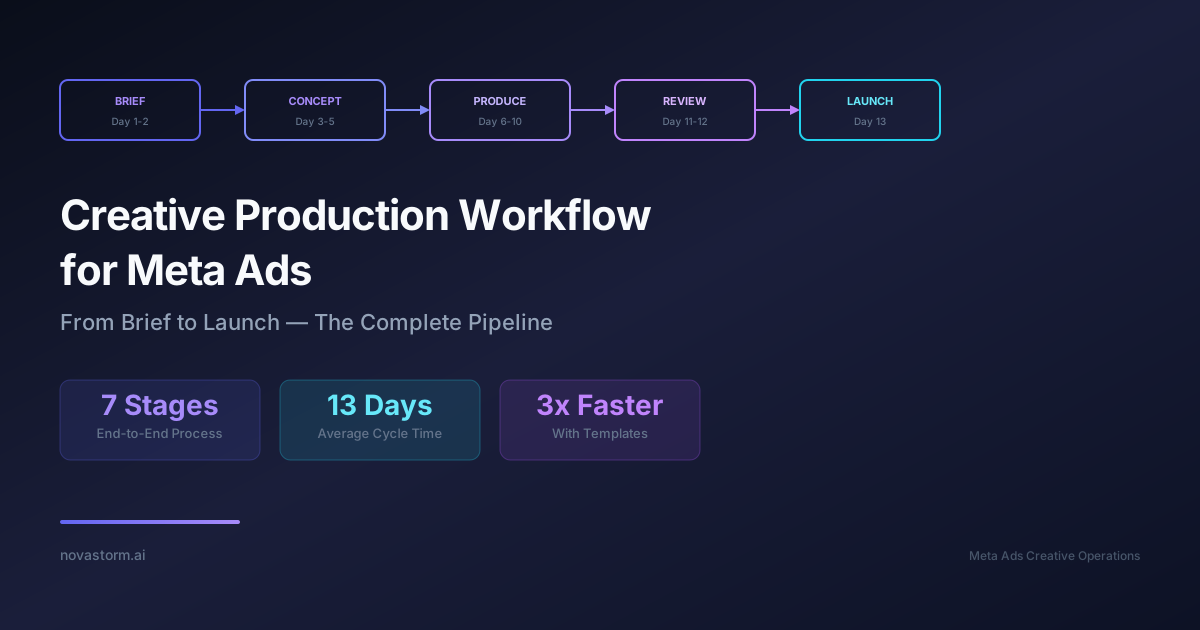
Creative Production Workflow for Meta Ads: From Brief to Launch
Organize a creative project with a filled brief, evidence and rights checks, a coherent schedule and mandatory launch acceptance gates.