

Anchoring Bias in Meta Ads: Setting the Right Price Frame
Prepare truthful price frames with documented references, visible subscription commitments and a retained-contribution test of anchoring hypotheses.
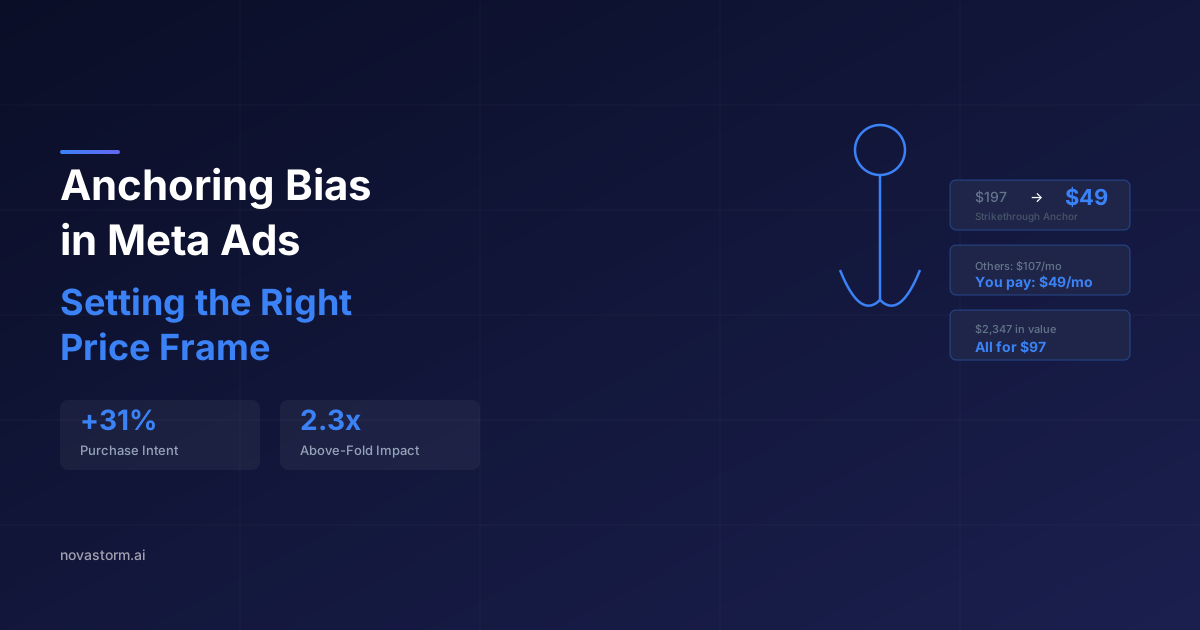
Anchoring research concerns how a reference value can influence a numerical judgment. Tversky and Kahneman (1974) is a foundational source on judgment under uncertainty. It does not establish a Meta conversion percentage, a first-ten-words rule or a universal price frame.
Use a price reference with a documented basis
- Previous price: retain SKU, actual sale history, period and applicable local pricing requirements. A made-up high crossed-out number is not evidence.
- Competitor price: compare current equivalent product, plan scope, billing duration, taxes and fees, with dated evidence.
- Bundle value: sum genuine separately available component prices on compatible terms; do not invent exact totals to look researched.
- Subscription unit price: show the total billed amount and commitment prominently alongside any per-day or per-use illustration.
- Keep material terms visible in the ad or appropriate immediate context; a low unit cost must not disguise an annual obligation.
Three honest teaching variants
Assume a hypothetical plan really costs $49 monthly or $588 prepaid for a year, with the same stated features. These examples are not actual NovaStorm pricing.
| Variant | English teaching copy | Required support |
|---|---|---|
| Direct monthly price | “$49 per month. See plan features and cancellation terms.” | Actual monthly billing and current terms |
| Annual commitment | “$588 billed yearly; equivalent to $49 per month.” | Annual charge, duration and renewal terms |
| Documented reference | “Compare the included workflow and total cost with your current plan.” | Buyer can inspect like-for-like features; no invented competitor average |
Stop wasting ad budget
NovaStorm AI cuts Meta Ads CPA by 30% on average. No complex setup required.
For a 30-day illustrative month, $49 / 30 = $1.63 per day after rounding. That is not daily billing and should not replace the $49 monthly obligation. Exact reference prices such as $2,347 of value or a $107 industry average need real calculations and a defined dataset; precision alone does not make a claim credible.
Test margin instead of a persuasive number alone
Hypothesis: the annual total with a clear monthly equivalent improves informed selection for customers who prefer annual billing. Compare truthful versions within the same eligible audience, offer and allocation. Prespecify retained contribution per assigned visitor, refund/cancellation window, meaningful effect and loss allowance.
Synthetic example: current copy produces 40 retained customers at $25 contribution each, or $1,000; alternative copy produces 45 at $20 each, or $900. Before common media costs, the alternative gives $100 less contribution despite more customers. Include creative costs and uncertainty before deciding. Do not claim fatigue after a fixed number of exposures or a conversion gain from an unverified study.
Use the verified price obligations and evidence to prepare a NovaStorm brief and campaign draft. The product owner approves the frame, destination and saved fields before publication; reference-price verification remains a human responsibility.
Published by NovaStorm AI. Worked examples and proposed tests are labeled in the article.
Disclaimer: This article was generated with the assistance of AI and reviewed by the NovaStorm AI team. While we strive for accuracy, we recommend verifying specific data points and consulting official sources (linked where available) for critical business decisions.
Ready to automate your Meta Ads?
NovaStorm AI takes full responsibility for your campaigns — from monitoring to optimization.
Start NowMore on Buyer psychology
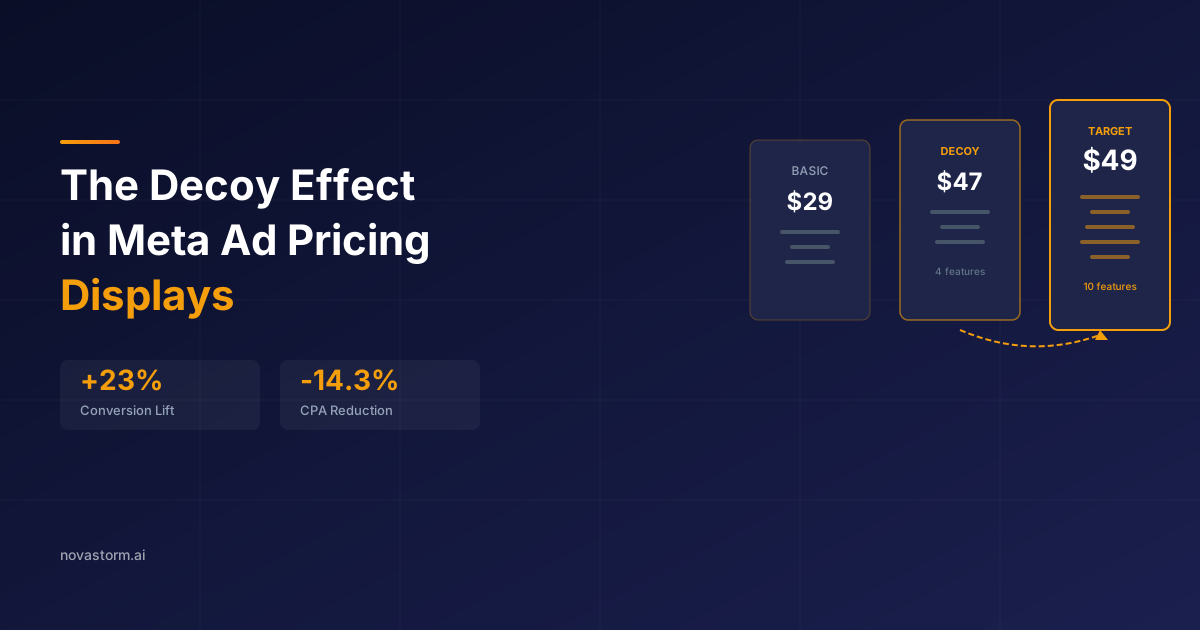
The Decoy Effect in Meta Ad Pricing Displays
Use the decoy effect as a testable pricing-display hypothesis with correct dominance, real offers and retained contribution rather than unsupported uplifts.
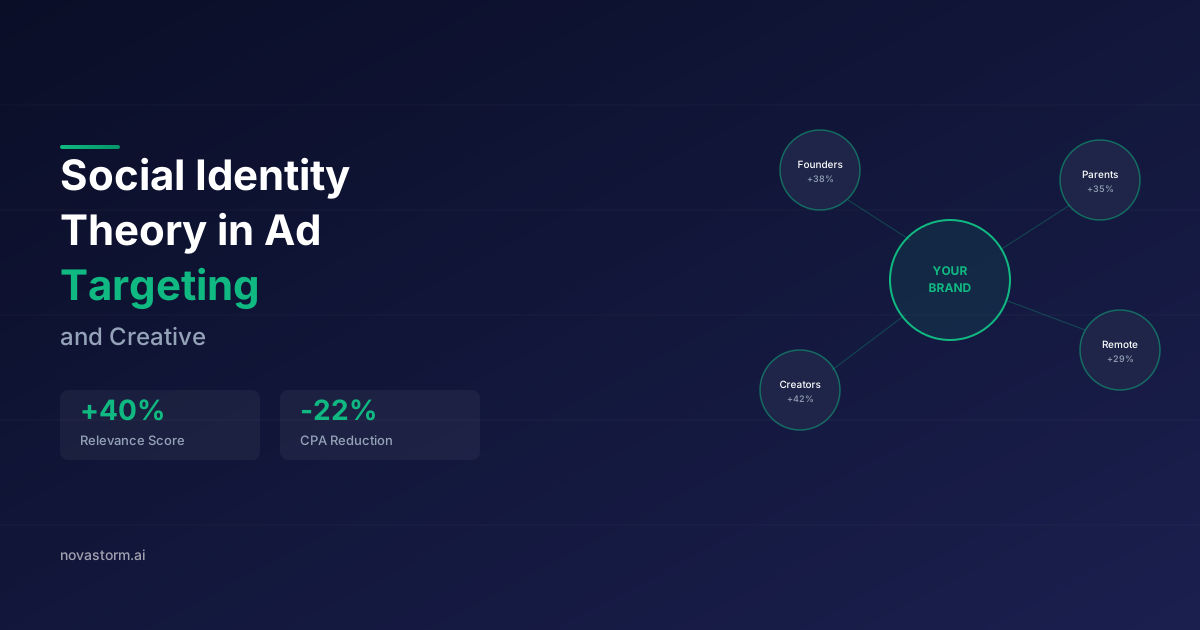
Social Identity Theory in Ad Targeting and Creative
Use customer self-description responsibly in Meta creative, with permissioned language, stereotype checks and a same-audience message test.
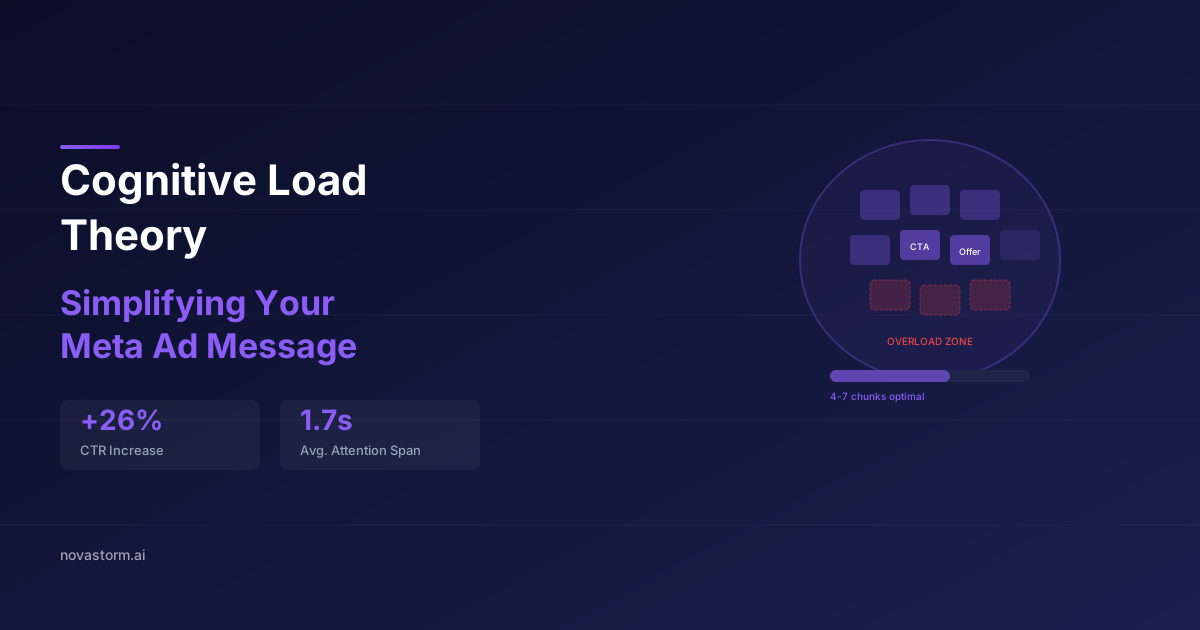
Cognitive Load Theory: Simplifying Your Meta Ad Message
Review Meta ad clarity with a seven-second usability probe, a before-and-after message example and quality outcomes that preserve material disclosures.
The Von Restorff Effect: Making Your Meta Ad Stand Out in the Feed
Test a contrasting Meta ad layout while preserving the offer; distinguish isolation research, measurable attention and mature business outcomes.