

Agency Pricing: Percentage of Spend vs Flat Fee vs Performance-Based
Compare the three main agency pricing models for Meta Ads management. Learn which pricing structure maximizes revenue while keeping clients happy long-term.
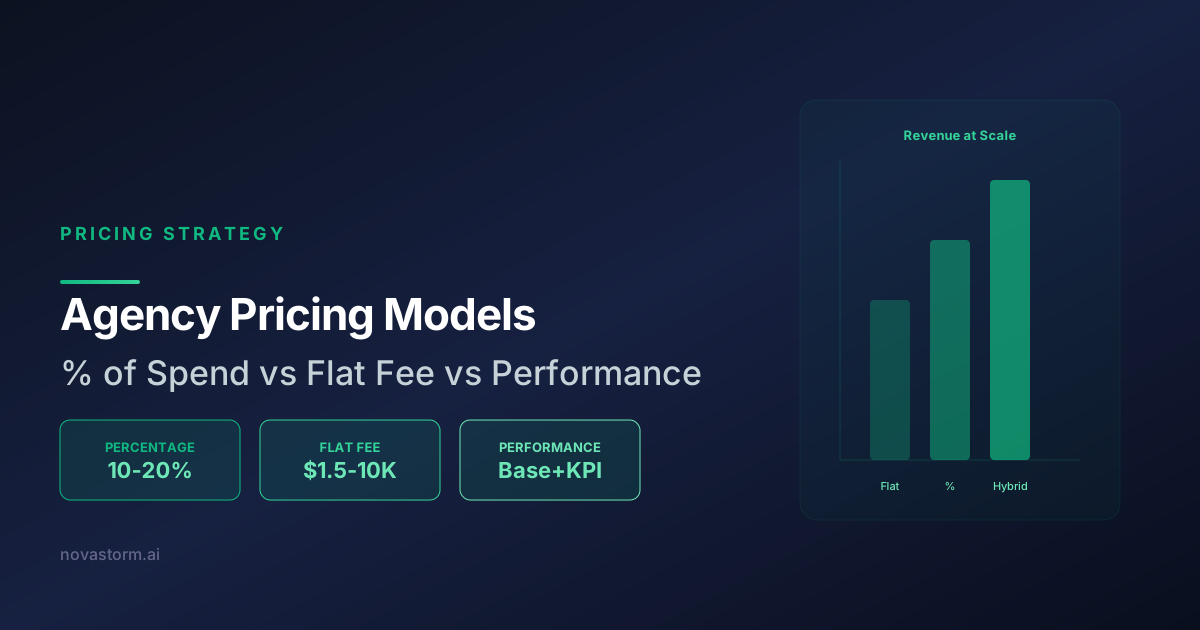
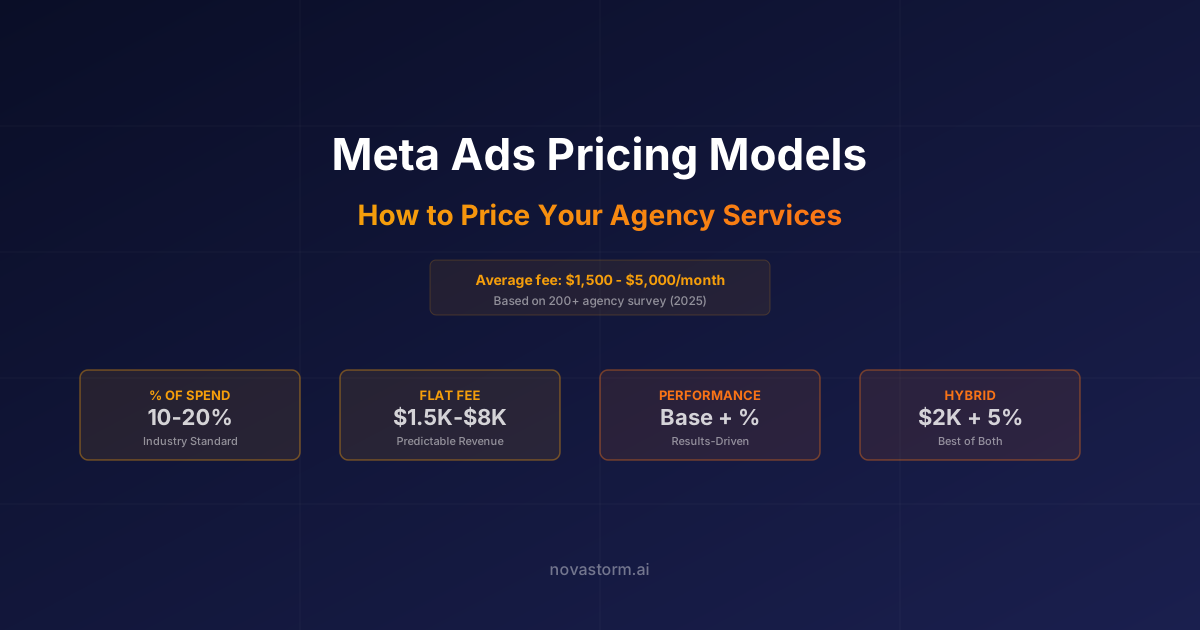
Choose an agency fee by comparing the contracted workload, delivery cost, client economics and measurement risks. Percentage of spend, flat fee and performance bonuses create different incentives. None is automatically safe or appropriate at a particular client count.
Extend the percentage calculation into service economics
Hypothetical client: USD 50,000 monthly media spend and a negotiated 15% management fee. Fee revenue is 50,000 × 0.15 = USD 7,500. The 15% is a teaching input, not a market-rate claim. Media spend belongs to the client; the agency earns its fee, not the full advertising budget.
| Agency cost assumption | USD | Basis |
|---|---|---|
| Delivery labor | 2,400 | 40 hours × USD 60 fully loaded internal cost |
| Creative contractor | 600 | Bounded approved monthly scope |
| Allocated tools | 150 | Chosen allowance |
| Administration | 300 | Chosen allocated cost |
| Total service cost | 3,450 | 2,400 + 600 + 150 + 300 |
At a USD 7,500 fee, service contribution is 7,500 − 3,450 = USD 4,050, or 4,050 / 7,500 = 54% before unallocated costs and taxes. A negotiated USD 4,500 flat fee for that same scope yields USD 1,050, or about 23.3%. These are scenario calculations, not advice to maximize fees regardless of client value.
If media spend doubles while the same workload is retained, a 15% fee becomes USD 15,000 although the assumed USD 3,450 delivery cost does not change. Higher spend may increase risk or complexity, but work is not necessarily linear in spend. Estimate countries, products, assets, reporting requirements and approval burden separately. A new offer or extra reporting scope can require more work even with unchanged media spend.
Compare incentives and boundaries
| Structure | Teaching choice | Boundary to document |
|---|---|---|
| Percentage | 15% with an agreed minimum | Fee increases with spend; owner approves spend independently |
| Flat fee | USD 4,500 for the stated scope | Define revision limits and separately approved extra work |
| Hybrid | Cost-covering base plus negotiated bonus | A base does not eliminate attribution or payment risk |
| Outcome fee | Payment on accepted qualified results | Specify quality, duplication, maturity and disputes before work |
Do not label illustrative percentages or base fees as typical without a defined market sample. Set a minimum from actual cost and capacity; a client’s small media budget does not automatically make its service simple. Price changes follow the contract’s notice and approval terms, not a universal notice period.
Stop wasting ad budget
NovaStorm AI cuts Meta Ads CPA by 30% on average. No complex setup required.
Calculate bonuses after returns and margin
Hypothetical negotiated bonus: 10% of contribution above a USD 6,000 baseline. Current collected sales are USD 30,000; returns are USD 2,000; product and variable fulfillment costs USD 15,000; media USD 5,000. Contribution before this agency fee is 30,000 − 2,000 − 15,000 − 5,000 = USD 8,000. Excess over the baseline is USD 2,000, so the bonus is 2,000 × 10% = USD 200. The baseline must use the same cost treatment.
This calculation is an agreed commercial formula, not evidence of incremental agency impact. Define currency, attribution source, eligible sales, return allowance, settlement date, baseline updates and how stockouts, promotions or other channels are handled. Add a later reconciliation or clawback rule for late refunds if agreed. Revenue or nominal ROAS alone can reward sales that reduce client profit.
Demonstrate monitoring value without inventing uplift
Hypothesis to test: clearer monitoring and approval reduce unapproved exposure or shorten time to investigate incidents. This is not a measured NovaStorm ROAS improvement or proof of a night-time alert. For a real evaluation, record the signal source, detection time, responsible person, reconciled exposure, action and read-back. Compare periods with similar scope and disclose missed incidents and false alarms.
| Teaching incident record | Required evidence |
|---|---|
| Signal: spend appears above approved exposure | Reconciled spend, currency, account and time window |
| Investigation assigned | Named operator and response time |
| Client decision | Approve, hold or pause with exposure limit |
| Action | Authorized settings change and status read-back |
| Value assessment | Observed time and exposure against a stated comparison; no assumed sales lift |
Use NovaStorm to prepare the approved campaign or creative draft, then let the authorized client reviewer approve the version and budget change. Campaign preparation is not proof of automated anomaly handling. Keep a separate quarterly decision record so fee discussions can refer to documented work and accepted results rather than an invented percentage improvement.
Published by NovaStorm AI. Worked examples and test fixtures in this article are illustrative, not observed customer results.
Disclaimer: This article was generated with the assistance of AI and reviewed by the NovaStorm AI team. While we strive for accuracy, we recommend verifying specific data points and consulting official sources (linked where available) for critical business decisions.
Ready to automate your Meta Ads?
NovaStorm AI takes full responsibility for your campaigns — from monitoring to optimization.
Start NowMore on Agency operations and careers
Starting a Meta Ads Agency: Business Plan and First Steps
Learn how to start a Meta Ads agency from scratch. Complete business plan template, legal setup, pricing strategy, and first client acquisition steps for 2026.
Managing Multiple Ad Accounts: Agency Best Practices
Onboard client accounts with verified asset IDs and task permissions, review templates safely, and end access with an auditable handoff.
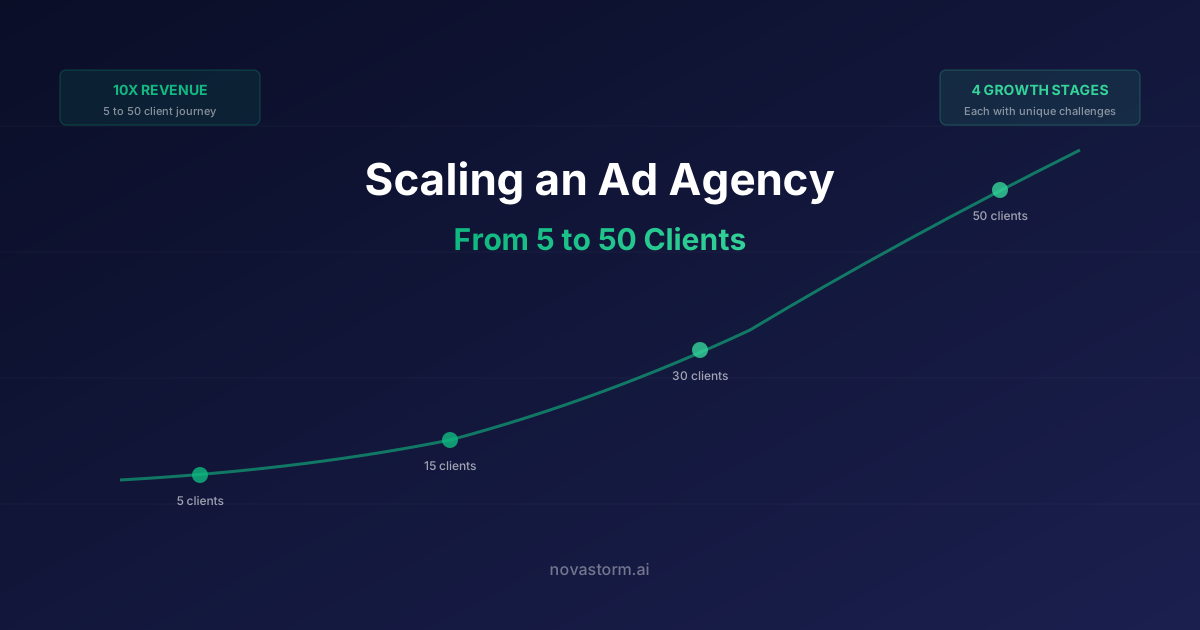
Scaling an Ad Agency: From 5 to 50 Clients
Scale a Meta agency from measured client hours, payroll and cash runway, with bottleneck-based hiring and a defined second-review gate.
Meta Ads Pricing Models: How to Price Your Agency Services
Price Meta agency work from scoped hours and loaded costs, with inspectable bonus terms and measured campaign-preparation efficiency.