

Ad Fraud on Meta: How to Detect and Protect Your Budget
Investigate suspicious Meta traffic with comparable measurements, privacy-safe evidence and verified verification-tool scope.

An unexpected traffic pattern is a reason to investigate, not proof of fraud. Clicks, consented analytics sessions and server requests measure different things. Check those definitions and technical failures before blaming a placement or requesting compensation.
Turn thresholds into investigation signals
| Signal | Legitimate alternatives to check | Evidence to retain |
|---|---|---|
| Clicks exceed measured sessions | Click definition, repeat clicks, consent rejection, redirect failure or blocked analytics. | Same dates, time zone and campaign IDs; exact metric definitions. |
| Very short sessions or high bounce | Page error, slow load, irrelevant message or incomplete collection. | Safe error counts, landing-path test and baseline comparison. |
| High CTR without orders | Broad click intent, broken checkout or immature orders. | Paid-order ledger and actual business outcome window. |
| Device/geographic shift | Travel, reporting differences, network routing or changed targeting. | Aggregated breakdown and current settings. |
| Time-of-day spike | Time-zone mismatch, budget pacing or legitimate campaign activity. | Timestamped spend and traffic records in one time zone. |
A 30% gap, 90% bounce rate, 5% CTR or two-second session is not a universal fraud boundary. Set alerts against an appropriate baseline and sample volume. A large gap remains unresolved until its measurement and traffic causes are examined.
A privacy-safe investigation procedure
- Preserve the exact campaign, ad and placement identifiers; the observation interval; actual spending; the landing URL; and a record of settings or website changes. Limit access to the incident owner.
- Align platform reports, aggregated server requests, consent status and analytics collection within the same interval. Distinguish all requests from eligible consented sessions and remove repeated business actions according to the declared rules.
- Compare coarse device/browser and country distributions with baseline and declared service coverage. Inspect repeated request patterns or impossible event sequences in authorized logs, retaining only redacted examples and opaque incident IDs for sharing.
- Reproduce the landing and payment path on relevant browsers, including consent rejection and acceptance. Check response errors, redirects and event duplication. Classify confirmed technical defects separately from suspected invalid traffic.
- Apply a documented loss limit while investigating. Restrict or pause affected delivery only after verifying supported controls and the business impact; preserve the evidence needed to review the decision.
Prepare a factual support packet
Stop wasting ad budget
NovaStorm AI cuts Meta Ads CPA by 30% on average. No complex setup required.
Include the affected IDs, dates and time zone, spend, metric definitions, baseline comparison, redacted aggregate log findings, verified path tests and unresolved questions. Separate “observed,” “reproduced defect” and “suspected explanation.” Ask support to investigate the specified activity and clarify any billing adjustment process. Do not describe a refund as promised or a diagnosis as confirmed before the response supports it.
Check the scope of independent verification
DoubleVerify’s announcement describes viewability and fraud verification for Facebook and Instagram Reels. IAS describes viewability and invalid-traffic measurement for Reels video inventory. These are scoped integrations, not guarantees that a tool diagnoses every website click or placement. Confirm current contractual coverage, format, reporting access and implementation before buying or relying on it.
Do not assume a legacy MOAT recommendation remains available. Do not label all Audience Network traffic fraudulent or core Meta placements fraud-free. Compare actual permitted measurement and business outcomes, keeping suspected invalid traffic separate from ordinary low conversion.
Keep budget preparation separate from anti-fraud
NovaStorm can help prepare the approved Meta campaign brief and candidate materials. Give the human reviewer the investigation findings and loss allowance. This does not provide anti-fraud verification, incident adjudication or a refund process. Keep the traffic investigation, vendor validation and support outcome with their responsible owners.
Published by NovaStorm AI. Planning examples are illustrative assumptions, not measured customer results.
Disclaimer: This article was generated with the assistance of AI and reviewed by the NovaStorm AI team. While we strive for accuracy, we recommend verifying specific data points and consulting official sources (linked where available) for critical business decisions.
Ready to automate your Meta Ads?
NovaStorm AI takes full responsibility for your campaigns — from monitoring to optimization.
Start NowMore on Campaign diagnostics
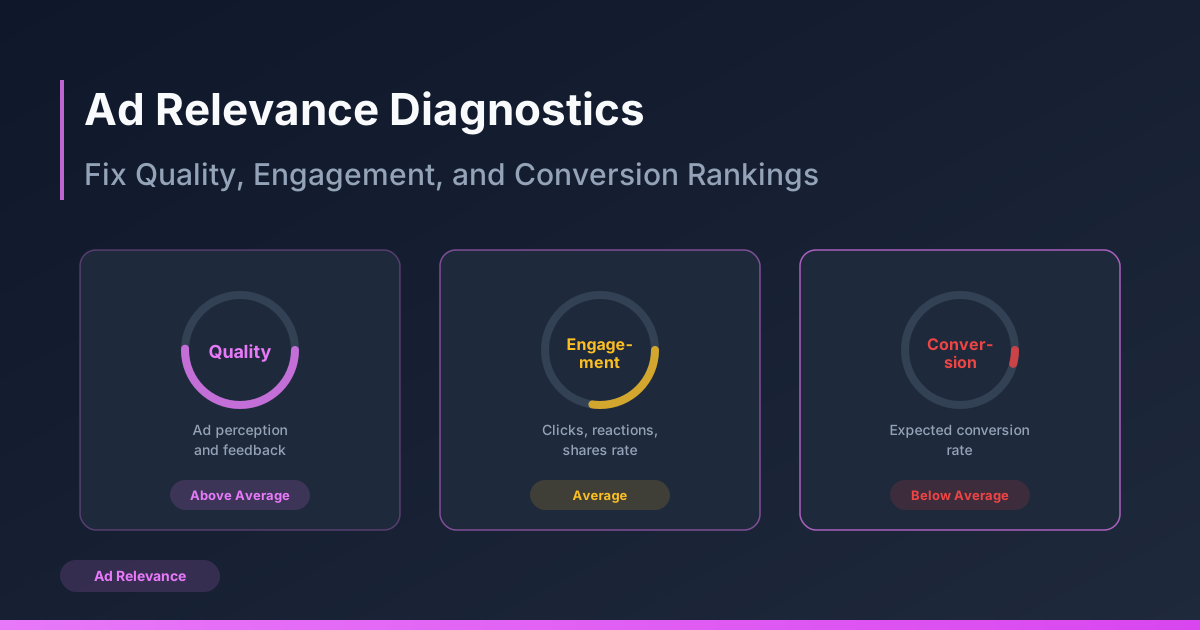
Ad Relevance Diagnostics: Fix Quality, Engagement, and Conversion Rankings
Audit all three relevance diagnostics with customer economics, missing-data handling and a bounded decision plan.

The Media Buyer's Daily Routine: What to Check and When
Build a dated morning report, separate urgent delivery incidents from immature performance, and assign approval and escalation owners.
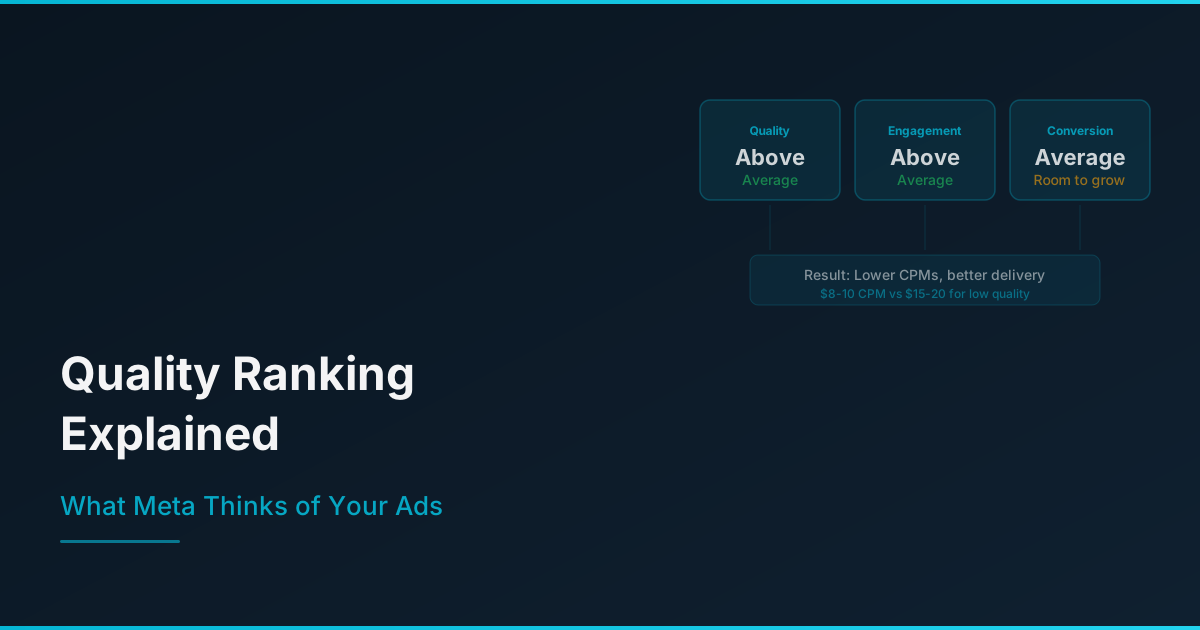
Quality Ranking Explained: What Meta Thinks of Your Ads
Treat Meta quality rankings as diagnostics, investigate missing data and verify business outcomes before changing an ad.
How to Audit a Meta Ads Account in 60 Minutes
Run a 60-minute Meta Ads triage with reconciled orders, a repair acceptance log, and explicit checks for percentages and acquisition-cost units.