

Video Ad Length on Meta: How to Compare 15-, 30- and 60-Second Edits
Compare 15-, 30- and 60-second Meta video edits with explicit metric definitions, a controlled message, a cash-risk limit and mature business outcomes.
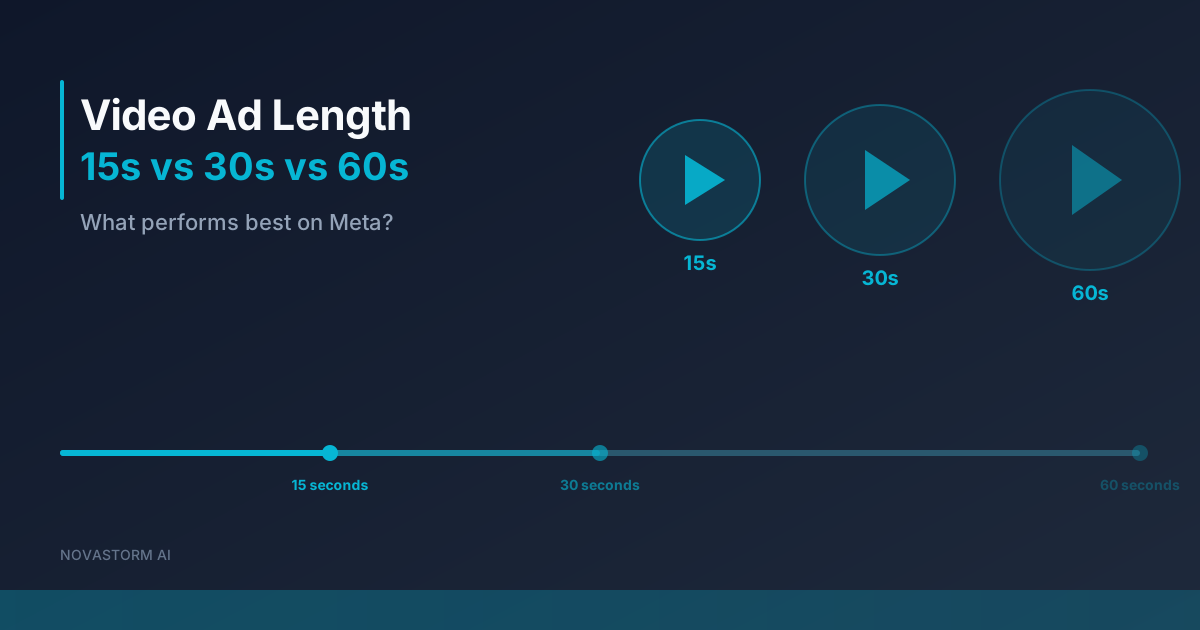
Choose the shortest edit that can communicate the necessary decision information clearly, then test that choice. Duration alone does not determine sales. A longer demonstration may answer an objection; a shorter version may omit it. The useful question is which edit earns qualified, mature outcomes for your offer and budget.
Name the video metric before comparing durations
Open the current column tooltip and Meta’s ThruPlay guidance before exporting results. Save the exact reporting-column definition, selected performance goal and date. A goal for delivery, a count of qualifying plays and a cost-per-play column are different fields; do not assume an account’s goal and every exported column use the same duration threshold.
For a comparison using a 15-second qualifying-play definition, the short-video condition can represent completion or near-completion, while a longer video can qualify after only its initial 15 seconds. Verify the exact short-video completion condition in the selected column. Fifteen seconds is the full running time of a 15-second edit, half of a 30-second edit and a quarter of a 60-second edit. The same count therefore does not establish equal message exposure. If the account uses another threshold, rebuild the comparison around that definition.
Write every rate with its denominator: qualifying plays divided by impressions, completions divided by starts, or retained purchases divided by a defined eligible population. Counts of plays are not unique purchasers. Cost per qualifying play is spend divided by those plays; it cannot substitute for CPA or contribution after acquisition cost.
Keep the message and document what a cut removes
The following is a proposed edit plan for a simple product demonstration, not a set of existing customer videos. Keep the same product, offer, opening claim, destination and core demonstration. Capture the exact timeline in the production log.
| Edit | Illustrative content sequence | Difference to record |
|---|---|---|
| 15 seconds | 0–3: product/problem; 3–10: one demonstration; 10–15: accurate CTA. | Only one use case; extended explanation removed. |
| 30 seconds | 0–3: same opening; 3–10: same demonstration; 10–23: explain one objection; 23–30: same CTA. | Adds objection information and changes CTA timing. |
| 60 seconds | 0–3: same opening; 3–10: same demonstration; 10–45: explanation and additional demonstration; 45–60: summary/CTA. | Adds information, pacing and repeated CTA exposure. |
Stop wasting ad budget
NovaStorm AI cuts Meta Ads CPA by 30% on average. No complex setup required.
Do not describe those edits as a pure duration experiment. Cutting a 30-second master to 15 seconds changes detail, pacing and time to the CTA. Holding wording constant by merely speeding the footage can reduce readability. Document unavoidable differences and interpret the result as a comparison of edits. Check current placement eligibility and previews instead of assigning universal winning durations to Feed, Stories or Reels.
Use a bounded test with business outcomes
- Choose one primary outcome: retained paid orders, qualified leads or another economically defined result. Set maximum acceptable acquisition cost and a cash-loss limit before enrollment.
- If causal attribution matters, use an eligible randomized experiment with non-overlapping arms. Identical targeting in separate ad sets does not establish random assignment. If unavailable, call the comparison observational.
- Keep enrollment dates, offer and measurement policy consistent. Define the same outcome-maturation interval from actual conversion and refund delay; do not compare today’s incomplete orders with older settled orders.
- Export spend, impressions, deduplicated reach, defined video metrics and mature outcomes. Record placement mix and actual delivery per edit; a low-delivery variant is not a proven loser.
- Stop at a declared loss limit or broken measurement. Review the declared outcome after maturation and report uncertainty; more watch time is not enough to justify scaling.
Hypothetical arithmetic: edit A spends $120 and records 3,000 qualifying plays and three retained orders; edit B spends $120 and records 2,000 qualifying plays and six retained orders. Cost per play is $0.04 versus $0.06, while media CPA is $40 versus $20. These assumed counts demonstrate why the cheapest view need not mean the cheapest order. They are not industry benchmarks or evidence that one duration wins.
Prepare approved versions and preserve traceability
Name exports with the duration, message revision and asset identifier. Check captions, licenses, display crop and CTA in the final rendered file. Use the creative testing framework to connect each edit to its hypothesis and observed result.
Use NovaStorm for the proposed campaign preparation and human-review workflow with paused campaign and local ad-set drafts. Prepare and approve the different video files in a confirmed editing workflow; this article does not establish automatic duration editing, a video-view benchmark or profitable campaign delivery.
Published by NovaStorm AI. Planning examples are illustrative assumptions, not measured customer results.
Disclaimer: This article was generated with the assistance of AI and reviewed by the NovaStorm AI team. While we strive for accuracy, we recommend verifying specific data points and consulting official sources (linked where available) for critical business decisions.
Ready to automate your Meta Ads?
NovaStorm AI takes full responsibility for your campaigns — from monitoring to optimization.
Start NowMore on Ad formats and placements
Mobile-First Meta Ad Design: Preview, Readability and Form Recovery
Review Meta creative at actual phone size, distinguish artwork pixels from interactive controls, and test slow-network form recovery before approving a draft.
Sound-On vs Sound-Off Ad Design: Optimizing for Both on Meta
Review one Meta video with sound on and muted, correct captions, verify music rights and check text against the actual placement preview.
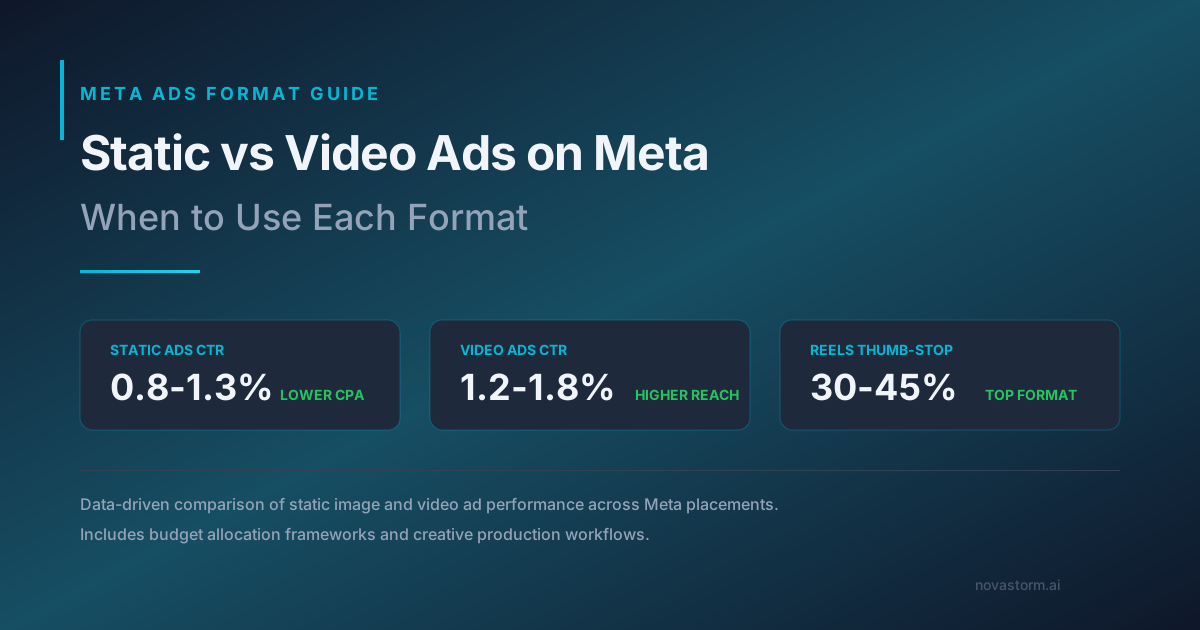
Static vs Video Ads on Meta: When to Use Each Format
Compare static and video ads using the same offer and mature business metric, including creative-production costs and unequal delivery.
Dark Posts Explained: Ad-Only Content, Post IDs and Review
Understand ad-only posts, verify post-ID reuse by format, and keep a version and approval log without assuming privacy or transferred engagement.