

Storytelling in Meta Ad Copy: Narrative Frameworks That Sell
Write traceable ad stories with fictional examples clearly labeled, real testimonial permission, accurate outcome arithmetic and a controlled test plan.
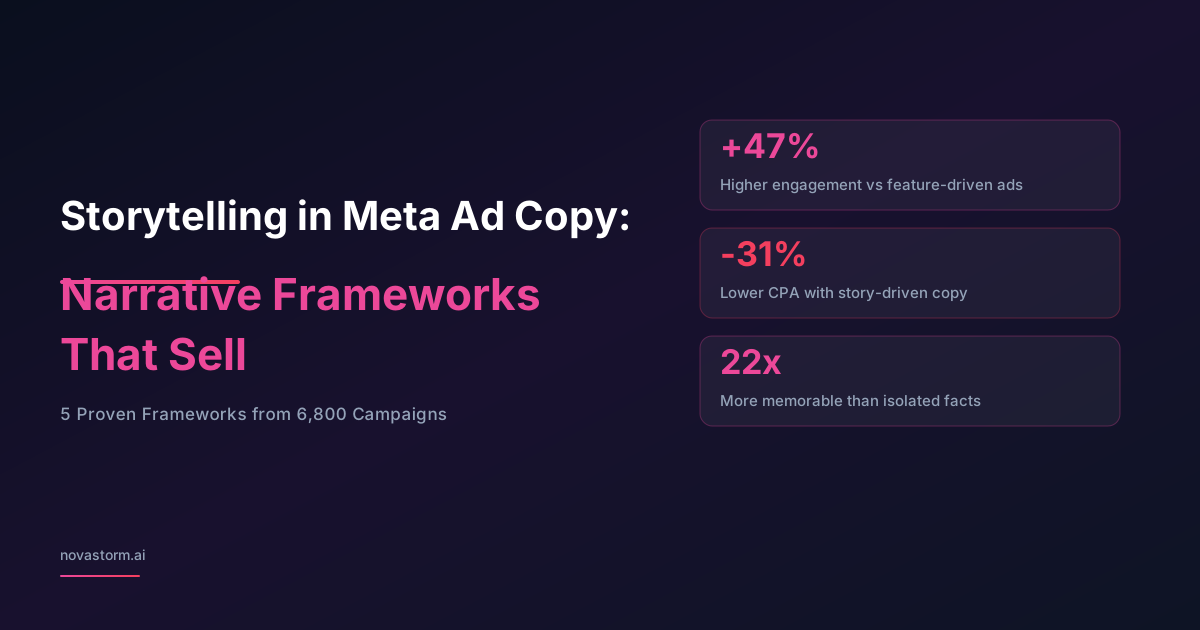
Use a story to explain a customer task, a decision and a supportable outcome. A plausible narrative is not customer evidence. Real testimonials need permission and substantiation; fictional teaching examples must stay visibly fictional.
Use narrative structure without a performance guarantee
The Joseph Campbell Foundation’s account of the hero’s journey describes separation, initiation and return. The three-beat ad adaptation below is an editorial device, not Campbell’s supposed twelve mandatory advertising stages. Stanford’s story-communication resource offers conceptual context. It does not provide a Meta ad experiment from which a memory multiplier or CPA reduction can be inferred.
No biological explanation is needed to choose a testable story angle. Do not assume an ad reliably causes an oxytocin response or that a story always beats a feature list. Treat engagement and business outcomes as separate questions.
Five completed frameworks
All examples in this section are fictional teaching copy. Sarah and Mike are invented characters, not NovaStorm customers, and their actions and numbers are illustrative.
| Framework | Illustrative copy | Review boundary |
|---|---|---|
| Task–discovery–decision | Sarah had a campaign plan in scattered notes. She prepared a paused draft, compared the saved settings with her plan and asked the campaign owner to approve publication. | No time saving, automatic optimization or CPA result implied |
| Before–after–bridge | Before: the proposed audience and budget were recorded separately. After: the owner reviewed the same decision sheet beside a draft. The bridge was a preparation-and-review workflow. | Organizational workflow, not guaranteed protection from every anomaly |
| Customer testimony | Use a real authorized customer’s task, decision and result when a publishable record exists. For this teaching example, Mike is fictional and no testimonial is claimed. | Do not format invented wording as a real customer quotation |
| Contrarian hook | A cheaper click is not always a better customer. Compare mature retained orders and contribution before deciding which message to scale. | Reasoned proposition; no invented 68% performance attribution |
| Timeline | Draft the brief, review the saved fields, approve the test, then review mature outcomes under the chosen measurement plan. | Sequence of work, not a promise of results by day 14 |
Check the arithmetic behind an outcome story
Stop wasting ad budget
NovaStorm AI cuts Meta Ads CPA by 30% on average. No complex setup required.
Hypothetical Mike example: assumed spend $200 and revenue $714 give ROAS 714/200 = 3.57. At $140 spend with the same $714 revenue, ROAS is 5.10, with 30% less spend. The original baseline must therefore be 3.57 for those assumptions, not a target of 4.2 presented as actual performance. These figures are a calculation exercise and do not establish why revenue stayed unchanged.
If contribution margin before media were an assumed 30%, $714 × 0.30 = $214.20. Contribution less media would be $14.20 versus $74.20 before other costs. A real story also needs refunds, currency, attribution, period and operational costs; ROAS alone is not profit.
Approve a real story before publication
- Verify the identity and publishable permission, exact quotation, use of image/name and any incentive or commercial relationship. A customer agreeing to a quote does not validate its performance claim.
- Read the source exports behind the stated result: spend, qualified outcomes, revenue, refund window, comparison dates and attribution definition.
- Describe concurrent changes and limitations. A before/after story cannot establish the product caused the entire difference.
- Confirm that the described product actions actually exist. Avoid “every anomaly,” guaranteed cost reductions or unmeasured customer timelines.
- Keep an approval record and an expiry/review date for claims that can become outdated. If no real case is available, publish an explicitly fictional worked example instead.
Test the narrative on the same task
Proposed hypothesis: a concrete task–decision story improves qualified retained purchases compared with a capability list. Use eligible concurrent randomized assignment, the same factual offer, visual, destination and measurement, and a sample sized for the useful effect. Predeclare authorization and mature purchase/returns follow-up; a story’s popularity is not proof of incrementality.
Use the case-study creative guide when collecting publishable evidence. In NovaStorm, prepare the reviewed campaign draft, inspect actual saved fields and Paused status, and obtain publication approval. Unpublished ad sets remain local drafts. This verified preparation capability supports Sarah’s fictional process example, not a claim of an observed customer outcome.
Published by NovaStorm AI. Worked examples and proposed tests are labeled in the article.
Disclaimer: This article was generated with the assistance of AI and reviewed by the NovaStorm AI team. While we strive for accuracy, we recommend verifying specific data points and consulting official sources (linked where available) for critical business decisions.
Ready to automate your Meta Ads?
NovaStorm AI takes full responsibility for your campaigns — from monitoring to optimization.
Start NowMore on Ad copy and messaging
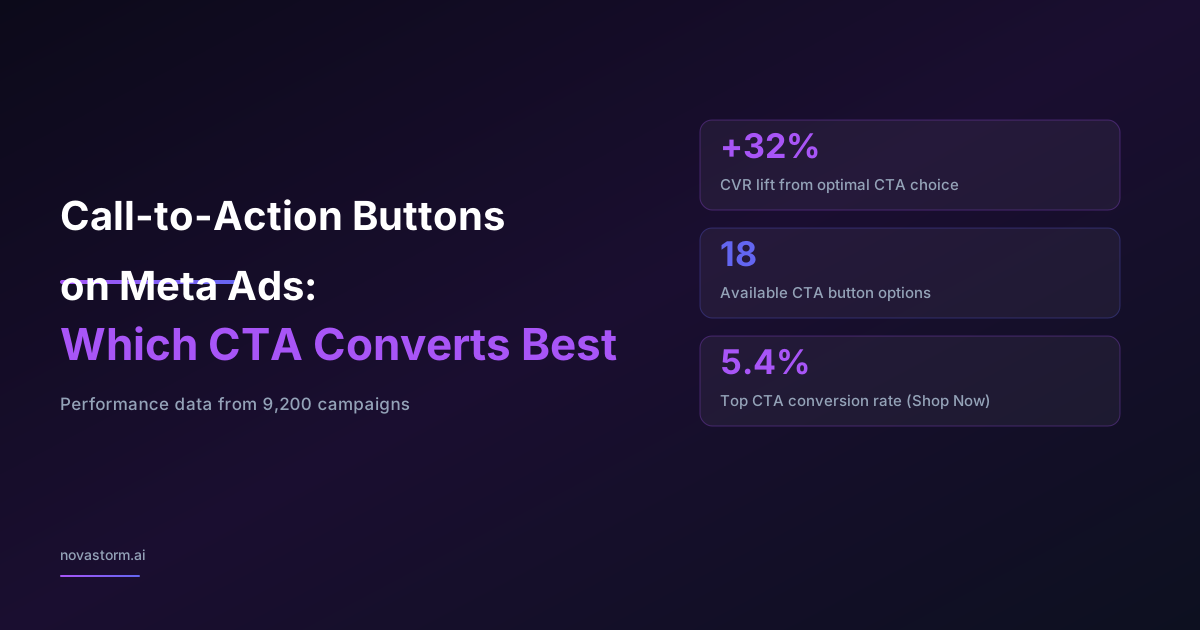
Call-to-Action Buttons on Meta Ads: Which CTA Converts Best
Match an available Meta CTA to the destination, compare one mature business outcome and plan a funded randomized test before declaring a winner.
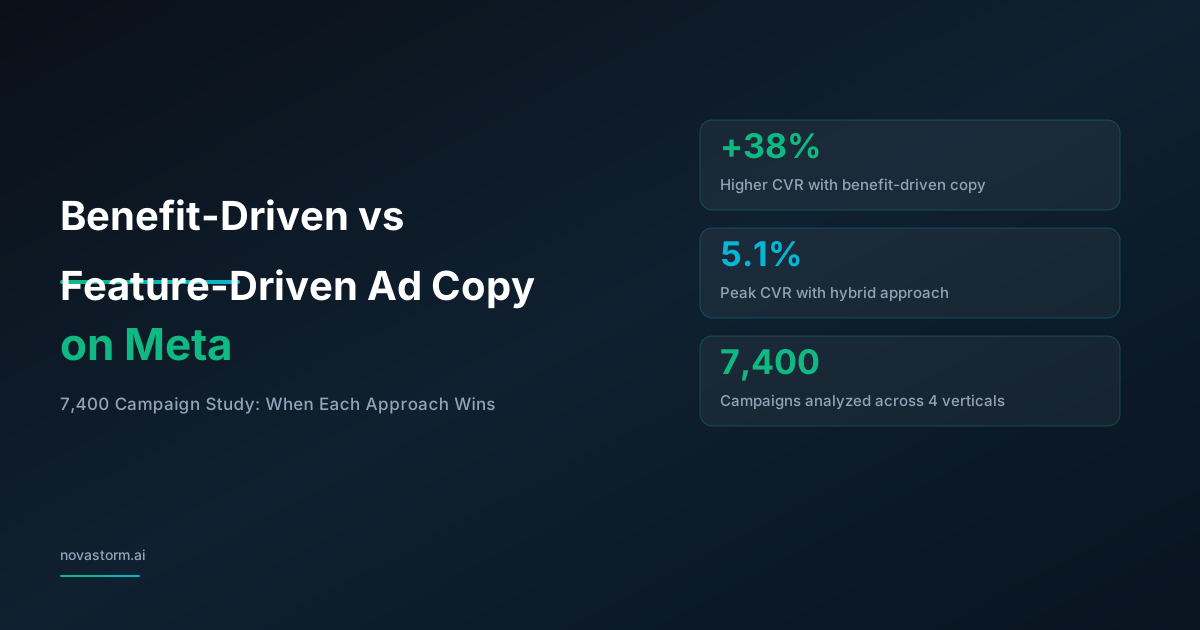
Benefit-Driven vs Feature-Driven Ad Copy on Meta
Translate features into supportable task benefits, draft three comparable versions and evaluate mature outcomes without guaranteed performance claims.
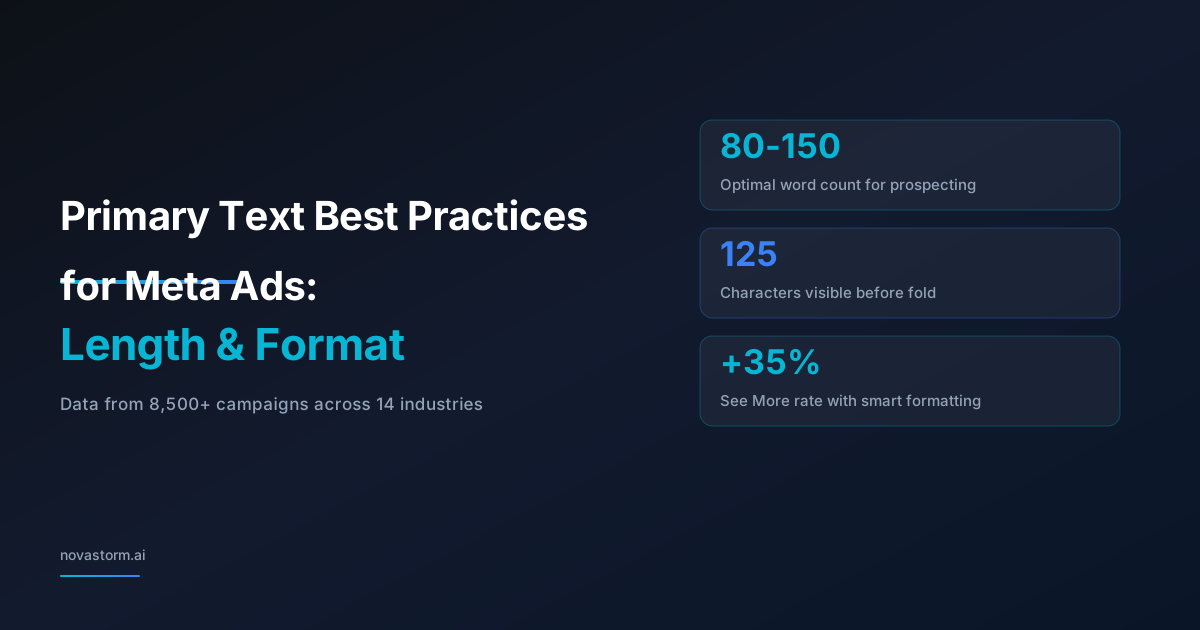
Primary Text Best Practices for Meta Ads: Length and Format
Prepare three traceable primary-text lengths, check openings and previews, then compare approved copy with funded sampling and mature outcomes.
How to Write Meta Ad Copy for Different Awareness Levels
Research category and brand knowledge, draft five awareness message hypotheses and measure complete acquisition economics rather than assuming market shares.