

Shopify vs Amazon: Where to Send Meta Ads Traffic
Compare Shopify and Amazon destinations using a same-product profit worksheet, consent-aware measurement and a fair test design.
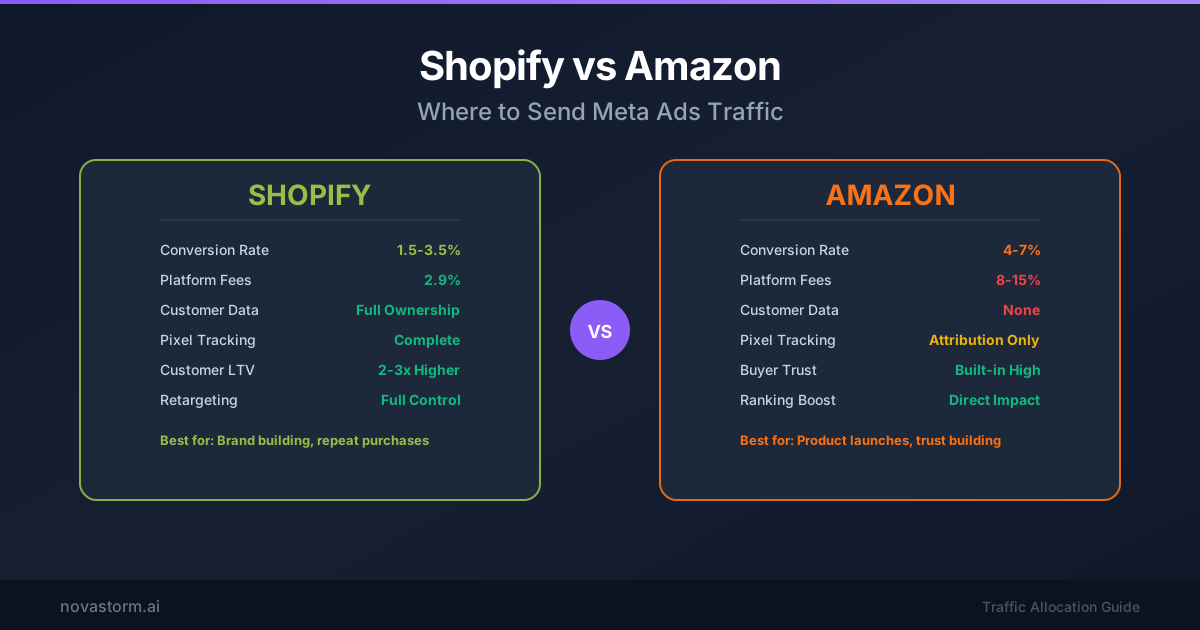
Send Meta traffic to the destination that produces acceptable retained contribution for the same offer, with measurement you can explain. Amazon familiarity and Shopify control are possible advantages to test. Neither destination has a guaranteed conversion rate or customer lifetime-value multiplier.
Compare one product, including the costs of operating the store
Hypothetical example: the same product sells for USD 60 on both destinations, excluding tax collected for authorities. It costs USD 20 to produce. All fee inputs below are planning assumptions, not current Shopify or Amazon price schedules. Replace them with your plan, category, fulfillment and settlement charges.
| Per retained order, USD | Shopify assumption | Amazon assumption |
|---|---|---|
| Net product revenue | 60 | 60 |
| Product cost | 20 | 20 |
| Payment or referral charge | 2 | 9 |
| Shipping or fulfillment | 7 | 6 |
| Packing or inbound/storage allocation | 2 | 2 |
| Refund/damage planning allowance | 3 | 4 |
| Store/plan/apps/support allocation | 5 | 1 |
| Contribution before Meta spend | 21 | 18 |
Shopify contribution = 60 − 20 − 2 − 7 − 2 − 3 − 5 = USD 21. Amazon contribution = 60 − 20 − 9 − 6 − 2 − 4 − 1 = USD 18. The hypothetical Shopify USD 5 overhead allocation comes from USD 500 monthly platform, apps and support costs divided by 100 retained orders. At only 50 retained orders, that allocation becomes USD 10 and contribution falls to USD 16. Shared overhead allocations help compare complete costs; for a small marginal test, separately identify which cash costs truly change.
At assumed CPA USD 15, contributions after media are USD 6 and USD 3. A qualifying, actually earned referral bonus could change Amazon’s result; recognize credited amounts and their settlement timing, not an assumed discount on every order. Check whether the customer buys your offer when another seller wins the Featured Offer, commonly called the Buy Box. A product-page conversion is not necessarily your retained sale.
Measure each destination without calling all data complete
Amazon’s Attribution guide describes eligible sellers, vendors and agencies and a 14-day last-click model. Create a unique eligible tag for each test arm and confirm it survives the final link. Its attributed result is not a Meta Purchase event or a randomized causal lift estimate. Inspect brand/product report scope and reconcile your seller’s net orders and returns.
Stop wasting ad budget
NovaStorm AI cuts Meta Ads CPA by 30% on average. No complex setup required.
For Shopify, reconcile business orders with the event source instead of assuming the Pixel fires for everyone. Shopify’s Customer Privacy API checks permitted processing using merchant settings, location and visitor decisions. Its Allowed methods are more informative than a consent flag alone. Record consent through actual visitor interaction; do not set acceptance automatically. Test acceptance, refusal, withdrawal and a checkout handoff with the implementation owner. Consent, browser restrictions and integration defects can all create reporting gaps.
A comparable destination test
- Specify the same SKU, size, quantity, market, currency and shipping promise. Record material differences in price, Prime eligibility, tax, coupons, delivery and returns. Those differences are part of the destination offer, not harmless noise.
- If supported and feasible, use a randomized Meta experiment with mutually exclusive arms and the same message. Fix the evaluation period, spend limit and analysis before launch. Two independent ad sets can select different users; their comparison is descriptive.
- Use equally defined measures: retained orders for your offer, contribution after variable costs, media and any incremental fixed expense. Allow the same conversion and refund observation horizon. Do not compare Amazon 14-day attribution with a different Shopify window as if identical.
- Document incomplete destination matching. If one arm cannot reliably associate net seller orders with assignment, report the gap and use a holdout design or improve instrumentation before claiming a winner.
Cold audiences and repeat purchases are hypotheses
Hypothesis: Amazon checkout familiarity might help new visitors; hypothesis: an owned store’s education or subscription option might help a different product. Test these with comparable cohorts. A 60/40 split can be a chosen exploration budget, but has no automatic evidentiary status. Allocate only within your loss tolerance and actual measurement limits.
For long-term value, count contribution from all customers originally assigned or acquired under a consistent definition, including zero-repeat customers, net returns and repeat marketing expense. Use mature cohorts at the same horizon; do not infer twelve-month value from a seven-day repeat rate. If reliable matching across Amazon and Shopify is unavailable, report separate cohort scopes and avoid claiming Shopify buyers are worth two or three times more.
Use cohort analysis to set a mature comparison horizon. Prepare two destination-specific campaign drafts in NovaStorm and review URLs and caps before publishing. Keep settled sales and the cost worksheet in your connected commerce reports or an external spreadsheet; this guide does not demonstrate a unified live Amazon/Shopify dashboard or automatic cross-channel reallocation.
Published by NovaStorm AI. Worked examples and test fixtures in this article are illustrative, not observed customer results.
Disclaimer: This article was generated with the assistance of AI and reviewed by the NovaStorm AI team. While we strive for accuracy, we recommend verifying specific data points and consulting official sources (linked where available) for critical business decisions.
Ready to automate your Meta Ads?
NovaStorm AI takes full responsibility for your campaigns — from monitoring to optimization.
Start NowMore on E-commerce catalogs and channels
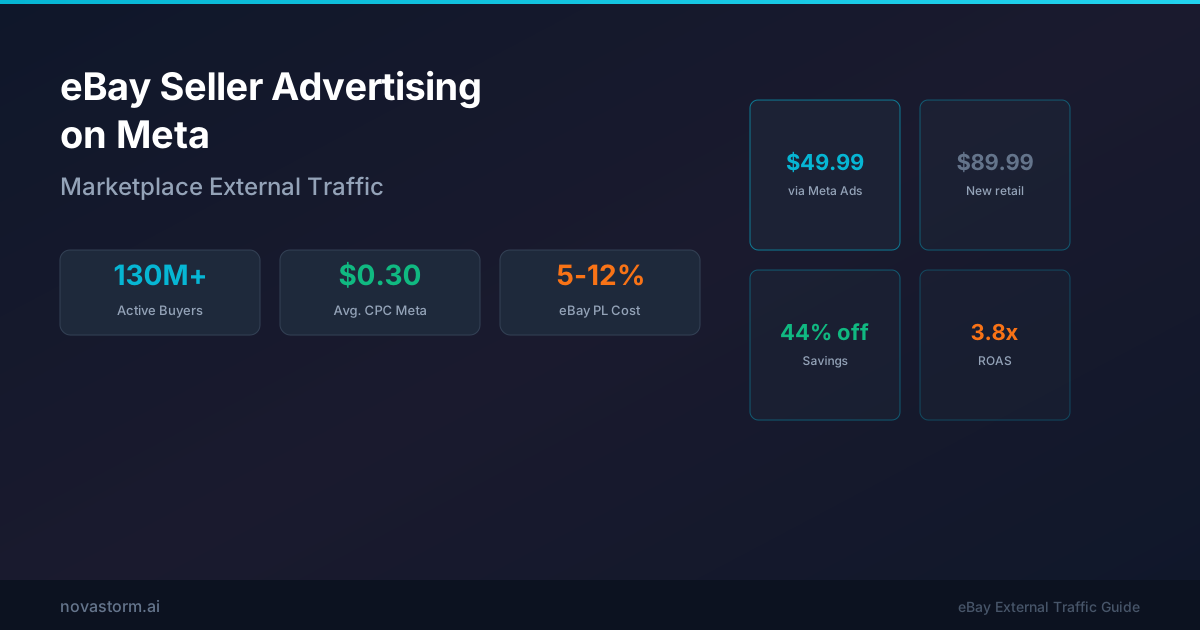
eBay Seller Advertising on Meta: Marketplace External Traffic
Plan an eBay external-traffic test with honest condition creative, a sold-item stop procedure and profit after fees and returns.
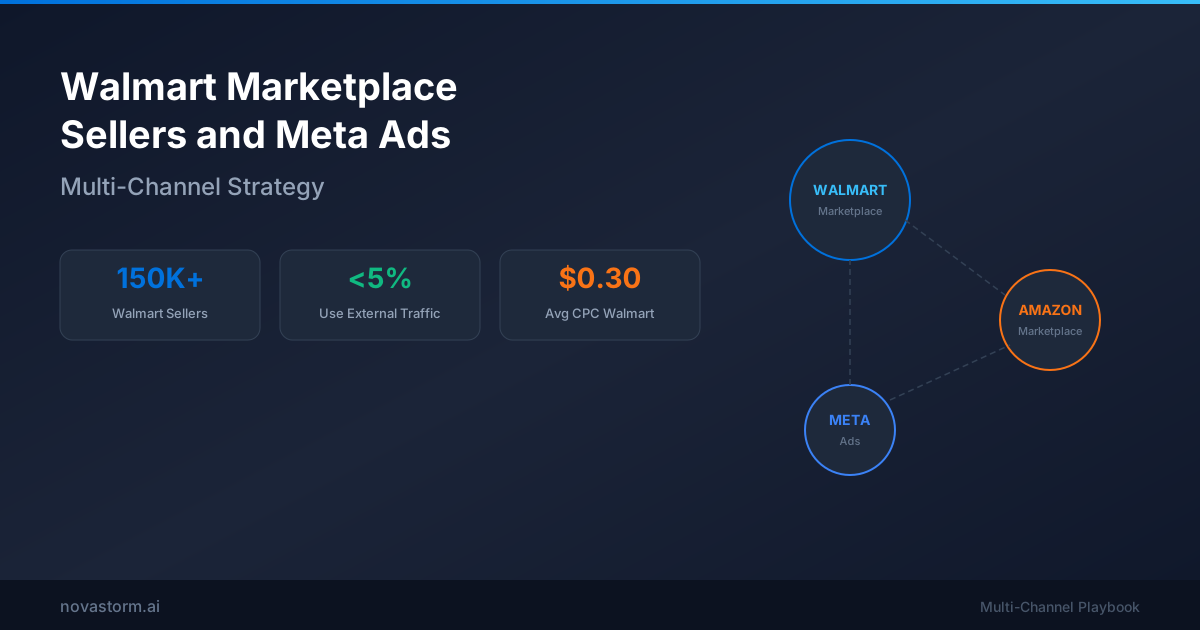
Walmart Marketplace Sellers and Meta Ads: Multi-Channel Strategy
Build a Walmart external-traffic test using eligible referral links, verified seller offers and profit across marketplace and DTC destinations.
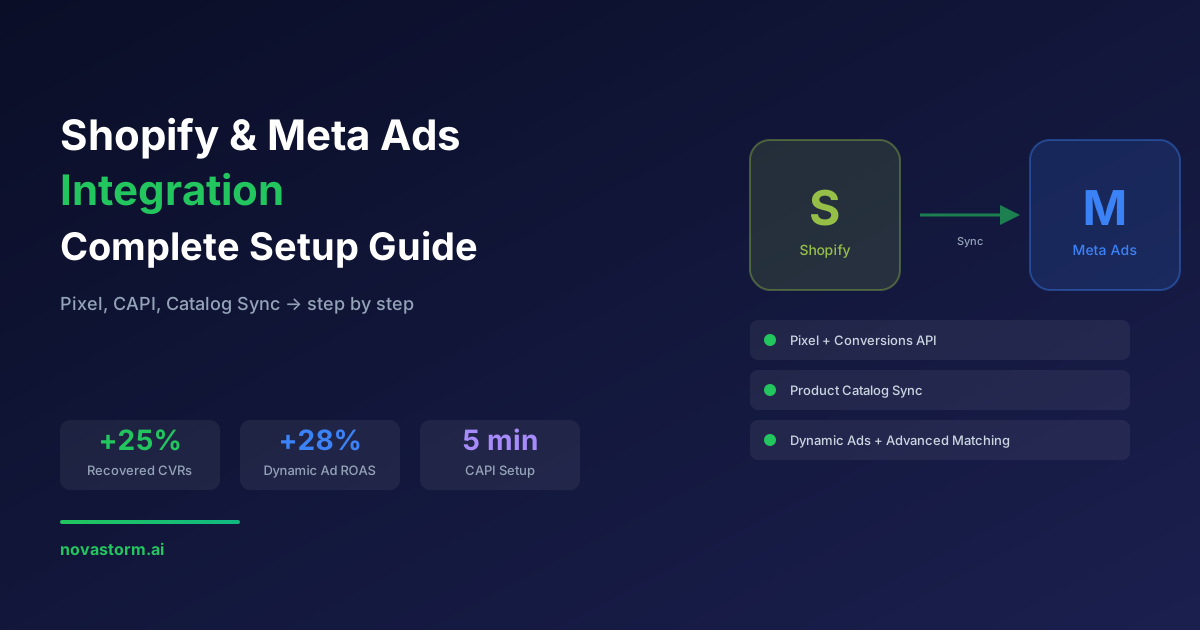
Shopify and Meta Ads Integration: Complete Setup Guide
Connect Shopify and Meta with official instructions, privacy checks, payment and duplicate-event tests, and product/collection sync acceptance.
Etsy Shop Promotion Through Meta Ads: Handmade Product Marketing
Advertise handmade Etsy products with honest tracking limits, labor-based margins, cleared craft footage and achievable delivery promises.