

How to Recover a Declining Meta Ads Account: Turnaround Playbook
Diagnose a Meta Ads decline with reconciled paid results, a cash-risk limit and sequential creative or audience tests rather than a promised seven-day reset.
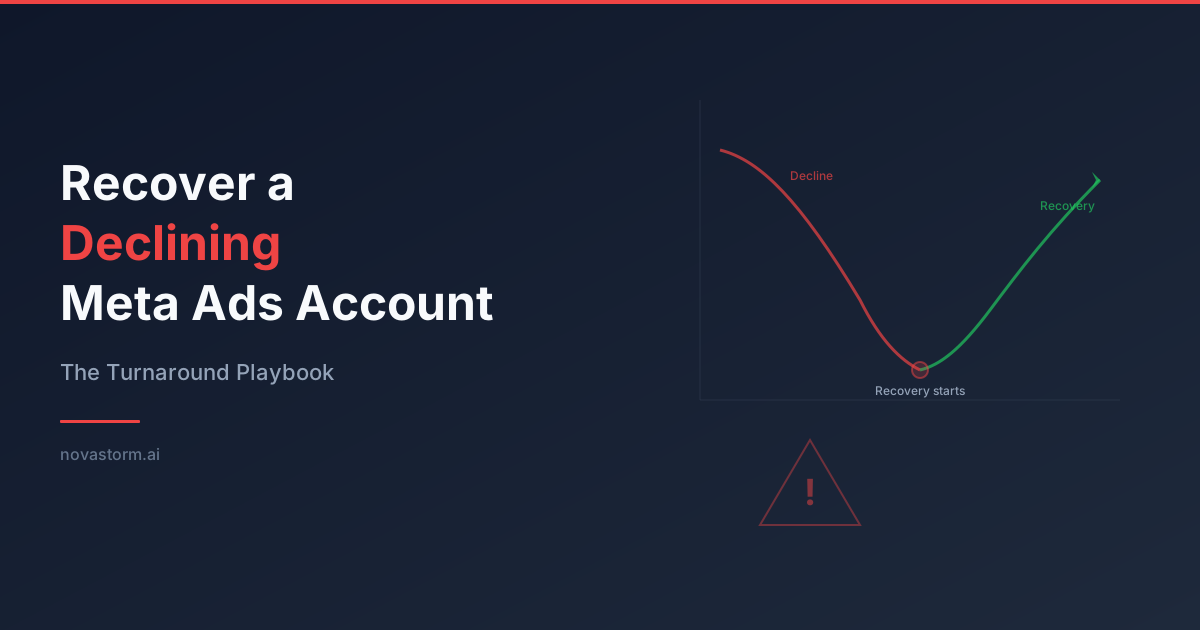
A declining report calls for diagnosis before replacement. A higher same-day CPA may reflect conversion delay, a payment problem, changed reporting or worse economics. Establish the commercial loss allowance and inspect confirmed defects first; a new campaign is not evidence that past learning has been erased.
Stage 1: verify measurement, payment and exposure
- Save a baseline with objective, event, attribution setting, currency, time zone, destination, price and offer. Compare equally mature cohorts and declare the refund cutoff.
- Reconcile reported events with distinct paid order IDs. Check missed or duplicate events, payment status, cancellations and whether new versus existing customers are mixed.
- Reproduce the mobile journey and payment confirmation. Inspect the actual account delivery or restriction message rather than inferring a restriction from weak sales.
- Record recent edits, stock and price changes, traffic mix and seasonal differences. Rank observations by evidence and commercial risk, without naming a cause solely from a chart pattern.
The account audit worksheet provides repair acceptance checks. A proven broken checkout may justify immediate containment; sparse early results require an allowance decision, not an automatic pause at 1.5 times target CPA.
Stage 2: declare the commercial ceiling
Hypothetical risk calculation, not an account recovery: assume retained-order contribution before media is $40 and an operator chooses a $120 media allowance for diagnosis. After $90 spend, two confirmed retained orders contribute $80, leaving a $10 shortfall before overhead. Two more orders may still be pending, but their possible $80 contribution is not earned cash. If the allowance remains fixed, $30 of additional media capacity remains; deciding to spend it requires acknowledging the unresolved results.
Use the mature contribution ceiling and an explicit cash limit together. Record who can stop spending, how often actual spending is checked and the response if reporting is delayed. A manually reviewed allowance is not a guarantee against overspend. Keep unresolved conversions visible and include their expected maturity date without counting them as purchases.
Stage 3: test one plausible explanation
| Observed pattern | Competing explanations | Next controlled question |
|---|---|---|
| CTR falls while CPM is similar | Creative relevance, placement mix or audience changes | Does one revised hook improve mature paid outcomes under matched conditions? |
| CPM rises while response is stable | Inventory, geography, seasonality or delivery mix | Did the report composition change before changing audiences? |
| Clicks continue but paid orders fall | Tracking, stock, payment or message mismatch | Can the same valid mobile order complete and reconcile? |
| New reach slows | Limited pool, exclusions or delivery constraints | Does one eligible audience treatment help under the same offer and creative? |
Stop wasting ad budget
NovaStorm AI cuts Meta Ads CPA by 30% on average. No complex setup required.
These are diagnostic possibilities, not a ranked list of proven causes. Use the fatigue analysis for the first pattern. If a creative test is chosen, keep audience, offer, destination and bidding conditions stable. Finish its declared review before testing an audience change; otherwise the result cannot identify which treatment mattered.
Stage 4: decide when the evidence is usable
- Choose the hypothesis, meaningful commercial difference, comparison method and loss allowance before launch. Use an appropriate controlled comparison where available; ordinary parallel delivery may receive different traffic.
- Set review timing from purchase delay, refund maturity and the volume needed for the decision. Seven days may be insufficient, and more days do not cure a biased comparison.
- If mature contribution improves within the allowance, document the conditions and consider a separately approved increase. If the result is inconclusive, retain that conclusion or stop when the cash limit is reached.
- If economics remain poor, examine the offer and costs rather than repeatedly changing the campaign structure. A technical repair and a profitable recovery are different results.
A diagnosis and replacement approval log
Illustrative work record: “Checkout failure reproduced; web owner assigned; acceptance is one valid mobile order with one reconciled purchase. After acceptance, hypothesis H1 changes only the first video hook. Reviewer approves exact copy and the $120 teaching allowance. Audience test H2 waits for H1 review.” This is a proposed sequence, not a completed recovery.
Record baseline version, finding, evidence, owner, repair acceptance, hypothesis, changed parameter, spend allowance, approval time and next review. In NovaStorm, prepare the approved replacement as paused campaign and local ad-set drafts. Review the actual saved settings and creative before publication; this workflow does not claim an automatic algorithm reset or recovery guarantee.
For the proposed hook comparison, retain the creative test record. Keep a rollback reference and judge subsequent performance on the declared mature outcome, so the next review can distinguish a new hypothesis from an unresolved defect.
Published by NovaStorm AI. Planning examples are illustrative assumptions, not measured customer results.
Disclaimer: This article was generated with the assistance of AI and reviewed by the NovaStorm AI team. While we strive for accuracy, we recommend verifying specific data points and consulting official sources (linked where available) for critical business decisions.
Ready to automate your Meta Ads?
NovaStorm AI takes full responsibility for your campaigns — from monitoring to optimization.
Start NowMore on Campaign diagnostics
How to Audit a Meta Ads Account in 60 Minutes
Run a 60-minute Meta Ads triage with reconciled orders, a repair acceptance log, and explicit checks for percentages and acquisition-cost units.
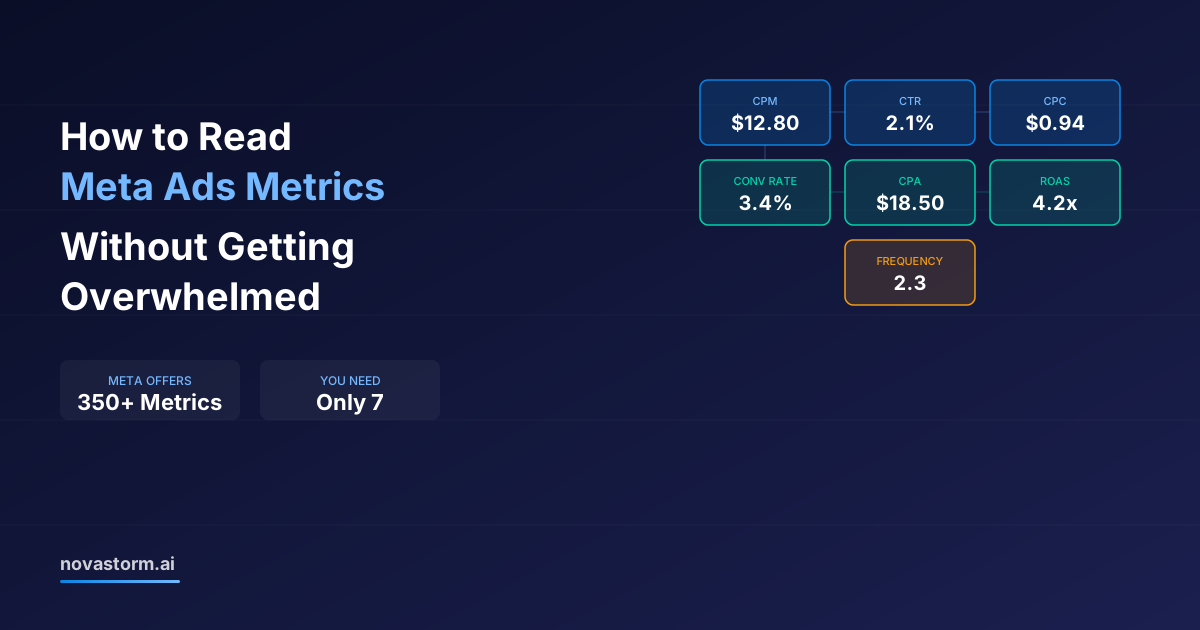
How to Read Meta Ads Metrics Without Getting Overwhelmed
Read Meta delivery and conversion metrics with exact denominators, mature orders, contribution economics and competing diagnostic hypotheses.

The Media Buyer's Daily Routine: What to Check and When
Build a dated morning report, separate urgent delivery incidents from immature performance, and assign approval and escalation owners.
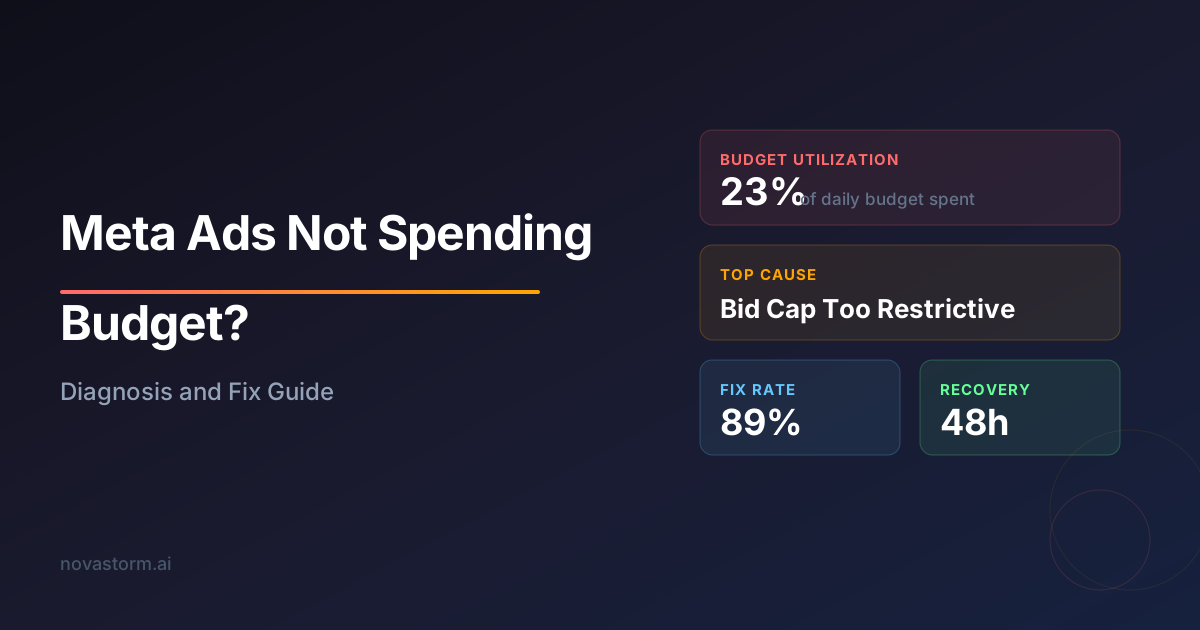
Meta Ads Not Spending Budget: Diagnosis and Fix Guide
Diagnose low Meta Ads spend using statuses, billing, schedule and allocation. Plan a reversible cap test with explicit spend and acquisition boundaries.