

Approval Workflows for Meta Ad Creative: Team Collaboration
Build effective approval workflows for Meta ad creative that streamline team collaboration. Define roles, stages, and tools for faster creative sign-off.
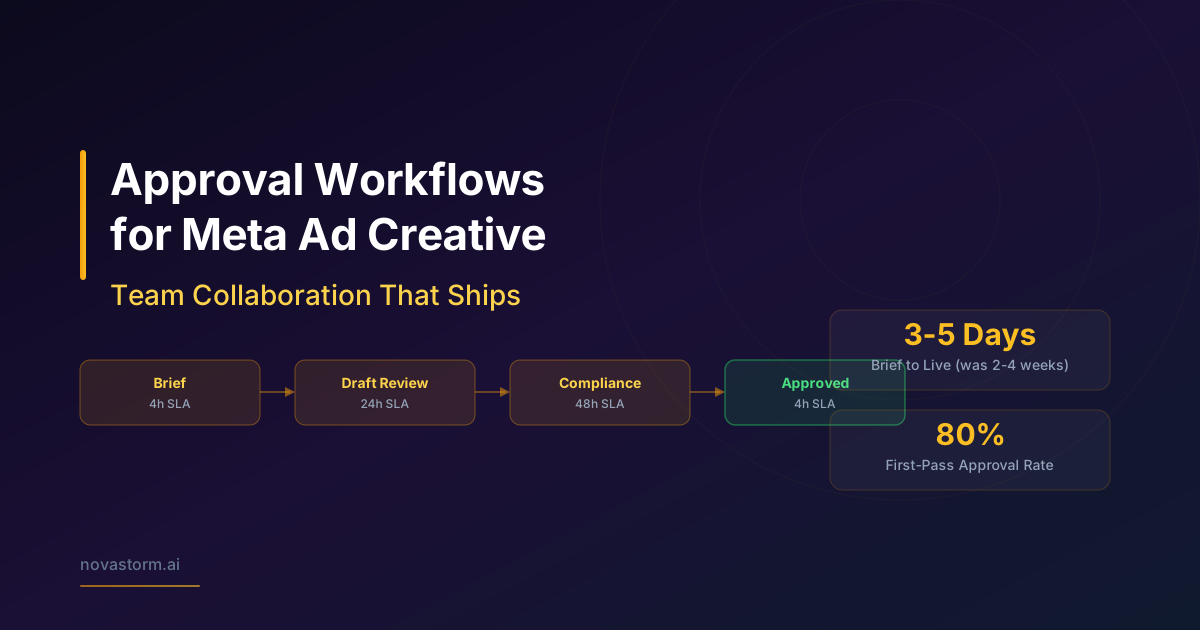
Creative approval is a decision about a specific asset and copy version. A deadline can trigger escalation, but silence cannot establish that someone reviewed the offer, facts or destination. Design the workflow so the final authorized person records an explicit approve, reject or hold decision before handoff.
A version-bound approval record
Hypothetical workflow for fictional creative C-01, not a measured team case: the brief defines the intended audience, offer terms, evidence for claims, placements and destination. Draft V1 includes the exact text, rendered asset and landing-page version. Reviewers annotate that bundle rather than an unversioned file link.
| Stage | Owner and backup | Completion evidence | If overdue |
|---|---|---|---|
| Brief | Marketing lead; delegated deputy | Scope and offer explicitly approved | Notify deputy; remain on hold |
| Design and copy | Creative lead and editor; named alternates | Annotated V1 with factual checks | Escalate unresolved feedback |
| Sensitive claim review | Authorized specialist; delegated alternate | Decision on specific claim and evidence | Escalate to specialist lead; do not bypass |
| Final handoff | Final approver; formally authorized deputy | Explicit approval for final bundle V2 | Hold delivery until authorized decision |
Response deadlines are team choices. A deputy must have delegated authority for the decision, not merely access to the file. If neither authorized approver is available, keep the campaign paused. Record who was notified and when; an audit trail of an unanswered notification is not an approval.
Changes that invalidate the approved bundle
| Change after approval | Required review | Why |
|---|---|---|
| USD 240 annual charge changed to USD 20/month | Offer and factual review plus final approval | May change the billing meaning |
| Free trial added; guarantee or performance claim strengthened | Evidence and applicable specialist review plus final approval | Creates a new promise |
| Different testimonial, logo or customer result | Permission and factual review plus final approval | Changes whose evidence is used |
| CTA or destination changed | Action and landing-page check plus final approval | May lead to a different commitment |
| Color or line wrapping changed | Check readability, contrast and placement; approve new version | Even visual changes can hide essential terms |
A copy edit is not automatically minor. Changing “may help” to “will increase,” deleting an exception, changing a date or altering price punctuation can materially change a claim. Mark V2 as pending, describe the difference and route it to the affected reviewers. Carry forward unchanged evidence references explicitly, then obtain final approval for V2. Never let an approved V1 silently authorize V2.
A filled annotation and cycle-time log
Stop wasting ad budget
NovaStorm AI cuts Meta Ads CPA by 30% on average. No complex setup required.
Synthetic example, not observed turnaround times. All timestamps below use UTC on October 5, 2026. They illustrate how to measure waiting and work without claiming an industry norm.
| Time | Version | Annotation or decision | Owner |
|---|---|---|---|
| 09:00 | V1 | Submitted: annual plan copy and destination | Producer |
| 11:00 | V1 | Reject: month-equivalent wording hides USD 240 upfront charge | Editor |
| 13:00 | V2 | Charge and renewal terms restored; revised bundle submitted | Producer |
| 14:00 | V2 | Offer and destination checks accepted | Offer owner |
| 15:00 | V2 | Explicit final approval; approved bundle frozen | Final approver |
Calculated submission-to-final-approval time is 15:00 − 09:00 = six hours for this fixture. First feedback arrived after two hours, revision took two hours and the final review period took two hours. This is not a typical launch duration, and approval-to-live time is a separate metric. Measure multiple real items, distinguish working time from elapsed time and report count, median and spread before asserting a speed improvement.
Track rejected claims, version changes after approval and wrong-version handoffs alongside elapsed time. A faster approval queue can still produce more mistakes. Opportunity cost from a delay depends on whether the campaign would have performed and how resources were otherwise used; waiting days do not automatically equal lost revenue.
Handoff into campaign preparation
- Attach the final copy, asset, destination, offer terms, placements and approval timestamp to the campaign preparation brief.
- Read back the prepared draft against that approved bundle. A mismatched asset or late edit returns the item to review.
- Keep preparation separate from permission to launch. The authorized operator checks settings and receives an explicit launch decision.
NovaStorm can support preparation of the campaign draft being reviewed; this proposed workflow does not establish automatic approval routing or publishing behavior. Connect it to the creative production workflow so handoff includes version identity and ownership.
Published by NovaStorm AI. Worked examples and test fixtures in this article are illustrative, not observed customer results.
Disclaimer: This article was generated with the assistance of AI and reviewed by the NovaStorm AI team. While we strive for accuracy, we recommend verifying specific data points and consulting official sources (linked where available) for critical business decisions.
Ready to automate your Meta Ads?
NovaStorm AI takes full responsibility for your campaigns — from monitoring to optimization.
Start NowMore on Agency operations and careers
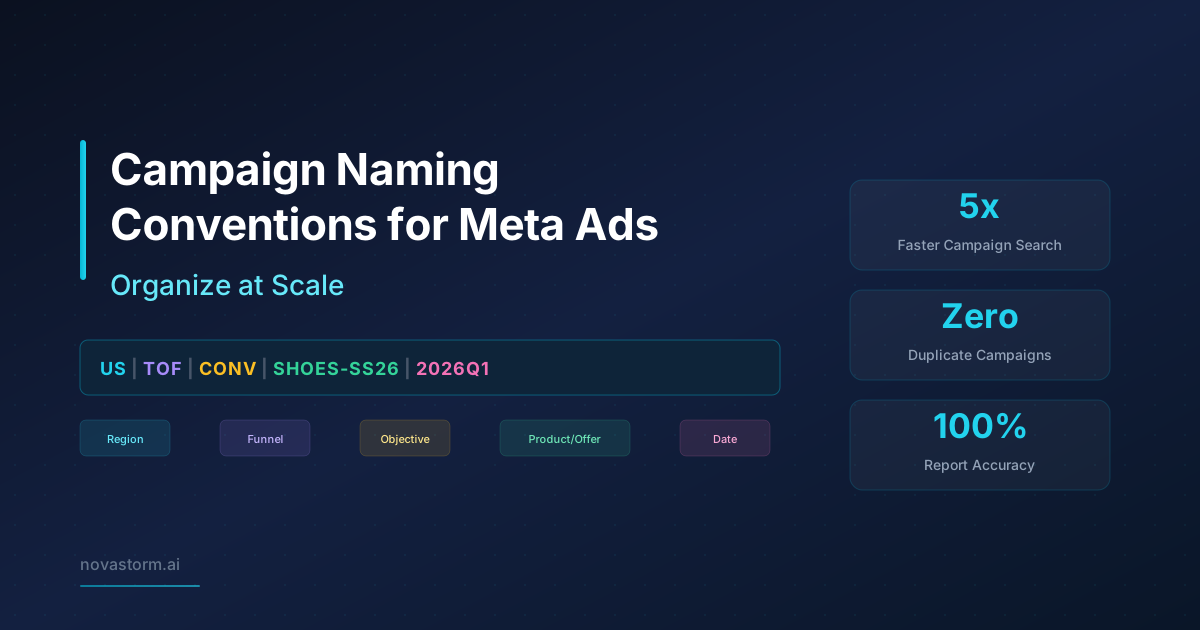
Campaign Naming Conventions for Meta Ads: Organize at Scale
Master campaign naming conventions for Meta Ads to organize at scale. Structured naming taxonomy for campaigns, ad sets, and ads with real-world examples.
Starting a Meta Ads Agency: Business Plan and First Steps
Learn how to start a Meta Ads agency from scratch. Complete business plan template, legal setup, pricing strategy, and first client acquisition steps for 2026.
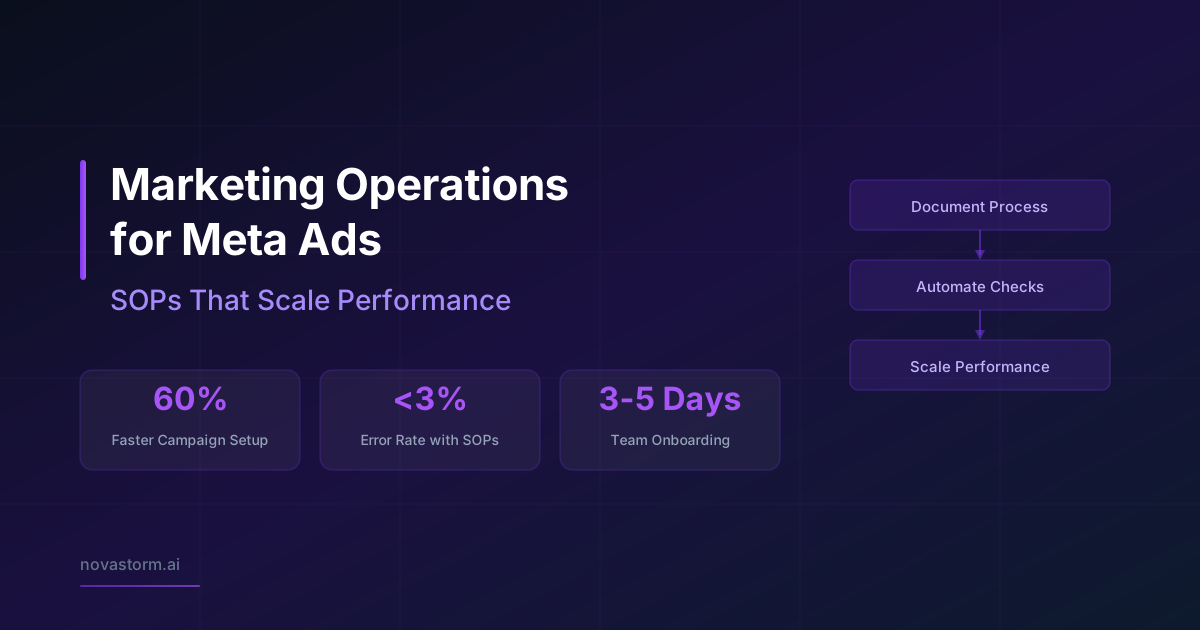
Marketing Operations for Meta Ads: SOPs That Scale Performance
Learn how to build standard operating procedures for Meta Ads that scale performance across teams. Proven SOPs for campaign setup, optimization, and reporting.
Agency Pricing: Percentage of Spend vs Flat Fee vs Performance-Based
Compare the three main agency pricing models for Meta Ads management. Learn which pricing structure maximizes revenue while keeping clients happy long-term.