

Amazon Sellers Using Meta Ads: External Traffic Strategy
Plan Meta traffic to Amazon using verified Attribution links, bonus eligibility and seller contribution after fees and refunds.
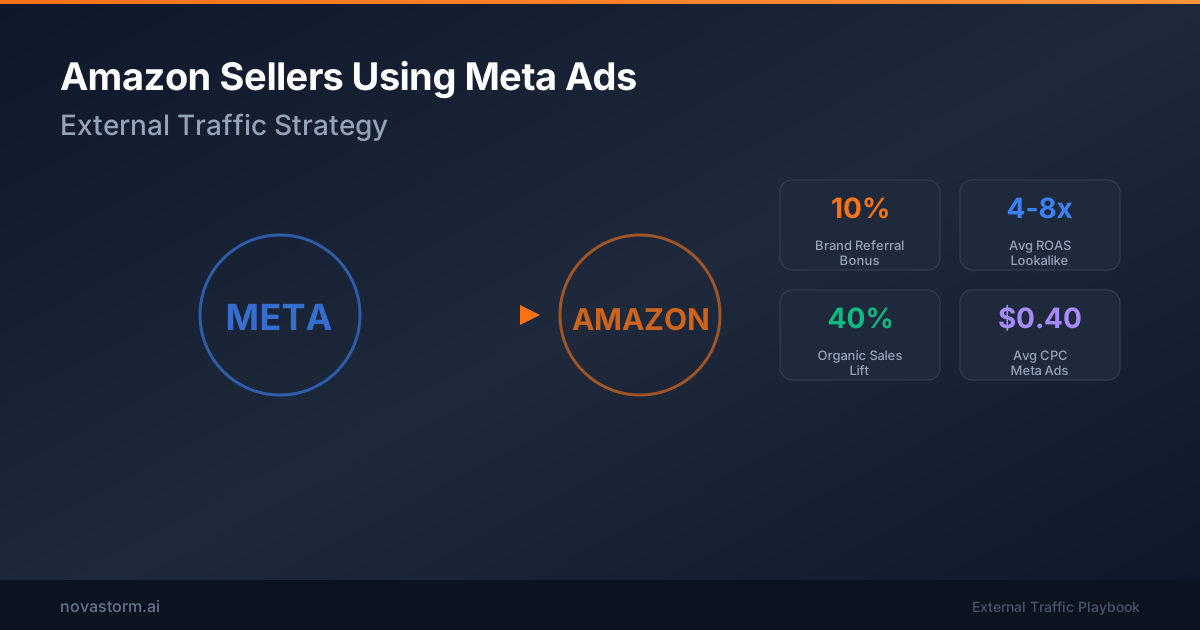
Meta can introduce an Amazon product to shoppers, but the marketplace purchase is measured in Amazon’s systems. Verify marketplace eligibility, tagged destinations and seller economics before spending. External traffic is not proof of improved organic ranking or an event stream available to Meta.
Verify Amazon Attribution and bonus eligibility
Amazon’s Attribution guide lists Brand Registry sellers with the appropriate brand role, vendors and supported agency/tool-provider access, and lists US, Canada, UK, Germany, France, Italy and Spain availability. Confirm the actual marketplace and advertiser account before setup. The guide specifies a 14-day last-click model: a later eligible click can change credit; attribution is not an incrementality experiment.
Amazon’s US Attribution remarketing announcement describes Brand Referral Bonus for eligible US brand-owning sellers, with an average 10% credit on qualifying externally attributed sales. Enrollment is separate. The average is not a universal product rate; inspect current category terms, credited transactions and reversals. Attribution availability in another country does not establish bonus eligibility there.
Hypothetical calculation: if an eligible USD 30 sale receives an assumed 10% bonus, 30 × 0.10 = USD 3. This is arithmetic, not a guaranteed payment. Amazon’s linked guide notes a two-month processing time between a sale and the bonus receipt; verify the current program terms and reconcile settled credits, returns and fees rather than spending an expected bonus as already received.
Choose a direct destination or an owned page
- Create an Attribution campaign for the actual advertised products and a distinct tagged destination for the comparison you need. Keep the product/variation, offer, marketplace and creative mapping in a local worksheet.
- Verify the generated link through desktop and mobile/app handoff and any owned redirect. Check that it reaches the advertised available variant and preserves the actual Amazon tag; do not fabricate parameter syntax.
- Direct to Amazon is a legitimate candidate. An owned product page may explain the offer but adds a step; make email signup optional and separately authorized, then test whether the extra step helps mature contribution.
- A consented owned-page outbound click is a click, not a marketplace Purchase. Do not send it as a paid order to Meta or assume Amazon Attribution automatically supplies Meta optimization events.
Brand Analytics insights are not permission to export Amazon customer emails into Meta Custom Audiences. Use independently authorized first-party contacts only when the actual purpose, terms and permissions allow it. Amazon-owned remarketing described in its tools is not a Meta customer-list export. Broad relevant creative can be tested without claiming access to individual Amazon shoppers.
Stop wasting ad budget
NovaStorm AI cuts Meta Ads CPA by 30% on average. No complex setup required.
Include fees and featured-offer availability
| Hypothetical USD 30 order economics | USD |
|---|---|
| Net product revenue excluding tax | 30 |
| Goods | 10 |
| Marketplace referral fee (assumed) | 4.50 |
| Fulfillment/inbound/storage allocation (assumed) | 6 |
| Returns/service allowance | 2 |
| Contribution before bonus/media | 7.50 |
| Assumed settled eligible bonus | 3 |
| Media per attributed order | 8 |
| Contribution with bonus:7.50+3−8 | 2.50 |
| Contribution without bonus:7.50−8 | −0.50 |
All worksheet inputs are invented and must be replaced with your actual seller fees. Check stock, delivery promises and whether your offer is the Featured Offer (Buy Box) at the destination. If a shopper buys another seller’s offer or unavailable variant, do not assume attributed product sales equal your retained profitable orders. Reconcile seller orders/refunds and settled fees; measure listing changes as possible confounders.
Test the extra page and organic-effect hypothesis
Before launch define comparable assignment, affordable spend and a completed purchase/refund window. Compare direct-tagged traffic with an owned-page route, recording outbound loss and mature seller contribution. Hypothetical funnel: 100 visitors at an owned page produce 60 outbound clicks; that 40% loss is invented and says nothing about final purchase quality without matched follow-up.
To investigate incremental sales or an organic effect, use an appropriately designed holdout or staggered market test where feasible and track total seller sales and contribution—not only tagged orders. Keep price, stock, Amazon advertising and promotions comparable; document unavoidable changes. Ranking or untagged-sales movement alongside Meta spend is observational evidence and cannot isolate a causal boost. Avoid a universal scaling percentage or ROAS target.
Prepare the actual product benefit, correct marketplace destination and approved offer for a NovaStorm campaign draft. Review before publication; measure Amazon sales and credits through its authorized systems. See destination selection for comparing commerce paths without assuming equivalent tracking.
Published by NovaStorm AI. Worked examples and test fixtures in this article are illustrative, not observed customer results.
Disclaimer: This article was generated with the assistance of AI and reviewed by the NovaStorm AI team. While we strive for accuracy, we recommend verifying specific data points and consulting official sources (linked where available) for critical business decisions.
Ready to automate your Meta Ads?
NovaStorm AI takes full responsibility for your campaigns — from monitoring to optimization.
Start NowMore on E-commerce catalogs and channels

Magento and Meta Ads: Enterprise E-commerce Advertising Guide
Plan Magento and Meta integration with paid-order queues, consistent variant IDs and market-level reconciliation.
Etsy Shop Promotion Through Meta Ads: Handmade Product Marketing
Advertise handmade Etsy products with honest tracking limits, labor-based margins, cleared craft footage and achievable delivery promises.
BigCommerce Meta Ads Setup: Catalog and Pixel Configuration
Verify BigCommerce catalog IDs and paid-order events with a webhook ledger, consent checks and a synthetic release matrix.
eBay Seller Advertising on Meta: Marketplace External Traffic
Plan an eBay external-traffic test with honest condition creative, a sold-item stop procedure and profit after fees and returns.