

The AIDA Framework Applied to Meta Ads Campaign Structure
Use Attention, Interest, Desire and Action as message-planning questions, without mandatory campaign objectives, funnel ratios or promised CPA improvement.
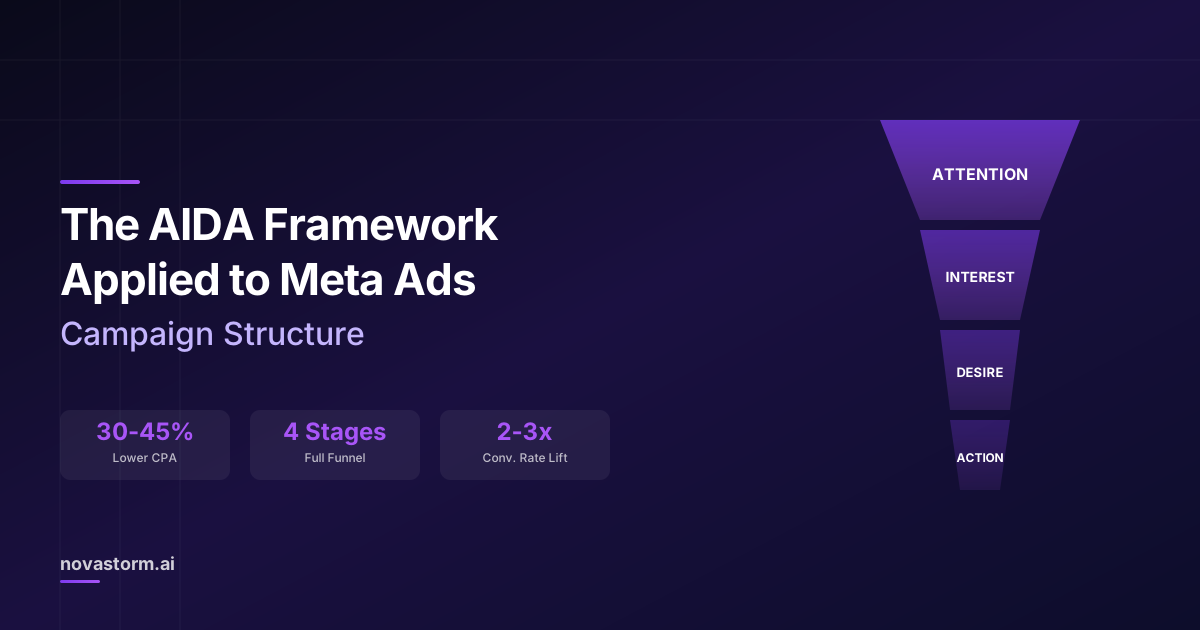
AIDA stands for Attention, Interest, Desire and Action. It is a message-planning lens, not a verified description of the order every buyer follows. Use it to identify missing information in an offer; do not create four campaigns merely to mirror the labels.
Turn the labels into customer questions
| Lens | Reader or customer question | Possible truthful response |
|---|---|---|
| Attention | What is this and is it relevant to me? | An identifiable product and eligible use case |
| Interest | How does it solve my problem? | A demonstration or clear explanation |
| Desire | Why should I trust or prefer it? | Evidence, real terms and authentic proof |
| Action | What happens when I proceed? | Price, next step and a working destination |
A fictional message audit
An ad shows a bag but never explains its capacity. The page provides specifications but hides delivery cost until checkout. AIDA points to two information gaps: relevance and the terms of action. Improving those gaps is a hypothesis to evaluate; the model cannot promise a 30–45% acquisition-cost reduction.
| Hypothetical bag audit | Before | Proposed repair and acceptance |
|---|---|---|
| Attention/Interest | Photo alone; capacity unclear | Show true dimensions and an accurate example of items that fit |
| Desire | Unverified "best bag" claim | Replace with demonstrated material/construction details |
| Action | USD 40 ad; USD 5 delivery revealed late | State USD 40 plus USD 5 delivery for the illustrative eligible route; confirm USD 45 before payment |
These are fictional inputs, not our customer observation. The page owner repairs the hidden shipping disclosure and tests the checkout separately from a copy experiment: same eligible destination, price totals visible, no broken control and one confirmed permitted test purchase. Repairing a known defect is acceptance work; it does not establish the incremental effect of AIDA.
Keep message planning separate from delivery goals
A cold eligible customer can see a clear purchase offer without first watching an awareness video. A cart addition is not automatically the right “Desire” optimization event. The objective and event guide selects delivery around the required business action. Current identifiers are exposed in the Meta’s official campaign SDK.
Build only the campaign jobs you can justify
Stop wasting ad budget
NovaStorm AI cuts Meta Ads CPA by 30% on average. No complex setup required.
The full-funnel architecture review maps actual campaign responsibilities and audience transitions. Keep business boundaries, measurement and cash limits with each job. AIDA supplies neither a universal 20/25/25/30 spending split nor a known conversion rate between its labels.
Evaluate a specific change
- Name the unanswered customer question.
- Change a defined message or destination element.
- Preserve truthful claims and required offer information.
- Choose the main business outcome and commercial guardrail.
- Use a supported controlled design when a causal effect is required.
Monitor verified defects and cash limits immediately; assess business outcomes after their normal delay. Frequency, watch duration and click response can help investigate attention, but they do not assign a customer to a psychological stage with certainty.
Use the model as a checklist
Close the review with the identified gap, proposed change and evidence needed. If all four questions are already answered in one useful ad and destination, the framework does not require additional campaign complexity. AIDA should make the offer easier to understand and review, rather than supply a guaranteed growth timetable.
One message change and a bounded decision
Hypothetical experiment brief: unanswered question=capacity; A=existing accurate bag description; B=same offer with a concise capacity demonstration. Primary outcome=unique confirmed orders after normal outcome delay; guardrail=owner-approved maximum experiment loss. Declare eligibility and supported assignment, preserve price/shipping facts, and include production cost and mature refunds. AIDA does not require four campaigns, four events or arbitrary budget percentages.
Convert the capacity gap into the NovaStorm creative brief: product facts, demonstrated capacity, USD 45 illustrative delivered total, destination and prohibited unsupported claims. Reviewer checks the draft and explicitly approves the chosen version. Campaign preparation remains separate from live delivery and the psychological model does not prove an optimization objective.
Published by NovaStorm AI. Worked examples and test fixtures in this article are illustrative, not observed customer results.
Disclaimer: This article was generated with the assistance of AI and reviewed by the NovaStorm AI team. While we strive for accuracy, we recommend verifying specific data points and consulting official sources (linked where available) for critical business decisions.
Ready to automate your Meta Ads?
NovaStorm AI takes full responsibility for your campaigns — from monitoring to optimization.
Start NowMore on Campaign structure and objectives
The Complete Guide to Meta Ads Learning Phase
Monitor a new Meta campaign day by day, distinguish delivery status from business performance and decide when a change is justified.
Growth Loops vs Funnels: Modern Customer Acquisition on Meta
Measure a referral, content or data feedback loop by its real outputs, costs and delay, without assuming every customer makes the next acquisition cheaper.
How to Structure Meta Ads Campaigns for Maximum Budget Efficiency
Review each Meta campaign’s job, group separation and budget control without promising CPA savings from consolidation or automatic overlap penalties.
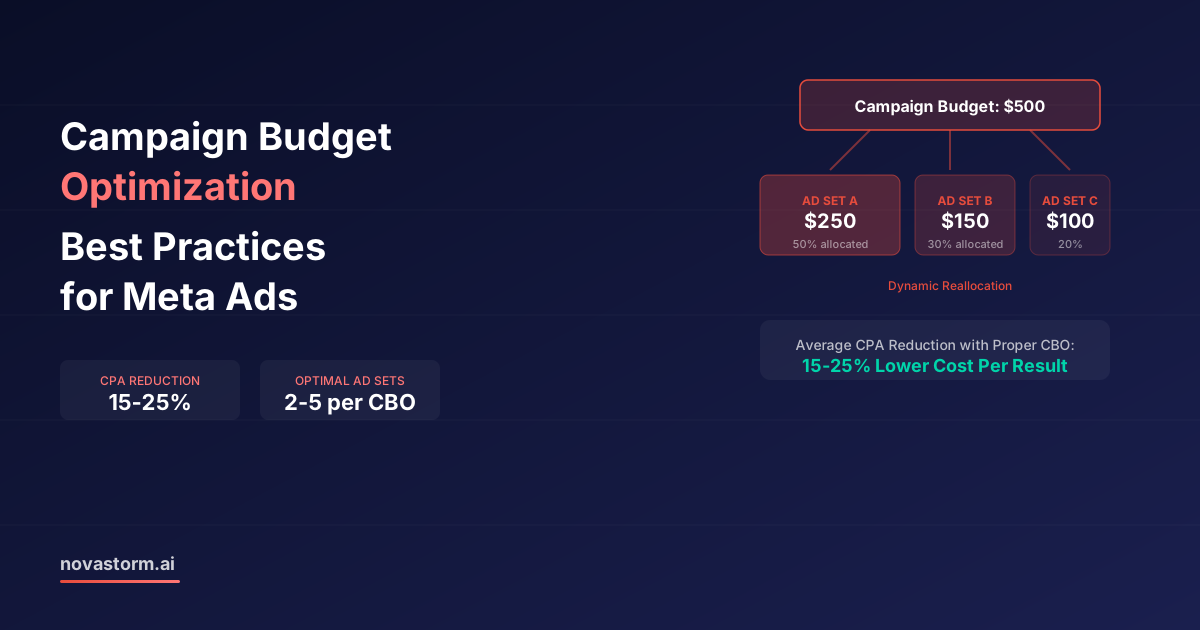
Campaign Budget Optimization Best Practices for Meta Ads
Check a campaign-level Meta budget configuration: shared outcomes, saved limits, dates, pacing and how to diagnose uneven ad-set allocation.