

How to Write and Test Body Copy for Meta Ads
Write evidence-backed Meta primary text, verify category and landing-page alignment, then test one copy-length hypothesis against mature customer cost.

Body copy should help an eligible reader understand the actual offer and next action. Clear wording is a design choice to test, not a guarantee that a framework sells. Start with verified product facts and the destination the reader will reach.
Three structures for one fictional reminder tool
The following examples assume a tool genuinely provides editable reminders. They are original teaching copy, not customer ads or proven results. Do not publish a functionality claim until the product owner confirms it.
| Structure | Draft primary text | What needs verification |
|---|---|---|
| Problem → context → solution | Project follow-up scattered across notes? Keep your next actions in one place and set reminders you can edit. Explore the workflow. | Actual reminders, permissions and destination demonstration |
| Before → proposed after → mechanism | Move from separate task notes to a shared action list. Review the reminder workflow and decide whether it fits your team. | Shared-list capability; no guaranteed stress or revenue improvement |
| Feature → practical use → benefit hypothesis | Set an editable reminder for a task. Review upcoming actions in your workflow. See how the feature works. | Feature availability; the desired benefit remains a hypothesis |
Specific numbers require a source
“847 companies increased revenue 34% in 90 days” is a fictional example of a claim that must not be copied into an ad. Such wording needs an identified dataset, selection rules, measurement period, comparison and permission; specificity alone does not create credibility. The same applies to 12,000 users, 5,000 downloads or a change from three hours to 20 minutes. If evidence is missing, describe the verified feature instead.
Do not promise “see results this week” without defining and substantiating those results. A safer feature-led next step is “Explore the reminder workflow and review the available plan.” Social proof, if used, requires genuine quotes, relevant context and rights; it is not inherently the highest-performing persuasion method.
Stop wasting ad budget
NovaStorm AI cuts Meta Ads CPA by 30% on average. No complex setup required.
Check category and the first visible screen
- Confirm what is being advertised and where: regulated categories or sensitive claims need the applicable current platform and local review. A general productivity example is not permission to reuse personal-attribute or health wording.
- Inspect actual placement previews, including collapsed primary text. Put the verified offer and useful next action early; no fixed number of visible lines applies universally.
- Match ad and page on feature, price, trial terms, eligibility and action. A “free” CTA must not lead to an undisclosed charge.
- Remove unverified counts, quantified benefits and time promises. Preserve qualifications in readable copy rather than hiding them behind expansion.
- Approve the exact copy version, image rights and destination before release.
A one-variable length test
Hypothesis: extra practical detail helps eligible prospects decide whether to start the tool’s genuine available trial. Short version: “Set editable task reminders. Explore the workflow and review the available plan.” Longer version retains that opening and CTA but adds: “Review upcoming actions in one list. Adjust a reminder when a task changes.” Use those extra details only if they are real. Keep tone, image, offer and destination constant.
- Use stable eligible-user assignment through an available experiment method; ordinary ad delivery does not guarantee randomization. Declare the exposure cap, sample plan and stopping rule before launch.
- Choose retained paying customers or properly qualified leads as the primary outcome, with a defined maturation period. Trial starts and clicks are diagnostics.
- Reconcile identities, missing data, refunds and acquisition costs at the same outcome age. A claim of better CPA needs enough information and uncertainty assessment.
- Hypothetical mature example: $300 and 10 retained customers give CPA $30; $300 and 12 give CPA $25. These arithmetic rows are not observed results or a statistically established copy winner.
- Keep the valid factual copy even if the commercial comparison is inconclusive; log the tested variable and the actual conclusion.
A proposed NovaStorm workflow prepares the primary-text variants as paused campaign and local ad-set drafts for human approval. It does not verify testimonials, predict customer results or guarantee a copy framework’s efficiency. The awareness-level guide and experiment card help align the question and test.
Published by NovaStorm AI. Planning examples are illustrative assumptions, not measured customer results.
Disclaimer: This article was generated with the assistance of AI and reviewed by the NovaStorm AI team. While we strive for accuracy, we recommend verifying specific data points and consulting official sources (linked where available) for critical business decisions.
Ready to automate your Meta Ads?
NovaStorm AI takes full responsibility for your campaigns — from monitoring to optimization.
Start NowMore on Ad copy and messaging
Meta Ad Headlines: Clear Promises, Placement Review and Testing
Write a truthful Meta headline, check its actual placement display and compare one wording change under a spend allowance and mature-outcome rule.
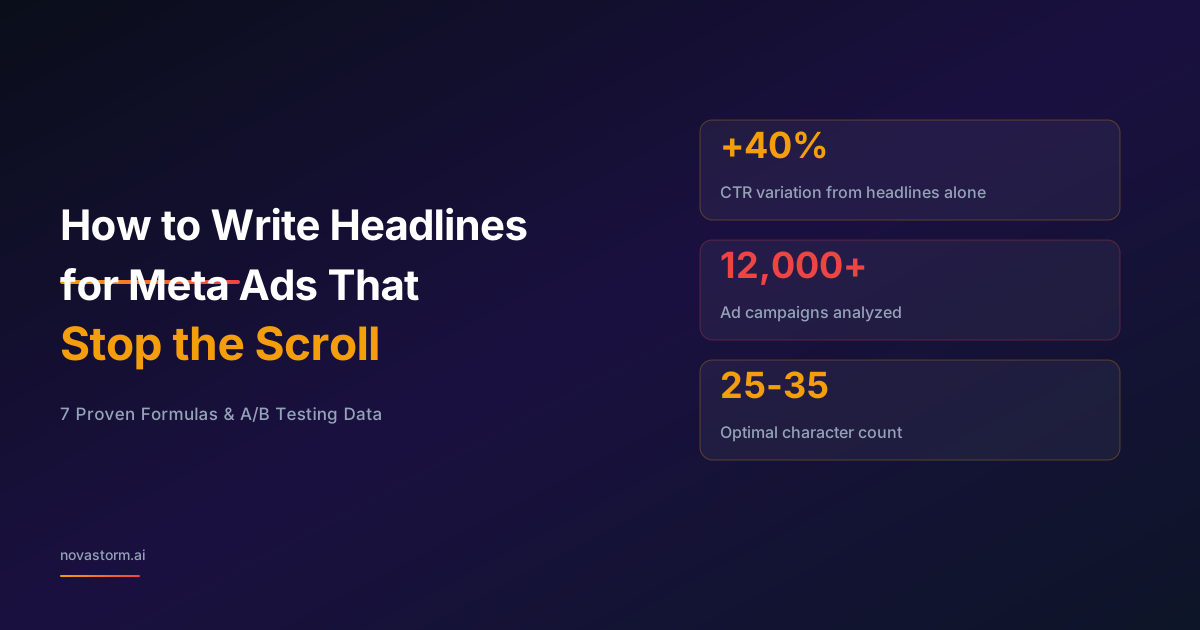
How to Write Headlines for Meta Ads That Stop the Scroll
Write supportable Meta ad headlines, preview their placement visibility and test one angle with an explicit sample and mature outcome plan.
Social Proof in Meta Ads: Verify Reviews and Test the Treatment
Turn genuine reviews into a documented Meta ad brief, preserve permissions and claim evidence, and compare proof formats against mature retained sales.
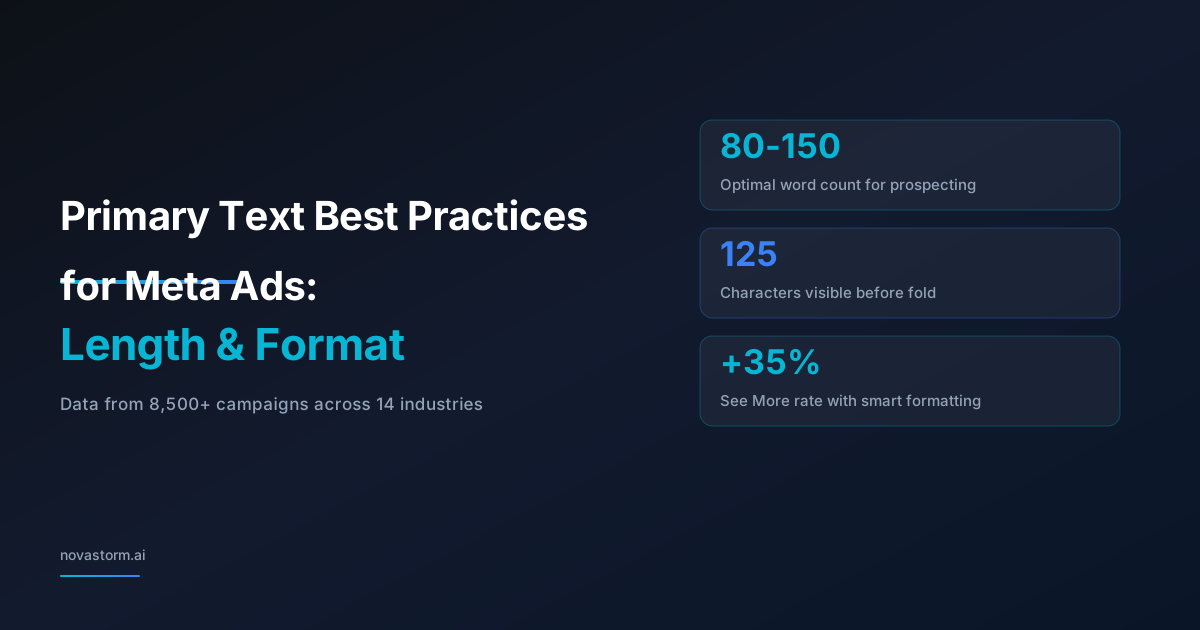
Primary Text Best Practices for Meta Ads: Length and Format
Prepare three traceable primary-text lengths, check openings and previews, then compare approved copy with funded sampling and mature outcomes.